
Uncategorized
Turning the Patent Cliff into a Bioplant Opportunity


The 2030 patent cliff may either decimate revenue streams or provide an opportunity for innovation that can transform the biopharmaceutical industry. As it stands today, some 200 biopharmaceuticals are scheduled to go off patent during the next four years, representing approximately $300 billion in revenue.
That revenue hit can be softened if biopharma manufacturers replace traditional mammalian expression systems with a Lemna plant-based system. Susan Stipa, CEO and co-founder of Phylloceuticals, tells GEN the Lemna platform her team has developed can reduce operational costs by nearly 80%–90% per gram in the upstream part of the process and one-third the cost overall. That’s because Lemna-based production lacks the 12-month lag and need for sterile growth media associated with mammalian cell lines and has less need for viral deactivation.
Demonstrating those points, Phylloceuticals’ Lemna-based approach produced microgram quantities of the PD-1 inhibitor pembrolizumab in only 16 weeks. Batch harvesting garnered “yields of approximately 0.6 grams purified mAb per kilogram of fresh weight,” Stipa says.
This isn’t how production has been traditionally handled, she says. So, “most companies are making defensive plays—such as mergers and acquisitions, reformulations, and reducing headcounts. But…what if the patent cliff could be an opportunity?”
The duckweed advantage
In optimal conditions Lemna, a genus of small free-floating aquatic flowering plants also known as duckweed, can double within 36 hours. In the wild, five to seven days is normal. “It’s one of the most prolific plants in the world,” Stipa points out. That rapid doubling time creates a huge speed advantage for line development and scale-up. “Line development speed for Lemna is four to six months versus 18+ months for Chinese hamster ovaries (CHO) cells,” Stipa says, “primarily due to Lemna’s genetic stability and clonal growth.” It boasts inexpensive, animal serum-free growth medium, no adventitious viruses, a negative carbon footprint, and uses about 10% of the water used by CHO cell systems to produce mAbs. And, she adds, “There is near-zero impact from unforeseen environmental deviations, like power outages.”

CEO, Co-Founder
Importantly, “As a multicellular eukaryote, it possesses the advanced chaperones and complex post-translational modification machinery—specifically sophisticated N-glycosylation—required to correctly fold and stabilize large, bioactive human molecules. Our ability with duckweed to control sugars and, in particular, obtain human (or human-like) sugar profiles is what sets us apart.”
Those features make Lemna an attractive alternative to the more expensive CHO and other mammalian cell lines. CHO cells require a very complex system, and “thousands of CHO cells must be screened to find the cell that produces the right protein and remains genetically stable. There can be genetic drift, but with Lemna, there is none,” Stipa points out. Mammalian cells are sensitive to environmental fluctuations and require skilled technicians to manage them.
“Almost anything you can make in mammalian cells, you can make in duckweed, just a little bit better. And, yes, we do a bit better with folding,” she says.
Yeast such as Pichia pastoris or Saccharomyces cerevisiae is another option, but Stipa points out, “Yeast is a story of quantity versus quality. It can produce a lot very quickly, and it does simple proteins very well, but when the protein size and complexity increase, productivity drops.”
Building where there’s a need
That said, Phylloceuticalshas a potentially broad client base that includes individual investigators needing microgram quantities up to contract development organizations, biosimilar manufacturers, and innovators. The company is still young, though. “We need to prove the platform is what the industry wants it to be,” Stipa says.
Stipa developed a comprehensive view of the industry as a young cancer patient and through a career as a chemical process engineer who built biopharma facilities globally, and as a life sciences marketer exposed to many companies.
Her time in marketing, in fact, led to the formation of Phylloceuticals. “I had developed brand strategy for so many start-ups only to see the scientist-founders lose the room pretty quickly,” Stipa says. “In today’s media-saturated world, innovative science also needs advocates able to tell incredibly compelling stories, and to tell them so they stick.”
In 2024, Stipa and her co-founders, Lynn Dickey, PhD, now chief technology and science officer, and Bill Brydges, one of the original leaders of bioengineering firm Foster-Wheeler Biokinetics, incorporated Phylloceuticals.
The company became operational in January 2025, opening its pilot facility in Rapid City, South Dakota. “Our location choice perfectly mirrors the bio-agility of our platform,” Stipa says. “Traditional mammalian cell [production facilities] are often tied to very specific legacy pharma hubs. The idea of Phylloceuticals is that we can be up and running anywhere the need is, and in underserved regions. Rapid City is at the core of one of the largest rural healthcare areas [in the U.S.].”
That the facility was operational in only 12 weeks helped Phylloceuticals transition from friends and family financing to angel investment. Stipa says she expects to close the company’s first funding round soon, “to be followed immediately by a Series A round.”
Initial focus: biosimilars
The company’s focus on biosimilars is directly related to the patent cliff and the industry’s widely discussed onshoring. The COVID pandemic highlighted a flaw in the global supply chain that left nations dependent upon others for critical pharmaceutical ingredients. Plugging that gap with the Biosecure Act (signed into law December 2025) and Federal Acquisition Regulations that ban commerce with companies of concern, Stipa says, makes Phylloceuticals an attractive choice for low-cost, onshore, mAb production. “Beyond biosimilars, we are also very active in animal health biologics and ADC/RTL support,” she adds.
Regulators—notably the FDA—are familiar with Lemna because of its commercial-scale use for food, and for pharmaceutical products that have been through Phase II, including β-interferon, although it hasn’t been used commercially for pharmaceutical products. Commercial scale has been on Stipa’s mind since the beginning. “From the very early months, we had a team beginning to think about what scale-up would look like. Even when we didn’t have the funds, we had advisors working on the scaleup question,” Stipa says. Currently, Phylloceuticals can make microgram-to-gram quantities. Its next phase is to make gram-to-kilogram quantities.
Challenges
“I think pharma rarely fails because of the science,” Stipa says. She says the company is still improving extraction from the apoplast (the network of cell walls and intercellular spaces that help transport water and nutrients) and scaling to commercial quantities.
Instead, the big challenge for Phylloceuticals is simply innovating in an industry that has a legacy, multi-billion-dollar investment in stainless steel infrastructure. “Change is hard,” she acknowledges. But change is also inevitable, and the biopharmaceutical industry is hardly the first to face entrenched legacy equipment and processes.
As an example, she cites Kodak, which invented the first digital camera in 1975 but didn’t commercialize it. Aside from its initial technical immaturity, digital photography “would challenge the paradigm of film and chemicals Kodak sold,” Stipa points out. Yet, today, more than 90% of all photos are digital, and film photography is a relatively small niche. Clearly, she says, “It is possible to shift a legacy mindset.
“Our challenge is to find forward-thinking leaders who believe the same way [we do],” Stipa continues. The first two customers have signed on—one engaged in preclinical studies around joint disease, and one focused on animal health—which suggests such leaders are there and are open to new ways of doing things.
“The industry is at a crossroads,” Stipa says. “I see this as an opportunity to help our partners transition from ‘how we’ve always done it’ to a model of bio-agility.”
The post Turning the Patent Cliff into a Bioplant Opportunity appeared first on GEN – Genetic Engineering and Biotechnology News.

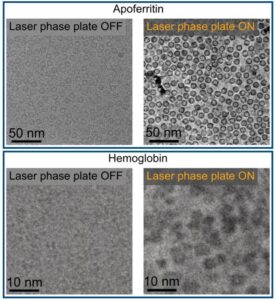
You know when you are at the eye doctor getting an updated prescription, and suddenly the world snaps into sharper focus? Physicists at the University of California (UC), Berkeley, have now done something similar for electron microscopy. By introducing phase contrast into a cryo‑electron microscope, they have delivered dramatically sharper images of some of biology’s smallest and most elusive proteins.
The advance comes from a new laser phase plate (LPP), described in the paper “Laser phase plate improves structure determination of small proteins by cryo‑EM,” which was published recently in Science. Led by physicist Holger Mueller, PhD, of UC Berkeley and Lawrence Berkeley National Laboratory, the team demonstrated that a laser‑driven phase plate can overcome one of cryo‑EM’s most persistent limitations: poor contrast for small proteins.
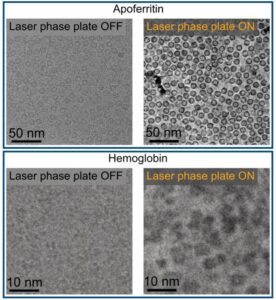
Cryo‑EM has transformed structural biology over the past decade, earning a Nobel Prize in 2017 for enabling high‑resolution structures without crystallization. But despite its impact, the technique still struggles with proteins below ~70 kilodaltons—a size range that includes about 90% of the human proteome. “Because of signal-to-noise limitations, the majority of human and animal proteins are too small to be analyzed by these methods [cryo-EM and cryoelectron tomography]. The increase in signal-to-noise ratio provided by this laser phase plate is expected to overcome these important limitations.”
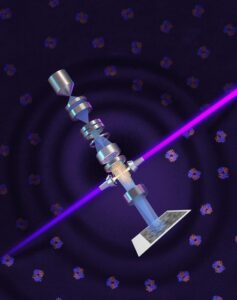
The new LPP begins to address that problem. The LPP uses an intense, continuous‑wave laser to shift the phase of the electron beam itself. This produces true phase contrast without dimming or destabilizing the beam. Mueller described the laser focus as “75 kilowatts focused to a few microns… That’s more powerful than what you use for welding. It has more power than a military laser. It builds up the brightest continuous laser focus ever.”
Installed in a custom Thermo Fisher Titan Krios, the LPP immediately improved the clarity and resolvability of small proteins, including hemoglobin, which sits at the lower limit of what today’s cryo‑EM instruments can handle. As the authors wrote in the abstract: “Here, we show that the laser phase plate (LPP)… enhances the resolution in single-particle reconstruction of small proteins by improving specimen-motion correction, recovery of information from the early frames, as well as particle visualization, 3D classification, and alignment.”
These improvements were achieved using standard defocus ranges and reconstruction workflows. “For the most challenging cases—small particles, bad specimens—the laser produces a very considerable advantage,” Mueller said.
The impact extends beyond single‑particle analysis. Cryo‑electron tomography (cryo‑ET), which assembles multiple angular views of a molecule or protein into a three-dimensional image, stands to benefit even more. “With cryo-ET, we’re looking at small, very complicated cellular material that’s incredibly crowded inside the cell,” said Bridget Carragher, PhD, founding technical director of imaging at Biohub. “It’s like a forest of trees, and you’re trying to find one leaf on one tree in there. Cryo-ET needs a dramatic step forward in contrast, so we can start to see what’s going on inside the cell. That’s what the laser phase plate promises to give us.”
Biohub is developing a dual‑laser version of the system, designed to reduce component wear and minimize aberrations. Meanwhile, Mueller’s team is pushing toward imaging proteins as small as 17 kilodaltons, a threshold that would open access to vast regions of the human proteome previously invisible to cryo‑EM.
“This technology is a step function change for biology,” said Stephani Otte, PhD, Biohub’s vice president of imaging science. “What was once invisible will become visible—and that changes everything about how we understand disease.”
“The bottom line is, if you have a large protein and a really good sample—a fresh one or one frozen without bubbles, for example—you may not need the phase plate to get a single, high-quality image. But for a small protein and a bad sample, laser-on is best,” Mueller said. “This could fill an enormous gap in our knowledge of protein structures that can’t be crystallized or are too small for today’s cryo-EM. And it will be revolutionary for cryo-ET.”
The post Laser‑Driven Phase Contrast Enhances Cryo‑EM Resolution of Small Proteins appeared first on GEN – Genetic Engineering and Biotechnology News.
Uncategorized
STAT+: Updated: Tracking RFK Jr.’s promises to remake health in America
Updated June 11, 2026
WASHINGTON — A pledge to “Make America Healthy Again” earned Robert F. Kennedy Jr. his job atop U.S. health agencies a year and some change ago. He’s now had the opportunity to turn his words into action, with mixed results.
“All one needs” to prove the health secretary’s attentiveness is to “review my unprecedented list of accomplishments on a wide range of issues, all of which I drove,” Kennedy posted on X on Wednesday in response to a journalist.

Updated June 11, 2026
WASHINGTON — A pledge to “Make America Healthy Again” earned Robert F. Kennedy Jr. his job atop U.S. health agencies a year and some change ago. He’s now had the opportunity to turn his words into action, with mixed results.
“All one needs” to prove the health secretary’s attentiveness is to “review my unprecedented list of accomplishments on a wide range of issues, all of which I drove,” Kennedy posted on X on Wednesday in response to a journalist.

Can any of the new obesity medications in development stand out from the pack? Which company just broke records with its IPO? And will the Food and Drug Administration allow greater access to experimental peptides?
We discuss all that and more on this week’s episode of “The Readout LOUD,” STAT’s biotech podcast.


Illinois’ financial crisis could bring the state to a halt
The final 6 ‘Game of Thrones’ episodes might feel like a full season
New Season 8 Walking Dead trailer flashes forward in time
Mod turns ‘Counter-Strike’ into a ‘Tekken’ clone with fighting chickens
Meet Superman’s grandfather in new trailer for Krypton
Disney’s live-action Aladdin finally finds its stars

Laser‑Driven Phase Contrast Enhances Cryo‑EM Resolution of Small Proteins

STAT+: Updated: Tracking RFK Jr.’s promises to remake health in America

An obesity drug deep-dive, and peptides move mainstream

RFK Jr. claims his calendar is publicly available. We’ve been trying to get it for a year

Nonprofit buys experimental cancer drug to maintain patient access
Potential Cocaine Addiction Targets Identified Through Genetic Mapping in Rats
Illinois’ financial crisis could bring the state to a halt
The final 6 ‘Game of Thrones’ episodes might feel like a full season
New Season 8 Walking Dead trailer flashes forward in time
Mod turns ‘Counter-Strike’ into a ‘Tekken’ clone with fighting chickens
Meet Superman’s grandfather in new trailer for Krypton
Disney’s live-action Aladdin finally finds its stars
-
 Uncategorized9 years ago
These ’90s fashion trends are making a comeback in 2017
-
Uncategorized9 years ago
According to Dior Couture, this taboo fashion accessory is back
-
Endpoints News3 months ago
Novartis to pay $2B upfront to take next-gen PI3Kα inhibitor from Synnovation
-
Uncategorized9 years ago
Phillies’ Aaron Altherr makes mind-boggling barehanded play
-
Uncategorized9 years ago
Uber and Lyft are finally available in all of New York State
-
Contributors9 years ago
The final 6 ‘Game of Thrones’ episodes might feel like a full season
-
Uncategorized9 years ago
Steph Curry finally got the contract he deserves from the Warriors
-
Uncategorized9 years ago
The old and New Edition cast comes together to perform