
Uncategorized
TGA approves trial for first-in-human multiple myeloma therapy

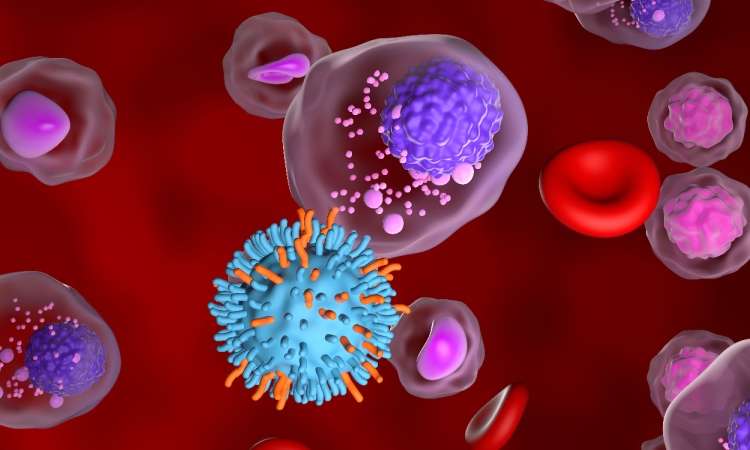

Australia’s Therapeutic Goods Administration (TGA) has approved a first-in-human trial of a T-cell therapy in multiple myeloma.
The therapy, developed by HaemaLogiX in collaboration with the Peter MacCallum Cancer Centre (Peter Mac), is a KMA.CAR T-cell immunotherapy. The novel autologous CAR-T cell therapy targets Kappa Myeloma Antigen (KMA), a receptor found only on the surface of myeloma cells and not on healthy immune cells.
This tumour-specific targeting means that, unlike currently approved BCMA-directed CAR-T therapies, KMCAR T-cell is not expected to damage healthy immune cells, potentially offering patients an effective treatment without affecting their natural ability to ward off infection.
KMCAR T-cell therapy, developed with HaemaLogiX’s KappaMab antibody technology, harnesses the patient’s own T cells and genetically modifies them to recognise and destroy cancerous plasma cells that express KMA.
Figures show multiple myeloma is the second most common blood cancer worldwide, with estimations from the World Health Organization (WHO) and Global Cancer Observatory (GLOBOCAN) suggesting approximately 188,000 new cases of multiple myeloma are diagnosed each year globally. Data shows 42% of patients die from the disease within five years of diagnosis.
“Peter Mac’s Centre of Excellence in Cellular Immunotherapy is world-class and has been instrumental in bringing CAR-T therapies from the laboratory to patients,” said Dr Rosanne Dunn, Chief Scientific Officer and Founder of HaemaLogiX.
“We are incredibly fortunate to have such a partner to translate our KMA targeting technology into the CAR-T modality.
“For patients with multiple myeloma who have failed or relapsed on their current treatment, it is critical that we explore novel therapeutic targets. The KMA target is unique – it is expressed on malignant plasma cells but spares normal immune cells.
“Through the CAR-T approach, we have an opportunity to harness this tumour specificity to potentially deliver meaningful benefits for patients without harming their immune system.”
The post TGA approves trial for first-in-human multiple myeloma therapy appeared first on Drug Discovery World (DDW).

Metastasis remains one of cancer’s most difficult biological transitions to capture: tumor cells must leave a primary tumor, survive circulation, enter a distant organ, and then either disappear, persist, or eventually grow into clinically detectable lesions. A spatiotemporal study in mice and human samples identifies transient tumor-cell and immune-niche states that may offer windows for intercepting metastatic colonization.
A new study published in Science provides a high-resolution look at that process in liver cancer, suggesting that metastatic colonization unfolds through ordered changes in both disseminated tumor cells and the immune microenvironments that surround them.
In the study, “Spatiotemporal multiomics uncover tumor ecosystem dynamics during metastatic colonization,” researchers led by Yunfan Sun, MD, PhD, at Zhongshan Hospital, Fudan University, applied spatiotemporal multiomics to experimental hepatocellular carcinoma mouse models and human metastatic samples. Their goal was to reconstruct how disseminated tumor cells, or DTCs, survive the earliest stages of lung colonization and later transition into metastatic outgrowth.
The team integrated high-resolution spatial transcriptomics, single-cell RNA sequencing, and chromatin-accessibility profiling across nine sequential stages of lung colonization in mouse models. The resulting atlas followed liver cancer cells from their first arrival in the lungs through later metastatic progression, while also mapping changes in nearby immune cells.
The analysis indicated that early metastatic seeding is not simply a random survival event. “After a massive innate immune clearance, primarily by neutrophils and natural killer (NK) cells, a rare subpopulation of DTCs survived by entering a transient, quiescent Phgdhhigh state,” the authors write. These cells were associated with an immune-scarce niche, allowing them to avoid elimination during a vulnerable early window.
Mechanistically, the authors linked this state to metabolic and epigenetic remodeling. Alveolar type 2 cells enriched near surviving DTCs appeared to promote the Phgdhhigh phenotype. Elevated PHGDH activity fueled one-carbon metabolism and increased levels of S-adenosylmethionine (SAM). That shift was tied to H3K27me3-mediated silencing of proinflammatory chemokine genes, including Ccl2 and Cxcl10, which would otherwise help recruit immune cells to the niche.
Perturbing this axis genetically or pharmacologically restored chemokine expression, increased immune surveillance, and reduced metastatic outgrowth in the models, according to the study. Lineage-tracing experiments further suggested that many macrometastases derived from ancestors that had passed through the transient Phgdhhigh state.
The researchers also identified a second niche-remodeling step before rapid metastatic expansion. At this stage, Cx3cr1high interstitial macrophages accumulated in the DTC niche. These “macrophages recruited immunosuppressive cells (T regulatory cells, neutrophils, and alveolar macrophages) and provided growth signals through the IGF1-IGF1R axis that trigger the transition of DTCs from quiescence to rapid proliferation,” the authors report in the study. Depleting these macrophages reduced metastatic burden in mouse experiments.
Together, the findings point to metastatic colonization as a temporally organized process shaped by reciprocal interactions between tumor cells and their local microenvironment. First, a rare tumor-cell state helps establish early immune evasion. Later, macrophage-driven remodeling appears to convert a quiescent niche into one that supports metastatic outgrowth.
Although the work is largely preclinical, the authors suggest that these transient states may represent vulnerabilities for micrometastasis-targeting approaches. By defining when and how early DTCs evade immune attack, the study offers a framework for developing interventions aimed not only at established metastases, but also at the earliest stages of metastatic colonization.
The post Spatiotemporal Multiomics Charts Cellular Dynamics of Liver Metastasis appeared first on GEN – Genetic Engineering and Biotechnology News.
The FDA’s Cellular, Tissue and Gene Therapies advisory committee voted 10 to 3 in favor of Replimune’s immunotherapy for advanced melanoma in combination with Bristol Myers Squibb’s Opdivo, but trial design was a major sticking point as the panel deliberated.


The positive vote came despite persistent concerns from FDA scientists and positions the company to bounce back from two earlier rejections.


Illinois’ financial crisis could bring the state to a halt
The final 6 ‘Game of Thrones’ episodes might feel like a full season
New Season 8 Walking Dead trailer flashes forward in time
Mod turns ‘Counter-Strike’ into a ‘Tekken’ clone with fighting chickens
Meet Superman’s grandfather in new trailer for Krypton
Disney’s live-action Aladdin finally finds its stars
Spatiotemporal Multiomics Charts Cellular Dynamics of Liver Metastasis
Replimune overcomes ‘messy data’ to secure positive adcomm vote for melanoma therapy

Replimune melanoma drug wins support of FDA panel

Alnylam plunges as earnings deliver ‘one-two punch’

Capricor’s data clash and a fugitive in the C-suite
A Computational Framework for Designing Disordered Proteins at Large Scale
Illinois’ financial crisis could bring the state to a halt
The final 6 ‘Game of Thrones’ episodes might feel like a full season
New Season 8 Walking Dead trailer flashes forward in time
Mod turns ‘Counter-Strike’ into a ‘Tekken’ clone with fighting chickens
Meet Superman’s grandfather in new trailer for Krypton
Disney’s live-action Aladdin finally finds its stars
-
Fierce Biotech4 months ago
Scientists turn pig semen extract into eye drops that kill cancer in mice
-
 Uncategorized9 years ago
These ’90s fashion trends are making a comeback in 2017
-
Endpoints News4 months ago
Novartis to pay $2B upfront to take next-gen PI3Kα inhibitor from Synnovation
-

 Uncategorized4 months ago
Novartis buys Synnovation’s PI3Kα inhibitors for $3 billion
-
Uncategorized9 years ago
According to Dior Couture, this taboo fashion accessory is back
-
Uncategorized9 years ago
Phillies’ Aaron Altherr makes mind-boggling barehanded play
-
Uncategorized9 years ago
Steph Curry finally got the contract he deserves from the Warriors
-
Uncategorized9 years ago
Uber and Lyft are finally available in all of New York State