
Uncategorized
Sun Pharma Aims for Top 3 in Women’s Health with $11.75B Organon Purchase

Sun Pharmaceutical Industries has agreed to acquire Organon, the women’s health drug developer spun out of Merck & Co., for $11.75 billion in a deal intended to catapult the buyer into a top 25 global biopharma—top three in women’s health—by growing its innovative medicines business and expanding its product offerings into biosimilar drugs, the companies said today.
Headquartered in Jersey City, NJ, Organon was spun out of Merck in 2021 and has since then grown its portfolio to more than 70 women’s health and general medicines products, including biosimilars, that have been commercialized in the U.S. and some 140 countries worldwide. In addition to the U.S., Organon’s largest markets include Brazil, Canada, China, and the countries of the European Union. Organon said it has six manufacturing facilities across the EU and emerging markets.
Sun Pharma said the combined company created by the deal will have annual revenue of $12.4 billion, a figure the company said would propel it into a top 25 global pharma—though the company was ranked No. 14 in GEN’s most recent A-List of Top 25 Biotech Companies Heading Into 2026, compiled last December, based on its market capitalization (share price times the number of outstanding shares) of INR 4.31 trillion ($50.8 billion).
Sun Pharma said Organon’s portfolio was similar to its own, and that the acquisition of Organon was aligned with its strategies of growing its Innovative Medicines business (to a 27% revenue share) and expanding into biosimilars as a Top 10 global company.
The combined company, Sun Pharma and Organon said, would be top three in global women’s health, creating a commercial platform for future growth; the seventh largest global biosimilar player; and a presence in 150 countries worldwide, with 18 large markets that would each generate more than $100 million in revenues.
“This transaction represents a significant opportunity for Sun Pharma to build on its vision of Reaching People and Touching Lives,” Sun Pharma executive chairman Dilip Shanghvi said in a statement. “Organon’s portfolio, capabilities, and global reach are highly complementary to our own, and we believe that bringing the two organizations together can create a stronger and more diversified platform. We have deep respect for Organon’s mission and look forward to building on its legacy while driving sustainable long‑term growth.”
Deal speculation
The deal ends two weeks of speculation that began with an April 10 report in the Indian news outlet The Economic Times stating that Sun Pharma had submitted a $12 billion all-cash offer for Organon. On Friday, the news outlet followed up with a report stating that Sun Pharma had submitted a revised $13 billion offer.
Investors appeared to support the deal, as Sun Pharma shares on India’s National Stock Exchange rose about 7% to INR 1,733.50 ($18.41) at the close of trading today.
Sun Pharma has agreed to acquire 100% of Organon’s issued and outstanding shares for cash. Sun said it planned to fund the acquisition through a combination of available cash resources and committed financing from banks.
“Together, we will become a partner of choice for acquiring and launching new products,” stated Kirti Ganorkar, managing director of Sun Pharma. “Our immediate priorities will be business continuity, disciplined integration, and responsible value creation. We see strong potential in leveraging Organon’s talent pool. In addition, there is a scope for synergies including significant revenue upside opportunities to be realized over the coming years.”
Those synergies were later quantified by Sun Pharma as approximately $350 million within two to four years of the deal’s completion.
Sun Pharma did say, however, that the acquisition of Organon will strengthen its generation of cash, with its earnings before interest, taxes, depreciation, and amortization (EBITDA) and cash flow set to nearly double, supporting future efforts to reduce the net debt/EBITDA of 2.3x resulting from the deal.
Sun Pharma finished the first nine months of its fiscal year ending March 31, 2026, with a net profit of INR 87.654 billion ($931.5 million) and EBITDA of INR 137.772 billion ($1.464 billion; up 19.2% from the year-ago period), on sales of INR 436.604 billion ($4.64 billion), up 11.3% year over year.
During its fiscal year ending March 31, 2025, Sun Pharma reported adjusted net profit (excluding one-time items) of INR 119.844 billion ($1.274 billion), up 19% from a year earlier, on sales of INR 520.412 billion (about $5.53 billion). Reported net profit for FY 2025 was INR 109.290 billion ($1.161 billion), vs. Rs. 95.764 billion ($1.017 billion) during FY 2024.
Organon finished last year with adjusted EBITDA of $1.9 billion on revenue of $6.2 billion. The company reported debt of $8.64 billion—down from the $9.5 billion in debt it reported when it separated from Merck—and a cash balance of $574 million.
Planned sale
In November, Organon announced plans to sell its JADA® System, designed to control and treat abnormal postpartum uterine bleeding or hemorrhage, to Laborie Medical Technologies for up to $465 million—$440 million to be paid at closing, subject to adjustments, and up to $25 million tied to achieving 2026 revenue targets. Net proceeds from the divestiture will contribute to Organon’s cash balance as of March 31, 2026.
Organon will merge with a subsidiary of Sun Pharma, with Organon surviving the merger. The transaction is expected to close in early 2027 subject to customary conditions, including regulatory approvals and Organon stockholder approval.
The boards of both Sun Pharma and Organon have approved the deal.
“Following a comprehensive review of strategic alternatives, our Board determined that this all‑cash transaction offers compelling and immediate value to Organon stockholders,” stated Carrie Cox, executive chair of Organon. “We believe Sun Pharma is well positioned to support Organon’s businesses, employees, and patients globally, and to further advance our commitment to delivering impactful medicines and solutions.”
The post Sun Pharma Aims for Top 3 in Women’s Health with $11.75B Organon Purchase appeared first on GEN – Genetic Engineering and Biotechnology News.

Bayer has agreed to acquire Perfuse Therapeutics for up to $2.45 billion, the companies said, in a deal designed to broaden the buyer’s ophthalmology pipeline with Perfuse’s sole pipeline drug and two clinical phase programs for eye disorders.
Perfuse’s PER-001 is a small molecule endothelin receptor antagonist being developed for the treatment of ophthalmic diseases. Two of PER-001’s four programs are in Phase II development: One designed to treat open-angle glaucoma by improving the visual field for patients, and the other designed to treat diabetic retinopathy (DR) by improving contrast sensitivity and reducing ischemia in patients with the disorder.
Last year, Perfuse announced positive results from two Phase II clinical trials evaluating PER-001.
One was a Phase IIa trial (NCT05822245) assessing PER-001 in glaucoma, which showed that six months after a single intravitreal administration of PER-00, added to existing standard-of-care intraocular pressure (IOP)-reducing therapies, 22.2% of low-dose and 37.5% of high-dose patients experienced ≥7 decibel (dB) improvement in a pre-defined retina region of minimal five test points compared to 0% in control in six months.
The improvement was 8–14x better than the natural history of disease (2.7%) with currently available treatments, Perfuse said at the time.
In the other Phase IIa trial (NCT06003751), which focused on DR, patients showed a mean of +0.9 dB improvement in low luminance contrast sensitivity in the high-dose group and +0.65 dB in the low-dose group across multiple frequencies measured at week 20. In contrast, a mean of -2.1 dB worsening occurred in the control group over the same period.
The low luminance, low contrast visual acuity was better by a mean difference of 5.5 and 5.1 letters from baseline in low- and high-dose groups compared to control measured at week 20, Perfuse said at the time.
PER-001 is also in preclinical development for dry age-related macular degeneration (AMD)/geographic atrophy, as well as for retinal vein occlusion.
“We are excited by the work of the team at Perfuse Therapeutics and encouraged by the potential of PER-001,” Juergen Eckhardt, MD, head of business development and licensing at Bayer Pharmaceuticals, said in a statement. “With this acquisition, we are complementing our expertise in ophthalmology and our pipeline, reinforcing our commitment to developing urgently needed therapies for patients.”
Looking beyond Eylea®
Bayer’s ophthalmology pipeline has long been dominated by the blockbuster drug Eylea® (aflibercept), co-marketed with Regeneron Pharmaceuticals and initially approved in 2011. However, Eylea is close to losing exclusivity for key U.S. patents: According to Regeneron’s Form 10-K annual report for 2024, patents for Eylea expire between 2027 and 2039, starting with four formulation patents expiring on June 14, 2027. Patents for the higher-dose version, Eylea HD®, expire between 2027 and 2032, starting with two formulation patents expiring on June 14, 2027.
Last year, Eylea and Eylea HD saw their sales slip in the mid-teens, generating a total combined $8.04 billion in revenue, consisting of $4.385 billion in U.S. net sales for Regeneron and €3.11 billion in ex-U.S. sales for Bayer (about $3.655 billion today, up from the $3.506 billion reported in January).
During the first quarter of this year, Regeneron reported $941 million in U.S. sales, down 10% from a year ago; Bayer plans to report Q1 sales on May 12.
PER-001 is an intravitreal bio-erodible implant administered into the vitreous cavity of the eye using a single-use, 25-gauge applicator and designed to provide a sustained release of the drug, allowing for a convenient dosing regimen, according to Perfuse and Bayer.
Bayer has agreed to pay $300 million upfront for Perfuse, which is headquartered in San Francisco with R&D facilities in Durham, NC. The remaining up to $2.15 billion in deal value hinges on Bayer achieving development, regulatory, and commercial milestones.
The acquisition deal is subject to approval by Perfuse shareholders and antitrust clearances.
“I’m incredibly proud of what the Perfuse team has accomplished and deeply thankful to all our investors and collaborators,” stated Sevgi Gurkan, MD, Perfuse’s founder and CEO. “Bayer’s vision aligns closely with ours, and they have the scale and global resources to unlock the full potential of PER-001 to change the trajectory of human blindness. We are very excited to see our mission continue with even greater momentum.”
The post Bayer to Acquire Perfuse for up to $2.45B, Seeing Ophthalmology Opportunity appeared first on GEN – Genetic Engineering and Biotechnology News.
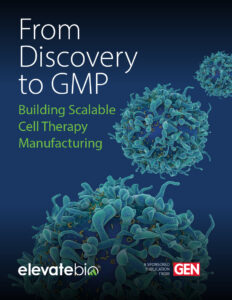
Over the past decade, our industry has witnessed the promise of cell and gene therapies. Patients with rare diseases or hard-to-treat diagnoses now have treatment options harnessing human cells and genes to alter disease. The accessibility of these therapies remains constrained not by what’s biologically possible, but how they are designed and manufactured.
The field has reached an inflection point. We’ve demonstrated the scientific foundation and its curative potential. To make advanced therapies sustainable as a pillar of medicine, we must make them more accessible. The companies that will define cell and gene therapy’s future will be those who can eliminate the distance between top science and efficient manufacturing.
This eBook brings together perspectives from Genetic Engineering News and ElevateBio to examine both the technical and operational realities shaping cell therapy today. From emerging innovations to persistent manufacturing challenges, the goal is to connect scientific progress with the systems required to scale it.
Traditional drug development has relied on siloed pathways, where therapeutics are designed and developed by one team and then manufactured by another. This approach is especially challenging in cell therapy, often leading to delays, setbacks, or outright failures. ElevateBio was built differently. Therapeutic design, development, and manufacturing operate as an integrated ecosystem, enabling tighter coordination and faster iteration.
The future of cell therapy depends on therapies designed with manufacturability in mind from the start. Process development, analytical strategy, and quality considerations must be embedded early, allowing manufacturing insights to inform development decisions in real time. This includes optimizing constructs, delivery systems, and processes to ensure scalability, reproducibility, and readiness for GMP production.
Looking beyond the science, a sustainable cell therapy ecosystem requires more than better therapeutics. It requires expanded treatment infrastructure, new commercial models, and systems capable of supporting broader patient access. But that ecosystem cannot scale on unreliable manufacturing.
As cell therapies expand into larger patient populations and new indications, the need for manufacturing designed for reliability and scale from day one becomes more urgent. The therapies being developed today have the potential to transform millions of lives—but only if the systems supporting them are built to deliver at scale.
Michael Paglia, Chief Technology Officer, ElevateBio
The post From Discovery to GMP: Building Scalable Cell Therapy Manufacturing appeared first on GEN – Genetic Engineering and Biotechnology News.
Uncategorized
STAT+: Oregon hospitals won’t outsource to national physician chain after all
After a tidal wave of blowback that culminated in a lawsuit, a nonprofit health system has reversed course in its plan to replace its Oregon emergency physicians with a national chain.
PeaceHealth’s announcement Wednesday didn’t disclose what prompted its change of heart, but those familiar with the situation say it’s because the health system’s plan was poised for defeat in a legal challenge. When PeaceHealth said in February it was cutting ties with Eugene Emergency Physicians, the local group that had staffed its Oregon hospitals for 35 years, the news drew tremendous pushback from doctors, nurses, lawmakers, mayors, and emergency medicine groups.
Then, on March 20, the Eugene emergency physicians sued, arguing that PeaceHealth’s plan to use the Atlanta-based staffing chain ApolloMD violated a new Oregon law prohibiting managed service organizations from directly owning medical practices or interfering with clinical decisions. The case has had four hearings, in which the judge was “quite clear” that the scheme violated the law, Senate Bill 951, said Hayden Rooke-Ley, an attorney who represented the doctors and a senior fellow for health care with the American Economic Liberties Project.

After a tidal wave of blowback that culminated in a lawsuit, a nonprofit health system has reversed course in its plan to replace its Oregon emergency physicians with a national chain.
PeaceHealth’s announcement Wednesday didn’t disclose what prompted its change of heart, but those familiar with the situation say it’s because the health system’s plan was poised for defeat in a legal challenge. When PeaceHealth said in February it was cutting ties with Eugene Emergency Physicians, the local group that had staffed its Oregon hospitals for 35 years, the news drew tremendous pushback from doctors, nurses, lawmakers, mayors, and emergency medicine groups.
Then, on March 20, the Eugene emergency physicians sued, arguing that PeaceHealth’s plan to use the Atlanta-based staffing chain ApolloMD violated a new Oregon law prohibiting managed service organizations from directly owning medical practices or interfering with clinical decisions. The case has had four hearings, in which the judge was “quite clear” that the scheme violated the law, Senate Bill 951, said Hayden Rooke-Ley, an attorney who represented the doctors and a senior fellow for health care with the American Economic Liberties Project.


Illinois’ financial crisis could bring the state to a halt
The final 6 ‘Game of Thrones’ episodes might feel like a full season
New Season 8 Walking Dead trailer flashes forward in time
Mod turns ‘Counter-Strike’ into a ‘Tekken’ clone with fighting chickens
Meet Superman’s grandfather in new trailer for Krypton
Disney’s live-action Aladdin finally finds its stars
Bayer to Acquire Perfuse for up to $2.45B, Seeing Ophthalmology Opportunity

From Discovery to GMP: Building Scalable Cell Therapy Manufacturing

STAT+: Oregon hospitals won’t outsource to national physician chain after all

Microproteins and Peptideins Expand Boundaries of the Human Proteome

Trump administration’s drug strategy is at odds with recent actions on funding, policy
Amgen, AbbVie say IRA negotiations impacted Q1 sales
Illinois’ financial crisis could bring the state to a halt
The final 6 ‘Game of Thrones’ episodes might feel like a full season
New Season 8 Walking Dead trailer flashes forward in time
Mod turns ‘Counter-Strike’ into a ‘Tekken’ clone with fighting chickens
Meet Superman’s grandfather in new trailer for Krypton
Disney’s live-action Aladdin finally finds its stars
-
 Uncategorized9 years ago
These ’90s fashion trends are making a comeback in 2017
-
Contributors9 years ago
The final 6 ‘Game of Thrones’ episodes might feel like a full season
-
Uncategorized9 years ago
According to Dior Couture, this taboo fashion accessory is back
-
Uncategorized9 years ago
Uber and Lyft are finally available in all of New York State
-
Uncategorized9 years ago
Phillies’ Aaron Altherr makes mind-boggling barehanded play
-
Uncategorized9 years ago
The old and New Edition cast comes together to perform
-
Uncategorized9 years ago
Steph Curry finally got the contract he deserves from the Warriors
-
Uncategorized9 years ago
Disney’s live-action Aladdin finally finds its stars