

Uncategorized
Silica Nanoparticles Induce Ferroptosis, Reprogram Immunity in Prostate Cancer Models

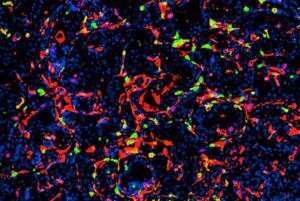
Ultrasmall fluorescent core‑shell silica nanoparticles—best known for their roles in medical imaging applications—are now showing surprising therapeutic muscle. Originally engineered as inert carriers for imaging agents, these particles, called Cornell Prime dots (C’ dots), have steadily expanded their résumé. In a new preclinical study, researchers at Weill Cornell Medicine report that these engineered silica nanoparticles can directly kill prostate tumor cells while reawakening antitumor immunity, offering a potential new edge in a disease where immunotherapy has historically struggled.
Prostate cancer remains one of the most immunologically “cold” solid tumors, with myeloid‑driven immune suppression, metabolic bottlenecks, and stromal remodeling that blunt the effects of checkpoint blockade. The new work suggests that C’ dots—when targeted to prostate‑specific membrane antigen (PSMA)—can break through these layers of resistance by triggering ferroptosis, remodeling the tumor microenvironment, and priming tumors for combination immunotherapy.
“We’re very encouraged by these results; a treatment that directly induces tumor‑cell death while transforming the immune microenvironment, as this does, would represent a new clinical paradigm,” said senior author Michelle Bradbury, MD, PhD, the endowed professor of imaging research in radiology and director of the Molecular Imaging Innovations Institute at Weill Cornell Medicine and a neuroradiologist at NewYork-Presbyterian/Weill Cornell Medical Center.
The study, published in Cancer Research and titled “Reprogramming of TLR–Ferroptosis Signaling and Immunometabolic Pathways Overcomes Myeloid Suppression to Improve Checkpoint Blockade in Prostate Cancer,” shows that the silica particles accumulate in prostate tumors and push cancer cells toward ferroptosis, a form of iron‑dependent cell death driven by runaway lipid peroxidation. Although the particles were originally designed for imaging, the team found that they often pick up positively charged iron ions in the bloodstream and shuttle them into tumor cells—effectively turning the particles into catalytic seeds for oxidative collapse.
At the same time, the nanoparticles reshape the immune landscape. T cells, macrophages, and other immune populations shift from inert or suppressive states into robust antitumor activity, converting cold tumors into hot ones. “One of the most intriguing aspects of this work is the convergence of direct tumor cell killing with broad immune remodeling,” said co‑author Jedd Wolchok, MD, PhD, the Meyer director of the Sandra and Edward Meyer Cancer Center, professor of medicine at Weill Cornell Medicine, director of the Parker Institute for Cancer Immunotherapy at Weill Cornell Medicine Meyer Cancer Center, and an oncologist at NewYork-Presbyterian/Weill Cornell Medical Center.
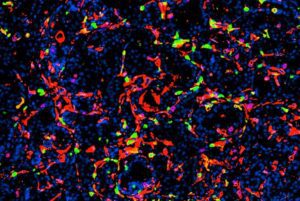
The therapeutic impact was most striking in survival experiments. C’ dots alone modestly extended survival in aggressive mouse models, as did checkpoint blockade alone. But the combination produced complete or near‑complete remissions in 40% of mice. Adding CSF‑1R blockade increased complete remissions to 50%.
The researchers’ next steps include continuing to explore these ultrasmall core-shell silica particles, setting the stage for the platform’s translational potential.
“By creating conditions that support a more effective antitumor immune response, these particles may help unlock the full potential of immunotherapy in prostate cancer, where durable responses have historically been difficult to achieve,” added Wolchok.
The post Silica Nanoparticles Induce Ferroptosis, Reprogram Immunity in Prostate Cancer Models appeared first on GEN – Genetic Engineering and Biotechnology News.



Hosted by Drug Discovery World and supported by Sartorius and BioIVT, this webinar will explore the opportunities and challenges that exist within cancer research drug discovery and development.
You will hear from Dr Sudha Rao, Chief Scientific Officer of Kazia Therapeutics, Karol Budzik, PhD, Business Development Associate at Vyriad Therapeutics and Lars van der Veen, Chief Scientific Officer at iOnctura.
Presentations will cover how cancer treatments have shifted towards reprogramming the biology driving tumour growth, immune escape and treatment resistance, the trajectory that in vivo CAR-T treatments are taking, and how challenging tumours burdened by stroma and immune-mediated resistance can be tackled.
Q&A with the speakers follows the presentations.
The post New webinar: Tackling drug discovery challenges in cancer research appeared first on Drug Discovery World (DDW).
Amid the rise of psychedelics in the mental health space, researchers have begun to explore psilocybin as a treatment for chemotherapy-induced peripheral neuropathy.
Uncategorized
New Spectrometry Technique Could Aid Formulation Development
New Spectrometry Technique Could Aid Formulation Development
A new technique combining two forms of spectrometry could help biopharmaceutical companies improve their choice of formulation buffer for antibody manufacturing by revealing how molecular forms and three-dimensional shapes of complex biologics respond to their environment. That’s the view of Christian Bleiholder, PhD, a professor at Florida State University who helped develop the technique.
According to Bleiholder, what happens structurally when a complex biological molecule, such as an antibody or viral spike protein, binds to its target is currently poorly understood.
“This is where [this approach] can help with the bioprocessing and formulation,” he says, as structural changes “can affect the lifespan [of the product] and lead to issues, such as aggregation.”
Because antibodies are complex, existing techniques tend to be powerful at different levels of complexity, he explains. Mass spectrometry is particularly powerful for distinguishing molecular composition, while structural approaches such as X-ray crystallography and cryo-electron microscopy can provide high-resolution structural information.
The challenge is understanding the link between these things within a heterogeneous sample, he says.
To overcome this, Bleiholder and his team worked with Bruker Daltonics to develop Tandem-Trapped Ion Mobility Spectrometry (Tandem-TIMS). This combines tandem ion mobility spectrometry with tandem mass spectrometry to disentangle three overlapping layers of molecular complexity: molecular form, three-dimensional shape, and binding or assembly state, he says.
He explains that, if the proteins have different structures, they can be characterized with tandem ion mobility spectrometry, and then mass spectrometry can be used to look at their molecular forms and binding states.
Going forward, Bleiholder hopes the technique can be used for formulation development but also earlier, during drug discovery of new products, such as multi-specific antibodies, to determine which molecular states are important and how those change when a biologic engages its target. He also plans to look at automating the technique.
Bleiholder spoke about using Tandem-TIMS at the Bioprocessing Summit in Boston earlier this year.
The post New Spectrometry Technique Could Aid Formulation Development appeared first on GEN – Genetic Engineering and Biotechnology News.


BIO’s plan for ‘securing America’s biotech century’

China’s innovation moment sees a rise in first in class

Windward prices IPO, Rezera postpones its offering: Finance Report

FDA Approves First Drug to Treat Adults with Primary Membranous Nephropathy

How Vancomycin-Resistant Enterococcus Evolved in a Danish Hospital

Cellectis could cut 70% of workforce in shift to in vivo therapies
-

 Uncategorized8 months ago
Novartis buys Synnovation’s PI3Kα inhibitors for $3 billion
-
Endpoints News8 months ago
Novartis to pay $2B upfront to take next-gen PI3Kα inhibitor from Synnovation
-

 Uncategorized6 months ago
Optical Pooled CRISPR Screen Reveals Regulators of NF-κB Dynamics in Human Cells
-
Uncategorized6 months ago
Relay’s PI3Kα inhibitor clears efficacy bar in Phase 2 vascular anomalies study
-
Uncategorized5 months ago
Hybrid solid−liquid optics enable scalable, high-resolution light-sheet microscopy across diverse immersion media
-
Fierce Biotech8 months ago
Scientists turn pig semen extract into eye drops that kill cancer in mice
-
Nature Biotechnology8 months ago
Sustained nitric oxide production by engineered E. coli remodels the tumor microenvironment and potentiates immunotherapy
-

 BioPharma Dive – AI / Data8 months ago
AstraZeneca lung drug gets ‘surprise’ win in COPD trials
 Scan to Read