

-
 AI, Machine Learning & Computational Biology1 month ago
Molecular Devices and STEMCELL Technologies Team Up to Automate Organoid Research
Validated on the CellXpress.ai automated cell culture system, the new workflow combines organoid biology expertise and laboratory automation to help researchers reduce variability, expand scale, and...
-

 AI, Machine Learning & Computational Biology1 month ago
Virtual biotech company puts thousands of AI scientist agents to work on drug discovery
The latest company to spin out of a Stanford Medicine lab is a biotech undertaking with 37,000 employees—and none of them are human. There's no lab...
-


 AI, Machine Learning & Computational Biology1 month ago
AI is changing the talent biotech companies compete to hire
As AI becomes more embedded in biotech R&D, companies are competing for professionals who can bridge biology, machine learning, data and engineering. Recruiting expert Darren Nelson...
-

 AI, Machine Learning & Computational Biology1 month ago
Consolidating Antibody Discovery Data with an AI Platform
The Sapio Scientific AI platform gives scientists a single, structured environment where experimental records connect directly to client deliverables and where time spent on data consolidation...
-

 AI, Machine Learning & Computational Biology2 months ago
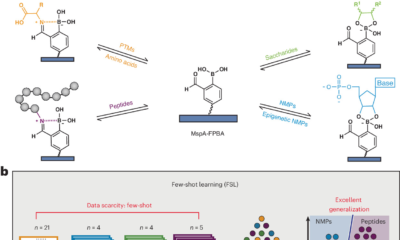
A versatile nanopore identifies four classes of analytes simultaneously
Nature Biotechnology, Published online: 15 September 2026; doi:10.1038/s41587-026-03322-xA versatile nanopore sensor, created by modifying a bacterial porin, enables the simultaneous identification of amino acids, nucleoside monophosph...
-
 AI, Machine Learning & Computational Biology2 months ago
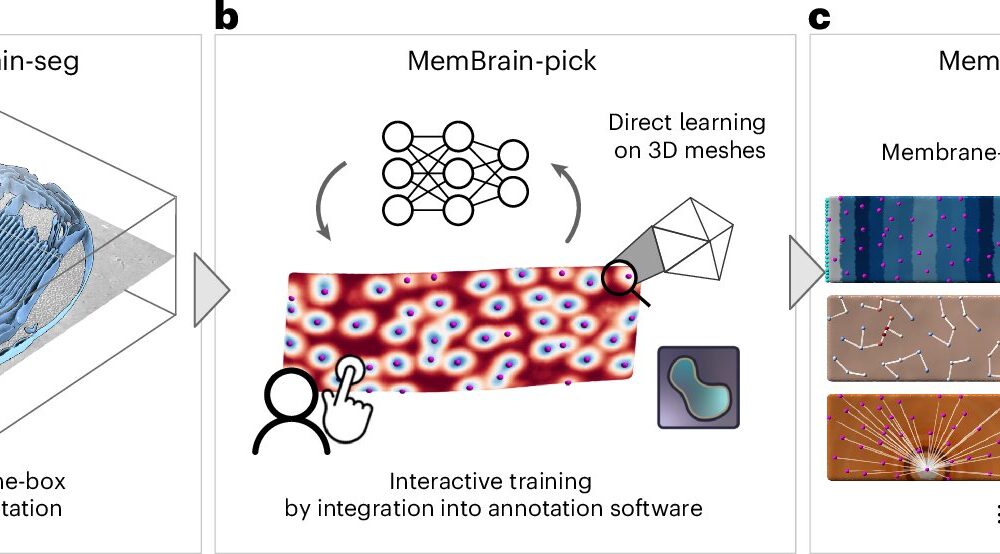
AI automates 3D membrane mapping, matching manual results in a fraction of time
Cell membranes and the proteins within them control many vital processes and play a key role in health and disease. But studying them in 3D images...
-


 AI, Machine Learning & Computational Biology2 months ago
CloudScope Enables Continuous Remote Monitoring of Brain Activity in Freely Moving Mice
Johns Hopkins researchers developed CloudScope, a cloud-based microscope enabling continuous, remote brain imaging in freely moving mice, revealing disease progression, seizures, cellular changes and behavior over...
-


 AI, Machine Learning & Computational Biology2 months ago
Mikhail, Davis embody the FDA’s stabilization, Seehafer signals AI revolution is coming
Newly solidified in their roles as the heads of CBER and CDER, Karim Mikahil and Michael Davis have been working for months to right the ship...
-


 AI, Machine Learning & Computational Biology2 months ago
Data Integrity as the Foundation for AI
In this sponsored podcast, LabVantage’s Gary Stimson digs into what it takes to build a data foundation for trustworthy AI. The post Data Integrity as the...
-

 AI, Machine Learning & Computational Biology2 months ago
Machine learning model predicts melanoma prognosis using RNA modifications
Melanoma remains one of the most aggressive and treatment-resistant forms of human cancer, and although immune checkpoint inhibitors have transformed outcomes for a subset of patients,...


LncRNA SBF2-AS1 Worsens Heart Injury After Attack via miR-149-5p/PHLPP2 Axis

Stigmatizing language found in over half of primary care patient records

Research report: The Influence of Renal or Hepatic Impairment on the Pharmacokinetics of Iclepertin (BI 425809): Results from Two Phase I Open-Label, Non-randomised, Single Dose, Parallel Design Studies

Novartis buys Synnovation’s PI3Kα inhibitors for $3 billion
Novartis to pay $2B upfront to take next-gen PI3Kα inhibitor from Synnovation

