Uncategorized
ASGCT Honors Mohamed Abou‑el‑Enein as Outstanding New Investigator
ASGCT Honors Mohamed Abou‑el‑Enein as Outstanding New Investigator
Some scientists build tools. Others build bridges. Mohamed Abou‑el‑Enein, MD, PhD, does both—engineering a high‑dimensional platform that temporally maps CAR T cells, while constructing the translational infrastructure needed to move them from concept to clinic. That dual lens has now earned him two of the American Society of Gene and Cell Therapy’s (ASGCT) top honors: the 2026 Outstanding New Investigator Award and, to his lab, the Best of Molecular Therapy Award, which features the contributions of leading early-career authors to the Molecular Therapy family of journals.
This year’s Molecular Therapy recognition highlights a study from Abou‑el‑Enein’s lab, published in May 2025, that uses spectral flow cytometry to map how CAR T cells remodel during manufacturing, revealing a five‑day window when the cells are most potent. The work reflects a core principle of his group: you cannot rationally engineer what you cannot precisely measure. Their high‑dimensional analytical tools are designed to simultaneously capture the full profile of each engineered cell, information that directly shapes how next‑generation therapies are built.
“Spending my career bridging scientific discovery and patient care, both by supporting others and through our own research, makes this dual recognition especially meaningful,” said Abou‑el‑Enein. “The contribution of translational scientists has long been underestimated and under‑acknowledged, and having a committee of peers recognize its value means a great deal to me.”
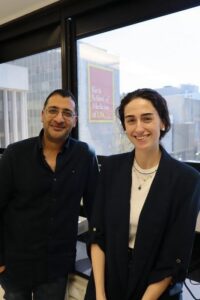

As a physician‑scientist, Abou‑el‑Enein brings comprehensive training to the problems of cell and gene therapy translation, a trajectory shaped across leading institutions globally. His path spans clinical medicine, regulatory science, biomanufacturing, and data science—training that now converges at the University of Southern California (USC), where he leads the USC/Children’s Hospital Los Angeles Cell Therapy Program and directs the institution’s cGMP manufacturing facility. His team has built a platform capable of producing a wide range of advanced therapies, from viral vectors to stem‑cell–based products. As USC’s Chuck Murry, MD, PhD, director of the Eli and Edythe Broad Center for Regenerative Medicine and Stem Cell Research noted, he brings “an eclectic mix of cell biology, biomanufacturing, and patient‑centered humanity” to the role.
The Abou‑el‑Enein lab extends that mission by developing computational platforms that unify analytical data with predictive modeling. Their newest effort—UNICORN (UNIfying Cell Therapy Outcome prediction and Regulatory Navigation)—integrates high‑dimensional analytics with machine learning to forecast therapeutic performance and streamline regulatory decision‑making for pediatric cancers and rare diseases. It’s a natural evolution of the group’s earlier work, which established a powerful analytical framework for tracking CAR T cell states over time.
Their broader analytical ecosystem includes tools for single‑cell characterization, computational modeling, and non‑viral precision genome engineering, all designed to support translation from the earliest stages of design.
As he prepares to deliver his Outstanding New Investigator lecture in Boston, Abou‑el‑Enein said the meeting is a chance to reconnect with the community that shaped his translational philosophy.
“These awards are catalysts that give me motivation to keep going,” he said. “I always remind my team… we do science because we believe that what we do will make a difference. It’s really about helping patients and making sure they have a real chance.”
The post ASGCT Honors Mohamed Abou‑el‑Enein as Outstanding New Investigator appeared first on GEN – Genetic Engineering and Biotechnology News.