Uncategorized
Approaches to Reducing Toxicity and Side Effects in Cell and Gene Therapy
Cell and gene therapy encompasses a broad range of therapeutic interventions for diseases that have proved refractory to treatment with conventional pharmaceutical approaches. Perhaps the most familiar FDA-approved modality in the cell and gene therapy field is chimeric antigen receptor (CAR) T-cell therapy, which involves genetic modification of a patient’s own T cells to identify and eliminate malignant cell lineages in acute lymphoblastic leukemia, non-Hodgkin lymphoma, and multiple myeloma.
Although only 20 or so cell or gene therapies have been FDA-approved, the area holds considerable promise for investment. The global market was valued at nearly $9 billion in 2025, and growth has been projected at over 15% per year from 2026 to 2035. As with any pharmaceutical product, however, the potential of cell and gene therapy relies in large part upon minimizing risks to patient health from adverse effects. Numerous companies, from both prominent names in the field to smaller startups, are developing solutions to mitigate the deleterious consequences of cell and gene therapy.
Reducing cytokine release syndrome
Cytokines are a broad family of small proteins and peptides that cell lineages of the innate and adaptive immune systems employ to communicate with each other and coordinate timely and appropriately scaled responses to foreign antigen-containing cells. Cytokine release syndrome (CRS) occurs when hyperactivation of one or more immune lineages results in the release of excessive quantities of cytokines into the circulation.
“As a scientific community, we’ve been researching CAR T-cell therapy for over 30 years and have grown together in our understanding of the body’s immune response to treatment, from both a safety and efficacy perspective,” says Rosanna Ricafort, MD, vice president and global program lead of hematology and cell therapy at Bristol Myers Squibb. “We have evolved our ability to characterize, stage, and manage potential side effects, allowing for timely and thoughtful interventions of the most commonly associated side effects like CRS.”
Ricafort cited clinical data presented at the 2025 American Society for Clinical Oncology (ASCO) meeting in Chicago demonstrating that over 95% of instances of CRS and other adverse events arising from BMS’s CD19-directed CAR T-cell therapy (BreyanziR) occurred in the first two weeks after onset of therapy. “These and other studies have helped establish the largely predictable safety profile of CAR T-cell therapy to date,” Ricafort pointed out.
Minimizing side effects
The NF-κB and prostaglandin E2 pathways are prominent regulators of the activation and differentiation of pro-inflammatory T cell lineages. Excessive signaling through these pathways results in cytokine amplification, which contributes to CRS and immune effector cell-associated neurotoxicity syndrome (ICANS), a complication of some types of CAR T-cell therapy.
CytoAgents, a clinical-stage biotech company, is developing CTO1681, an orally administered prostaglandin signaling inhibitor that has been shown to offset CRS and ICANS toxicities associated with CAR T-cell therapy of lymphoma patients. At the 2025 European Society for Medical Oncology (ESMO) Immuno-Oncology Congress in London, CytoAgents presented non-clinical data showing that CTO1681 treatment reduced secretion of TNF-α, IL6, and other key CRS-associated cytokines with no impairment of CAR T-cell mediated cytotoxicity on lymphoma cells.
“These data suggest CTO1681 could enable safer CAR T-cell therapy administration, support outpatient treatment paradigms, and broaden patient access without compromising anti-tumor efficacy,” said Teresa Whalen, CEO at CytoAgents. CTO1681 is currently in Phase Ib/IIa trials for cancer patients undergoing CAR T-cell therapy, with potential expansion into additional therapeutic spaces including asthma and chronic obstructive pulmonary disease.
Adding immunosuppressants
A potential side effect of adeno-associated virus (AAV)-based gene transfer approaches is acute liver injury resulting in part from CRS in patients receiving AAV therapy. Duchenne muscular dystrophy (DMD) is a progressive, degenerative muscular disorder caused by mutations or changes in the DMD gene, resulting in reduced levels of the protein dystrophin.

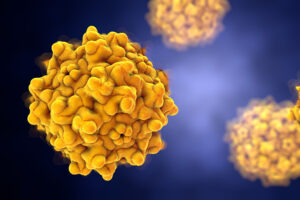
Elevidys, developed by Sarepta Therapeutics, is an AAV-based therapy approved for the treatment of DMD that stimulates targeted production of a truncated form of dystrophin in skeletal muscle. “Individuals with non-ambulatory Duchenne face profound unmet need and fewer treatment options,” says Louise Rodino-Klapac, PhD, president of R&D and development and technical operations at Sarepta. Topline data released earlier this year showed that Elevidys treatment resulted in significant improvement in key clinical ambulatory metrics in patients.
As part of its ENDEAVOR clinical trial, Sarepta Therapeutics is evaluating the potential of supplementing Elevidys with sirolimus to reduce potential acute liver injury (ALI) complications. Sirolimus is a mammalian target of rapamycin (mTOR) kinase inhibitor that suppresses responses of T and B cells to interleukin 2, which functions to stimulate proliferation of helper, cytotoxic, and regulatory T cells.
Developing non-integrating therapies
As an alternative approach to supplementing cell and gene therapy modalities with existing immunosuppressants, other companies are modifying CAR T-cell therapy to reduce the risk of CRS and other side effects. Myasthenia gravis, a chronic fatigue-inducing autoimmune disorder in which signals between nerves and muscles are compromised, results in part from the secretion of autoantibodies from B-cell maturation antigen (BCMA)-expressing B plasma cells.
Conventional BCMA-directed CAR T-cell approaches rely on the integration of lentiviral or gamma-retroviral vectors to encode the CAR and typically involve lymphodepletion chemotherapy that can be accompanied by acute and delayed toxicity. In contrast, non-integrating (i.e., mRNA-based) BCMA-directed CAR T-cell therapies may circumvent this toxicity due to the lack of requirement for chemotherapy.
Cartesian Therapeutics is developing an mRNA-based BCMA-targeted CAR T-cell therapy for myasthenia gravis, Descartes-08. At the 2025 American Academy of Neurology (AAN) Annual Meeting in San Diego, results were reported of a Phase IIb clinical trial of Descartes-08 in myasthenia gravis. In the trial, adverse event rates were similar between groups receiving Descartes-08 and the placebo group, and were predominantly mild to moderate in nature, with no cases of CRS or ICANS reported.
“The impressive strength and duration of response shown in the data reinforce our confidence in the potential of Descartes-08 to transform the current treatment landscape in MG, offering patients a safe, flexible, and durable treatment option,” said Carsten Brunn, PhD, president and CEO of Cartesian.
Engineering chimeric receptors
Modifications of CAR T-cell therapy to improve clinical efficacy and reduce side effects can also encompass modification of the molecular structure of the chimeric receptor itself. D domains are highly selective targeting domains incorporated into newer generations of CARs that enhance targeting of pathological cell types and reduce immunogenic responses in patients that give rise to unwanted side effects.
One example of such next-generation CAR T-cell therapies, anito-cell, has been co-developed by Arcellx, Kite Pharma, and Gilead. Anito-cel is an autologous anti-BCMA CAR T-cell therapy for the treatment of relapsed/refractory multiple myeloma patients.
Phase II trial results in multiple myeloma presented at the 2025 American Society of Hematology (ASH) meeting in Orlando showed an overall response rate of 97% and a complete response rate of 68%. Importantly, in the context of side effects, there were no delayed neurological symptoms, and for most patients, only low-grade CRS was observed, which was resolved within a few days.
“The anito-cel D-domain BCMA binder could be important to our work in in vivo cell therapy, further strengthening our potential in oncology and inflammation,” said Daniel O’Day, chairman and CEO of Gilead. “Anito-cel could become a foundational treatment for multiple myeloma over time, including earlier lines of therapy.”
The post Approaches to Reducing Toxicity and Side Effects in Cell and Gene Therapy appeared first on GEN – Genetic Engineering and Biotechnology News.