
Uncategorized
Visualizing Receptor Transport Within Neurons via Transcytosis
Visualizing Receptor Transport Within Neurons via Transcytosis

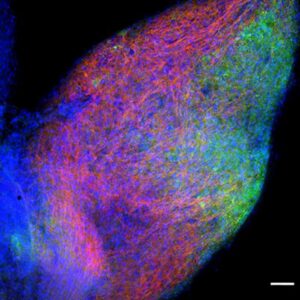
As spindly, elongated cells, neurons must be able to transport proteins and receptors between distant sites in their cell bodies and axons to function properly. A new imaging study by researchers at Johns Hopkins University has now visualized the ebb and flow of the nerve growth factor receptor TrkA within neurons, via an unusual process known as transcytosis. Their study also explains how this phenomenon supports neuronal function and connectivity in mice.
Senior and corresponding author Rejji Kuruvilla, PhD, at Johns Hopkins University Department of Biology, and colleagues reported on their findings in Science Signaling, in a paper titled “Transcytosis-mediated anterograde transport of the receptor TrkA mediates the formation of presynaptic sites in sympathetic neurons.” In their paper, the authors concluded, “These findings provide mechanistic insight into an atypical mode of receptor trafficking and demonstrate its physiological relevance in sympathetic neuron connectivity in mice … Our study suggests that transcytosis might be a more general mechanism than now appreciated for the targeted transport of trophic and guidance receptors, adhesion and synaptic proteins, as well as ion channels.”
The axons of neurons are extremely long compared to their main cell bodies, with axon terminals sometimes residing a long distance from the cell nucleus. “Axon terminals can be meters away from cell bodies where many axonal membrane proteins with critical functions in regulating axon guidance and growth, neuronal survival, presynaptic organization, and synaptic transmission are made,” the authors wrote.
Neurons need to be able to transport these proteins efficiently across these relatively vast distances. They do this by either directly sending the protein through a secretory pathway or via an indirect mechanism called transcytosis. The latter occurs when the central cell body takes in newly synthesized proteins or surface receptors, after which they move to axons through the cell cytoplasm. “Transcytosis is an atypical endocytosis-based mechanism, where newly synthesized proteins are first inserted on cell body surfaces, internalized, and anterogradely transported to axons,” the team continued.
Transcytosis is still relatively obscure and enigmatic compared with the direct secretion method, and questions remain about how exactly it sustains the function and connectivity of neurons. “In contrast to the considerable progress made in understanding the direct secretory pathway, there is limited knowledge about transcytosis, specifically the underlying transport kinetics and organelles involved, whether it occurs in vivo, and its contributions to neuronal connectivity and function,” the investigators noted.
Seeking answers, first author Kuruvilla, together with first author Guillermo Moya-Alvarado, PhD, and colleagues, used live cell imaging and electron microscopy to peer at the movement of receptors across compartments within mouse neurons.
They visualized the trafficking dynamics and transcytosis of a receptor named TrkA. “The family of tropomyosin-related kinase (Trk) receptors provides a prominent example of membrane proteins that undergo long-distance axonal trafficking to control neuronal survival, axon growth, and synaptic transmission,” the scientists explained.
Through their study, the authors noted various shifts in speed and direction as vesicles carried TrkA from the soma to axons. Using labeled TrkA proteins, the scientists also confirmed that transcytosis occurred within nerve terminals of living mice. “Live imaging and electron microscopy of compartmentalized cultures revealed that soma surface–derived TrkA proteins underwent dynamic transport within axons, with changes in speed, direction, and the vesicular organelles that carried them as they moved from proximal to distal axon compartments,” they stated. “In mice, soma surface–labeled TrkA proteins were observed in sympathetic nerve terminals, demonstrating that transcytosis occurs in vivo.”
They also found that disrupting its transcytosis by introducing a point mutation into TrkA reduced the number and size of presynaptic sites and decreased synaptic transmission in culture and in rodents in vivo, confirming the importance of the process for neuronal physiology. “These findings provide mechanistic insight into an atypical mode of receptor trafficking and demonstrate its physiological relevance in sympathetic neuron connectivity in mice,” the team concluded “Uncovering mechanisms of axon delivery has implications that extend beyond the healthy nervous system to understanding cell biological pathways that contribute to nerve repair after injury or neurodegeneration, because the correct complement of membrane proteins must be accurately targeted to regenerating axons to ensure functional recovery.”
The post Visualizing Receptor Transport Within Neurons via Transcytosis appeared first on GEN – Genetic Engineering and Biotechnology News.

Uncategorized
STAT+: Trump administration revisits policy to close Medicare drug price negotiation loophole
WASHINGTON — The Trump administration on Friday proposed to change a policy that is designed to prevent drugmakers from avoiding Medicare price negotiation by adding active ingredients to drugs.
The policy is part of an annual proposed rule that establishes the process that the Centers for Medicare and Medicaid Services uses to choose the next 20 drugs and biologics for price negotiation. Those drugs will be announced by Feb. 1, 2027, and their negotiated prices will take effect in 2029. The administration also considered a similar policy last year but put off a decision to study it further.
Medicare must wait seven to 11 years after a product is approved by the Food and Drug Administration before it can negotiate its price, depending on the type of medicine. Biologics that are typically administered in doctor offices get more time than drugs taken orally.

WASHINGTON — The Trump administration on Friday proposed to change a policy that is designed to prevent drugmakers from avoiding Medicare price negotiation by adding active ingredients to drugs.
The policy is part of an annual proposed rule that establishes the process that the Centers for Medicare and Medicaid Services uses to choose the next 20 drugs and biologics for price negotiation. Those drugs will be announced by Feb. 1, 2027, and their negotiated prices will take effect in 2029. The administration also considered a similar policy last year but put off a decision to study it further.
Medicare must wait seven to 11 years after a product is approved by the Food and Drug Administration before it can negotiate its price, depending on the type of medicine. Biologics that are typically administered in doctor offices get more time than drugs taken orally.
Last month, the Andes virus outbreak on a Dutch cruise ship departing from Argentina brought a transmission context for hantavirus, that was previously unprecedented, to the forefront. The Andes virus is the only member of the hantavirus family that is capable of efficient person-to-person spread through close contact with respiratory secretions. Other hantaviruses are typically spread through contact with infected rodents, making the Andes virus a much more significant public health threat.
While at sea, the outbreak spread among passengers and crew, infecting 13 people and killing three. The cruise passengers have since returned to their home countries, 23 in total. Because a person can carry the virus for weeks before showing any symptoms, health agencies are facing a complex challenge of identifying everyone who was exposed. There are currently no vaccines or preventive treatments approved for the virus; this travel-related outbreak brought the need for vaccine development to the forefront.
Researchers at The University of Texas Medical Branch (UTMB) had previously developed and tested two mRNA vaccines against intramuscular Andes virus challenge in golden Syrian hamsters (“1-methylpseudouridine-modified or non-modified mRNA modalities encoding the envelope glycoproteins, Gn and Gc, in a single open reading frame.”)
When tested in the Syrian hamster model, both mRNA vaccines were efficacious in hamsters using a two-dose regimen. Recognizing that a fast-moving international outbreak doesn’t allow time for patients to wait weeks between shots, the team retested the vaccines to determine whether a single dose would be effective.
Now, a new report shares the finding that the vaccine provided full protection against the Andes hantavirus after a single dose.
This work is published in The Lancet in the paper, “Single-dose mRNA vaccines against Andes hantavirus.”
Alexander Bukreyev, PhD, head of the Laboratory of Viral Pathogenesis and Vaccine Development at UTMB, said that the group is working to fast-track these single-dose vaccines into human clinical trials.
The results exceeded expectations. When testing the vaccines in an animal model that mimics human disease, the scientists found that a single shot provided 100% protection against a lethal dose of the virus. Even when the researchers significantly lowered the dosage to a fraction of the original amount, the results remained definitive.
“Every vaccinated animal remained completely healthy and showed no symptoms or weight loss,” said Michelle Meyer, PhD, senior scientist in the Bukreyev Laboratory. “When we looked at the tissues from the vaccinated animals a month after infection, the virus was entirely gone. The vaccines triggered a powerful immune response, creating protective antibodies in as little as 14 days.”
Because the Andes virus can take a relatively long time to make a human severely ill, these fast-acting vaccines could serve a dual purpose, possibly functioning as an emergency tool for people who have already been exposed.
“If given quickly to high-risk contacts during an outbreak, such as the Andes virus situation on the cruise ship, the vaccines could theoretically jump-start their immune systems fast enough to intercept the virus—stopping it from replicating and preventing them from getting sick or spreading it further,” Bukreyev said.
The post Hantavirus One-Shot mRNA Vaccine Fully Protects in Syrian Hamster Model appeared first on GEN – Genetic Engineering and Biotechnology News.
Biotechnology company SonoThera has raised $125 million in an oversubscribed Series B financing round. The financing was led by Vida Ventures, with participation from ARK Invest, CureDuchenne Ventures, Leaps by Bayer, Otsuka Pharmaceutical, SymBiosis, UCB Ventures SA, Vivo Capital, and existing investors ARCH Venture Partners, Alexandria Venture Investments, Duquesne Family Office, Illumina Ventures, Johnson & Johnson Innovation – JJDC, Medical Excellence Capital, RA Capital, and Vertex Ventures HC.
SonoThera will use the funds to advance its lead programs in Duchenne muscular dystrophy (DMD) and autosomal dominant polycystic kidney disease (ADPKD) in the clinic. The funds will also support efforts to expand its pipeline of targeted redosable genetic medicines across multiple organ systems and scale its proprietary platform technologies for safe, targeted therapy delivery.
The company’s platform combines a proprietary ultrasound-mediated delivery technology dubbed RIPPLE , with a payload engineering platform dubbed PORE. The platforms are designed to support the development of DNA and RNA therapeutics, gene editing, and gene silencing approaches. SonoThera is using its tech to develop genetic medicines that it claims will address key limitations of conventional gene therapies including delivery challenges, payload size constraints, immune responses, safety events, and difficulties with redosing.
As Kenneth Greenberd, PhD, SonoThera’s co-founder and CEO, stated “we founded SonoThera to take a fundamentally different approach, with a platform designed to broaden the therapeutic possibilities of the field. We believe our technology has the potential to expand the range of diseases addressable by genetic medicines while enabling more precise, durable, safer, and repeatable therapies for patients.”
SonoThera has already demonstrated the targeted delivery and expression capabilities of its platform across multiple tissues, including skeletal muscle, heart, liver, kidney, adipose, and brain. It has also shown that it can deliver large payloads such as full-length dystrophin for DMD and RNA-based payloads for gene silencing applications in preclinical studies.
The company expects to initiate its first clinical trial in DMD in 2027.
Commenting on the financing, Rajul Jain, MD, managing director at Vida Ventures, said “we believe SonoThera, with its RIPPLE delivery and PORE payload engineering technologies, has the potential to unlock opportunities in diseases with significant unmet need that have been previously inaccessible to other genetic medicine approaches.”
In connection with the financing, Jain and Rakhshita Dhar, MS, vice president & head of Healthcare Venture Investments at Leaps by Bayer, have joined SonoThera’s Board of Directors.
The post SonoThera Raises $125M to Develop Ultrasound-Mediated Genetic Medicines appeared first on GEN – Genetic Engineering and Biotechnology News.


Illinois’ financial crisis could bring the state to a halt
The final 6 ‘Game of Thrones’ episodes might feel like a full season
New Season 8 Walking Dead trailer flashes forward in time
Mod turns ‘Counter-Strike’ into a ‘Tekken’ clone with fighting chickens
Meet Superman’s grandfather in new trailer for Krypton
Disney’s live-action Aladdin finally finds its stars

STAT+: Trump administration revisits policy to close Medicare drug price negotiation loophole
Hantavirus One-Shot mRNA Vaccine Fully Protects in Syrian Hamster Model
SonoThera Raises $125M to Develop Ultrasound-Mediated Genetic Medicines

STAT+: Up and down the ladder: The latest comings and goings
FDA imposes import alert on Indian plant after inspectors flag GMP failings

STAT+: Pharmalittle: We’re reading about a discontinued cancer drug, a Novo security breach, and more
Illinois’ financial crisis could bring the state to a halt
The final 6 ‘Game of Thrones’ episodes might feel like a full season
New Season 8 Walking Dead trailer flashes forward in time
Mod turns ‘Counter-Strike’ into a ‘Tekken’ clone with fighting chickens
Meet Superman’s grandfather in new trailer for Krypton
Disney’s live-action Aladdin finally finds its stars
-
 Uncategorized9 years ago
These ’90s fashion trends are making a comeback in 2017
-
Uncategorized9 years ago
According to Dior Couture, this taboo fashion accessory is back
-
Endpoints News3 months ago
Novartis to pay $2B upfront to take next-gen PI3Kα inhibitor from Synnovation
-
Uncategorized9 years ago
Phillies’ Aaron Altherr makes mind-boggling barehanded play
-
Uncategorized9 years ago
Uber and Lyft are finally available in all of New York State
-
Contributors9 years ago
The final 6 ‘Game of Thrones’ episodes might feel like a full season
-
Uncategorized9 years ago
Steph Curry finally got the contract he deserves from the Warriors
-
Uncategorized9 years ago
The old and New Edition cast comes together to perform