
Uncategorized
Study supports Treg enhancement as dementia treatment

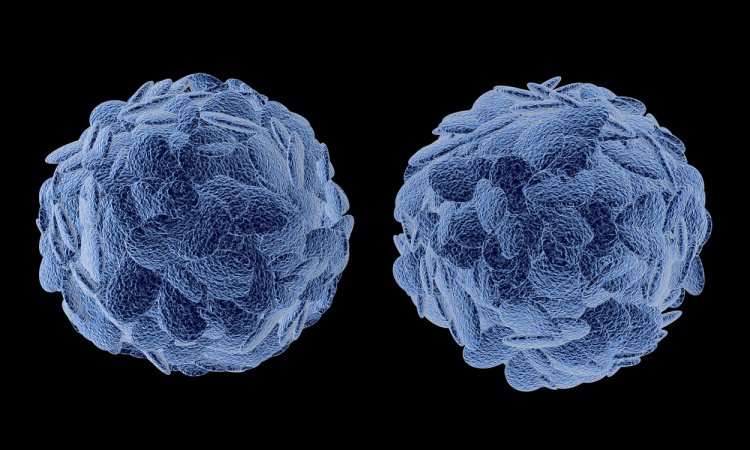

A research study led by Dr Alireza Faridar and Dr Stanley Appel at the Houston Methodist Neurological Institute has demonstrated the involvement of the peripheral immune system in the neuroinflammatory profile of frontotemporal dementia (FTD).
Dr Fred Grossman, Chief Medical Officer at sponsors Coya, said: “We believe these biomarker data coupled with the clinical and lab results of the clinical study in FTD provide additional evidence supporting the development of biologic combination therapies that enhance the function of regulatory T cells (Tregs) and target inflammation in FTD, ALS and other neurodegenerative diseases of high unmet need.”
Coya’s investigational product candidate pipeline aims to restore the anti-inflammatory and immunomodulatory functions of Tregs. Its therapeutic platforms include Treg-enhancing biologics, Treg-derived exosomes, and autologous Treg cell therapy.
Blood samples were obtained from 27 patients clinically diagnosed with FTD and 25 age-matched healthy individuals as a control group. Comprehensive analyses revealed significantly lower regulatory Treg immunomodulatory suppressive function in FTD patients compared to healthy controls. Transcriptomic profiling of monocytes showed different degrees of dysregulation of immune-related genes in samples from FTD patients.
Consistent with the reduced anti-inflammatory function observed in Tregs, proteomic analysis of plasma inflammatory mediators showed a significant increase in the pro-inflammatory cytokine TNFα (tumour necrosis factor-alpha) and the chemokines CXCL10, CCL3, CCL19, CSF1 and CXCL12 in FTD patients compared to healthy controls.
The immunomodulatory function of Tregs
The company believes the results of this study demonstrate that there is a dysregulation of inflammation-related gene expression in peripheral monocytes and an increase of plasma inflammatory chemokines and cytokines in FTD. In addition, the data provide evidence of compromised immunomodulatory function of Tregs.
The company argues that this study further supports the previously reported findings of an academic clinical study of low-dose interleukin 2 (LD IL-2) and CTLA-4 Ig in patients with FTD. The subcutaneous administration of LD IL-2 and CTLA-4 Ig significantly increased the number and function of Tregs as early as two weeks after initiation of treatment and remained elevated throughout the study. Study patients did not show clinical cognitive decline as measured by the validated tools MoCA (Montreal Cognitive Assessment) and CDR-FTLD (Clinical Dementia Rating-Frontotemporal Lobar Degeneration module) over the 22-week treatment period.
The post Study supports Treg enhancement as dementia treatment appeared first on Drug Discovery World (DDW).

Uncategorized
Sanofi Bispecific Scores in Asthma, Rhinosinusitis, but Eczema Bet Doesn’t Pay Off
Sanofi Bispecific Scores in Asthma, Rhinosinusitis, but Eczema Bet Doesn’t Pay Off
Sanofi has faced questions about the potential of lunsekimig in eczema, with executives calling the clinical trial a “measured risk.” Read More
Uncategorized
STAT+: Gilead to buy cancer biotech Tubulis for more than $3 billion
In a move that will grow its oncology pipeline, Gilead Sciences is spending more than $3 billion to buy the German biotech Tubulis, the companies said Tuesday.
The deal includes an upfront payment of $3.15 billion and up to $1.85 billion more if certain milestones are reached. It also highlights both the therapeutic and commercial promise of antibody-drug conjugates, the next-generation chemotherapy treatments that the privately held Tubulis is developing.
Gilead’s latest move comes just months after it said it would acquire Arcellx in a deal worth $7.8 billion. The two companies had already been working together on a multiple myeloma CAR-T therapy that could be approved later this year. Gilead last month also announced that it was buying Ouro Therapeutics, which is focused on drugs for autoimmune disease, for up to $2.18 billion.
In a move that will grow its oncology pipeline, Gilead Sciences is spending more than $3 billion to buy the German biotech Tubulis, the companies said Tuesday.
The deal includes an upfront payment of $3.15 billion and up to $1.85 billion more if certain milestones are reached. It also highlights both the therapeutic and commercial promise of antibody-drug conjugates, the next-generation chemotherapy treatments that the privately held Tubulis is developing.
Gilead’s latest move comes just months after it said it would acquire Arcellx in a deal worth $7.8 billion. The two companies had already been working together on a multiple myeloma CAR-T therapy that could be approved later this year. Gilead last month also announced that it was buying Ouro Therapeutics, which is focused on drugs for autoimmune disease, for up to $2.18 billion.
In its third acquisition of 2026, Gilead is spending $3.15 billion upfront to snag a next-generation antibody-drug conjugate platform from German startup Tubulis.
The California biopharma could pay out another $1.85 billion down the road …


Illinois’ financial crisis could bring the state to a halt
The final 6 ‘Game of Thrones’ episodes might feel like a full season
New Season 8 Walking Dead trailer flashes forward in time
Mod turns ‘Counter-Strike’ into a ‘Tekken’ clone with fighting chickens
Meet Superman’s grandfather in new trailer for Krypton
Disney’s live-action Aladdin finally finds its stars
Sanofi Bispecific Scores in Asthma, Rhinosinusitis, but Eczema Bet Doesn’t Pay Off

STAT+: Gilead to buy cancer biotech Tubulis for more than $3 billion
Gilead continues dealmaking streak with $3.15B Tubulis buy for ADCs
BioNTech to shutter Singapore HQ after ‘comprehensive review’
Amgen Seeks ‘Return to Growth’ for Tepezza as More Convenient Formulation Aces Phase 3

STAT+: Merck’s experimental HIV prevention pill could be made for less than $5 a year, researchers say
Illinois’ financial crisis could bring the state to a halt
The final 6 ‘Game of Thrones’ episodes might feel like a full season
New Season 8 Walking Dead trailer flashes forward in time
Mod turns ‘Counter-Strike’ into a ‘Tekken’ clone with fighting chickens
Meet Superman’s grandfather in new trailer for Krypton
Disney’s live-action Aladdin finally finds its stars
-
 Uncategorized9 years ago
These ’90s fashion trends are making a comeback in 2017
-
Contributors9 years ago
The final 6 ‘Game of Thrones’ episodes might feel like a full season
-
Uncategorized9 years ago
According to Dior Couture, this taboo fashion accessory is back
-
Uncategorized9 years ago
The old and New Edition cast comes together to perform
-
Uncategorized9 years ago
Phillies’ Aaron Altherr makes mind-boggling barehanded play
-
Uncategorized9 years ago
Uber and Lyft are finally available in all of New York State
-
Uncategorized9 years ago
Disney’s live-action Aladdin finally finds its stars
-
Uncategorized9 years ago
Steph Curry finally got the contract he deserves from the Warriors