
Uncategorized
StockWatch: Agilent Shares Jump on Better than Expected Quarterly Results

A strong quarterly earnings report that beat analyst expectations, growth that extended into core pharma and biotech tools, plus improved investor guidance on revenue, operating margin, and earnings per share (EPS) were enough to send shares of Agilent Technologies (NYSE: A) jumping to their best one-day increase in nearly 24 years this past week.
Agilent shares surged 17% from $115.79 to $135.42 Thursday, the first trading day after the tools giant announced better-than-expected results for the second quarter of its 2026 fiscal year ending April 30. Agilent operates on a fiscal year that ends October 31. That was the best one-day performance since November 19, 2002, when the stock ballooned 16% to $134.50.
Shares inched up another 0.12% Friday, closing the week at $135.54—giving Agilent an 18% gain for the week and seven straight positive trading days.
Agilent finished Q2 of FY’26 with net income of $339 million or $1.20 a share, up 58% from $215 million or 75 cents a share a year earlier, on revenue that rose 10% to $1.835 billion from $1.668 billion in the year-ago quarter, the company announced after the close of trading on Wednesday.
Agilent’s “core” growth—which excludes the impact of currency and acquisitions and divestitures within the past 12 months—was 6.3%, exceeding the 4.8% growth forecasted by a consensus of Wall Street analysts cited by the company, as well as its earlier investor guidance of growth ranging from 4% to 5.5%. The consensus also predicted Q2 revenue of $1.79 billion, according to FactSet data cited by Barron’s.
Agilent moved quickly to raise the low end of its FY 2026 revenue guidance, from $7.3 billion to $7.39 billion, while trimming the upper end to $7.49 billion from $7.5 billion. The latest guidance remains above the initial FY 2026 forecast of between $7.3 billion and $7.4 billion.
Agilent also raised its guidance on operating margin from 75 to 85 basis points, and on FY 2026 non-GAAP EPS, which is now projected to range from an even $6 to $6.10, an increase of eight cents at the midpoint from the previous range of $5.90 to $6.04, which was raised in February from the initial range of $5.86 to $6. The analyst consensus predicts a lower EPS of $5.97.
“Strong follow-up quarter”
“All in, F2Q was a strong follow-up quarter to the weather-related headwinds seen in F1Q and, looking ahead, we continue to see Agilent as a clean tools story to own with upside from reshoring, CDMO [contract development and manufacturing organization] capacity ramping and AI [artificial intelligence] investments in pharma over the long-term,” Casey Woodring, vice president, equity research with J.P. Morgan, and three colleagues wrote in a research note.
In a separate report also issued by J.P. Morgan, Woodring and colleagues concluded that AI-driven shortening of timelines for target identification and hypothesis generation “could increase subsequent wet lab validation volume, benefiting high-throughput instruments and multi-omics tool providers, while potentially pressuring lower-throughput/animal-model-adjacent tools.”
Agilent is one of seven biopharma tools developers likely to benefit as a result, the J.P. Morgan analysts wrote. The firm retains an “Overweight” rating and $180 price target on Agilent.
Agilent president and CEO Padraig McDonnell told analysts on the company’s May 27 earnings call that pharma customers are leaning into AI to accelerate drug development and reduce the odds of costly late-stage failures.
“There is a growing need for large-scale multi-modal datasets to train AI models, which will require significant investments in the wet lab,” McDonnell said. “By moving the needle on drug development ROI, AI holds the promise of putting our largest customer constituency on a better footing. A higher number of approvals coming through the drug pipeline should be a strong tailwind for us, given our leading position in downstream manufacturing QA/QC workflows.
“Attractive setup”
Puneet Souda, senior managing director, life science tools and diagnostics and a senior research analyst with Leerink Partners, added that given Agilent’s guidance mostly rose by the amount results beat consensus forecasts, “we continue to see an attractive setup for A [Agilent]” and likes the company’s position across multiple end-markets—citing chemicals and applied markets (C&AM), QA/QC instrumentation, and biopharma.
Souda maintained Leerink’s “Outperform” rating on Agilent shares and raised the firm’s 12-month price target by 3%, to $170 from $165, based on the improved guidance.
Michael Ryskin, research analyst with BofA Securities, showed even more enthusiasm about Agilent’s prospects, upgrading his firm’s rating on the company’s shares from “Neutral” to “Buy”—but trimming by 3% its price target from $150 to $145, a multiple reflecting a lower estimate of 18 times Agilent’s FY 2027 earnings before interest, taxes, depreciation, and amortization (EBITDA), from 19 times EBITDA.
“Key growth drivers such as LC and GC replacement cycles continue to deliver (and remain in early innings), execution is solid across the board, and there were few new negative surprises to derail the momentum (despite widespread fears of chemicals slowdown),” Ryskin wrote. “Combined with a very reasonable valuation, and a myriad of issues elsewhere in tools, we see Agilent as an increasingly attractive asset.”
So too did analysts from four other investment firms, which responded to Agilent’s results by raising their price targets on Agilent stock:
- TD Cowen (Dan Brennan)—Up 5% from $147 to $155, maintaining “Buy” rating.
- Barclays (Luke Sergott)—Up 3.6% from $140 to $145, maintaining “Overweight” rating.
- RBC Capital (Dan Leonard)—Up 1.3%, from $153 to $155, maintaining “Outperform” rating.
- Baird (Catherine Ramsey Schulte)—Up 1.3% from $156 to $158, maintaining “Outperform” rating. Schulte raised the target price 0.6% from $155 just on Tuesday.
But Brandon Couillard, managing director, Life Science Tools & Diagnostics and an equity research analyst at Wells Fargo, lowered his firm’s price target on Agilent’s shares 3%, to $160 from $165, reasoning that the lower price would yield a more realistic 18.71% difference between the stock’s current price and what the firm predicts it is worth. Couillard maintained Wells Fargo’s “Overweight.”
Instruments grew by high single digits during Agilent’s fiscal second quarter, driven by continued positive low double-digit revenue increases in liquid chromatography (LC), LC/mass spectrometry (MS), and gas chromatography (GC) instrument sales.
“Best market share data I’ve seen”
“I think we’ll continue to see strong momentum on the LC-MS and GC,” McDonnell told analysts. “We expect the LC replacement cycle to be a 200–300 bps [basis points, or 2–3%] tailwind to the LC growth. We’ve seen that normal trajectory of the replacement cycle, but continued momentum and funnels look really strong. I will say it was actually the best market share data I’ve seen.”
“Not only are we replacing, but we’re also taking share in competitive accounts, which again, continues the momentum,” he added.
McDonnell said the instrument sales surge was driven by three compelling reasons: Past underinvestment in replacing aging tools by biopharma customers; favorable capital expenditure or “CapEx” conditions in the United States and Europe, “and, of course, customer-focused innovations.”
“We expect that to continue, and we’re seeing it across all markets,” McDonnell added.
During the second fiscal quarter, Agilent said, its core pharma and biotech business rose 6%. Tycho Peterson, equity analyst with Jefferies, noted that Agilent’s biopharma results marked its fifth straight quarter of mid-single-digit growth, led by factors that, according to the company, include:
- Replacement by customers of Agilent LC tools, which sent revenue in that segment up by low double digits
- A third straight quarter of growth from biotech customers
- A 20% jump year-to-date in tool purchases driven by the development of glucagon-like peptide 1 (GLP-1) receptor agonist drugs for obesity and diabetes indications, though down from the 50% leap seen in Agilent’s first fiscal quarter of this year
- Low single-digit growth among small molecule drug developers
“Large cap” biotechs with a market capitalization (share price times the number of outstanding shares) of $10 billion or more accounted for a low double-digit increase in sales that outpaced sales from small- and mid-cap biotech—though positive demand signals are emerging, tied to funding. And while China sales fell by high single digits overall, Agilent generated revenue that grew in the high teens year-over-year from biotech companies there, Peterson reported.
Consumables “momentum”
Biopharma activity is recorded within Agilent’s Life Sciences and Diagnostics Group (LDG) segment, which year-over-year rose 12% (9% core) to $732 million during the quarter. Among the company’s two other reporting segments, the Applied Markets Group (AMG) saw growth of 14% (11% core) to $344 million, while the Agilent CrossLab Group (ACG) grew 6% (2% core) to $759 million.
LDG includes LC-MS instrument platforms, cell and biomolecular analysis, specialized CDMO services, pathology, companion diagnostics, and genomics. AMG includes GC-MS, spectroscopy, and vacuum technology platforms. ACG supports customers in all end markets through services, software and informatics, automation, and consumables.
In consumables, Agilent said sales of its Altura Ultra Inert HPLC [high-performance LC] columns grew more than 50% quarter-over-quarter, reaching 75% of the top 20 biopharma accounts.
“This rapid adoption reinforces the strength of the innovation engine and the unified commercial organization. We will continue to build on that strong initial momentum with additional waves of column launches,” McDonnell vowed.
Another expected source of biopharma growth in the coming months, Peterson of Jefferies observed, is orders for new tools from drug and tools developers reshoring their operations in the United States. Re-shoring orders are expected by fiscal year-end 2026, with revenue contributions beginning in the 2027 fiscal year that begins on November 1 of this year.
Biopharma is part of Agilent’s Life Sciences and Diagnostics Markets segment, which consists of seven areas of activity: Providing active pharmaceutical ingredients for oligo-based therapeutics, as well as solutions that include reagents, instruments, software, and consumables, which enable customers in the clinical and life sciences research areas to interrogate samples at the cellular and molecular level.
“You look at the long-term drivers in pharma, you see redistribution of supply chains, expansion of biologics, and, of course, you see many other factors really helping. What I would say is that we’re very much downstream in QA/QC,” McDonnell said during the earnings call. “We’re in development as well. We’re right in that sweet spot for reshoring, replacement cycle, and any capacity or supply chain resilience around, feel really good about that.”
Leaders and laggards
- Q32 Bio (NASDAQ: QTTB) shares zoomed 81% from $7.09 to $12.85 Wednesday after the developer of therapies for alopecia areata and other autoimmune and inflammatory diseases entered into an approximately $55 million private placement of common stock and pre-funded warrants with “new and existing institutional and accredited investors.” Q32 agreed to issue and sell 6.725 million shares of its stock at $8 per share, plus pre-funded warrants to buy 150,000 shares at $7.9999. Q32 finished the first quarter with $50.8 million in cash and cash equivalents—enough to fund operations into the first half of 2028 when combined with guaranteed near-term milestone payments from selling Phase II complement inhibitor ADX-097 to Akebia Therapeutics, plus proceeds from an at-the-market stock offering received after Q1. BVF Partners led the financing with participation from RA Capital Management, OrbiMed, and Atlas Venture. Morgan Stanley acted as lead placement agent, and Oppenheimer & Co. acted as a placement agent.
- Replimune Group (NASDAQ: REPL) shares rocketed 86% from $4.68 to $8.69 Friday after the developer of oncolytic immunotherapies agreed with the FDA on a path toward resubmission and reconsideration of the Biologics License Application (BLA) for its lead product candidate RP1 (vusolimogene oderparepvec) in combination with nivolumab to treat advanced melanoma. Repligen said it agreed to resubmit its BLA for RP1 “in the coming days,” while the FDA agreed to treat the BLA resubmission as an urgent matter and prioritize its review “in recognition of the significant unmet need for patients in the advanced melanoma community.” In April, the FDA stunned Repligen by rejecting its BLA for a second time, issuing a complete response letter (CRL) contending that data were not sufficient to allow for RP1 approval—an assertion Replimune vehemently rejects. The BLA is supported by data from the Phase II IGNYTE trial (NCT03767348)—a 34% response rate with a median duration of 24.8 months and a favorable safety profile.
The post StockWatch: Agilent Shares Jump on Better than Expected Quarterly Results appeared first on GEN – Genetic Engineering and Biotechnology News.

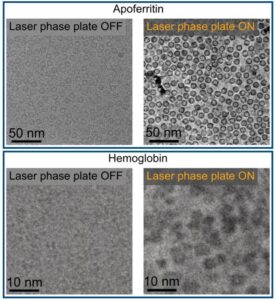
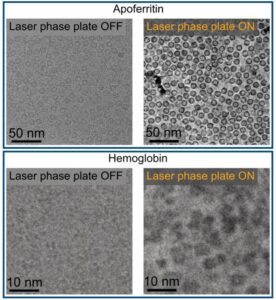
You know when you are at the eye doctor getting an updated prescription, and suddenly the world snaps into sharper focus? Physicists at the University of California (UC), Berkeley, have now done something similar for electron microscopy. By introducing phase contrast into a cryo‑electron microscope, they have delivered dramatically sharper images of some of biology’s smallest and most elusive proteins.
The advance comes from a new laser phase plate (LPP), described in the paper “Laser phase plate improves structure determination of small proteins by cryo‑EM,” which was published recently in Science. Led by physicist Holger Mueller, PhD, of UC Berkeley and Lawrence Berkeley National Laboratory, the team demonstrated that a laser‑driven phase plate can overcome one of cryo‑EM’s most persistent limitations: poor contrast for small proteins.
Cryo‑EM has transformed structural biology over the past decade, earning a Nobel Prize in 2017 for enabling high‑resolution structures without crystallization. But despite its impact, the technique still struggles with proteins below ~70 kilodaltons—a size range that includes about 90% of the human proteome. “Because of signal-to-noise limitations, the majority of human and animal proteins are too small to be analyzed by these methods [cryo-EM and cryoelectron tomography]. The increase in signal-to-noise ratio provided by this laser phase plate is expected to overcome these important limitations.”
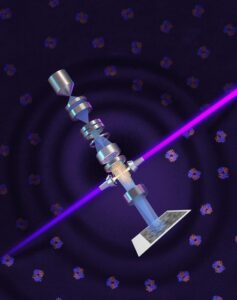
The new LPP begins to address that problem. The LPP uses an intense, continuous‑wave laser to shift the phase of the electron beam itself. This produces true phase contrast without dimming or destabilizing the beam. Mueller described the laser focus as “75 kilowatts focused to a few microns… That’s more powerful than what you use for welding. It has more power than a military laser. It builds up the brightest continuous laser focus ever.”
Installed in a custom Thermo Fisher Titan Krios, the LPP immediately improved the clarity and resolvability of small proteins, including hemoglobin, which sits at the lower limit of what today’s cryo‑EM instruments can handle. As the authors wrote in the abstract: “Here, we show that the laser phase plate (LPP)… enhances the resolution in single-particle reconstruction of small proteins by improving specimen-motion correction, recovery of information from the early frames, as well as particle visualization, 3D classification, and alignment.”
These improvements were achieved using standard defocus ranges and reconstruction workflows. “For the most challenging cases—small particles, bad specimens—the laser produces a very considerable advantage,” Mueller said.
The impact extends beyond single‑particle analysis. Cryo‑electron tomography (cryo‑ET), which assembles multiple angular views of a molecule or protein into a three-dimensional image, stands to benefit even more. “With cryo-ET, we’re looking at small, very complicated cellular material that’s incredibly crowded inside the cell,” said Bridget Carragher, PhD, founding technical director of imaging at Biohub. “It’s like a forest of trees, and you’re trying to find one leaf on one tree in there. Cryo-ET needs a dramatic step forward in contrast, so we can start to see what’s going on inside the cell. That’s what the laser phase plate promises to give us.”
Biohub is developing a dual‑laser version of the system, designed to reduce component wear and minimize aberrations. Meanwhile, Mueller’s team is pushing toward imaging proteins as small as 17 kilodaltons, a threshold that would open access to vast regions of the human proteome previously invisible to cryo‑EM.
“This technology is a step function change for biology,” said Stephani Otte, PhD, Biohub’s vice president of imaging science. “What was once invisible will become visible—and that changes everything about how we understand disease.”
“The bottom line is, if you have a large protein and a really good sample—a fresh one or one frozen without bubbles, for example—you may not need the phase plate to get a single, high-quality image. But for a small protein and a bad sample, laser-on is best,” Mueller said. “This could fill an enormous gap in our knowledge of protein structures that can’t be crystallized or are too small for today’s cryo-EM. And it will be revolutionary for cryo-ET.”
The post Laser‑Driven Phase Contrast Enhances Cryo‑EM Resolution of Small Proteins appeared first on GEN – Genetic Engineering and Biotechnology News.
Uncategorized
STAT+: Updated: Tracking RFK Jr.’s promises to remake health in America
Updated June 11, 2026
WASHINGTON — A pledge to “Make America Healthy Again” earned Robert F. Kennedy Jr. his job atop U.S. health agencies a year and some change ago. He’s now had the opportunity to turn his words into action, with mixed results.
“All one needs” to prove the health secretary’s attentiveness is to “review my unprecedented list of accomplishments on a wide range of issues, all of which I drove,” Kennedy posted on X on Wednesday in response to a journalist.

Updated June 11, 2026
WASHINGTON — A pledge to “Make America Healthy Again” earned Robert F. Kennedy Jr. his job atop U.S. health agencies a year and some change ago. He’s now had the opportunity to turn his words into action, with mixed results.
“All one needs” to prove the health secretary’s attentiveness is to “review my unprecedented list of accomplishments on a wide range of issues, all of which I drove,” Kennedy posted on X on Wednesday in response to a journalist.

Can any of the new obesity medications in development stand out from the pack? Which company just broke records with its IPO? And will the Food and Drug Administration allow greater access to experimental peptides?
We discuss all that and more on this week’s episode of “The Readout LOUD,” STAT’s biotech podcast.


Illinois’ financial crisis could bring the state to a halt
The final 6 ‘Game of Thrones’ episodes might feel like a full season
New Season 8 Walking Dead trailer flashes forward in time
Mod turns ‘Counter-Strike’ into a ‘Tekken’ clone with fighting chickens
Meet Superman’s grandfather in new trailer for Krypton
Disney’s live-action Aladdin finally finds its stars

Laser‑Driven Phase Contrast Enhances Cryo‑EM Resolution of Small Proteins

STAT+: Updated: Tracking RFK Jr.’s promises to remake health in America

An obesity drug deep-dive, and peptides move mainstream

RFK Jr. claims his calendar is publicly available. We’ve been trying to get it for a year

Nonprofit buys experimental cancer drug to maintain patient access
Potential Cocaine Addiction Targets Identified Through Genetic Mapping in Rats
Illinois’ financial crisis could bring the state to a halt
The final 6 ‘Game of Thrones’ episodes might feel like a full season
New Season 8 Walking Dead trailer flashes forward in time
Mod turns ‘Counter-Strike’ into a ‘Tekken’ clone with fighting chickens
Meet Superman’s grandfather in new trailer for Krypton
Disney’s live-action Aladdin finally finds its stars
-
 Uncategorized9 years ago
These ’90s fashion trends are making a comeback in 2017
-
Uncategorized9 years ago
According to Dior Couture, this taboo fashion accessory is back
-
Endpoints News3 months ago
Novartis to pay $2B upfront to take next-gen PI3Kα inhibitor from Synnovation
-
Uncategorized9 years ago
Phillies’ Aaron Altherr makes mind-boggling barehanded play
-
Uncategorized9 years ago
Uber and Lyft are finally available in all of New York State
-
Contributors9 years ago
The final 6 ‘Game of Thrones’ episodes might feel like a full season
-
Uncategorized9 years ago
Steph Curry finally got the contract he deserves from the Warriors
-
Uncategorized9 years ago
The old and New Edition cast comes together to perform