
Uncategorized
STAT+: AI drug developer Insilico Medicine and Lilly ink commercialization deal worth up to $2.75 billion

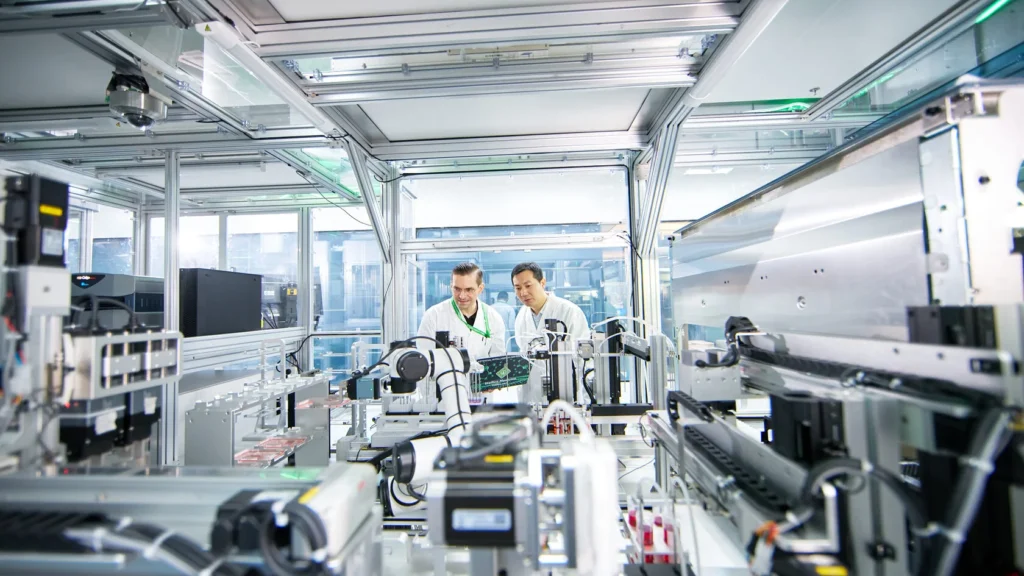
Alex Zhavoronkov, CEO of Insilico Medicine, can’t stop complimenting Eli Lilly. “Lilly is better in AI than Insilico, and no other company is better in AI than us … except for these guys,” he said.
He insisted he wasn’t saying nice things about Lilly just because the pharma giant has signed a new deal with Insilico that’s worth $115 million up front and approximately $2.75 billion in biobucks, which are contingent on achieving regulatory and commercial milestones. After calling Lilly’s tirzepatide, which he is on, “the best drug ever invented by humans,” he said he’s been consistently singing Lilly’s praises for a year. “Mounjaro makes me so happy every day. I want to develop the next one.”
It looks like Zhavoronkov might have the opportunity to do just that — his AI drug development company’s new deal with Lilly, announced on Sunday, includes rights for the Mounjaro and Zepbound manufacturer to develop, manufacture, and commercialize some of Insilico’s preclinical AI-discovered candidates for oral therapeutics. Though he declined to say which assets Lilly licensed, he said that the company is the “absolutely best partner” for the candidates and that “nobody is better than them” in these disease areas. Insilico’s pipeline webpage recently was updated to note that a candidate targeting GLP-1 has been out-licensed to an undisclosed partner.

Uncategorized
STAT+: Once again, child dies in gene-editing trial in China, rekindling debate on transparency and safety
Last year, a little-known Chinese startup took center stage at the American Society for Gene and Cell Therapy annual convention in New Orleans.
Speaking before a sprawling conference hall for the presidential symposium, HuidaGene CEO Alvin Luk presented data from one of the world’s first trials to test if CRISPR gene editing could cure children with Duchenne muscular dystrophy, an intractable, fatal disease. Similar efforts in the U.S. ran aground amid technical challenges, but HuidaGene had surged ahead, using a regulatory pathway that lets Chinese hospitals start studies without oversight from government regulators.
The results, from the first two patients, were not impressive. It wasn’t clear the therapy worked at all. But Luk said the data indicated benefit and the company was about to test a higher dose. Hopefully, that would have far better effects.
Then HuidaGene went dark. For 15 months following that conference, the Shanghai-based company did not issue a single new press release. Luk quietly departed last summer, alongside Chief Technology Officer TJ Cradick, a longtime U.S.-based gene editing executive who had been there less than a year. In February, a listing on a clinical trial registry was updated to announce the study was “complete.”
What happened to the remainder of patients in the study was unclear. But after a monthslong STAT investigation and repeated questions to the company, HuidaGene on Wednesday issued an update.

Last year, a little-known Chinese startup took center stage at the American Society for Gene and Cell Therapy annual convention in New Orleans.
Speaking before a sprawling conference hall for the presidential symposium, HuidaGene CEO Alvin Luk presented data from one of the world’s first trials to test if CRISPR gene editing could cure children with Duchenne muscular dystrophy, an intractable, fatal disease. Similar efforts in the U.S. ran aground amid technical challenges, but HuidaGene had surged ahead, using a regulatory pathway that lets Chinese hospitals start studies without oversight from government regulators.
The results, from the first two patients, were not impressive. It wasn’t clear the therapy worked at all. But Luk said the data indicated benefit and the company was about to test a higher dose. Hopefully, that would have far better effects.
Then HuidaGene went dark. For 15 months following that conference, the Shanghai-based company did not issue a single new press release. Luk quietly departed last summer, alongside Chief Technology Officer TJ Cradick, a longtime U.S.-based gene editing executive who had been there less than a year. In February, a listing on a clinical trial registry was updated to announce the study was “complete.”
What happened to the remainder of patients in the study was unclear. But after a monthslong STAT investigation and repeated questions to the company, HuidaGene on Wednesday issued an update.
A legal dispute between the FDA and Eli Lilly over whether the highly anticipated obesity candidate retatrutide is indeed a biologic has come to a head as the company prepares to submit the medicine for approval.
Uncategorized
Attovia adds to biotech IPO momentum with $289M offering

The startup is the 12th drug company to bank at least $250 million in an IPO this year, nearly matching totals last seen during the sector’s pandemic peak, according to BioPharma Dive data.

The startup is the 12th drug company to bank at least $250 million in an IPO this year, nearly matching totals last seen during the sector’s pandemic peak, according to BioPharma Dive data.


Illinois’ financial crisis could bring the state to a halt
The final 6 ‘Game of Thrones’ episodes might feel like a full season
New Season 8 Walking Dead trailer flashes forward in time
Mod turns ‘Counter-Strike’ into a ‘Tekken’ clone with fighting chickens
Meet Superman’s grandfather in new trailer for Krypton
Disney’s live-action Aladdin finally finds its stars

STAT+: Once again, child dies in gene-editing trial in China, rekindling debate on transparency and safety
Lilly, FDA retatrutide biologic dispute comes to a head as submission nears

Attovia adds to biotech IPO momentum with $289M offering
Immune Pathway Identified That Prevents C. albicans Infection from Becoming Deadly

Lilly climbs, Novo falls as obesity drug battle intensifies
Electrical Stimulation’s Effects on Neurons, Gene Expression Mapped in Living Human Brain Tissue
Illinois’ financial crisis could bring the state to a halt
The final 6 ‘Game of Thrones’ episodes might feel like a full season
New Season 8 Walking Dead trailer flashes forward in time
Mod turns ‘Counter-Strike’ into a ‘Tekken’ clone with fighting chickens
Meet Superman’s grandfather in new trailer for Krypton
Disney’s live-action Aladdin finally finds its stars
-
Fierce Biotech4 months ago
Scientists turn pig semen extract into eye drops that kill cancer in mice
-
 Uncategorized9 years ago
These ’90s fashion trends are making a comeback in 2017
-
Endpoints News5 months ago
Novartis to pay $2B upfront to take next-gen PI3Kα inhibitor from Synnovation
-

 Uncategorized4 months ago
Novartis buys Synnovation’s PI3Kα inhibitors for $3 billion
-
Uncategorized9 years ago
According to Dior Couture, this taboo fashion accessory is back
-
Uncategorized9 years ago
Steph Curry finally got the contract he deserves from the Warriors
-
Uncategorized9 years ago
Phillies’ Aaron Altherr makes mind-boggling barehanded play
-
Uncategorized9 years ago
Uber and Lyft are finally available in all of New York State