
Uncategorized
Smile Please: Wisconsin Welcomes FUJIFILM Cellular Dynamics New Headquarters

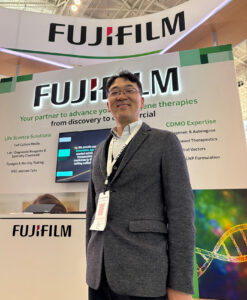
In January 2012, Kodak, a name synonymous with analog photography, filed for Chapter 11 bankruptcy protection, an event caused in part by the company’s inability to anticipate and adapt to the digital revolution.
A similar fate might well have befallen its Japanese competitor, Fujifilm. But last year, the Japanese giant recorded record sales and record profits, priding itself on its ability to innovate and evolve.
Part of that evolution and commitment to growth was on full display this week in Madison, Wisconsin, as Fujifilm executives and state officials officially opened the new facility of FUJIFILM Cellular Dynamics, Inc. (FCDI), which houses nearly 200 employees with a view to developing tomorrow’s life-saving therapies.
“The collaboration between Wisconsin and Japan has been fantastic,” said Tomoyuki (Tom) Hasegawa, CEO of FCDI for the past four years. “We are making a global impact together.”
The work here is “incredible,” Hasegawa continued. “All our employees are excited!”
Among the dignitaries speaking prior to the official ribbon-cutting ceremony were Wisconsin Governor Tony Evers, a 74-year-old Democrat. “Cleaning out a drawer the other day,” Evers joked, “I found a box of Fujifilm. I’m not sure what to do with it!”
Having toured Fujifilm’s Japan headquarters in 2019, Evers called the opening “a full-circle moment” and “a true Wisconsin success story.” The state’s expertise in stem cell biology began more than 20 years ago with the pioneering research of James Thompson, PhD, who co-founded Cellular Dynamics in 2004. The company was acquired by Fujifilm in 2015.
The new facility will quadruple FCDI’s cell therapy research and manufacturing, which Evers said, “may hold the key to Parkinson’s disease, Alzheimer’s, cancers, autoimmune and liver disease and other serious health conditions.”
Also speaking was Toshihisa “Toshi” Iida, a 30-year Fujifilm veteran who currently serves as corporate vice president and general manager of Fujifilm’s Life Sciences Strategy Headquarters and Bio CDMO Division.
Fujifilm was founded in 1934, Iida said, with a continuous push to combine technology and innovation. “Our journey has not always been easy,” he said. In 2000, the company’s core film business accounted for 70 percent of the firm’s profits. The business did not just decline; “It was a collapse,” he said.
“We overcame this challenge. I am a living witness to this transformation story.”
While Fujifilm’s business has evolved and diversified, the company’s purpose pays tribute to its photographic roots: “Giving our world more smiles.” The company’s interest in human health dates back to its early years. Just two years after its founding, Fujifilm produced the first X-ray film. “Our technology must serve people and improve lives,” Iida said.
Over the past 15 years, Fujifilm has invested some $10 billion in health and biologics. The investment in Madison is just a part of that bigger program. “This site is not just a building, but a platform to support innovation,” Iida said. “Japan is the birthplace of iPS cells. This has the potential to change medicine.”
Field of dreams
Hasegawa has been with Fujifilm for his entire professional career of 28 years, joining the company fresh from completing a law degree at the University of Tokyo. The one thing he knew was that he did not want to pursue a law career.
It was the late 1990s and the dawn of the digital camera revolution. “The company’s transformation story sounded very interesting to me,” Hasegawa told me in an interview in the exhibit hall at the American Society of Gene and Cell Therapy in Boston. “Especially right after Windows 95 came out, those were very exciting days expanding the digital capability of the company globally.”
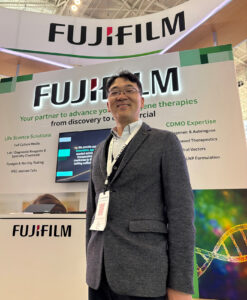
Before long, the company set its sights on the U.S. market, and Hasegawa moved to New York to lead that effort, before returning to Tokyo in 2011 and assuming direction of the global marketing team. Three years later, he moved into business development and was put in charge of corporate planning and cultural affairs.
Hasegawa recalls reading about the induced pluripotent stem cells (iPSCs) by accident. In 2012, the Japanese scientist Shinya Yamanaka, PhD, famously won the Nobel Prize in Physiology or Medicine for the identification of factors crucial in the reprogramming of mature cells into pluripotent stem cells.
Following the acquisition of Cellular Dynamics, Fujifilm “asked me to be in charge” of this fledgling program in regenerative medicine, Hasegawa said. “This is a very well-known story in Japan because [Yamanaka] won the Nobel Prize and it is a very interesting technique. He’s a superstar! That’s why Fujifilm believes that the cell and gene therapy [CGT] field could be our next field of dreams.”
Thompson built a foundation in iPS cells in Cellular Dynamics and “ introduced lots of new [cell types] derived from iPS cells. Cellular Dynamics became a global leader for iPS-related products,” Hasegawa said. “Fujifilm’s concept was very interesting—we wanted to explore the synergy of imaging, analysis, and digital technologies to support the pharma industry. That’s what happened in 2015.”
Hasegawa says he has “a big dream” for the company’s growth. “One way is to deliver our iPS cell products, which include cardiomyocyte cells and neuron cells. We have 40 types of cells for toxicity and efficacy testing for pharma companies to do their R&D. We are a leading supplier of these iPS cells, which have high quality and also the same donor cell for multiple neurons to enable isogenic research.”
At one time, Hasegawa concedes, “we wanted to be a king of pharma, but we switched our strategy.” The company invested heavily in its services to support drug discovery through commercialization, including service lines across contract development and manufacturing (CDMO) and small-molecule drug development. In 2017, Fujifilm acquired reagent company Wako Pure Chemical, which has an HQ in Japan and a subsidiary in Richmond, VA.
Another strand to Fujifilm’s bow is as a provider of materials including reagent kits. “As you remember [in cinema], film is not necessarily the hero—cameras and cameramen are the heroes,” Hasegawa said. “We support [R&D], so that kind of mindset is very beneficial.”
Another thriving business is cell therapy utilizing iPSC technology. Hasegawa points to another subsidiary that provides cell therapy CDMO services in California. “We have an end-to-end service for cell therapy,” he said. In the cell therapy space, he is not looking for additional acquisitions, “because we shifted our strategy.” But for the supporting industry, “if there are good opportunities, we can of course have a discussion about it.”
Fujifilm says its $200-million investment in the new FCDI facility will “help secure America’s supply chain for biotech and regenerative medicine.” The new facility will feature state-of-the-art resources, including a Center of Excellence for genome editing and laboratories for cell culture manufacturing and process development. The space will quadruple capacity for R&D and manufacturing and enhance the company’s capabilities in drug discovery support and process development.
The company believes the investment will help Fujifilm keep pace with the rapidly expanding cell therapy market—and put a smile on the faces of patients and company executives alike.
The post Smile Please: Wisconsin Welcomes FUJIFILM Cellular Dynamics New Headquarters appeared first on GEN – Genetic Engineering and Biotechnology News.

Officials sanctioned Dabur India months after FDA inspectors found bird droppings and data integrity deficiencies during an inspection of the plant.
Uncategorized
STAT+: Pharmalittle: We’re reading about a discontinued cancer drug, a Novo security breach, and more
And so, another working week will soon draw to a close. Not a moment too soon, yes? This is, you may recall, our treasured signal to daydream about weekend plans. Our agenda includes promenading with the official mascots, catching another round of live musical vibes here and there, and taking pride in some folks who are dear to us. We also hope to hold yet another listening party, where the rotation will likely include this, this, this, this and this. And what about you? This is a wonderful time of year to sample the many outdoor activities popping up — street fairs, festivals, and all sorts of gatherings can be sampled. If the weather fails to cooperate, though, you could curl up with a good book, sit in front of the telly to take in one or more sporting events, or plan a needed getaway. If none of this strikes your fancy, you could simply park yourself somewhere comfortable for a while and remain zen. Well, whatever you do, have a grand time. But be safe. Enjoy, and see you soon. …
In a rare move, the nonprofit organization Blood Cancer United announced it was buying the remaining supplies of Luvelta, a discontinued investigational cancer drug, STAT reports. As part of the transaction, Blood Cancer United, previously known as the Leukemia & Lymphoma Society, also will acquire the investigational new drug designation and manage the compassionate-use program for children with a rare form of blood cancer, distributing the medication to patients at no cost while supplies last. Sutro Biopharma discontinued development in March 2025 and also eliminated a compassionate use program.
Novo Nordisk identified a security incident in which certain information, including patient data from some clinical trials, was copied externally without authorization from its internal IT systems, Reuters notes. The company said it launched a probe with the assistance of external cybersecurity experts and is in contact with the relevant authorities. The potential categories of personal data affected may include patient ID, year of birth, sex, and health or immunogenicity data among others. Novo did not provide further details, but does not believe the incident will enable any third party to identify participants in its clinical trials.

And so, another working week will soon draw to a close. Not a moment too soon, yes? This is, you may recall, our treasured signal to daydream about weekend plans. Our agenda includes promenading with the official mascots, catching another round of live musical vibes here and there, and taking pride in some folks who are dear to us. We also hope to hold yet another listening party, where the rotation will likely include this, this, this, this and this. And what about you? This is a wonderful time of year to sample the many outdoor activities popping up — street fairs, festivals, and all sorts of gatherings can be sampled. If the weather fails to cooperate, though, you could curl up with a good book, sit in front of the telly to take in one or more sporting events, or plan a needed getaway. If none of this strikes your fancy, you could simply park yourself somewhere comfortable for a while and remain zen. Well, whatever you do, have a grand time. But be safe. Enjoy, and see you soon. …
In a rare move, the nonprofit organization Blood Cancer United announced it was buying the remaining supplies of Luvelta, a discontinued investigational cancer drug, STAT reports. As part of the transaction, Blood Cancer United, previously known as the Leukemia & Lymphoma Society, also will acquire the investigational new drug designation and manage the compassionate-use program for children with a rare form of blood cancer, distributing the medication to patients at no cost while supplies last. Sutro Biopharma discontinued development in March 2025 and also eliminated a compassionate use program.
Novo Nordisk identified a security incident in which certain information, including patient data from some clinical trials, was copied externally without authorization from its internal IT systems, Reuters notes. The company said it launched a probe with the assistance of external cybersecurity experts and is in contact with the relevant authorities. The potential categories of personal data affected may include patient ID, year of birth, sex, and health or immunogenicity data among others. Novo did not provide further details, but does not believe the incident will enable any third party to identify participants in its clinical trials.
Uncategorized
Amgen shores up Tavneos’ FDA defense with Duke data analysis
Amgen shores up Tavneos’ FDA defense with Duke data analysis
After the FDA flagged patient deaths linked to Amgen’s rare disease drug Tavneos and called for its voluntary removal, the pharma recruited an independent data analysis from Duke researchers to help build the case for the drug’s continued market approval. Read More


Illinois’ financial crisis could bring the state to a halt
The final 6 ‘Game of Thrones’ episodes might feel like a full season
New Season 8 Walking Dead trailer flashes forward in time
Mod turns ‘Counter-Strike’ into a ‘Tekken’ clone with fighting chickens
Meet Superman’s grandfather in new trailer for Krypton
Disney’s live-action Aladdin finally finds its stars
FDA imposes import alert on Indian plant after inspectors flag GMP failings

STAT+: Pharmalittle: We’re reading about a discontinued cancer drug, a Novo security breach, and more
Amgen shores up Tavneos’ FDA defense with Duke data analysis

Chile offers new data on food warning label efficacy
Novartis’ $12B Avidity buy pays dividends with Phase 1/2 muscular dystrophy win

STAT+: At hospital finance conference, a call to end the friction that’s keeping costs high
Illinois’ financial crisis could bring the state to a halt
The final 6 ‘Game of Thrones’ episodes might feel like a full season
New Season 8 Walking Dead trailer flashes forward in time
Mod turns ‘Counter-Strike’ into a ‘Tekken’ clone with fighting chickens
Meet Superman’s grandfather in new trailer for Krypton
Disney’s live-action Aladdin finally finds its stars
-
 Uncategorized9 years ago
These ’90s fashion trends are making a comeback in 2017
-
Uncategorized9 years ago
According to Dior Couture, this taboo fashion accessory is back
-
Endpoints News3 months ago
Novartis to pay $2B upfront to take next-gen PI3Kα inhibitor from Synnovation
-
Uncategorized9 years ago
Phillies’ Aaron Altherr makes mind-boggling barehanded play
-
Uncategorized9 years ago
Uber and Lyft are finally available in all of New York State
-
Contributors9 years ago
The final 6 ‘Game of Thrones’ episodes might feel like a full season
-
Uncategorized9 years ago
Steph Curry finally got the contract he deserves from the Warriors
-
Uncategorized9 years ago
The old and New Edition cast comes together to perform