
Uncategorized
Restoring Vision with Stem Cell–Derived Retinal Cells by Overcoming ILM Barrier

Degeneration of retinal ganglion cells can cause irreversible vision loss. Pluripotent stem cells (PSCs) could, in theory, be used to replace lost ganglion cells. However, past attempts at injection of these cells have failed because the cells are not able to reach the retina.
Now, researchers have successfully demonstrated that disrupting an eye structure long suspected of blocking the growth and survival of transplanted nerve cells—the internal limiting basement membrane (ILM)—may help restore vision in people with optic nerve damage.
The work suggests that altering or removing the thin layer of tissue, which separates the light-sensing retinal tissue at the back of the eye from the gel-like vitreous fluid that fills the eye, was needed for the survival and migration of donor human PSC-derived retinal ganglion cells into the retina of mice, rats, and nonhuman primates. This technique could help transplanted retinal ganglion cells survive and grow in people with blinding optic nerve damage.
This work is published in Science Translational Medicine in the paper, “The internal limiting basement membrane inhibits functional engraftment of transplanted human retinal ganglion cells in vivo.”
Damage, or optic neuropathy, occurs when retinal ganglion cells die of disease, inflammation, or injury and stop carrying electrical signals to the brain. Common causes of damage include glaucoma, optic nerve inflammation (optic neuritis), and ischemic optic neuropathy (sudden loss of blood flow to the optic nerve).
Healthy, functional human retinal ganglion cells can be grown in a lab, but most die when transplanted, said Thomas Vincent Johnson III, MD, PhD, a professor of ophthalmology at the Johns Hopkins Wilmer Eye Institute. “Even when the retinal ganglion cells survive, they remain on the retina’s surface and do not migrate into the tissue or form the connections with other nerve cells necessary to detect light,” he noted.
Researchers have speculated that the internal limiting membrane, present in many vertebrates, including humans, may be causing transplant failures.
Starting with immunosuppressed rodents, the researchers injected lab-grown human retinal ganglion cells (hRGCs) into the vitreous humors of mice with an inborn gene mutation that caused an incomplete, patchy internal limiting membrane to form. They then injected the human retinal ganglion cells into a second group of mice treated with an enzyme solution known to partially digest the membrane without damaging the eye. Lastly, they injected a third, control group of mice treated with an inactive sterile solution. After two weeks, the team observed transplantation survival in 95% of eyes (45/50) with the inborn structural defect, 80% of enzymatically disrupted eyes (32/40), and 75% of control group eyes (12/16).
The researchers then traced where the surviving human retinal ganglion cells settled and grew in the mice, noting that a much greater percentage reached the retinal ganglion cell layer in mice born with a patchy internal limiting membrane and in those treated with the enzyme.
Capturing 3D images of the migrated cells, the researchers say they observed that 2% (plus or minus 0.6%) and 7.1% (plus or minus 1.6%) surviving cells in enzyme-treated and mutant eyes, respectively, matured to form dendrites. In contrast, migration and maturation only occurred in 0.01% plus or minus 0.01% of surviving control human retinal ganglion cells.
Conducting similar experiments in larger eyes and donated eye tissue replicated the group’s findings, establishing evidence that the inner limiting membrane is indeed a structural obstacle to neuron replacement, the researchers noted. They also established a surgical procedure for retinal ganglion cell transplantation that could be used in clinical trials, thus advancing potential methods for restoring vision in humans with optic neuropathy.
While the study’s results are promising, Johnson cautions that further work is still needed before their experimental findings can be applied to people. “We know our methods are effective, but we don’t know if completely removing the internal limiting membrane helps or harms the retinal ganglion cells in the long run,” he said. “It will likely take several years before our findings could become available as an experimental therapy, but the methods we developed will guide the field moving forward.”
The post Restoring Vision with Stem Cell–Derived Retinal Cells by Overcoming ILM Barrier appeared first on GEN – Genetic Engineering and Biotechnology News.

Uncategorized
STAT+: Trump’s obesity drug plan creates a temporary Medicare program that may be hard to end
WASHINGTON — Weight loss drugs will be available to adults 65 and older in Medicare for the first time next month, thanks to a government program that’s supposed to be temporary. It may be difficult to end it.
Medicare is prohibited by law from paying for obesity drugs. The Trump administration is circumventing that law by making the drugs available via a demonstration program.
Initially, Medicare had hoped to push private Medicare insurers to voluntarily cover the drugs via a three-year program called BALANCE, which would have started following a short transitional period. But insurers balked, so the federal government is instead extending the transitional coverage program, called Bridge, until the end of next year.
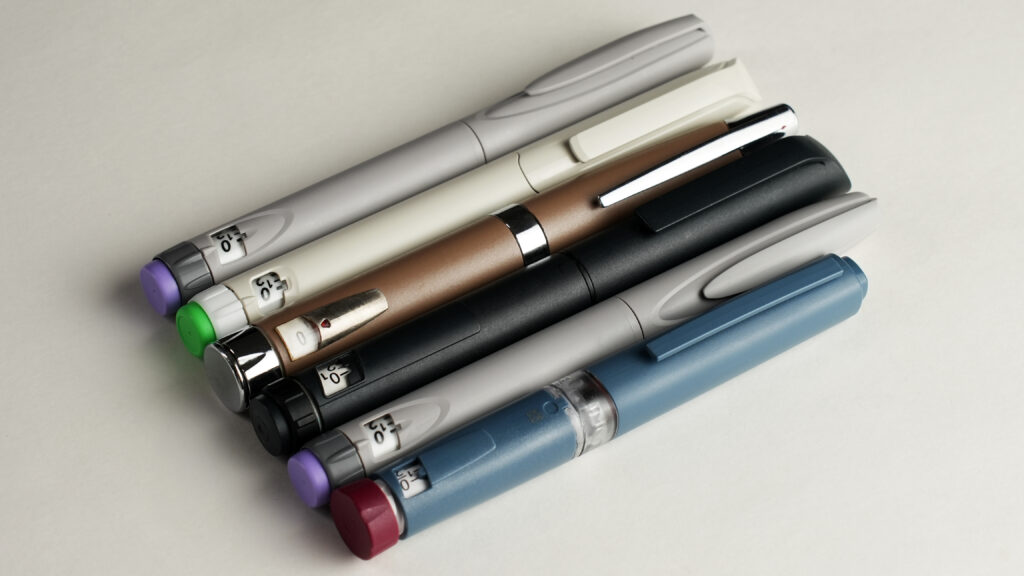
WASHINGTON — Weight loss drugs will be available to adults 65 and older in Medicare for the first time next month, thanks to a government program that’s supposed to be temporary. It may be difficult to end it.
Medicare is prohibited by law from paying for obesity drugs. The Trump administration is circumventing that law by making the drugs available via a demonstration program.
Initially, Medicare had hoped to push private Medicare insurers to voluntarily cover the drugs via a three-year program called BALANCE, which would have started following a short transitional period. But insurers balked, so the federal government is instead extending the transitional coverage program, called Bridge, until the end of next year.
Neumora Therapeutics is laying off 35% of workers after its most advanced asset failed a pair of Phase 3 studies, sending the biotech’s stock spiraling early Monday.
Uncategorized
Germany rethinking drug price reforms after Lilly, Boehringer withdraw investments: Reuters
Weeks after Boehringer Ingelheim and Eli Lilly retracted billions of dollar in German commitments, the nation’s government is reportedly changing a contentious element of its planned healthcare reforms.


Illinois’ financial crisis could bring the state to a halt
The final 6 ‘Game of Thrones’ episodes might feel like a full season
New Season 8 Walking Dead trailer flashes forward in time
Mod turns ‘Counter-Strike’ into a ‘Tekken’ clone with fighting chickens
Meet Superman’s grandfather in new trailer for Krypton
Disney’s live-action Aladdin finally finds its stars

STAT+: Trump’s obesity drug plan creates a temporary Medicare program that may be hard to end
Neumora discards depression asset, lays off staffers after pair of late-stage flops
Germany rethinking drug price reforms after Lilly, Boehringer withdraw investments: Reuters
AI Predicts Gene Regulation for Drug Discovery Using Condensate Morphology
Elicio crashes on midstage pancreatic cancer miss but will advance to Phase 3

STAT+: Lilly’s Ajax acquisition may have been worth it
Illinois’ financial crisis could bring the state to a halt
The final 6 ‘Game of Thrones’ episodes might feel like a full season
New Season 8 Walking Dead trailer flashes forward in time
Mod turns ‘Counter-Strike’ into a ‘Tekken’ clone with fighting chickens
Meet Superman’s grandfather in new trailer for Krypton
Disney’s live-action Aladdin finally finds its stars
-
 Uncategorized9 years ago
These ’90s fashion trends are making a comeback in 2017
-
Uncategorized9 years ago
According to Dior Couture, this taboo fashion accessory is back
-
Endpoints News3 months ago
Novartis to pay $2B upfront to take next-gen PI3Kα inhibitor from Synnovation
-
Uncategorized9 years ago
Phillies’ Aaron Altherr makes mind-boggling barehanded play
-
Uncategorized9 years ago
Uber and Lyft are finally available in all of New York State
-
Contributors9 years ago
The final 6 ‘Game of Thrones’ episodes might feel like a full season
-
Uncategorized9 years ago
Steph Curry finally got the contract he deserves from the Warriors
-
Uncategorized9 years ago
The old and New Edition cast comes together to perform