

Uncategorized
Phage Chemical “Crosstalk” Can Backfire, Steering Responders Into Lysogeny

Phages have been known to trade chemical messages to guide their life‑cycle decisions, but new research shows that some of those messages function more like Trojan horses than helpful signals. By releasing peptides (arbitrium) cues, one phage can mislead another into choosing dormancy at a moment when lysis would normally be favored—a strategic manipulation that shifts the competitive balance between viruses sharing the same bacterial host.
Bacteriophages rely on a simple but consequential choice each time they enter a host cell: burst the cell open to release new viral particles (lysis) or integrate into the genome and lie low (lysogeny). In recent years, researchers have uncovered that some phages don’t make this decision alone. Instead, they use short peptides—part of a communication system known as arbitrium—to optimize their lysis/lysogeny switch. High peptide levels signal that hosts are running out, nudging the phage toward dormancy; low levels encourage lytic growth.
A new study from the University of Exeter titled “Arbitrium phages can manipulate each other’s lysis/lysogeny decisions,” and published in Cell, shows that this viral messaging system isn’t as private as once thought. The team found that arbitrium signals can cross species boundaries, allowing one phage to influence the developmental decisions of another. And in some cases, that influence amounts to a molecular trick: a signal that pushes the receiving phage toward lysogeny even when conditions would normally favor lysis.
The researchers describe this as a form of phage crosstalk—and in certain contexts, a manipulative one. By secreting peptides that resemble the arbitrium signals of other phages, a virus can effectively convince its competitor to stand down. The responding phage enters lysogeny prematurely, sparing the bacterial host and reducing competition for the signaling phage’s own progeny.
“The decision to kill or lie dormant depends on the specific situation,” said Rebecca Woodhams, a PhD student at Exeter’s Centre for Ecology and Conservation. “When many bacteria are available, a phage should choose lysis and look to infect these potential hosts. When many hosts have already been killed, and few remain, lying low and waiting for better times is safer.”
The team demonstrated that non‑cognate peptides—signals produced by unrelated phages—can shift the lysis‑lysogeny balance toward early dormancy. This benefits the phage emitting the signal, which avoids competition, but imposes a fitness cost on the responder, which forgoes opportunities for replication.
Robyn Manley, PhD, a co-author on the study, noted that this dynamic complicates the idea of viral communication as cooperative: “Viral communication is not just cooperation. Sometimes, it is manipulation.”
“Antagonistic co-evolution between signal-emitting and signal-receiving phages to manipulate each other’s infection behaviors may explain the rapid diversification of arbitrium systems and their frequent horizontal exchange to escape the noise of crosstalk,” wrote the authors.
The work was carried out using soil‑associated phages and bacteria, but the implications extend far beyond a single ecological niche. Phage–phage interference like this could ripple through microbial communities, reshaping which bacteria survive and how viral populations compete in shared environments. Understanding how viruses interpret—and misinterpret—chemical cues could help researchers better predict infection outcomes or design phages that resist unwanted crosstalk.
The post Phage Chemical “Crosstalk” Can Backfire, Steering Responders Into Lysogeny appeared first on GEN – Genetic Engineering and Biotechnology News.

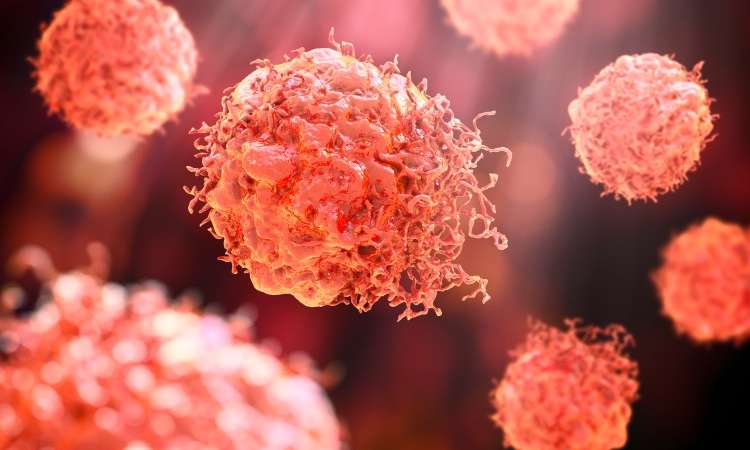

Hosted by Drug Discovery World and supported by Sartorius and BioIVT, this webinar will explore the opportunities and challenges that exist within cancer research drug discovery and development.
You will hear from Dr Sudha Rao, Chief Scientific Officer of Kazia Therapeutics, Karol Budzik, PhD, Business Development Associate at Vyriad Therapeutics and Lars van der Veen, Chief Scientific Officer at iOnctura.
Presentations will cover how cancer treatments have shifted towards reprogramming the biology driving tumour growth, immune escape and treatment resistance, the trajectory that in vivo CAR-T treatments are taking, and how challenging tumours burdened by stroma and immune-mediated resistance can be tackled.
Q&A with the speakers follows the presentations.
The post New webinar: Tackling drug discovery challenges in cancer research appeared first on Drug Discovery World (DDW).
Amid the rise of psychedelics in the mental health space, researchers have begun to explore psilocybin as a treatment for chemotherapy-induced peripheral neuropathy.
Uncategorized
New Spectrometry Technique Could Aid Formulation Development
New Spectrometry Technique Could Aid Formulation Development
A new technique combining two forms of spectrometry could help biopharmaceutical companies improve their choice of formulation buffer for antibody manufacturing by revealing how molecular forms and three-dimensional shapes of complex biologics respond to their environment. That’s the view of Christian Bleiholder, PhD, a professor at Florida State University who helped develop the technique.
According to Bleiholder, what happens structurally when a complex biological molecule, such as an antibody or viral spike protein, binds to its target is currently poorly understood.
“This is where [this approach] can help with the bioprocessing and formulation,” he says, as structural changes “can affect the lifespan [of the product] and lead to issues, such as aggregation.”
Because antibodies are complex, existing techniques tend to be powerful at different levels of complexity, he explains. Mass spectrometry is particularly powerful for distinguishing molecular composition, while structural approaches such as X-ray crystallography and cryo-electron microscopy can provide high-resolution structural information.
The challenge is understanding the link between these things within a heterogeneous sample, he says.
To overcome this, Bleiholder and his team worked with Bruker Daltonics to develop Tandem-Trapped Ion Mobility Spectrometry (Tandem-TIMS). This combines tandem ion mobility spectrometry with tandem mass spectrometry to disentangle three overlapping layers of molecular complexity: molecular form, three-dimensional shape, and binding or assembly state, he says.
He explains that, if the proteins have different structures, they can be characterized with tandem ion mobility spectrometry, and then mass spectrometry can be used to look at their molecular forms and binding states.
Going forward, Bleiholder hopes the technique can be used for formulation development but also earlier, during drug discovery of new products, such as multi-specific antibodies, to determine which molecular states are important and how those change when a biologic engages its target. He also plans to look at automating the technique.
Bleiholder spoke about using Tandem-TIMS at the Bioprocessing Summit in Boston earlier this year.
The post New Spectrometry Technique Could Aid Formulation Development appeared first on GEN – Genetic Engineering and Biotechnology News.


Generic Drugs

China plans to transform $3M biotech sector into $522B powerhouse by 2030

FDA approves imlunestrant in combination with abemaciclib for ER-positive, HER2-negative, ESR1-mutated advanced or metastatic breast cancer

Time-Restricted Eating Linked to Improved Huntington’s Disease Markers

Discovery of CRISPR’s long lost ancestor may expand gene-editing toolkit

Asahi Kasei Introduces VANTIJ® SU-VFC Benchtop Virus-Filtration System
-
Fierce Biotech6 months ago
Scientists turn pig semen extract into eye drops that kill cancer in mice
-
Endpoints News6 months ago
Novartis to pay $2B upfront to take next-gen PI3Kα inhibitor from Synnovation
-

 Uncategorized6 months ago
Novartis buys Synnovation’s PI3Kα inhibitors for $3 billion
-
Nature Biotechnology6 months ago
Sustained nitric oxide production by engineered E. coli remodels the tumor microenvironment and potentiates immunotherapy
-

 Uncategorized5 months ago
Optical Pooled CRISPR Screen Reveals Regulators of NF-κB Dynamics in Human Cells
-
Uncategorized4 months ago
Relay’s PI3Kα inhibitor clears efficacy bar in Phase 2 vascular anomalies study
-

 STAT News – Biotech6 months ago
STAT+: In private meetings, White House works to win pharma companies’ support for drug pricing bill
-
Nature Biotechnology6 months ago
Mapping cis-regulatory mutations at scale in sorghum enables modulation of gene expression
 Scan to Read