
Uncategorized
Phage Chemical “Crosstalk” Can Backfire, Steering Responders Into Lysogeny

Phages have been known to trade chemical messages to guide their life‑cycle decisions, but new research shows that some of those messages function more like Trojan horses than helpful signals. By releasing peptides (arbitrium) cues, one phage can mislead another into choosing dormancy at a moment when lysis would normally be favored—a strategic manipulation that shifts the competitive balance between viruses sharing the same bacterial host.
Bacteriophages rely on a simple but consequential choice each time they enter a host cell: burst the cell open to release new viral particles (lysis) or integrate into the genome and lie low (lysogeny). In recent years, researchers have uncovered that some phages don’t make this decision alone. Instead, they use short peptides—part of a communication system known as arbitrium—to optimize their lysis/lysogeny switch. High peptide levels signal that hosts are running out, nudging the phage toward dormancy; low levels encourage lytic growth.
A new study from the University of Exeter titled “Arbitrium phages can manipulate each other’s lysis/lysogeny decisions,” and published in Cell, shows that this viral messaging system isn’t as private as once thought. The team found that arbitrium signals can cross species boundaries, allowing one phage to influence the developmental decisions of another. And in some cases, that influence amounts to a molecular trick: a signal that pushes the receiving phage toward lysogeny even when conditions would normally favor lysis.
The researchers describe this as a form of phage crosstalk—and in certain contexts, a manipulative one. By secreting peptides that resemble the arbitrium signals of other phages, a virus can effectively convince its competitor to stand down. The responding phage enters lysogeny prematurely, sparing the bacterial host and reducing competition for the signaling phage’s own progeny.
“The decision to kill or lie dormant depends on the specific situation,” said Rebecca Woodhams, a PhD student at Exeter’s Centre for Ecology and Conservation. “When many bacteria are available, a phage should choose lysis and look to infect these potential hosts. When many hosts have already been killed, and few remain, lying low and waiting for better times is safer.”
The team demonstrated that non‑cognate peptides—signals produced by unrelated phages—can shift the lysis‑lysogeny balance toward early dormancy. This benefits the phage emitting the signal, which avoids competition, but imposes a fitness cost on the responder, which forgoes opportunities for replication.
Robyn Manley, PhD, a co-author on the study, noted that this dynamic complicates the idea of viral communication as cooperative: “Viral communication is not just cooperation. Sometimes, it is manipulation.”
“Antagonistic co-evolution between signal-emitting and signal-receiving phages to manipulate each other’s infection behaviors may explain the rapid diversification of arbitrium systems and their frequent horizontal exchange to escape the noise of crosstalk,” wrote the authors.
The work was carried out using soil‑associated phages and bacteria, but the implications extend far beyond a single ecological niche. Phage–phage interference like this could ripple through microbial communities, reshaping which bacteria survive and how viral populations compete in shared environments. Understanding how viruses interpret—and misinterpret—chemical cues could help researchers better predict infection outcomes or design phages that resist unwanted crosstalk.
The post Phage Chemical “Crosstalk” Can Backfire, Steering Responders Into Lysogeny appeared first on GEN – Genetic Engineering and Biotechnology News.

Uncategorized
Sanofi Bispecific Scores in Asthma, Rhinosinusitis, but Eczema Bet Doesn’t Pay Off
Sanofi Bispecific Scores in Asthma, Rhinosinusitis, but Eczema Bet Doesn’t Pay Off
Sanofi has faced questions about the potential of lunsekimig in eczema, with executives calling the clinical trial a “measured risk.” Read More
Uncategorized
STAT+: Gilead to buy cancer biotech Tubulis for more than $3 billion
In a move that will grow its oncology pipeline, Gilead Sciences is spending more than $3 billion to buy the German biotech Tubulis, the companies said Tuesday.
The deal includes an upfront payment of $3.15 billion and up to $1.85 billion more if certain milestones are reached. It also highlights both the therapeutic and commercial promise of antibody-drug conjugates, the next-generation chemotherapy treatments that the privately held Tubulis is developing.
Gilead’s latest move comes just months after it said it would acquire Arcellx in a deal worth $7.8 billion. The two companies had already been working together on a multiple myeloma CAR-T therapy that could be approved later this year. Gilead last month also announced that it was buying Ouro Therapeutics, which is focused on drugs for autoimmune disease, for up to $2.18 billion.
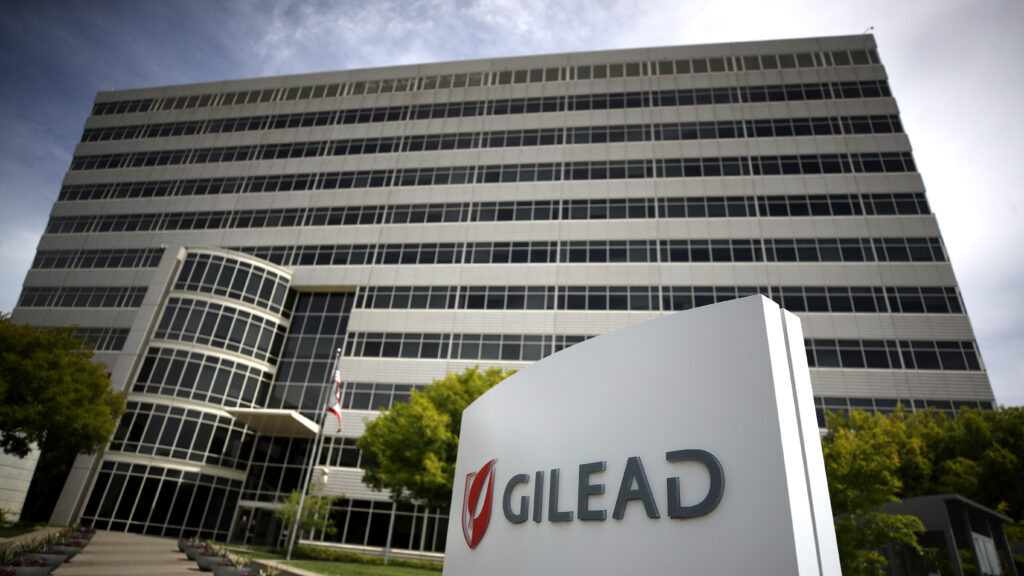
In a move that will grow its oncology pipeline, Gilead Sciences is spending more than $3 billion to buy the German biotech Tubulis, the companies said Tuesday.
The deal includes an upfront payment of $3.15 billion and up to $1.85 billion more if certain milestones are reached. It also highlights both the therapeutic and commercial promise of antibody-drug conjugates, the next-generation chemotherapy treatments that the privately held Tubulis is developing.
Gilead’s latest move comes just months after it said it would acquire Arcellx in a deal worth $7.8 billion. The two companies had already been working together on a multiple myeloma CAR-T therapy that could be approved later this year. Gilead last month also announced that it was buying Ouro Therapeutics, which is focused on drugs for autoimmune disease, for up to $2.18 billion.
In its third acquisition of 2026, Gilead is spending $3.15 billion upfront to snag a next-generation antibody-drug conjugate platform from German startup Tubulis.
The California biopharma could pay out another $1.85 billion down the road …


Illinois’ financial crisis could bring the state to a halt
The final 6 ‘Game of Thrones’ episodes might feel like a full season
New Season 8 Walking Dead trailer flashes forward in time
Mod turns ‘Counter-Strike’ into a ‘Tekken’ clone with fighting chickens
Meet Superman’s grandfather in new trailer for Krypton
Disney’s live-action Aladdin finally finds its stars
Sanofi Bispecific Scores in Asthma, Rhinosinusitis, but Eczema Bet Doesn’t Pay Off

STAT+: Gilead to buy cancer biotech Tubulis for more than $3 billion
Gilead continues dealmaking streak with $3.15B Tubulis buy for ADCs
BioNTech to shutter Singapore HQ after ‘comprehensive review’
Amgen Seeks ‘Return to Growth’ for Tepezza as More Convenient Formulation Aces Phase 3

STAT+: Merck’s experimental HIV prevention pill could be made for less than $5 a year, researchers say
Illinois’ financial crisis could bring the state to a halt
The final 6 ‘Game of Thrones’ episodes might feel like a full season
New Season 8 Walking Dead trailer flashes forward in time
Mod turns ‘Counter-Strike’ into a ‘Tekken’ clone with fighting chickens
Meet Superman’s grandfather in new trailer for Krypton
Disney’s live-action Aladdin finally finds its stars
-
 Uncategorized9 years ago
These ’90s fashion trends are making a comeback in 2017
-
Contributors9 years ago
The final 6 ‘Game of Thrones’ episodes might feel like a full season
-
Uncategorized9 years ago
According to Dior Couture, this taboo fashion accessory is back
-
Uncategorized9 years ago
The old and New Edition cast comes together to perform
-
Uncategorized9 years ago
Phillies’ Aaron Altherr makes mind-boggling barehanded play
-
Uncategorized9 years ago
Uber and Lyft are finally available in all of New York State
-
Uncategorized9 years ago
Disney’s live-action Aladdin finally finds its stars
-
Uncategorized9 years ago
Steph Curry finally got the contract he deserves from the Warriors