
Uncategorized
Parabilis Files for IPO, a Day After Signing Up-to-$2.3B Regeneron Collaboration

Parabilis Medicines, the developer of drugs and antibody-drug conjugates targeting historically undruggable protein targets and based on stabilized helical peptides or Helicons , has filed for an initial public offering (IPO), joining a growing parade of companies seeking to raise capital by tapping into the improving market for first time biotech stocks.
The company’s IPO filing came a day after Parabilis inked an up-to-$2.3 billion-plus strategic research collaboration with Regeneron Pharmaceuticals to discover and develop an initial five candidates encompassing “antibody-Helicon conjugates,” a new form of antibody-drug conjugates aimed at challenging and historically undruggable targets.
Regeneron has agreed to purchase approximately $75 million of Parabilis common stock in a concurrent private placement, at 90% of the IPO price per share.
It’s too soon to know how much money Parabilis plans to raise through the IPO. The company’s Form S-1 registration statement, filed Tuesday with the U.S. Securities and Exchange Commission (SEC), includes a placeholder “$100 million” figure that will inevitably be revised, and doesn’t say how many shares will be sold. Parabilis has applied to list its shares on The Nasdaq Global Market under the ticker symbol “PBLS.”
It’s also too early to know how much of the proceeds will go toward the four priorities it highlighted in its registration statement. Two of the four priorities relate to Parabilis’ lead Helicon peptide candidate zolucatetide (formerly FOG-001), a first and only direct inhibitor of the elusive β-catenin:TCF interaction, according to the company. Parabilis stated that it plans to continue ongoing clinical development of zolucatetide in desmoid tumors, including continuation of dose expansion and the launch of a Phase III registrational trial to topline data.
Parabilis also plans to continue ongoing clinical development of zolucatetide across several additional indications, including dose escalation and expansion in familial adenomatous polyposis (FAP); hepatocellular carcinoma, the most common type of primary liver cancer; and other rare tumors, with the aim of collecting data to support a registrational trial.
‘Expansive opportunity’
“We believe zolucatetide provides clinical validation of our first-in-industry Helicon approach and represents an expansive opportunity for medical and commercial impact,” Parabilis stated.
In addition, Parabilis plans to use IPO proceeds toward advancing its pipeline of additional programs—including its ERG protein degrader, an allosteric androgen receptor in its active state (ARON), and beta-catenin degraders—to Phase I clinical data; toward continued evolution of the Helicon platform for discovering and developing drug candidates; as well as toward general corporate purposes that include additional development efforts, working capital, and operating expenses.
According to Parabilis, zolucatetide has been evaluated in more than 150 patients to date and has generated positive clinical data in solid tumors characterized by alterations in the Wnt/beta-catenin pathway. In the drug’s lead indication of desmoid tumors, researchers have seen tumor reductions in 100% of patients with a 74% objective response rate (ORR) in patients who have had at least two post-baseline scans.
In March, Parabilis presented preliminary clinical data at the 11th Biennial Meeting of the International Society for Gastrointestinal Hereditary Tumors (InSiGHT) showing significant improvement in duodenal polyposis at 60 weeks in a patient with familial adenomatous polyposis (FAP) treated with zolucatetide in the company’s ongoing Phase I/II trial (NCT05919264).
The patient showed a 52.2% reduction in desmoid tumor diameter, as well as “substantial” reductions in polyp number and size compared with a pre-treatment evaluation nearly two years prior, consistent with downstaging from Spigelman stage II to stage I.
Parabilis says its Helicon discovery platform allows it to precisely tune potency, selectivity, and pharmacologic properties by integrating ligands and additional functionalities at multiple positions. The platform integrates artificial intelligence (AI)- and physics-based computational modeling with high-throughput peptide synthesis and experimental screening.
“While our initial programs are focused on disrupting protein-protein interactions and inducing targeted protein degradation, we believe our platform can incorporate other advances in small molecule drug design and extend them to targets that are likely to remain out of reach for other modalities,” Parabilis stated.
Parabilis was founded in 2015 as FogPharma to commercialize technology developed in and inlicensed from the lab of Harvard University researcher and serial entrepreneur Gregory Verdine, PhD. The company, which rebranded itself into Parabilis in 2024, says it has generated proprietary datasets, comprising millions of data points for hundreds of thousands of Helicons across dozens of drug-like properties, following a decade of Helicon drug discovery.
‘Continuous learning loop’
“These data power a continuous learning loop that refines our models from target selection through lead optimization, enhancing our speed, precision, and ability to generate high quality molecules against difficult targets,” Parabilis explained. “As a result, our platform produces unique complex synthetic molecules at scale and a compounding advantage that we believe is difficult to replicate.”
If it carries out the planned IPO, Parabilis would be the 12th biotech to go public this year. The 11 IPO companies to date have raised a combined $3.491 billion, compared to the $1.556 billion raised by 11 companies this time last year. Six of the 11 companies have seen their shares rise since their initial offerings, led by the 520% share price increase of Veradermics, a developer of treatments for dermatology and aesthetic conditions that closed Wednesday at $105.32 a share.
This year’s largest IPO—and the largest of any biotech—was the $625 million offering of Kailera Therapeutics, a developer of therapies for obesity and weight management based on glucagon-like peptide receptor 1 (GLP-1) agonists, alone or in combination with glucose-dependent insulinotropic polypeptide (GIP) receptor agonists.
Kailera last month completed what grew into a $718.75 million IPO last month that generated an estimated $662.1 million in net proceeds through the sale of 44,921,875 shares of common stock—including the exercise in full by underwriters of their option to purchase 5,859,375 additional shares—at the IPO price of $16 per share.
Should Parabilis’ planned IPO raise the placeholder $100 million amount, it would increase by 30% the $329.039 million in cash and cash equivalents that the company reported as of March 31.
Parabilis disclosed in its IPO filing that it ended the first quarter with a $45.316 million net loss, up 18% from its $38.342 million net loss of Q1 2025—as well as a net loss of $145.9 million for last year, up nearly 24% from its $117.9 million net loss for 2024. The company has no reported revenue.
Parabilis’ accumulated deficit rose 8% during Q1, to $586.82 million from $541.504 million at the end of 2025.
To fund its operations, Parabilis reported, it has raised a total $876.8 million as of March 31. That total consisted of $811.8 million from sales of its convertible preferred stock, $15 million in borrowings under a term loan and a $50 million Simple Agreement for Future Equity (SAFE).
The IPO comes just four months after Parabilis completed its last financing, an oversubscribed $305 million Series F round completed in January and co-led by investment firms RA Capital Management, Fidelity Management & Research Co., and Janus Henderson Investors.
Five investment firms were listed in the Form S-1 as underwriters for the IPO: Leerink Partners, BofA Securities, Evercore ISI, Guggenheim Securities, and LifeSci Capital.
The post Parabilis Files for IPO, a Day After Signing Up-to-$2.3B Regeneron Collaboration appeared first on GEN – Genetic Engineering and Biotechnology News.

Uncategorized
STAT+: At hospital finance conference, a call to end the friction that’s keeping costs high
NATIONAL HARBOR, Md. — At this week’s annual meeting of hospital finance leaders, the exhibit hall was packed with dozens of billing and collections companies. Armed with candy, tote bags, and pens, they smiled at passersby, eager to explain why their tactics would extract the most money from health insurers.
The sheer number of “revenue cycle” vendors who attended the Healthcare Financial Management Association’s annual conference in Maryland — outnumbering even the hospital attendees, according to a list shared by an organizer — was a visible reminder of the enormous industry built around just paying medical bills.
The U.S. health care industry spends roughly $200 billion annually on financial transactions: claims processing, payment, collections, and prior authorization. And yet the proliferation of billing vendors seemed to clash with the main theme of HFMA’s conference, affordability, spotlighting the need to simplify the billing process so that health care is less costly and more accessible for patients.
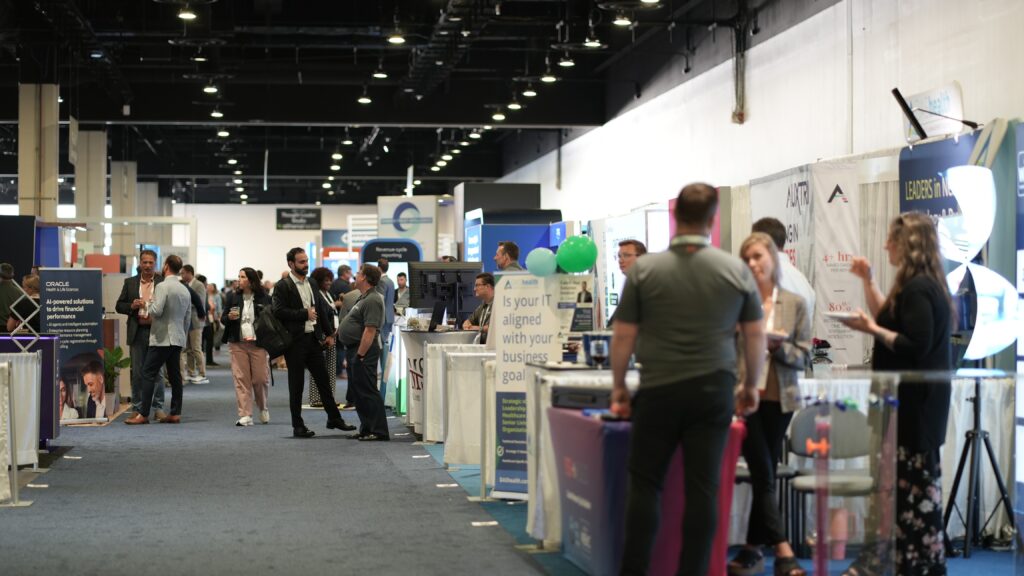
NATIONAL HARBOR, Md. — At this week’s annual meeting of hospital finance leaders, the exhibit hall was packed with dozens of billing and collections companies. Armed with candy, tote bags, and pens, they smiled at passersby, eager to explain why their tactics would extract the most money from health insurers.
The sheer number of “revenue cycle” vendors who attended the Healthcare Financial Management Association’s annual conference in Maryland — outnumbering even the hospital attendees, according to a list shared by an organizer — was a visible reminder of the enormous industry built around just paying medical bills.
The U.S. health care industry spends roughly $200 billion annually on financial transactions: claims processing, payment, collections, and prior authorization. And yet the proliferation of billing vendors seemed to clash with the main theme of HFMA’s conference, affordability, spotlighting the need to simplify the billing process so that health care is less costly and more accessible for patients.
Strong science, lower costs and growing capital networks are putting Spain and Portugal on the biotech investment map, even as structural bottlenecks persist, according to two investors.
You know when you are at the eye doctor getting an updated prescription, and suddenly the world snaps into sharper focus? Physicists at the University of California (UC), Berkeley, have now done something similar for electron microscopy. By introducing phase contrast into a cryo‑electron microscope, they have delivered dramatically sharper images of some of biology’s smallest and most elusive proteins.
The advance comes from a new laser phase plate (LPP), described in the paper “Laser phase plate improves structure determination of small proteins by cryo‑EM,” which was published recently in Science. Led by physicist Holger Mueller, PhD, of UC Berkeley and Lawrence Berkeley National Laboratory, the team demonstrated that a laser‑driven phase plate can overcome one of cryo‑EM’s most persistent limitations: poor contrast for small proteins.
Cryo‑EM has transformed structural biology over the past decade, earning a Nobel Prize in 2017 for enabling high‑resolution structures without crystallization. But despite its impact, the technique still struggles with proteins below ~70 kilodaltons—a size range that includes about 90% of the human proteome. “Because of signal-to-noise limitations, the majority of human and animal proteins are too small to be analyzed by these methods [cryo-EM and cryoelectron tomography]. The increase in signal-to-noise ratio provided by this laser phase plate is expected to overcome these important limitations.”
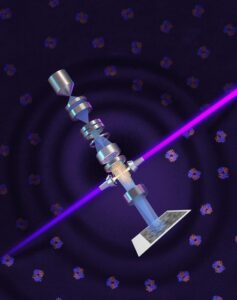
The new LPP begins to address that problem. The LPP uses an intense, continuous‑wave laser to shift the phase of the electron beam itself. This produces true phase contrast without dimming or destabilizing the beam. Mueller described the laser focus as “75 kilowatts focused to a few microns… That’s more powerful than what you use for welding. It has more power than a military laser. It builds up the brightest continuous laser focus ever.”
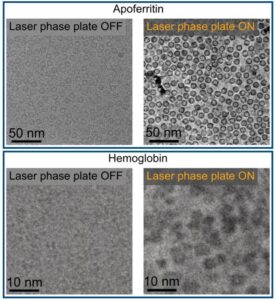
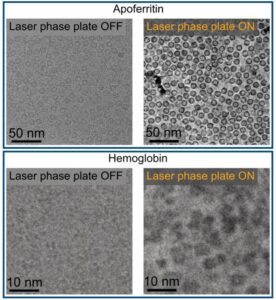
Installed in a custom Thermo Fisher Titan Krios, the LPP immediately improved the clarity and resolvability of small proteins, including hemoglobin, which sits at the lower limit of what today’s cryo‑EM instruments can handle. As the authors wrote in the abstract: “Here, we show that the laser phase plate (LPP)… enhances the resolution in single-particle reconstruction of small proteins by improving specimen-motion correction, recovery of information from the early frames, as well as particle visualization, 3D classification, and alignment.”
These improvements were achieved using standard defocus ranges and reconstruction workflows. “For the most challenging cases—small particles, bad specimens—the laser produces a very considerable advantage,” Mueller said.
The impact extends beyond single‑particle analysis. Cryo‑electron tomography (cryo‑ET), which assembles multiple angular views of a molecule or protein into a three-dimensional image, stands to benefit even more. “With cryo-ET, we’re looking at small, very complicated cellular material that’s incredibly crowded inside the cell,” said Bridget Carragher, PhD, founding technical director of imaging at Biohub. “It’s like a forest of trees, and you’re trying to find one leaf on one tree in there. Cryo-ET needs a dramatic step forward in contrast, so we can start to see what’s going on inside the cell. That’s what the laser phase plate promises to give us.”
Biohub is developing a dual‑laser version of the system, designed to reduce component wear and minimize aberrations. Meanwhile, Mueller’s team is pushing toward imaging proteins as small as 17 kilodaltons, a threshold that would open access to vast regions of the human proteome previously invisible to cryo‑EM.
“This technology is a step function change for biology,” said Stephani Otte, PhD, Biohub’s vice president of imaging science. “What was once invisible will become visible—and that changes everything about how we understand disease.”
“The bottom line is, if you have a large protein and a really good sample—a fresh one or one frozen without bubbles, for example—you may not need the phase plate to get a single, high-quality image. But for a small protein and a bad sample, laser-on is best,” Mueller said. “This could fill an enormous gap in our knowledge of protein structures that can’t be crystallized or are too small for today’s cryo-EM. And it will be revolutionary for cryo-ET.”
The post Laser‑Driven Phase Contrast Enhances Cryo‑EM Resolution of Small Proteins appeared first on GEN – Genetic Engineering and Biotechnology News.


Illinois’ financial crisis could bring the state to a halt
The final 6 ‘Game of Thrones’ episodes might feel like a full season
New Season 8 Walking Dead trailer flashes forward in time
Mod turns ‘Counter-Strike’ into a ‘Tekken’ clone with fighting chickens
Meet Superman’s grandfather in new trailer for Krypton
Disney’s live-action Aladdin finally finds its stars

STAT+: At hospital finance conference, a call to end the friction that’s keeping costs high
Beyond sunshine: Iberia’s biotech moment has arrived with developing capital networks

Laser‑Driven Phase Contrast Enhances Cryo‑EM Resolution of Small Proteins

STAT+: Updated: Tracking RFK Jr.’s promises to remake health in America

An obesity drug deep-dive, and peptides move mainstream

RFK Jr. claims his calendar is publicly available. We’ve been trying to get it for a year
Illinois’ financial crisis could bring the state to a halt
The final 6 ‘Game of Thrones’ episodes might feel like a full season
New Season 8 Walking Dead trailer flashes forward in time
Mod turns ‘Counter-Strike’ into a ‘Tekken’ clone with fighting chickens
Meet Superman’s grandfather in new trailer for Krypton
Disney’s live-action Aladdin finally finds its stars
-
 Uncategorized9 years ago
These ’90s fashion trends are making a comeback in 2017
-
Uncategorized9 years ago
According to Dior Couture, this taboo fashion accessory is back
-
Endpoints News3 months ago
Novartis to pay $2B upfront to take next-gen PI3Kα inhibitor from Synnovation
-
Uncategorized9 years ago
Phillies’ Aaron Altherr makes mind-boggling barehanded play
-
Uncategorized9 years ago
Uber and Lyft are finally available in all of New York State
-
Contributors9 years ago
The final 6 ‘Game of Thrones’ episodes might feel like a full season
-
Uncategorized9 years ago
Steph Curry finally got the contract he deserves from the Warriors
-
Uncategorized9 years ago
The old and New Edition cast comes together to perform