
Uncategorized
Michigan reports first two U.S. deaths in outbreak of cyclospora
LANSING, Mich. — Two people have died in the cyclospora outbreak in Michigan in the first confirmed deaths in the U.S. related to the microscopic parasite, state health officials announced Monday.
The Michigan Department of Health and Human Services said both people had underlying health conditions that may have been impacted by the intestinal illness and dehydration.

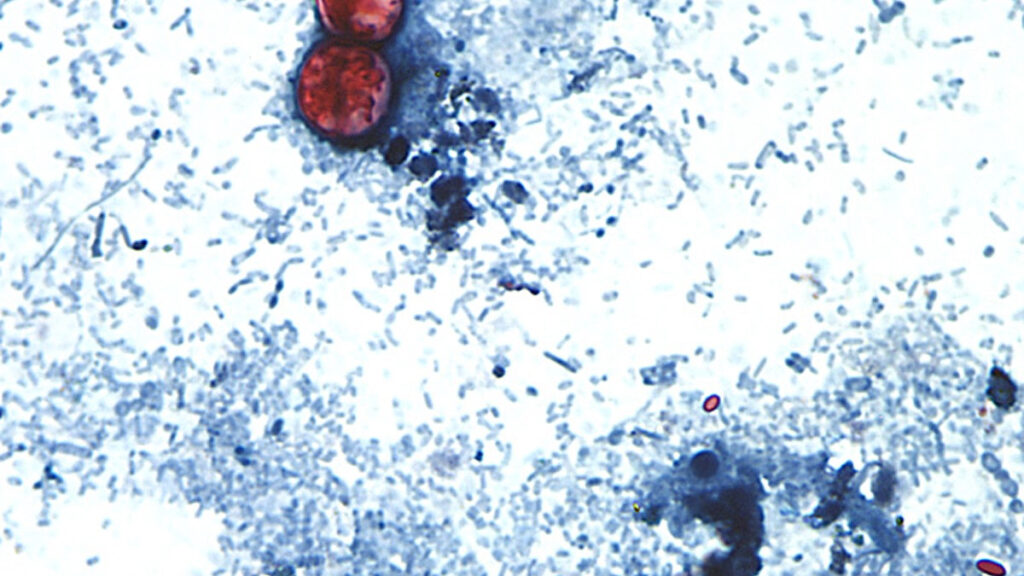
LANSING, Mich. — Two people have died in the cyclospora outbreak in Michigan in the first confirmed deaths in the U.S. related to the microscopic parasite, state health officials announced Monday.
The Michigan Department of Health and Human Services said both people had underlying health conditions that may have been impacted by the intestinal illness and dehydration.

Uncategorized
Combined Phage Therapy and FMT Reduces Recurrent UTIs and Antibiotic Use in First Human Case Series
Recurrent urinary tract infections (rUTIs) are among the most common bacterial infections worldwide. The difficult-to-treat condition, which affects primarily women, is defined as two urinary tract infections (UTIs) within six months or three UTIs within the past year. They are a leading cause of outpatient antibiotic use, accounting for more than 15% of all prescriptions.
While antibiotics remain the standard treatment, frequent recurrences and rising antibiotic resistance highlight the need for alternative therapeutic approaches. Now, researchers have, for the first time, administered a combined phage therapy (PT) with fecal microbiota transplantation (FMT), to decolonize urinary and intestinal reservoirs of rUTI patients.
The novel treatment approach, combining PT and elective FMT, was administered to three female patients, between May and July 2023, with rUTI that did not respond to antibiotics and commonly used non-antibiotic strategies. All had microbiologically confirmed E. coli in multiple infections.
All three women received PT orally and intravesically (locally applied to the bladder via catheter) for eight days outside of acute episodes. Two of these three patients were elected to receive subsequent FMT. Since the bacteria causing the recurring infections often reside in the gut as well as the urinary tract, the FMT treatment targeted the intestinal reservoirs of E. coli that survive antibiotic treatment of acute infections and can become increasingly resistant.
“While phage therapy acts to remove the pathogen, FMT aims to restore a healthy microbiome, combining both immediate and long-term effects,” Lena Biehl, MD, PhD, group leader at Fraunhofer ITMP, deputy lead of Cologne Microbiota Bank, University Hospital Cologne.
This work is published in Nature Microbiology in the paper, “Combined Phage therapy and fecal microbiota transplantation to treat recurrent urinary tract infection: a case series.”
The treatments were well tolerated and did not result in noticeable side effects. The two patients who received the combination therapy have experienced a long-term reduction of UTIs over the course of two years, while the one patient with PT only has experienced further episodes but with reduced symptoms. For all patients, although E. coli was detected in follow-up samples, quality of life improved significantly, while the need for antibiotic treatment was substantially reduced.
“Three patients are not a sufficiently large sample to establish this new therapy, and control groups were lacking. However, this experience has helped to lay the foundation for a clinical trial in order to test the clinical utility of this treatment approach and make it more widely available and sustainable for patients,” comments Shawna McCallin, MD, at the Balgrist University Hospital in Zurich.
The clinical trial is scheduled to begin in June 2027 at the participating institutions as part of the REPhRAME project, which is funded by the European Commission through the Horizon Europe funding programme.
The post Combined Phage Therapy and FMT Reduces Recurrent UTIs and Antibiotic Use in First Human Case Series appeared first on GEN – Genetic Engineering and Biotechnology News.
Uncategorized
STAT+: After Eli Lilly granted one man special access to obesity drug, doctors struggle to get answers
Last month, STAT reported that Eli Lilly granted a single 79-year-old patient special access to retatrutide, an unapproved obesity drug that has demonstrated bariatric-surgery levels of weight loss.
Since then, at least a handful of clinicians have tried to seek the same access for their patients. Two of them haven’t received answers from the drugmaker for weeks; one heard back on Monday, only after STAT reached out to Lilly with questions for this story, that his patient might qualify for access to the drug.
The lack of clarity from Lilly raises new questions about why the company gave extraordinary access to an experimental obesity drug to a single patient. Clinicians are calling for more transparency from Lilly on whether the company plans to expand access, or whether this was a one-time, special circumstance.

Last month, STAT reported that Eli Lilly granted a single 79-year-old patient special access to retatrutide, an unapproved obesity drug that has demonstrated bariatric-surgery levels of weight loss.
Since then, at least a handful of clinicians have tried to seek the same access for their patients. Two of them haven’t received answers from the drugmaker for weeks; one heard back on Monday, only after STAT reached out to Lilly with questions for this story, that his patient might qualify for access to the drug.
The lack of clarity from Lilly raises new questions about why the company gave extraordinary access to an experimental obesity drug to a single patient. Clinicians are calling for more transparency from Lilly on whether the company plans to expand access, or whether this was a one-time, special circumstance.
Uncategorized
STAT+: Medicare eliminates key pathways used by ‘breakthrough’ devices for extra payments
Medicare is removing flexibilities that have allowed medical devices designated as “breakthroughs” by the Food and Drug Administration to leapfrog qualifications for extra payments.
Until now, alternative pathways have allowed authorized breakthrough devices to qualify for supplemental payments without proving their novelty or substantial clinical improvement over alternatives. In its rule for inpatient hospital payments, the Centers for Medicare and Medicaid Services finalized a proposal to repeal those pathways for both inpatient and outpatient settings, starting in fiscal year 2028.
Such payments are meant to incentivize hospitals to use new, transformative technology while it’s still expensive, and give its makers time to prove their value. Requiring breakthrough devices to demonstrate substantial clinical improvement, the rule reads, “ensures that additional Medicare payments are used to support Medicare beneficiaries’ access to innovations that are demonstrated to improve outcomes compared to the currently available treatment.”

Medicare is removing flexibilities that have allowed medical devices designated as “breakthroughs” by the Food and Drug Administration to leapfrog qualifications for extra payments.
Until now, alternative pathways have allowed authorized breakthrough devices to qualify for supplemental payments without proving their novelty or substantial clinical improvement over alternatives. In its rule for inpatient hospital payments, the Centers for Medicare and Medicaid Services finalized a proposal to repeal those pathways for both inpatient and outpatient settings, starting in fiscal year 2028.
Such payments are meant to incentivize hospitals to use new, transformative technology while it’s still expensive, and give its makers time to prove their value. Requiring breakthrough devices to demonstrate substantial clinical improvement, the rule reads, “ensures that additional Medicare payments are used to support Medicare beneficiaries’ access to innovations that are demonstrated to improve outcomes compared to the currently available treatment.”


Illinois’ financial crisis could bring the state to a halt
The final 6 ‘Game of Thrones’ episodes might feel like a full season
New Season 8 Walking Dead trailer flashes forward in time
Mod turns ‘Counter-Strike’ into a ‘Tekken’ clone with fighting chickens
Meet Superman’s grandfather in new trailer for Krypton
Disney’s live-action Aladdin finally finds its stars
Combined Phage Therapy and FMT Reduces Recurrent UTIs and Antibiotic Use in First Human Case Series

STAT+: After Eli Lilly granted one man special access to obesity drug, doctors struggle to get answers

Michigan reports first two U.S. deaths in outbreak of cyclospora

STAT+: Medicare eliminates key pathways used by ‘breakthrough’ devices for extra payments
Evolutionarily Diverse Organisms Switch Genes on Simply and Switch Them off Dynamically
Supernus and Indivior merge to create CNS mega-company with 11 approved drugs
Illinois’ financial crisis could bring the state to a halt
The final 6 ‘Game of Thrones’ episodes might feel like a full season
New Season 8 Walking Dead trailer flashes forward in time
Mod turns ‘Counter-Strike’ into a ‘Tekken’ clone with fighting chickens
Meet Superman’s grandfather in new trailer for Krypton
Disney’s live-action Aladdin finally finds its stars
-
Fierce Biotech4 months ago
Scientists turn pig semen extract into eye drops that kill cancer in mice
-
 Uncategorized9 years ago
These ’90s fashion trends are making a comeback in 2017
-
Endpoints News5 months ago
Novartis to pay $2B upfront to take next-gen PI3Kα inhibitor from Synnovation
-

 Uncategorized4 months ago
Novartis buys Synnovation’s PI3Kα inhibitors for $3 billion
-
Uncategorized9 years ago
According to Dior Couture, this taboo fashion accessory is back
-
Uncategorized9 years ago
Steph Curry finally got the contract he deserves from the Warriors
-
Uncategorized9 years ago
Phillies’ Aaron Altherr makes mind-boggling barehanded play
-
Uncategorized9 years ago
Uber and Lyft are finally available in all of New York State