

Uncategorized
MHRA to offer early review of non-animal data



The Medicines and Healthcare products Regulatory Agency (MHRA) will offer early review of non-animal data in a decision supporting the government’s strategy to reduce animal testing in drug development.
The move is intended to help drug developers make greater use of New Approach Methodologies (NAMs), hopefully giving developers more confidence when making marketing applications based on evidence generated without animal testing.
Though each application will still be assessed on a case-by-case basis, the new guidance does include general regulatory principles, including:
- Generic/biosimilar products or drugs that are not pharmacologically active in animals should not be tested on animals.
- Toxicity testing of biological products on animals should only be done in species shown to be pharmacologically relevant.
- Products with a well-recognised pharmacological profile may enter UK clinical trials without having first been tested on animals.
- Products with a novel pharmacological action should be tested on animals, in line with international guidelines.
- Products that cannot be tested for efficacy in clinical trials, such as vaccines for some emerging pandemic infectious diseases, should be tested on animals.
To support the use of NAMs, the MHRA will review preliminary data from drug trials that use non-animal models. By the end of 2026, companies with a product developed without animal testing can have Module 4 of their Marketing Authorisation application reviewed by the MHRA in advance.
In this scheme, companies will submit Module 4, the Investigator Brochure and the final report of at least one clinical trial. The MHRA will give a non-binding written opinion that accepts the adequacy of the data or explains deficiencies. This will be included in the Marketing Authorisation application, alongside the Module 4 previously submitted and any updated version. The MHRA will undertake a further review, in consultation with the Commission on Human Medicines, and either endorse or reject the application, with reasons for any rejection. Companies submitting Module 4 in advance will be charged a fee to recover administrative costs and discourage unsuitable applications.
Julian Beach, Interim Executive Director Healthcare Quality and Access said: “A clearer regulatory route for medicines developed without animal testing will help accelerate the transition to modern, predictive science and support the Government’s strategy to reduce and ultimately replace animals in research.
“Advances such as AI driven analysis and human derived cell models mean some medicines no longer require animal studies to demonstrate safety and efficacy.
“Our offer to review study data ahead of a full marketing application is designed to help researchers who are adopting these approaches build the robust evidence needed to demonstrate safety and efficacy.”
The post MHRA to offer early review of non-animal data appeared first on Drug Discovery World (DDW).

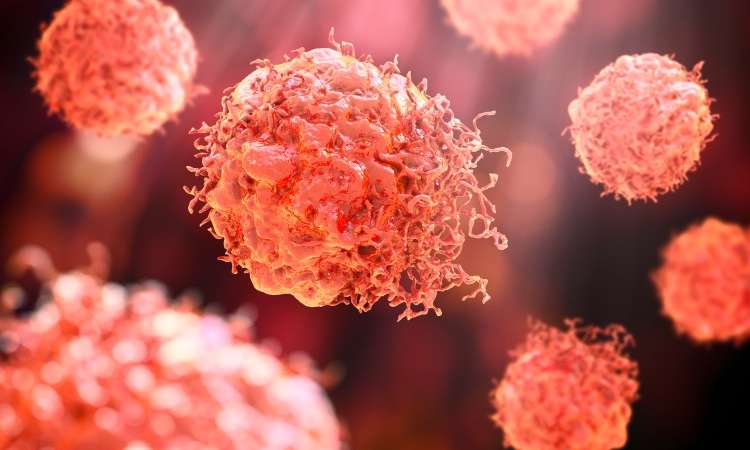

Hosted by Drug Discovery World and supported by Sartorius and BioIVT, this webinar will explore the opportunities and challenges that exist within cancer research drug discovery and development.
You will hear from Dr Sudha Rao, Chief Scientific Officer of Kazia Therapeutics, Karol Budzik, PhD, Business Development Associate at Vyriad Therapeutics and Lars van der Veen, Chief Scientific Officer at iOnctura.
Presentations will cover how cancer treatments have shifted towards reprogramming the biology driving tumour growth, immune escape and treatment resistance, the trajectory that in vivo CAR-T treatments are taking, and how challenging tumours burdened by stroma and immune-mediated resistance can be tackled.
Q&A with the speakers follows the presentations.
The post New webinar: Tackling drug discovery challenges in cancer research appeared first on Drug Discovery World (DDW).
Amid the rise of psychedelics in the mental health space, researchers have begun to explore psilocybin as a treatment for chemotherapy-induced peripheral neuropathy.
Uncategorized
New Spectrometry Technique Could Aid Formulation Development
New Spectrometry Technique Could Aid Formulation Development
A new technique combining two forms of spectrometry could help biopharmaceutical companies improve their choice of formulation buffer for antibody manufacturing by revealing how molecular forms and three-dimensional shapes of complex biologics respond to their environment. That’s the view of Christian Bleiholder, PhD, a professor at Florida State University who helped develop the technique.
According to Bleiholder, what happens structurally when a complex biological molecule, such as an antibody or viral spike protein, binds to its target is currently poorly understood.
“This is where [this approach] can help with the bioprocessing and formulation,” he says, as structural changes “can affect the lifespan [of the product] and lead to issues, such as aggregation.”
Because antibodies are complex, existing techniques tend to be powerful at different levels of complexity, he explains. Mass spectrometry is particularly powerful for distinguishing molecular composition, while structural approaches such as X-ray crystallography and cryo-electron microscopy can provide high-resolution structural information.
The challenge is understanding the link between these things within a heterogeneous sample, he says.
To overcome this, Bleiholder and his team worked with Bruker Daltonics to develop Tandem-Trapped Ion Mobility Spectrometry (Tandem-TIMS). This combines tandem ion mobility spectrometry with tandem mass spectrometry to disentangle three overlapping layers of molecular complexity: molecular form, three-dimensional shape, and binding or assembly state, he says.
He explains that, if the proteins have different structures, they can be characterized with tandem ion mobility spectrometry, and then mass spectrometry can be used to look at their molecular forms and binding states.
Going forward, Bleiholder hopes the technique can be used for formulation development but also earlier, during drug discovery of new products, such as multi-specific antibodies, to determine which molecular states are important and how those change when a biologic engages its target. He also plans to look at automating the technique.
Bleiholder spoke about using Tandem-TIMS at the Bioprocessing Summit in Boston earlier this year.
The post New Spectrometry Technique Could Aid Formulation Development appeared first on GEN – Genetic Engineering and Biotechnology News.


Lilly’s GIP/GLP-1 Candidate Brenipatide Shows Early Clinical Promise in Substance, Psych Disorders

Fatal toxicities test autoimmune CAR T’s safety thesis

Ultragenyx wins first approval for MPS IIIA, closing a bumpy four-year path

EMA’s CHMP backs eight new medicines in September

Electra dips after pricing upsized IPO, bucking trend: Public Equity Report

Generic Drugs
-
Fierce Biotech6 months ago
Scientists turn pig semen extract into eye drops that kill cancer in mice
-
Endpoints News6 months ago
Novartis to pay $2B upfront to take next-gen PI3Kα inhibitor from Synnovation
-

 Uncategorized6 months ago
Novartis buys Synnovation’s PI3Kα inhibitors for $3 billion
-
Nature Biotechnology6 months ago
Sustained nitric oxide production by engineered E. coli remodels the tumor microenvironment and potentiates immunotherapy
-

 Uncategorized5 months ago
Optical Pooled CRISPR Screen Reveals Regulators of NF-κB Dynamics in Human Cells
-
Uncategorized4 months ago
Relay’s PI3Kα inhibitor clears efficacy bar in Phase 2 vascular anomalies study
-

 STAT News – Biotech6 months ago
STAT+: In private meetings, White House works to win pharma companies’ support for drug pricing bill
-

 BioPharma Dive – AI / Data6 months ago
AstraZeneca lung drug gets ‘surprise’ win in COPD trials
 Scan to Read