
Uncategorized
Lonza and InduPro to collaborate on next-gen ADC therapies

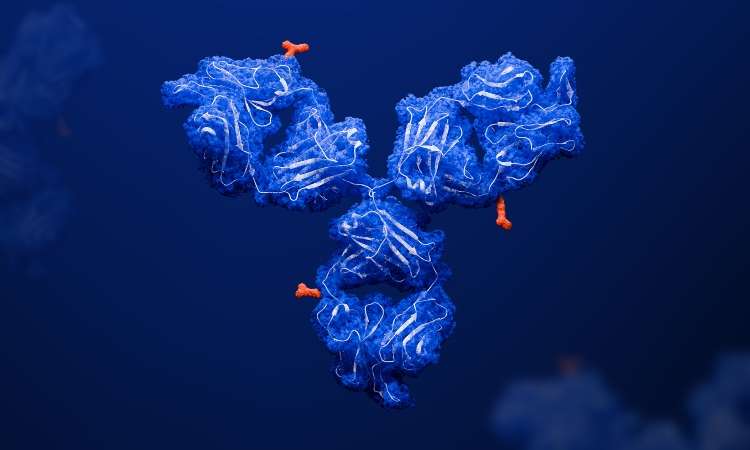

Lonza and InduPro have signed a licensing agreement to advance next-generation antibody-drug conjugates (ADC) therapies.
Under the terms of the agreement, Lonza will grant InduPro a non-exclusive, worldwide license to its proprietary GlycoConnect, HydraSpace and linker-payload technologies. These technologies will be applied to the development of ADCs targeting up to two oncology antigens, supporting the advancement of highly targeted cancer therapies.
InduPro will then combine its proprietary bispecific antibody capabilities with Lonza’s ADC platform, including GlycoConnect, HydraSpace, and SYNtecan E. By leveraging these complementary technologies, the companies aim to develop differentiated therapeutic approaches designed to address complex diseases such as cancer, where precision targeting and efficacy remain critically important.
“We are pleased to be starting this collaboration with InduPro, which underscores the strength and versatility of our ADC platform,” said Jan Vertommen, Vice President of Commercial Development, Advanced Synthesis at Lonza.
“By combining our expertise in bioconjugation technologies and manufacturing with InduPro’s innovative proximity guided antibody platform, we reinforce our commitment to enabling our licensing partners and supporting the advancement of next-generation ADC programmes.”
“This agreement represents an important step in advancing our pipeline of proximity-driven bispecific ADCs,” added Prakash Raman, CEO of InduPro.
“By combining InduPro’s ability to identify novel, disease-specific co-target pairs with Lonza’s industry-leading ADC technologies, we aim to develop differentiated, first-in-class therapeutics that improve selectivity, expand therapeutic windows, and ultimately deliver better outcomes for patients with hard-to-treat tumours.”
The post Lonza and InduPro to collaborate on next-gen ADC therapies appeared first on Drug Discovery World (DDW).

Recent BioSpace industry conference conversations point to sponsors pushing earlier on safety, quality and performance data, leading to demand for nitrosamine analysis, IVRT/IVPT and microbiome database capabilities.
Uncategorized
10 companies hiring in San Francisco, South San Francisco (plus a few in Brisbane, San Rafael)
10 companies hiring in San Francisco, South San Francisco (plus a few in Brisbane, San Rafael)
Looking for a new role in and around San Francisco? Check out these companies hiring across all disciplines. Read More
Uncategorized
Drug Targets LDL Receptor Pathway to Control Cholesterol
Drug Targets LDL Receptor Pathway to Control Cholesterol
Cholesterol-related heart disease remains the leading cause of death worldwide, and while doctors have more tools than ever to treat it, many patients still can’t achieve safe cholesterol levels or can’t tolerate the side effects of available medications. Researchers at the University of California (UC), San Diego, School of Medicine have now uncovered a hidden biological pathway, dependent on a protein known as Ral, which explains why high-cholesterol diets steadily chip away at our body’s ability to clear harmful low-density lipoprotein (LDL) cholesterol from the blood. The team‘s preclinical study, including tests in mice, also identified a drug candidate already proven safe in humans that could potentially target the pathway.
“We’ve known for a long time that a high-cholesterol diet reduces the liver’s ability to clear cholesterol from the blood, but we didn’t fully understand why,” said Alan Saltiel, PhD, professor of medicine at UC San Diego School of Medicine and director of the UC San Diego/UCLA Diabetes Research Center. “This new discovery explains a critical piece of that puzzle.” Saltiel is senior author of the researchers’ published paper in Nature, titled “Dietary cholesterol activates a Ral-dependent pathway driving LDLR turnover,” in which they concluded, “Together, our findings reveal a Ral-dependent signalling pathway as a key regulator of LDLR turnover and cholesterol homeostasis.”
Disruptions in cholesterol homeostasis are closely linked to an increased risk of atherosclerosis and cardiovascular disease (CVD), the authors wrote. “Elevated low-density lipoprotein cholesterol (LDL-C) significantly contributes to CVD by promoting the formation of atherosclerotic plaques in arteries.”
The liver is the main organ involved in removing cholesterol from the blood so it can be broken down and used elsewhere. This is done through LDL receptors (LDLRs), which sit on the surface of liver cells and act like docking stations, grabbing LDL cholesterol from the bloodstream and pulling it inside the cell for processing. “LDLRs have a crucial role in the uptake of LDL-C from the circulation by hepatocytes,” the investigators continued. The more LDL receptors on liver cells, the more cholesterol gets cleared from the blood, which is why most cholesterol-lowering drugs, such as statins or PCSK9 inhibitors, work by preserving or increasing the number of these receptors. However, the team noted, such treatments have their limitations. “The molecular switches that coordinate LDLR trafficking and turnover in response to nutritional cues, including high dietary cholesterol, remain poorly defined.”
The new research, carried out in mice and in human cells, reveals a previously unknown mechanism that quietly works against the cholesterol removal process, slowly reducing the number of LDL receptors and contributing to high blood cholesterol. The team found that this process begins when a protein called Ral—which Saltiel has previously studied in fat cells—is activated by high dietary cholesterol. “We describe here a previously unrecognized role for Ral signaling in orchestrating LDLR cellular trafficking and lysosomal routing in hepatocytes under chronic cholesterol stress,” the team stated.
Their studies showed that the more Ral is activated, the fewer LDL receptors remain available to clear cholesterol from the blood. This depletion process ultimately relies on a lysosomal protease enzyme called cathepsin A (CTSA). They further explained, “Ral engages the endocytic RalBP1–REPS1 complex to promote LDLR internalization and lysosomal routing, where LDLR is degraded by the lysosomal protease cathepsin A (CTSA).”
The researchers also found that blocking CTSA with a selective small molecule inhibitor (SAR164653) was enough to stabilize LDL receptors and dramatically lower circulating LDL cholesterol in mice. “Pharmacological inhibition of CTSA activity increases hepatic LDLR function and improves cholesterol clearance, offering a potential new therapeutic strategy for hypercholesterolaemia and cardiovascular disease,” they stated.
“There’s still a real need for new cholesterol-lowering options, since some people can’t get to safe levels even with the drugs we have now,” said Saltiel. “This new pathway we discovered is completely separate from anything that existing drugs target, so it gives us a new opportunity to fill that gap.”
After a fundamental biological breakthrough, it typically takes significant additional research to find drugs that target it. However, in this case, a CTSA inhibitor has already been through the early stages of drug development, with the initial goal of treating heart failure. While it was eventually shelved for strategic reasons, the drug had previously advanced to a Phase I clinical trial, where it was successfully tested for safety.
This discovery suggests that the investigational drug is already ready for testing in a Phase II trial for high cholesterol. “Luckily, there’s an experimental drug sitting on the shelf that’s already been shown to be safe in humans,” said Saltiel. “We hope to test whether this might be effective by conducting a clinical trial, which could potentially bring a new treatment option to patients much sooner than would have been expected.”
The post Drug Targets LDL Receptor Pathway to Control Cholesterol appeared first on GEN – Genetic Engineering and Biotechnology News.


Illinois’ financial crisis could bring the state to a halt
The final 6 ‘Game of Thrones’ episodes might feel like a full season
New Season 8 Walking Dead trailer flashes forward in time
Mod turns ‘Counter-Strike’ into a ‘Tekken’ clone with fighting chickens
Meet Superman’s grandfather in new trailer for Krypton
Disney’s live-action Aladdin finally finds its stars
10 companies hiring in San Francisco, South San Francisco (plus a few in Brisbane, San Rafael)
Labs see rising demand for nitrosamine, topical performance and microbiome testing
Drug Targets LDL Receptor Pathway to Control Cholesterol
First-in-Human Stem Cell Therapy Trial for Huntington’s Disease Begins at UCI Health

STAT+: Eli Lilly dives into hair loss treatments with investment in AI startup Absci
Jubilant draws FDA rebuke for delayed mold investigation and quality unit lapses
Illinois’ financial crisis could bring the state to a halt
The final 6 ‘Game of Thrones’ episodes might feel like a full season
New Season 8 Walking Dead trailer flashes forward in time
Mod turns ‘Counter-Strike’ into a ‘Tekken’ clone with fighting chickens
Meet Superman’s grandfather in new trailer for Krypton
Disney’s live-action Aladdin finally finds its stars
-
 Uncategorized9 years ago
These ’90s fashion trends are making a comeback in 2017
-
Endpoints News3 months ago
Novartis to pay $2B upfront to take next-gen PI3Kα inhibitor from Synnovation
-
Uncategorized9 years ago
According to Dior Couture, this taboo fashion accessory is back
-
 Uncategorized3 months ago
Novartis buys Synnovation’s PI3Kα inhibitors for $3 billion
-
Uncategorized9 years ago
Phillies’ Aaron Altherr makes mind-boggling barehanded play
-
Uncategorized9 years ago
Uber and Lyft are finally available in all of New York State
-
Uncategorized9 years ago
Steph Curry finally got the contract he deserves from the Warriors
-
Uncategorized9 years ago
The old and New Edition cast comes together to perform