
Uncategorized
Lilly Grows AI Footprint with Up-to-$2.75B Insilico Collaboration

Eli Lilly and Insilico Medicine are expanding a three-year partnership with a discovery and development collaboration that could generate more than $2.75 billion for the AI-based drug developer, Insilico said Sunday.
Lilly has agreed to pay Insilico $115 million upfront, as well as development, regulatory, and commercial milestones, raising the value of the deal, plus tiered royalties on future sales.
In return, Insilico will grant Lilly an exclusive global license to develop, manufacture, and commercialize what an announcement described only as “potentially best-in-class, novel oral therapeutics in preclinical development for certain indications,” without detailing the therapeutic areas where the companies plan to partner.
Partners since 2023
Alex Zhavoronkov, PhD, CEO of Insilico, described Lilly as “one of the top AI players in the world” during the company’s first earnings call since its Hong Kong initial public offering (IPO) last December.
The latest deal continues a relationship that began late in 2023, when Lilly inked a licensing agreement allowing it to access Insilico’s Pharma.AI software suite.
Last November, the two companies announced they were expanding their collaboration to become full-fledged partners in AI-based drug development through a collaboration intended to marry Insilico’s Pharma.AI platforms with Lilly’s development and disease expertise to jointly discover and advance innovative therapies.
Asked at the time whether Insilico could envision being acquired by Lilly someday, Zhavoronkov wouldn’t discuss the possibility: “We can’t comment on M&A [merger and acquisition] speculation but are committed to our current collaborations.”
The companies said their partnership could generate “over $100 million” for Insilico, consisting of an upfront payment, milestone payments, and tiered royalties on net sales upon commercialization of drug products.
However, Lilly and Insilico declined to discuss which targets they planned to pursue—or even whether the partnership would effectively expand Insilico’s pipeline into therapeutic areas beyond its current concentrations in idiopathic pulmonary fibrosis (IPF), cancer, metabolic diseases, and inflammation.
“Cornerstone” investor
A month later in December, Lilly surfaced as one of 15 “cornerstone” investors of Insilico (along with Chinese tech conglomerate Tencent) when Insilico went public on the Hong Kong Stock Exchange (ticker No. 3696) through an IPO that raised HKD 2.277 billion (about $290.9 million) through the sale of 94.69 million shares at HKD 24.05 ($3.07) each.
Lilly invested $5 million in Insilico to acquire 1,617,500 shares (about 1.49% of the total shares offered and 0.28% of Insilico’s total issued share capital) since Insilico’s underwriters exercised in full their option to acquire additional shares at the IPO price.
Since the IPO, Insilico’s shares have more than doubled, closing Friday at HKD 57.20 ($7.30).
The partnership with Insilico marks Lilly’s latest expansion of its growing footprint in AI-based drug development.
During the J.P. Morgan 44th Annual Healthcare Conference in January, Lilly announced plans to launch a five-year, $1 billion partnership with Nvidia to create a “Co-Innovation AI Lab” designed to address key challenges in AI drug discovery. Days before the conference, four partners of Lilly announced drug- and AI data-focused collaborations with the pharma giant—Benchling, Chai Discovery, Revvity, and Schrödinger.
And in October 2025, Lilly said it was partnering with Nvidia to build what the companies called the most powerful supercomputer owned and operated by a pharmaceutical company. The supercomputer was created to power an “AI factory” or specialized computing infrastructure designed to manage the entire AI lifecycle from data ingestion and training to fine-tuning and high-volume inference.
Lilly is among the external collaboration partners that are using Insilico’s Generative Chemistry application, a core component of the Chemistry42 drug discovery engine used for designing and optimizing novel small molecule drug candidates with desired properties from scratch, by using various AI models to streamline hit identification, hit-to-lead, and lead optimization.
Chemistry42 is part of Pharma.AI, a commercially available end-to-end generative AI software and automation platform designed to help users improve the quality and productivity of their pharmaceutical research.
12–18 months per program
In response to the field’s eager anticipation for AI-based clinical approvals, Zhavoronkov asserted, “There will be soon.”
Given the rigorous regulatory requirements that follow a drug’s progression past the IND stage, Insilico’s philosophy argues that AI delivers the most impact during the R&D phase, from “zero to preclinical candidate.”
Since 2021, Insilico has nominated 28 preclinical candidates, achieving an average turnaround of 12–18 months per program, from project initiation to preclinical candidate nomination, with only 60 to 200 molecules synthesized and tested in each program, according to the company. Traditional early-stage drug development typically requires three to six years, according to Thermo Fisher Scientific PPD, and entails screening of millions to billions of compounds for a particular target, according to a 2021 study.
Insilico’s pipeline now consists of more than 40 programs, of which 24 are disclosed on the company’s website as being anywhere from lead optimization through clinical phases. Half of the disclosed programs (12) have received investigational new drug (IND) approvals, enabling their advancement into clinical phases.
Furthest along in clinical studies is rentosertib (formerly called ISM001-055), which is designed to treat idiopathic pulmonary fibrosis (IPF) by targeting Traf2- and NCK- interacting kinase (TNIK), a serine/threonine kinase whose activation plays a crucial role in cellular processes that include signal transduction pathways essential for fibrosis development.
Rentosertib has completed a Phase IIa trial in China, published in Nature Medicine last year, and is in a separate Phase II trial in the United States. Insilico was set to launch a Phase IIb/III study in China for IPF in the first half of this year. Also in the first half, Insilico filed to begin a Phase I trial in China of inhalable rentosertib in IPF, and plans to file IND applications with the FDA to launch trials for inhalable rentosertib in IPF and small molecule rentosertib in kidney fibrosis.
Largest partner
Lilly is the largest biopharma to partner with Insilico, joining with significant albeit lower profile partners in ongoing drug development efforts, including:
- Exelixis—The cancer drug developer committed $80 million upfront and undisclosed development, commercial, and sales-based milestone payments to Insilico in return for licensing rights to Insilico’s SM3091 (now XL309), a small molecule ubiquitin-specific protease 1 (USP1) inhibitor being developed to treat BRCA-mutant tumors. In 2024, Insilico received a $10 million clinical milestone payment for XL309, now in a Phase I trial (NCT05932862), estimated to be completed in 2029.
- Fosun Group—The Chinese biopharma and Insilico are co-developing ISM8207, a small molecule glutaminyl-peptide cyclotransferase-like protein (QPCTL) inhibitor, which Insilico said is potentially first-in-class, as a treatment for advanced malignant tumors, such as those with high engagement of the CD47-Signal Regulatory Protein α (SIRPα) axis, in a Phase I trial (NCT06445517) with an estimated primary completion date of November 2026.
- Hygtia Therapeutics—The Chinese biotech is co-developing Insilico’s ISM8969, an oral, brain penetrant NLRP3 inhibitor for central nervous system (CNS) disorders. Insilico granted Hygtia 50% worldwide rights to research, develop, register, manufacture, and commercialize ISM8969, in return for Hygtia agreeing to pay Insilico up to $66 million in upfront and milestone payments. Hygtia was founded last year, incubated by the Fosun Group and the Shenzhen Pengfu Fund of Fosun Health Capital.
- Menarini Group—An oncology-focused subsidiary of the Italian biopharma and diagnostics developer called Stemline Therapeutics launched a second, up-to-$550 million partnership in January 2025 to develop a preclinical small molecule with an undisclosed “high unmet needs” target in cancer. Menarini paid Insilico a development and regulatory milestone payment of $3 million last July, followed in February by another $5 million milestone payment for completing first-in-patient dosing in a Phase I study (NCT07226427) evaluating MEN2501 (formerly ISM9682) in platinum-resistant ovarian cancer. MEN2501 is a small molecule KIF18A inhibitor for chromosomally unstable solid tumors, and is designed using Insilico’s generative AI engine. The companies are also partnering on MEN2312, a KAT6 inhibitor for breast cancer and other oncology indications that was outlicensed by Insilico to Menarini in 2024 and has since advanced into clinical development, with Insilico saying it has received early development milestone payments.
- Servier—The French-based, foundation-governed drug developer joined Insilico in January to announce launching an up-to-$888 million multi-year R&D collaboration to identify and develop therapeutics for “challenging” oncology targets by leveraging Insilico’s Pharma.AI platform.
IPO-related loss
Insilico announced the expanded partnership with Lilly the same day it reported its annual results for 2025. Insilico finished last year with a loss of $335.2 million, way above the loss of $17.1 million reported in 2024.
Insilico blamed the increased red ink on a year over year loss of revenue and a $296.7 million loss from changes in fair value of financial liabilities at fair value through profit and loss. That was primarily attributable, the company said, to the significant losses incurred when Insilico went public and converted the preferred shares issued in previous private capital financing series into ordinary publicly traded shares.
Year over year, Insilico’s revenue fell about one-third (-34.5%) to $56.239 million from $85.834 million a year earlier.
Nearly half of Insilico’s revenue ($24.952 million) came from drug discovery activity, followed by $23.885 million generated from pipeline development, $4.913 million from software subscription agreements or “solutions,” and $2.489 million from “other discovery” activity outside of the pharmaceutical sector.
The post Lilly Grows AI Footprint with Up-to-$2.75B Insilico Collaboration appeared first on GEN – Genetic Engineering and Biotechnology News.

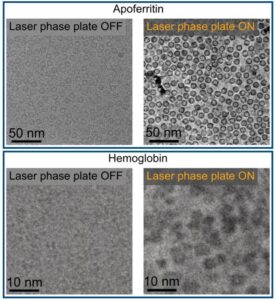
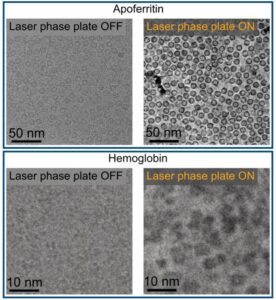
You know when you are at the eye doctor getting an updated prescription, and suddenly the world snaps into sharper focus? Physicists at the University of California (UC), Berkeley, have now done something similar for electron microscopy. By introducing phase contrast into a cryo‑electron microscope, they have delivered dramatically sharper images of some of biology’s smallest and most elusive proteins.
The advance comes from a new laser phase plate (LPP), described in the paper “Laser phase plate improves structure determination of small proteins by cryo‑EM,” which was published recently in Science. Led by physicist Holger Mueller, PhD, of UC Berkeley and Lawrence Berkeley National Laboratory, the team demonstrated that a laser‑driven phase plate can overcome one of cryo‑EM’s most persistent limitations: poor contrast for small proteins.
Cryo‑EM has transformed structural biology over the past decade, earning a Nobel Prize in 2017 for enabling high‑resolution structures without crystallization. But despite its impact, the technique still struggles with proteins below ~70 kilodaltons—a size range that includes about 90% of the human proteome. “Because of signal-to-noise limitations, the majority of human and animal proteins are too small to be analyzed by these methods [cryo-EM and cryoelectron tomography]. The increase in signal-to-noise ratio provided by this laser phase plate is expected to overcome these important limitations.”
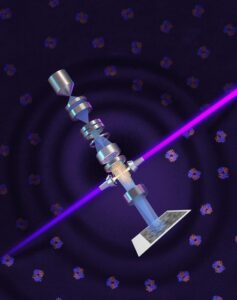
The new LPP begins to address that problem. The LPP uses an intense, continuous‑wave laser to shift the phase of the electron beam itself. This produces true phase contrast without dimming or destabilizing the beam. Mueller described the laser focus as “75 kilowatts focused to a few microns… That’s more powerful than what you use for welding. It has more power than a military laser. It builds up the brightest continuous laser focus ever.”
Installed in a custom Thermo Fisher Titan Krios, the LPP immediately improved the clarity and resolvability of small proteins, including hemoglobin, which sits at the lower limit of what today’s cryo‑EM instruments can handle. As the authors wrote in the abstract: “Here, we show that the laser phase plate (LPP)… enhances the resolution in single-particle reconstruction of small proteins by improving specimen-motion correction, recovery of information from the early frames, as well as particle visualization, 3D classification, and alignment.”
These improvements were achieved using standard defocus ranges and reconstruction workflows. “For the most challenging cases—small particles, bad specimens—the laser produces a very considerable advantage,” Mueller said.
The impact extends beyond single‑particle analysis. Cryo‑electron tomography (cryo‑ET), which assembles multiple angular views of a molecule or protein into a three-dimensional image, stands to benefit even more. “With cryo-ET, we’re looking at small, very complicated cellular material that’s incredibly crowded inside the cell,” said Bridget Carragher, PhD, founding technical director of imaging at Biohub. “It’s like a forest of trees, and you’re trying to find one leaf on one tree in there. Cryo-ET needs a dramatic step forward in contrast, so we can start to see what’s going on inside the cell. That’s what the laser phase plate promises to give us.”
Biohub is developing a dual‑laser version of the system, designed to reduce component wear and minimize aberrations. Meanwhile, Mueller’s team is pushing toward imaging proteins as small as 17 kilodaltons, a threshold that would open access to vast regions of the human proteome previously invisible to cryo‑EM.
“This technology is a step function change for biology,” said Stephani Otte, PhD, Biohub’s vice president of imaging science. “What was once invisible will become visible—and that changes everything about how we understand disease.”
“The bottom line is, if you have a large protein and a really good sample—a fresh one or one frozen without bubbles, for example—you may not need the phase plate to get a single, high-quality image. But for a small protein and a bad sample, laser-on is best,” Mueller said. “This could fill an enormous gap in our knowledge of protein structures that can’t be crystallized or are too small for today’s cryo-EM. And it will be revolutionary for cryo-ET.”
The post Laser‑Driven Phase Contrast Enhances Cryo‑EM Resolution of Small Proteins appeared first on GEN – Genetic Engineering and Biotechnology News.
Uncategorized
STAT+: Updated: Tracking RFK Jr.’s promises to remake health in America
Updated June 11, 2026
WASHINGTON — A pledge to “Make America Healthy Again” earned Robert F. Kennedy Jr. his job atop U.S. health agencies a year and some change ago. He’s now had the opportunity to turn his words into action, with mixed results.
“All one needs” to prove the health secretary’s attentiveness is to “review my unprecedented list of accomplishments on a wide range of issues, all of which I drove,” Kennedy posted on X on Wednesday in response to a journalist.

Updated June 11, 2026
WASHINGTON — A pledge to “Make America Healthy Again” earned Robert F. Kennedy Jr. his job atop U.S. health agencies a year and some change ago. He’s now had the opportunity to turn his words into action, with mixed results.
“All one needs” to prove the health secretary’s attentiveness is to “review my unprecedented list of accomplishments on a wide range of issues, all of which I drove,” Kennedy posted on X on Wednesday in response to a journalist.

Can any of the new obesity medications in development stand out from the pack? Which company just broke records with its IPO? And will the Food and Drug Administration allow greater access to experimental peptides?
We discuss all that and more on this week’s episode of “The Readout LOUD,” STAT’s biotech podcast.


Illinois’ financial crisis could bring the state to a halt
The final 6 ‘Game of Thrones’ episodes might feel like a full season
New Season 8 Walking Dead trailer flashes forward in time
Mod turns ‘Counter-Strike’ into a ‘Tekken’ clone with fighting chickens
Meet Superman’s grandfather in new trailer for Krypton
Disney’s live-action Aladdin finally finds its stars

Laser‑Driven Phase Contrast Enhances Cryo‑EM Resolution of Small Proteins

STAT+: Updated: Tracking RFK Jr.’s promises to remake health in America

An obesity drug deep-dive, and peptides move mainstream

RFK Jr. claims his calendar is publicly available. We’ve been trying to get it for a year

Nonprofit buys experimental cancer drug to maintain patient access
Potential Cocaine Addiction Targets Identified Through Genetic Mapping in Rats
Illinois’ financial crisis could bring the state to a halt
The final 6 ‘Game of Thrones’ episodes might feel like a full season
New Season 8 Walking Dead trailer flashes forward in time
Mod turns ‘Counter-Strike’ into a ‘Tekken’ clone with fighting chickens
Meet Superman’s grandfather in new trailer for Krypton
Disney’s live-action Aladdin finally finds its stars
-
 Uncategorized9 years ago
These ’90s fashion trends are making a comeback in 2017
-
Uncategorized9 years ago
According to Dior Couture, this taboo fashion accessory is back
-
Endpoints News3 months ago
Novartis to pay $2B upfront to take next-gen PI3Kα inhibitor from Synnovation
-
Uncategorized9 years ago
Phillies’ Aaron Altherr makes mind-boggling barehanded play
-
Uncategorized9 years ago
Uber and Lyft are finally available in all of New York State
-
Contributors9 years ago
The final 6 ‘Game of Thrones’ episodes might feel like a full season
-
Uncategorized9 years ago
Steph Curry finally got the contract he deserves from the Warriors
-
Uncategorized9 years ago
The old and New Edition cast comes together to perform