
Uncategorized
In Silico Devices May Improve Drug Manufacturability

Using in silico tools to augment physical experiments can help identify manufacturability issues early in development. That’s according to an AI technology company that spoke on a recent panel.
BigHat Biosciences, which was among the companies presenting at PEGS Boston, explained that developing in silico models of antibody yields using a cell-free expression system allows the exploration of a wider range of mutations.
And this, in turn, lets companies better optimize their product for manufacturability.
“There’s only so many experiments you can do by putting an antibody into CHO [Chinese Hamster Ovary] cells,” explains Hunter Elliott, PhD, vice president of machine learning at BigHat Biosciences.
“With in silico tools augmenting that exploration side, we can build models that make predictions for improved sequences, screening many more antibodies in silico than we need to send to the lab.”
Elliott’s talk came alongside a panelist who argued it was important for preclinical researchers to communicate with the manufacturing departments of their companies to make a success of the latest generation of harder-to-manufacture drugs.
Speaking about his own products, Elliott argues that using in silico tools to explore a wider range of possible antibody mutations means it’s possible to select the handful with the highest possible yields as well as other improved biophysical properties.
“You’re derisking your processes because you’re combining your experiments with the in silico tools you’re using,” he says.
Talking about the panel, Elliott adds that discussion around the limitations of models included the lack of publicly available data on manufacturability and developability, especially for potential products that have failed to make it to the clinic.
Some have expressed concern that using in silico tools might also accidentally screen out the best-performing antibodies. Although, he says, “my personal opinion is that the ability to predict properties of sequences without sending them into the lab makes it easier for us to optimize from a suboptimal starting sequence.”
“With these models, we can keep this imperfect antibody in the loop and take it forward through several rounds of optimization, and then, instead of a candidate molecule being killed early on, it might be engineered into manufacturability.”
The post <i>In Silico</i> Devices May Improve Drug Manufacturability appeared first on GEN – Genetic Engineering and Biotechnology News.

Uncategorized
An obesity drug deep-dive, and peptides move mainstream
Can any of the new obesity medications in development stand out from the pack? Which company just broke records with its IPO? And will the Food and Drug Administration allow greater access to experimental peptides?
We discuss all that and more on this week’s episode of “The Readout LOUD,” STAT’s biotech podcast.

Can any of the new obesity medications in development stand out from the pack? Which company just broke records with its IPO? And will the Food and Drug Administration allow greater access to experimental peptides?
We discuss all that and more on this week’s episode of “The Readout LOUD,” STAT’s biotech podcast.
Uncategorized
RFK Jr. claims his calendar is publicly available. We’ve been trying to get it for a year
WASHINGTON — Health secretary Robert F. Kennedy Jr. on Wednesday pointed to his “publicly available calendar” as an example of his commitment to transparency and to beat back unfavorable reporting.
But no such calendar, detailing who Kennedy meets with or how he spends his time, has been released by the administration. STAT has been asking the Department of Health and Human Services for Kennedy’s calendar for more than a year, via Freedom of Information Act requests and emails to the press office.
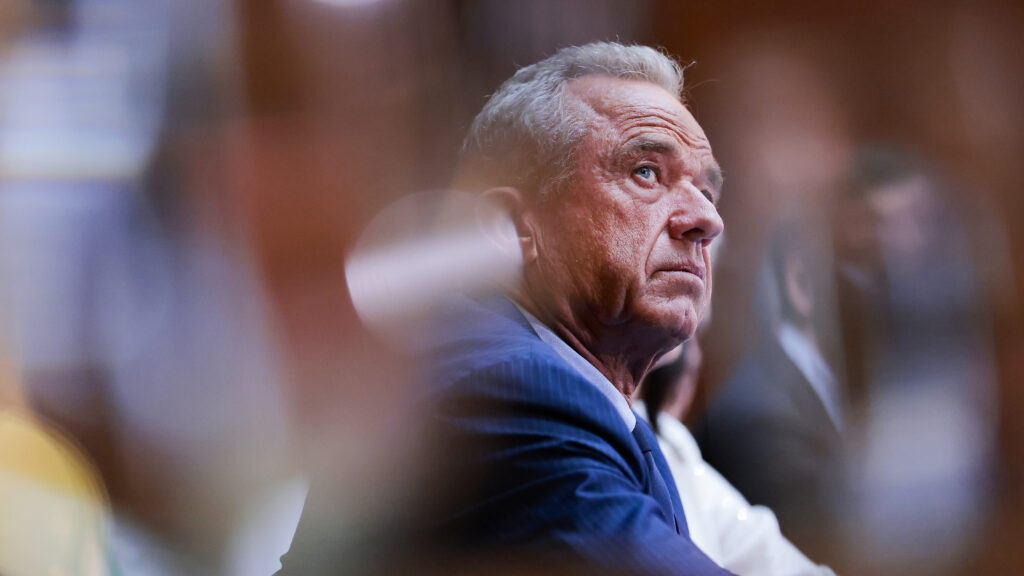
WASHINGTON — Health secretary Robert F. Kennedy Jr. on Wednesday pointed to his “publicly available calendar” as an example of his commitment to transparency and to beat back unfavorable reporting.
But no such calendar, detailing who Kennedy meets with or how he spends his time, has been released by the administration. STAT has been asking the Department of Health and Human Services for Kennedy’s calendar for more than a year, via Freedom of Information Act requests and emails to the press office.
Uncategorized
Nonprofit buys experimental cancer drug to maintain patient access
In a rare move, nonprofit organization Blood Cancer United announced Thursday it was buying the remaining supplies of Luvelta, a discontinued investigational cancer drug.
As part of the transaction, Blood Cancer United, previously known as the Leukemia & Lymphoma Society, will also acquire the investigational new drug designation and manage the compassionate-use program for children with a rare form of blood cancer, distributing the medication to patients at no cost while supplies last.
In a rare move, nonprofit organization Blood Cancer United announced Thursday it was buying the remaining supplies of Luvelta, a discontinued investigational cancer drug.
As part of the transaction, Blood Cancer United, previously known as the Leukemia & Lymphoma Society, will also acquire the investigational new drug designation and manage the compassionate-use program for children with a rare form of blood cancer, distributing the medication to patients at no cost while supplies last.


Illinois’ financial crisis could bring the state to a halt
The final 6 ‘Game of Thrones’ episodes might feel like a full season
New Season 8 Walking Dead trailer flashes forward in time
Mod turns ‘Counter-Strike’ into a ‘Tekken’ clone with fighting chickens
Meet Superman’s grandfather in new trailer for Krypton
Disney’s live-action Aladdin finally finds its stars

An obesity drug deep-dive, and peptides move mainstream

RFK Jr. claims his calendar is publicly available. We’ve been trying to get it for a year

Nonprofit buys experimental cancer drug to maintain patient access
Potential Cocaine Addiction Targets Identified Through Genetic Mapping in Rats
New mRNA Delivery Platform Restores Muscle Function in DMD Models

STAT+: Abridge inks deals with Nvidia and Lilly
Illinois’ financial crisis could bring the state to a halt
The final 6 ‘Game of Thrones’ episodes might feel like a full season
New Season 8 Walking Dead trailer flashes forward in time
Mod turns ‘Counter-Strike’ into a ‘Tekken’ clone with fighting chickens
Meet Superman’s grandfather in new trailer for Krypton
Disney’s live-action Aladdin finally finds its stars
-
 Uncategorized9 years ago
These ’90s fashion trends are making a comeback in 2017
-
Uncategorized9 years ago
According to Dior Couture, this taboo fashion accessory is back
-
Endpoints News3 months ago
Novartis to pay $2B upfront to take next-gen PI3Kα inhibitor from Synnovation
-
Uncategorized9 years ago
Phillies’ Aaron Altherr makes mind-boggling barehanded play
-
Uncategorized9 years ago
Uber and Lyft are finally available in all of New York State
-
Contributors9 years ago
The final 6 ‘Game of Thrones’ episodes might feel like a full season
-
Uncategorized9 years ago
Steph Curry finally got the contract he deserves from the Warriors
-
Uncategorized9 years ago
The old and New Edition cast comes together to perform