
Uncategorized
Gilead sets blockbuster bar for Yeztugo’s first full year on the market


Uncategorized
STAT+: Pharmalittle: We’re reading about an FDA gender rule change, its program for one-day inspections, and more
And so, another working week will soon draw to a close. Not a moment too soon, yes? This is, you may recall, our treasured signal to daydream about weekend plans. Our agenda is still shaping up, but will certainly include promenading with the official mascots, catching up on our reading, and taking a nap or two. We also hope to hold another listening party, where the rotation will likely include this, this, this, this and this. And what about you? The possibilities are endless this time of year, yes? You could enjoy the great outdoors, stream the hours away if the weather fails to cooperate, or rifle through your ever-growing to-do list. Or maybe you simply plan the rest of your life. Well, whatever you do, have a grand time. But be safe. And if mom is around somewhere, remember to say hello. See you soon. …
A proposal by the U.S. Food and Drug Administration to remove references to “gender” from its regulations sparked concerns about unintended consequences on research on gender minority populations, Bloomberg News explains. The FDA issued its proposed rule this week, citing instructions laid out in a 2025 executive order from President Trump, as the administration emphasizes “biological sex” across federal government policies and practices. The Trump administration has supercharged efforts to signal there are only two biological sexes. The FDA said the policy is unlikely to change much, stating the proposal “does not impact industry practice” and they “do not anticipate any measurable change in industry.” But some legal experts see potential for broader impacts on how drugs are tested or who is represented in clinical trials, especially among groups that are traditionally underrepresented in research.
Louisiana urged the U.S. Supreme Court to prevent abortion pills from being prescribed through telemedicine and distributed by mail, as the Republican-led state presses its case to overturn a 2023 federal rule that made access to the medication easier, Reuters writes. In a filing, Republican Louisiana Attorney General Liz Murrill asked the justices to deny emergency requests by two manufacturers of the abortion pill to lift a lower court’s decision that narrowed access to it by blocking the regulation nationwide while the state’s legal challenge continues. The regulation concerning the medication, called mifepristone, was issued by the FDA during Democrat Joe Biden’s presidency. Murrill’s office said the regulation has allowed medication abortions to skyrocket despite the state’s near-total ban on abortion.

And so, another working week will soon draw to a close. Not a moment too soon, yes? This is, you may recall, our treasured signal to daydream about weekend plans. Our agenda is still shaping up, but will certainly include promenading with the official mascots, catching up on our reading, and taking a nap or two. We also hope to hold another listening party, where the rotation will likely include this, this, this, this and this. And what about you? The possibilities are endless this time of year, yes? You could enjoy the great outdoors, stream the hours away if the weather fails to cooperate, or rifle through your ever-growing to-do list. Or maybe you simply plan the rest of your life. Well, whatever you do, have a grand time. But be safe. And if mom is around somewhere, remember to say hello. See you soon. …
A proposal by the U.S. Food and Drug Administration to remove references to “gender” from its regulations sparked concerns about unintended consequences on research on gender minority populations, Bloomberg News explains. The FDA issued its proposed rule this week, citing instructions laid out in a 2025 executive order from President Trump, as the administration emphasizes “biological sex” across federal government policies and practices. The Trump administration has supercharged efforts to signal there are only two biological sexes. The FDA said the policy is unlikely to change much, stating the proposal “does not impact industry practice” and they “do not anticipate any measurable change in industry.” But some legal experts see potential for broader impacts on how drugs are tested or who is represented in clinical trials, especially among groups that are traditionally underrepresented in research.
Louisiana urged the U.S. Supreme Court to prevent abortion pills from being prescribed through telemedicine and distributed by mail, as the Republican-led state presses its case to overturn a 2023 federal rule that made access to the medication easier, Reuters writes. In a filing, Republican Louisiana Attorney General Liz Murrill asked the justices to deny emergency requests by two manufacturers of the abortion pill to lift a lower court’s decision that narrowed access to it by blocking the regulation nationwide while the state’s legal challenge continues. The regulation concerning the medication, called mifepristone, was issued by the FDA during Democrat Joe Biden’s presidency. Murrill’s office said the regulation has allowed medication abortions to skyrocket despite the state’s near-total ban on abortion.
Uncategorized
ASGCT Honors Mohamed Abou‑el‑Enein as Outstanding New Investigator
ASGCT Honors Mohamed Abou‑el‑Enein as Outstanding New Investigator
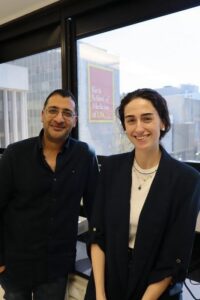
Some scientists build tools. Others build bridges. Mohamed Abou‑el‑Enein, MD, PhD, does both—engineering a high‑dimensional platform that temporally maps CAR T cells, while constructing the translational infrastructure needed to move them from concept to clinic. That dual lens has now earned him two of the American Society of Gene and Cell Therapy’s (ASGCT) top honors: the 2026 Outstanding New Investigator Award and, to his lab, the Best of Molecular Therapy Award, which features the contributions of leading early-career authors to the Molecular Therapy family of journals.
This year’s Molecular Therapy recognition highlights a study from Abou‑el‑Enein’s lab, published in May 2025, that uses spectral flow cytometry to map how CAR T cells remodel during manufacturing, revealing a five‑day window when the cells are most potent. The work reflects a core principle of his group: you cannot rationally engineer what you cannot precisely measure. Their high‑dimensional analytical tools are designed to simultaneously capture the full profile of each engineered cell, information that directly shapes how next‑generation therapies are built.
“Spending my career bridging scientific discovery and patient care, both by supporting others and through our own research, makes this dual recognition especially meaningful,” said Abou‑el‑Enein. “The contribution of translational scientists has long been underestimated and under‑acknowledged, and having a committee of peers recognize its value means a great deal to me.”
As a physician‑scientist, Abou‑el‑Enein brings comprehensive training to the problems of cell and gene therapy translation, a trajectory shaped across leading institutions globally. His path spans clinical medicine, regulatory science, biomanufacturing, and data science—training that now converges at the University of Southern California (USC), where he leads the USC/Children’s Hospital Los Angeles Cell Therapy Program and directs the institution’s cGMP manufacturing facility. His team has built a platform capable of producing a wide range of advanced therapies, from viral vectors to stem‑cell–based products. As USC’s Chuck Murry, MD, PhD, director of the Eli and Edythe Broad Center for Regenerative Medicine and Stem Cell Research noted, he brings “an eclectic mix of cell biology, biomanufacturing, and patient‑centered humanity” to the role.
The Abou‑el‑Enein lab extends that mission by developing computational platforms that unify analytical data with predictive modeling. Their newest effort—UNICORN (UNIfying Cell Therapy Outcome prediction and Regulatory Navigation)—integrates high‑dimensional analytics with machine learning to forecast therapeutic performance and streamline regulatory decision‑making for pediatric cancers and rare diseases. It’s a natural evolution of the group’s earlier work, which established a powerful analytical framework for tracking CAR T cell states over time.
Their broader analytical ecosystem includes tools for single‑cell characterization, computational modeling, and non‑viral precision genome engineering, all designed to support translation from the earliest stages of design.
As he prepares to deliver his Outstanding New Investigator lecture in Boston, Abou‑el‑Enein said the meeting is a chance to reconnect with the community that shaped his translational philosophy.
“These awards are catalysts that give me motivation to keep going,” he said. “I always remind my team… we do science because we believe that what we do will make a difference. It’s really about helping patients and making sure they have a real chance.”
The post ASGCT Honors Mohamed Abou‑el‑Enein as Outstanding New Investigator appeared first on GEN – Genetic Engineering and Biotechnology News.
RIO DE JANEIRO — Mazdak Abulnaga should be the poster child for the type of employee pharma companies want to hire this year.
Abulnaga, a 33-year-old postdoctoral fellow at MIT and Harvard Medical School, is building …


Illinois’ financial crisis could bring the state to a halt
The final 6 ‘Game of Thrones’ episodes might feel like a full season
New Season 8 Walking Dead trailer flashes forward in time
Mod turns ‘Counter-Strike’ into a ‘Tekken’ clone with fighting chickens
Meet Superman’s grandfather in new trailer for Krypton
Disney’s live-action Aladdin finally finds its stars

STAT+: Pharmalittle: We’re reading about an FDA gender rule change, its program for one-day inspections, and more
ASGCT Honors Mohamed Abou‑el‑Enein as Outstanding New Investigator
‘Pharma, not really’: Top young AI talent shuns careers at big drugmakers
Biogen, Eisai hit with 3-month delay for starting SubQ Alzheimer’s therapy
Lilly invests $4.5B in Indiana manufacturing, opens doors of 1st genetic medicine site
Gilead sets blockbuster bar for Yeztugo’s first full year on the market
Illinois’ financial crisis could bring the state to a halt
The final 6 ‘Game of Thrones’ episodes might feel like a full season
New Season 8 Walking Dead trailer flashes forward in time
Mod turns ‘Counter-Strike’ into a ‘Tekken’ clone with fighting chickens
Meet Superman’s grandfather in new trailer for Krypton
Disney’s live-action Aladdin finally finds its stars
-
 Uncategorized9 years ago
These ’90s fashion trends are making a comeback in 2017
-
Contributors9 years ago
The final 6 ‘Game of Thrones’ episodes might feel like a full season
-
Uncategorized9 years ago
According to Dior Couture, this taboo fashion accessory is back
-
Uncategorized9 years ago
Uber and Lyft are finally available in all of New York State
-
Uncategorized9 years ago
Phillies’ Aaron Altherr makes mind-boggling barehanded play
-
Uncategorized9 years ago
The old and New Edition cast comes together to perform
-
Uncategorized9 years ago
Steph Curry finally got the contract he deserves from the Warriors
-
Uncategorized9 years ago
Disney’s live-action Aladdin finally finds its stars