
Uncategorized
Genetic Medicine Delivery Enhanced by Producer Cell Modifications

Gene editing has emerged as a powerful approach for targeting the genetic causes of disease, yet delivering the editing machinery into the correct cells efficiently, safely, and at the scale needed for therapies remains one of the biggest bottlenecks.
Among the leading delivery vehicles are engineered virus-like particles (eVLPs), which can enter human cells similar to viruses but carry no viral genes. Instead, these delivery vehicles carry gene editing tools for therapeutic applications.
In a new study published in Nature Communications titled, “Genome-wide screening reveals producer-cell modifications that improve virus-like particle production and delivery potency,” researchers from Whitehead Institute have developed a platform that systemically identifies which genes drive or block particle assembly to engineer cells that yield more potent delivery vehicles.
“We can engineer the particles as much as we want, but if we don’t understand how the producer cells are actually making the particles, we’re limited in how much we can improve production,” said Aditya Raguram, PhD, Valhalla Fellow at Whitehead Institute and corresponding author of the study.
As virus-like particles are assembled inside cultured human cells, the authors ran a genome-wide search to identify which genes are crucial in the production process by generating a large pool of producer cells in which nearly every gene in the human genome was switched off in the population. This approach generates eVLPs loaded with guide RNAs that identify the genetic perturbation in the cell that produced a particular particle. The team could then identify which gene shutdowns enabled and disabled particle production.
“One thing that surprised me was how clearly the search was able to highlight specific pathways that play a major role in the production of these particles,” said Diana Ly, research technician at Whitehead Institute and first author of the study.
The single gene whose removal most boosted production normally reduces the cell’s output of guide RNAs. Disabling this gene enabled cells to generate more guide RNA and particles to carry more functional cargo.
The improvement also extended across different gene editing tools and particle designs. The team tested the modified producer cells with diverse gene editors and four other delivery-vehicle systems from external labs, and produced improved particles.
“Because guide RNA loading is basically universal across different cargo types and particle types, this improvement could be quite broadly useful beyond the particles we’ve developed,” Raguram says.
Looking ahead, the authors are extending the screening platform to expand beyond switching off one gene at a time to examine how other cellular changes influence particle production. The team is sharing its engineered cell lines with the research community to improve the delivery of gene editing tools into immune cells, neurons, and other cell types important for treating disease.
For Raguram, the work speaks to a broader task facing the gene editing field.
“This delivery challenge is one of the last remaining bottlenecks that really limits the widespread application of gene editing technologies,” he says. “Solving the challenges associated with production could move virus-like particles closer to being ready for use in patients.”
The post Genetic Medicine Delivery Enhanced by Producer Cell Modifications appeared first on GEN – Genetic Engineering and Biotechnology News.

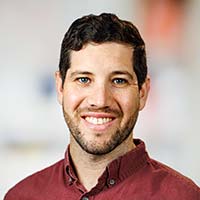
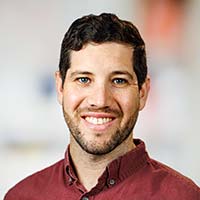
Alex Zevin, PhD
Director, Genomics Shared Resource
Fred Hutchinson Cancer Center
Panelist
Alex Zevin, PhD
Alex Zevin, PhD, began serving as the director of the Genomics Shared Resource at Fred Hutch in December 2022. Before that, he was a research scientist at ArcherDX where he developed NGS in vitro diagnostic devices including several clinical trial assays and an approved companion diagnostic. He also previously worked at InBios International and developed a rapid test for detection of anthrax.
Zevin has a bachelor’s degree in biochemistry from Colorado State University and a PhD in molecular biology from Arizona State University where he developed methods to characterize bacterial communities in engineered systems and conducted postdoctoral research at the University of Washington studying host-microbe interactions in non-human primate models.
- Time:
Digital PCR has emerged as a powerful approach for precise nucleic acid quantification, but it is constrained by limited dynamic range and the difficulty of multiplexing. Newer platforms, like Countable Labs’ single-molecule counting PCR, address both by offering precise quantification across a broad range of target abundances while simplifying multiplexing through single-molecule isolation and fluorescent imaging across millions of spatially fixed compartments.
In this GEN webinar, Alex Zevin, PhD, director of Fred Hutchinson Cancer Center’s Genomics Shared Resource, draws on hands-on experience with managing a suite of nucleic acid quantification technologies, including standard qPCR, digital droplet PCR, and Countable PCR, to share practical guidance for labs considering or expanding their PCR quantification capabilities. Key insights from the webinar include:
- How single-molecule counting differs from conventional digital PCR—and the sensitivity, precision, and multiplexing advantages it enables
- Real-world applications suited to single-molecule counting PCR, including validating NGS results, replacing or supplementing existing assays, and generating clinically actionable data
- Common challenges for converting qPCR and dPCR assays to single-molecule counting PCR, and how to overcome them
A live Q&A session will follow the presentations offering you a chance to pose questions to our expert panelist.
Produced with support from:

The post Digital PCR Playbook: Applications and Challenges Across Research and Clinical Labs appeared first on GEN – Genetic Engineering and Biotechnology News.
Uncategorized
Seaport’s IPO adventure, obesity pill battles, and Makary’s troubles
On this week’s episode of “The Readout LOUD,” we chat with Seaport Therapeutics CEO Daphne Zohar, fresh off the biotech’s successful IPO. Plus, Elaine, Allison, and Adam chat about this week’s notable news, including the obesity pill battle between Eli Lilly and Novo Nordisk, a Phase 3 study win for Cytokinetics, and FDA Commissioner Marty Makary’s White House troubles.
Oh, by the way, this is the 400th episode of your favorite biotech podcast.

On this week’s episode of “The Readout LOUD,” we chat with Seaport Therapeutics CEO Daphne Zohar, fresh off the biotech’s successful IPO. Plus, Elaine, Allison, and Adam chat about this week’s notable news, including the obesity pill battle between Eli Lilly and Novo Nordisk, a Phase 3 study win for Cytokinetics, and FDA Commissioner Marty Makary’s White House troubles.
Oh, by the way, this is the 400th episode of your favorite biotech podcast.
Uncategorized
Science is becoming less disruptive. Is an aging workforce to blame?
Physicist Albert Einstein, widely regarded as one of the most prolific scientists of the past century, conducted much of his transformative work at the beginning of his career, before spending years defending his theories against the burgeoning field of quantum mechanics.
A new study shows that Einstein is not alone, and that most researchers begin their careers conducting their more disruptive work — overturning conventional wisdom and forging paths of their own — but as they age, they tend to abandon that groundbreaking energy. Instead, many become adept at connecting previously unlinked ideas. The paper, published Thursday in Science, helps offer an explanation of a trend that has increasingly worried scholars of science policy and innovation: that the pace of discovery has slowed in recent years.
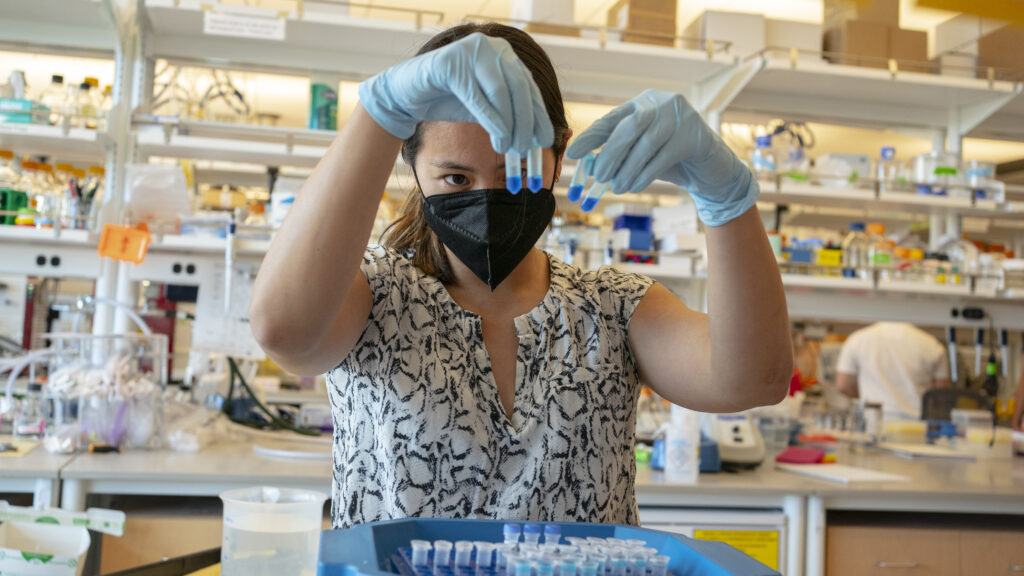
Physicist Albert Einstein, widely regarded as one of the most prolific scientists of the past century, conducted much of his transformative work at the beginning of his career, before spending years defending his theories against the burgeoning field of quantum mechanics.
A new study shows that Einstein is not alone, and that most researchers begin their careers conducting their more disruptive work — overturning conventional wisdom and forging paths of their own — but as they age, they tend to abandon that groundbreaking energy. Instead, many become adept at connecting previously unlinked ideas. The paper, published Thursday in Science, helps offer an explanation of a trend that has increasingly worried scholars of science policy and innovation: that the pace of discovery has slowed in recent years.


Illinois’ financial crisis could bring the state to a halt
The final 6 ‘Game of Thrones’ episodes might feel like a full season
New Season 8 Walking Dead trailer flashes forward in time
Mod turns ‘Counter-Strike’ into a ‘Tekken’ clone with fighting chickens
Meet Superman’s grandfather in new trailer for Krypton
Disney’s live-action Aladdin finally finds its stars

Digital PCR Playbook: Applications and Challenges Across Research and Clinical Labs

Seaport’s IPO adventure, obesity pill battles, and Makary’s troubles

Science is becoming less disruptive. Is an aging workforce to blame?
FDA pilots AI-informed one-day facility inspections
Amazon adds Ozempic pill to same-day prescription drug kiosks

Official leading CDC’s cruise ship program retires
Illinois’ financial crisis could bring the state to a halt
The final 6 ‘Game of Thrones’ episodes might feel like a full season
New Season 8 Walking Dead trailer flashes forward in time
Mod turns ‘Counter-Strike’ into a ‘Tekken’ clone with fighting chickens
Meet Superman’s grandfather in new trailer for Krypton
Disney’s live-action Aladdin finally finds its stars
-
 Uncategorized9 years ago
These ’90s fashion trends are making a comeback in 2017
-
Contributors9 years ago
The final 6 ‘Game of Thrones’ episodes might feel like a full season
-
Uncategorized9 years ago
According to Dior Couture, this taboo fashion accessory is back
-
Uncategorized9 years ago
Uber and Lyft are finally available in all of New York State
-
Uncategorized9 years ago
Phillies’ Aaron Altherr makes mind-boggling barehanded play
-
Uncategorized9 years ago
The old and New Edition cast comes together to perform
-
Uncategorized9 years ago
Steph Curry finally got the contract he deserves from the Warriors
-
Uncategorized9 years ago
Disney’s live-action Aladdin finally finds its stars