

Uncategorized
Genetic Findings Provide Insights Into Leading Cause of Back Pain

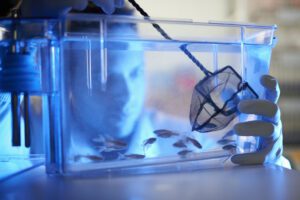
Neck and back pain could be caused by changes in gene activity that trigger the breakdown of the spine’s natural shock absorbers, according to researchers in the U.K. Findings from a study in zebrafish, titled “Targeted modulation of phosphate and lipid metabolism reduces ligament mineralization in col9a1b deficient zebrafish,” and published in Communications Biology, suggest that changes in gene activity can lead to a build-up of minerals in the spine—similar to unwanted bone forming in the wrong place—causing it to harden.
Experts say the findings point to potential future drug targets to treat back pain and suggest zebrafish could be a valuable tool for testing them.
Back pain affects most people at some point in their lives. One of the main underlying causes is the gradual breakdown of spinal discs (which cushion the bones of the spine), known as intervertebral disc degeneration (IVDD).
Despite how common and costly IVDD is, there are currently no drugs that can stop or reverse the condition. Surgery remains the only long-term option.
Genetics are known to play a role in the development of IVDD. A gene connected to a protein called collagen IX, which helps hold the disc’s structural fibers together, has been repeatedly linked to early-onset disc problems.
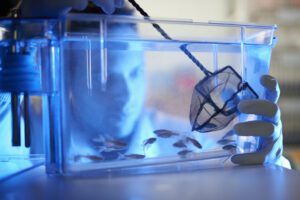
Scientists from the Universities of Edinburgh and Bristol studied zebrafish that were bred to lack a working copy of the gene to better understand how genetic faults could lead to disc disease. As the fish aged, their spines developed problems strikingly similar to human disc disease. The bones of the spine fused together, and the tissue between vertebrae became abnormally hardened with mineral deposits.
The team found that this hardening was preceded by a breakdown in a supportive scaffold layer in the developing spine, well before any mineral began to build up.
Researchers looked at which genes were switched on or off in the fish. They uncovered disruptions to how the body handles fat and to a growth-control pathway called mTOR, alongside changes in phosphate handling and vitamin A signaling, all processes linked to mineral buildup.

The team was also able to demonstrate ways to reduce the damage. The bone-protecting drug bisphosphonate, which is already used for osteoporosis, blocked the mineral buildup. Simply restricting the fish’s food intake, or using drugs that dampen fat metabolism, also reduced spinal fusions.
The findings point to phosphate handling and fat metabolism as promising targets for future drugs, according to the research team.
“For decades, surgery has been the only real answer for disc disease. By understanding the biology that drives the spine to harden, our zebrafish studies point to several ways of slowing it down, including a drug already used safely in patients,” said Erika Kague, PhD, study lead from the University of Edinburgh’s Institute of Genetics and Cancer. “There’s more work to do, but for a condition that’s affected people for generations without a treatment in sight, this is super exciting.”
“For the 9.5 million people across the U.K. living with back pain, this research brings fresh hope that potential new therapeutic approaches are on the horizon,” added Caroline Aylott, PhD, head of research delivery at Arthritis UK. “We are proud to fund research that is unlocking the science behind the processes leading to spinal disc degeneration. Back pain is one of the U.K.’s most common conditions that has blighted millions over generations.
“Dr. Erika Kague and her team at the University of Edinburgh have uncovered important genetic evidence that could pave the way for new treatments, bringing us one step closer to a future where fewer people have to live with the daily pain and challenges that back pain can bring.”
The post Genetic Findings Provide Insights Into Leading Cause of Back Pain appeared first on GEN – Genetic Engineering and Biotechnology News.



Hosted by Drug Discovery World and supported by Sartorius and BioIVT, this webinar will explore the opportunities and challenges that exist within cancer research drug discovery and development.
You will hear from Dr Sudha Rao, Chief Scientific Officer of Kazia Therapeutics, Karol Budzik, PhD, Business Development Associate at Vyriad Therapeutics and Lars van der Veen, Chief Scientific Officer at iOnctura.
Presentations will cover how cancer treatments have shifted towards reprogramming the biology driving tumour growth, immune escape and treatment resistance, the trajectory that in vivo CAR-T treatments are taking, and how challenging tumours burdened by stroma and immune-mediated resistance can be tackled.
Q&A with the speakers follows the presentations.
The post New webinar: Tackling drug discovery challenges in cancer research appeared first on Drug Discovery World (DDW).
Amid the rise of psychedelics in the mental health space, researchers have begun to explore psilocybin as a treatment for chemotherapy-induced peripheral neuropathy.
Uncategorized
New Spectrometry Technique Could Aid Formulation Development
New Spectrometry Technique Could Aid Formulation Development
A new technique combining two forms of spectrometry could help biopharmaceutical companies improve their choice of formulation buffer for antibody manufacturing by revealing how molecular forms and three-dimensional shapes of complex biologics respond to their environment. That’s the view of Christian Bleiholder, PhD, a professor at Florida State University who helped develop the technique.
According to Bleiholder, what happens structurally when a complex biological molecule, such as an antibody or viral spike protein, binds to its target is currently poorly understood.
“This is where [this approach] can help with the bioprocessing and formulation,” he says, as structural changes “can affect the lifespan [of the product] and lead to issues, such as aggregation.”
Because antibodies are complex, existing techniques tend to be powerful at different levels of complexity, he explains. Mass spectrometry is particularly powerful for distinguishing molecular composition, while structural approaches such as X-ray crystallography and cryo-electron microscopy can provide high-resolution structural information.
The challenge is understanding the link between these things within a heterogeneous sample, he says.
To overcome this, Bleiholder and his team worked with Bruker Daltonics to develop Tandem-Trapped Ion Mobility Spectrometry (Tandem-TIMS). This combines tandem ion mobility spectrometry with tandem mass spectrometry to disentangle three overlapping layers of molecular complexity: molecular form, three-dimensional shape, and binding or assembly state, he says.
He explains that, if the proteins have different structures, they can be characterized with tandem ion mobility spectrometry, and then mass spectrometry can be used to look at their molecular forms and binding states.
Going forward, Bleiholder hopes the technique can be used for formulation development but also earlier, during drug discovery of new products, such as multi-specific antibodies, to determine which molecular states are important and how those change when a biologic engages its target. He also plans to look at automating the technique.
Bleiholder spoke about using Tandem-TIMS at the Bioprocessing Summit in Boston earlier this year.
The post New Spectrometry Technique Could Aid Formulation Development appeared first on GEN – Genetic Engineering and Biotechnology News.


Biotech will find a way: The COINS Act won’t stop China biotech innovation

AriBio’s split Phase III result reflects a mixed CTAD

Flagship pours £100M into new U.K. company creation lab

Private European biopharmas make bigger acquisitions in 2026

STAT+: FDA rejects Capricor Therapeutics’ Duchenne therapy, a decision that was a long time coming

Will the first approved psychedelic become a blockbuster?
-

 Uncategorized8 months ago
Novartis buys Synnovation’s PI3Kα inhibitors for $3 billion
-
Endpoints News8 months ago
Novartis to pay $2B upfront to take next-gen PI3Kα inhibitor from Synnovation
-

 Uncategorized7 months ago
Optical Pooled CRISPR Screen Reveals Regulators of NF-κB Dynamics in Human Cells
-
Uncategorized6 months ago
Relay’s PI3Kα inhibitor clears efficacy bar in Phase 2 vascular anomalies study
-
Uncategorized6 months ago
Hybrid solid−liquid optics enable scalable, high-resolution light-sheet microscopy across diverse immersion media
-
Fierce Biotech8 months ago
Scientists turn pig semen extract into eye drops that kill cancer in mice
-
Nature Biotechnology8 months ago
Sustained nitric oxide production by engineered E. coli remodels the tumor microenvironment and potentiates immunotherapy
-
Nature Biotechnology8 months ago
Mapping cis-regulatory mutations at scale in sorghum enables modulation of gene expression
 Scan to Read