

Uncategorized
Gene Editing Pioneer Sangamo Files for Chapter 11 Bankruptcy; Agrees to Sell Assets
Gene Editing Pioneer Sangamo Files for Chapter 11 Bankruptcy; Agrees to Sell Assets

A journey that has lasted more than 30 years for Sangamo Therapeutics, a pioneering gene editing biotech company in the Bay Area, has reached an unwanted milestone as the company filed for Chapter 11 bankruptcy protection.
Concurrent with its starting voluntary Chapter 11 proceedings in the U.S. Bankruptcy Court for the District of Delaware, Sangamo simultaneously entered into two separate asset sale agreements: Eli Lilly has agreed to acquire Sangamo’s capsid delivery platform, zinc finger nuclease (ZFN) platform, modular integrase (MINT) platform, and prion disease program, ST-506. Astellas Pharma has agreed to take over Sangamo’s Fabry disease program, isaralgagene civaparvovec (ST-920).
To clinch the deals, Lilly and Astellas have agreed to be “stalking horse” bidders when Sangamo’s assets are sold in a future bankruptcy court auction. The stalking horse bids do not include the clinical-stage ST-503 program to treat chronic neuropathic pain, the giroctocogene fitelparvovec program to treat hemophilia A, and Sangamo’s cell therapy and regulatory T cell (Treg) assets. Sangamo said these are expected to remain available to interested bidders at the auction.
“We believe this process provides a clear framework to pursue value-maximizing transactions,” said Sandy Macrae, Sangamo’s CEO. “Our priority is to execute a disciplined and efficient sale process while supporting all of our stakeholders. We are also pleased to have signed agreements with two large pharmaceutical companies to serve as stalking horse bidders in the process, underscoring the strategic interest in our assets.”
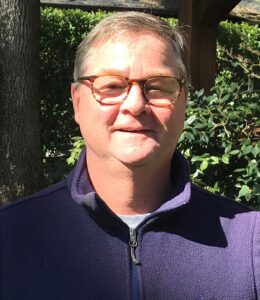
Founded by Ed Lanphier in 1995, Sangamo became an early developer of zinc-finger nucleases (ZFNs), one of the first established gene editing platforms. In 2005, Sangamo scientists led by Fyodor Urnov, PhD, Phil Gregory, PhD, and Mike Holmes, PhD, demonstrated the use of ZFNs to engineer a base substitution in human DNA. The term “genome editing” was born around that report. Sangamo’s technology became the first gene editing platform to enter the clinic, initially for patients with human immunodeficiency virus (HIV), followed by a series of rare genetic diseases.
More recently, the biotech branded itself as a “genomic medicine” company. In 2023, Sangamo trumpeted promising clinical data from its first-in-human Phase I/II STAAR trial (NCT04046224) in Fabry disease. All 25 patients dosed in the STAAR study have continued to show sustained, elevated α-Gal A levels, up to three years for the longest-treated patient. However, later that year, Sangamo deferred additional spending on planning a future Phase III program for ST-920, absent a collaboration partner or additional external funding.
Sangamo made the move as part of a restructuring that included a similar deferral of spending on chimeric antigen receptor-modified regulatory T-cell (CAR-Treg) therapies, the elimination of 40% of its U.S. workforce, and the narrowing of its pipeline. Sangamo said it was refocusing its spending on developing epigenetic regulation therapies treating neurological diseases, as well as novel adeno-associated virus (AAV) capsid delivery technologies.
In 2024, Sangamo shares surged 69% after it reached alignment with the FDA on a regulatory pathway to Accelerated Approval for ST-920 in advance of submitting a biologics license application (pre-BLA). However, Dennis Ding, an equity analyst with Jefferies, argued that the news posed little threat to the developer of the sole marketed drug for the rare disorder, Galafold® (migalastat), marketed by Amicus Therapeutics.
Last month, Sangamo said it remained in the process of completing a rolling BLA submission to the FDA for Accelerated Approval of ST-920 based on the mean annualized estimated glomerular filtration rate (eGFR) slope at 52-weeks across all dosed patients in the study. Two-year eGFR data may serve as confirmatory evidence for traditional approval, Sangamo said the FDA affirmed.
Sangamo was also advancing the Chemistry, Manufacturing and Controls (CMC) module, ahead of completion of the rolling BLA submission for ST-920, which the company said it expected this summer (subject to the ability to secure adequate additional funding), while it was continuing to commercialize the Fabry gene therapy.
In reporting first-quarter results, Sangamo said that it had submitted preclinical and clinical modules for review, while also submitting its antibody assay companion diagnostic, designed to screen patients for eligibility with ST-920, to the FDA’s Center for Devices and Radiological Health (CDRH).
Sangamo reported a $31-million net loss on revenue that plunged 78% year over year to $1.4 million from $6.4 million. Sangamo said $5 million of that decrease reflected Pfizer’s termination early last year of its collaboration with Sangamo to develop a hemophilia A gene therapy, giroctocogene fitelparvovec.
The termination occurred six months after Sangamo and Pfizer partnered to report positive Phase III data for giroctocogene fitelparvovec. The gene therapy met its primary endpoint in the Phase III AFFINE trial (NCT04370054) compared with Factor VIII (FVIII) replacement.
Sliding doors
Speaking several years ago with The CRISPR Journal, a peer-reviewed journal and sister publication of GEN, Sangamo founder Edward Lanphier reflected on the company’s bright beginnings. In 1994–95, he recalled, he became aware of research being done by Jeremy Berg, PhD, and Srinivasan Chandrasegaran, PhD, on engineering zinc finger proteins (ZFPs).

“While it was certainly unclear what making novel DNA-binding proteins might do, novel DNA sequences represented the other half of this equation—an agnostic vector plus a platform for developing novel transgenes. I became quite interested in that, and thus in starting Sangamo,” Lanphier remembered.
After founding Sangamo in 1995, Lanphier joined the company full-time two years later. Sangamo’s name was derived from some fascinating family history—Lanphier’s great-grandfather, a Yale-educated electrical engineer, founded a company in Sangamon County, IL, during the 1890s.
He designed and patented “the watt hour meter—the thing that sits on the side of buildings and goes around and around recording electricity,” Lanphier recalled. The Sangamo Electric Company manufactured various electronic components before being sold in the 1970s to Schlumberger.
Lanphier remembered “this incredibly cool logo from Sangamo Electric. I asked my dad, ‘‘What do you think?’’ He said, ‘‘That would be great!’’ And so, I started Sangamo Biosciences.”
While ZFNs showed immense promise as a commercial gene editing platform, they were difficult and expensive to manufacture. The dramatic arrival of CRISPR in 2012–13 quickly pushed ZFNs onto the fringes of the clinical gene editing space.
“When the [gene editing] movie is written, I know it is going to focus exclusively on the Broad and Berkeley and Charpentier and their work. But it is completely unfair—not to me but to Fyodor and Ed [Rebar] and Philip and Mike Holmes and Jeff Miller and the dozens of people who did create this field.”
Lanphier was asked why Sangamo never joined the CRISPR revolution a decade ago. “My perspective was always that [CRISPR] is bacterial—it is nonspecific, it is immunogenic. It’s a great research tool. It’s going to give a lot of visibility to genome editing. When people actually want to use it therapeutically, that’s when they will end up talking to us.”
Alas for Sangamo, that eventuality did not materialize.
The post Gene Editing Pioneer Sangamo Files for Chapter 11 Bankruptcy; Agrees to Sell Assets appeared first on GEN – Genetic Engineering and Biotechnology News.



Hosted by Drug Discovery World and supported by Sartorius and BioIVT, this webinar will explore the opportunities and challenges that exist within cancer research drug discovery and development.
You will hear from Dr Sudha Rao, Chief Scientific Officer of Kazia Therapeutics, Karol Budzik, PhD, Business Development Associate at Vyriad Therapeutics and Lars van der Veen, Chief Scientific Officer at iOnctura.
Presentations will cover how cancer treatments have shifted towards reprogramming the biology driving tumour growth, immune escape and treatment resistance, the trajectory that in vivo CAR-T treatments are taking, and how challenging tumours burdened by stroma and immune-mediated resistance can be tackled.
Q&A with the speakers follows the presentations.
The post New webinar: Tackling drug discovery challenges in cancer research appeared first on Drug Discovery World (DDW).
Amid the rise of psychedelics in the mental health space, researchers have begun to explore psilocybin as a treatment for chemotherapy-induced peripheral neuropathy.
Uncategorized
New Spectrometry Technique Could Aid Formulation Development
New Spectrometry Technique Could Aid Formulation Development
A new technique combining two forms of spectrometry could help biopharmaceutical companies improve their choice of formulation buffer for antibody manufacturing by revealing how molecular forms and three-dimensional shapes of complex biologics respond to their environment. That’s the view of Christian Bleiholder, PhD, a professor at Florida State University who helped develop the technique.
According to Bleiholder, what happens structurally when a complex biological molecule, such as an antibody or viral spike protein, binds to its target is currently poorly understood.
“This is where [this approach] can help with the bioprocessing and formulation,” he says, as structural changes “can affect the lifespan [of the product] and lead to issues, such as aggregation.”
Because antibodies are complex, existing techniques tend to be powerful at different levels of complexity, he explains. Mass spectrometry is particularly powerful for distinguishing molecular composition, while structural approaches such as X-ray crystallography and cryo-electron microscopy can provide high-resolution structural information.
The challenge is understanding the link between these things within a heterogeneous sample, he says.
To overcome this, Bleiholder and his team worked with Bruker Daltonics to develop Tandem-Trapped Ion Mobility Spectrometry (Tandem-TIMS). This combines tandem ion mobility spectrometry with tandem mass spectrometry to disentangle three overlapping layers of molecular complexity: molecular form, three-dimensional shape, and binding or assembly state, he says.
He explains that, if the proteins have different structures, they can be characterized with tandem ion mobility spectrometry, and then mass spectrometry can be used to look at their molecular forms and binding states.
Going forward, Bleiholder hopes the technique can be used for formulation development but also earlier, during drug discovery of new products, such as multi-specific antibodies, to determine which molecular states are important and how those change when a biologic engages its target. He also plans to look at automating the technique.
Bleiholder spoke about using Tandem-TIMS at the Bioprocessing Summit in Boston earlier this year.
The post New Spectrometry Technique Could Aid Formulation Development appeared first on GEN – Genetic Engineering and Biotechnology News.


Low Palladium Zinc Oxide Boosts Antibiotic Removal Without Adding Water Toxicity

Brodalumab Treatment for Palmoplantar Pustulosis Linked to Rare Pyoderma Gangrenosum Cases

Summit’s PD-1xVEGF rejected by FDA in lung cancer

Activities Report of the Generic Drug Program | FDARA Title VIII Sections 807 and 805

BIO’s plan for ‘securing America’s biotech century’

China’s innovation moment sees a rise in first in class
-

 Uncategorized8 months ago
Novartis buys Synnovation’s PI3Kα inhibitors for $3 billion
-
Endpoints News8 months ago
Novartis to pay $2B upfront to take next-gen PI3Kα inhibitor from Synnovation
-

 Uncategorized7 months ago
Optical Pooled CRISPR Screen Reveals Regulators of NF-κB Dynamics in Human Cells
-
Uncategorized6 months ago
Relay’s PI3Kα inhibitor clears efficacy bar in Phase 2 vascular anomalies study
-
Uncategorized5 months ago
Hybrid solid−liquid optics enable scalable, high-resolution light-sheet microscopy across diverse immersion media
-
Fierce Biotech8 months ago
Scientists turn pig semen extract into eye drops that kill cancer in mice
-
Nature Biotechnology8 months ago
Sustained nitric oxide production by engineered E. coli remodels the tumor microenvironment and potentiates immunotherapy
-

 BioPharma Dive – AI / Data8 months ago
AstraZeneca lung drug gets ‘surprise’ win in COPD trials
 Scan to Read