
Uncategorized
Four scientists awarded $3m for tau-driven disease research

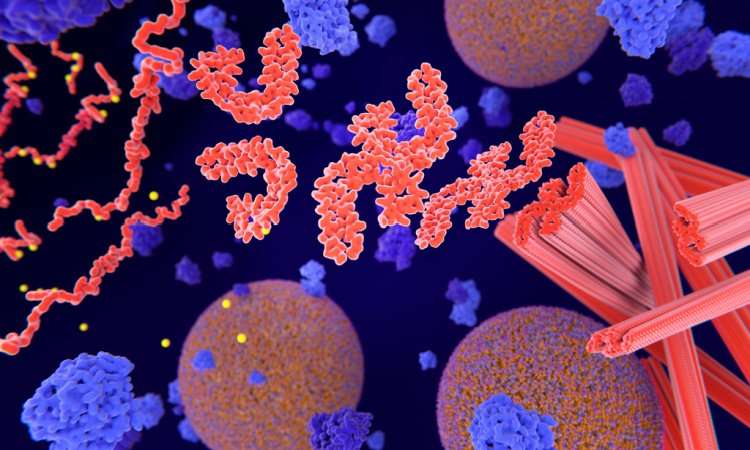

A group of charities have announced $3 million in grants to fund four innovative research projects over two years, stemming from the 2026 Tauopathy Challenge Workshop.
The Rainwater Charitable Foundation, in collaboration with the Alzheimer’s Association, the Aging Mind Foundation, and CurePSP, will fund the proposals based on their potential to advance understanding of tau biology.
Tauopathies are a group of devastating neurodegenerative disorders driven by the abnormal accumulation of tau protein, including Progressive Supranuclear Palsy (PSP), Corticobasal Degeneration (CBD), and Alzheimer’s disease (AD).
The funding will go to:
- Carlo Condello, University of California, San Francisco: This research aims to reveal the molecular heterogeneity of cell type-specific tau conformers in 4-repeat (4R) tauopathies such as PSP and CBD.
- Daniel Lee, University of Kentucky: This research investigates how the tau modification citrullination interacts with phosphorylation to influence tau structure, aggregation, and disease-associated forms of tau.
- Dr Edward Lee, University of Pennsylvania: This research investigates how tau fibres bundle together and interact with nearby cell structures in PSP with the hope of uncovering whether neurons, astrocytes, and oligodendrocytes generate distinct forms of tau pathology.
- Sue-Ann Mok, University of Alberta: This research examines aggregate structures in de novo and seeded tau aggregation reactions to rapidly identify specific tau modifications that help drive or disrupt the formation of disease-associated aggregate structures.
“As the burden of neurodegenerative disease continues to grow, it’s paramount we invest in innovative science that can unlock new paths toward diagnosis, treatment, and prevention,” said Jeremy Smith, President of the Rainwater Charitable Foundation. “We are grateful to our partners for helping make these grants possible and are proud to support the progress of these investigators and the insights they may generate for patients and families affected by these debilitating diseases.”
The post Four scientists awarded $3m for tau-driven disease research appeared first on Drug Discovery World (DDW).


Hosted by Drug Discovery World and supported by Sartorius and BioIVT, this webinar will explore the opportunities and challenges that exist within cancer research drug discovery and development.
You will hear from Dr Sudha Rao, Chief Scientific Officer of Kazia Therapeutics, Karol Budzik, PhD, Business Development Associate at Vyriad Therapeutics and Lars van der Veen, Chief Scientific Officer at iOnctura.
Presentations will cover how cancer treatments have shifted towards reprogramming the biology driving tumour growth, immune escape and treatment resistance, the trajectory that in vivo CAR-T treatments are taking, and how challenging tumours burdened by stroma and immune-mediated resistance can be tackled.
Q&A with the speakers follows the presentations.
The post New webinar: Tackling drug discovery challenges in cancer research appeared first on Drug Discovery World (DDW).
Amid the rise of psychedelics in the mental health space, researchers have begun to explore psilocybin as a treatment for chemotherapy-induced peripheral neuropathy.
Uncategorized
New Spectrometry Technique Could Aid Formulation Development
New Spectrometry Technique Could Aid Formulation Development
A new technique combining two forms of spectrometry could help biopharmaceutical companies improve their choice of formulation buffer for antibody manufacturing by revealing how molecular forms and three-dimensional shapes of complex biologics respond to their environment. That’s the view of Christian Bleiholder, PhD, a professor at Florida State University who helped develop the technique.
According to Bleiholder, what happens structurally when a complex biological molecule, such as an antibody or viral spike protein, binds to its target is currently poorly understood.
“This is where [this approach] can help with the bioprocessing and formulation,” he says, as structural changes “can affect the lifespan [of the product] and lead to issues, such as aggregation.”
Because antibodies are complex, existing techniques tend to be powerful at different levels of complexity, he explains. Mass spectrometry is particularly powerful for distinguishing molecular composition, while structural approaches such as X-ray crystallography and cryo-electron microscopy can provide high-resolution structural information.
The challenge is understanding the link between these things within a heterogeneous sample, he says.
To overcome this, Bleiholder and his team worked with Bruker Daltonics to develop Tandem-Trapped Ion Mobility Spectrometry (Tandem-TIMS). This combines tandem ion mobility spectrometry with tandem mass spectrometry to disentangle three overlapping layers of molecular complexity: molecular form, three-dimensional shape, and binding or assembly state, he says.
He explains that, if the proteins have different structures, they can be characterized with tandem ion mobility spectrometry, and then mass spectrometry can be used to look at their molecular forms and binding states.
Going forward, Bleiholder hopes the technique can be used for formulation development but also earlier, during drug discovery of new products, such as multi-specific antibodies, to determine which molecular states are important and how those change when a biologic engages its target. He also plans to look at automating the technique.
Bleiholder spoke about using Tandem-TIMS at the Bioprocessing Summit in Boston earlier this year.
The post New Spectrometry Technique Could Aid Formulation Development appeared first on GEN – Genetic Engineering and Biotechnology News.


Recipe for one of the world’s most important cancer drugs uncovered: Tobacco plants could produce the medicine

Poxvirus Machinery Mapped with Electron Microscopy Shows “Paired Engines”

Engineered Exosomes Show Promise for Precision Delivery but Face Significant Preclinical Bottlenecks

Gastric Cancer Multi-Omics Subtyping Algorithms Disagree Despite Shared Molecular Signals

Tezepelumab Reduces Severe Asthma Exacerbations Across Body Mass Index Groups

Patient-Facing AI Models Diverge in Accuracy and Safety for Anal Fissure Inquiries
-
 Uncategorized8 months ago
Novartis buys Synnovation’s PI3Kα inhibitors for $3 billion
-
Endpoints News8 months ago
Novartis to pay $2B upfront to take next-gen PI3Kα inhibitor from Synnovation
-
 Uncategorized7 months ago
Optical Pooled CRISPR Screen Reveals Regulators of NF-κB Dynamics in Human Cells
-
Uncategorized6 months ago
Relay’s PI3Kα inhibitor clears efficacy bar in Phase 2 vascular anomalies study
-
Uncategorized6 months ago
Hybrid solid−liquid optics enable scalable, high-resolution light-sheet microscopy across diverse immersion media
-
Fierce Biotech8 months ago
Scientists turn pig semen extract into eye drops that kill cancer in mice
-
Nature Biotechnology8 months ago
Sustained nitric oxide production by engineered E. coli remodels the tumor microenvironment and potentiates immunotherapy
-
Nature Biotechnology8 months ago
Mapping cis-regulatory mutations at scale in sorghum enables modulation of gene expression
 Scan to Read