

Uncategorized
Five-Year Brain Organoids Reveal New Insights Into Human Development

The human brain continues to develop for two decades. To study this prolonged process, researchers have traditionally relied on donated human brain tissue and animal models, both of which have limitations: donated tissue provides snapshots of brain development, and animal brains differ from the human brain in cell-type composition and timing of development.
Despite their increasing utility, organoids have proven challenging to maintain over long periods. Now, researchers have successfully maintained brain organoids for longer than ever before. For over five years, the tissue continued to mature in ways that closely resemble human brain development. By extending the lifespan of these organoids, the researchers create new opportunities to investigate neurodevelopment, model brain disorders, and test potential drugs.
This work is published in Nature in the paper, “Human brain organoids record the passage of time over multiple years.”
Brain organoids have become increasingly important for studying human brain development. “These models allow us to track development over time and examine how different brain cell types emerge,” said Noelia Antón-Bolaños, PhD, assistant professor at UMC Utrecht. So far, most studies have focused on the earliest stages of development because researchers could not maintain brain organoids in culture for extended periods.
Antón-Bolaños and her colleagues investigated how far human brain organoids can continue to mature. However, standard culture conditions did not adequately support neuronal activity over extended periods.
“During human brain development, neurons display spontaneous activity,” Antón-Bolaños explained. “By adapting the composition of the culture medium, we supported that activity, kept the neurons active, and maintained the neuronal populations for much longer.”
Using this approach, the team maintained organoids for over five years. At defined time points, the researchers profiled the cell types present, gene-expression patterns, epigenetic changes, and neuronal activity.
The researchers then examined whether the organoids simply stayed alive or continued to develop. Different brain cell types appeared in the same order as during human brain development, neurons formed increasingly complex connections, and genes became active or inactive at the expected times.
Some of the strongest evidence came from epigenetic changes. “In the human brain, these epigenetic changes accumulate according to a characteristic developmental pattern,” Antón-Bolaños said. “We observed the same pattern in the brain organoids.”
After approximately one year, the organoids displayed features that normally emerge only after birth. “The cells are outside the body, yet they still follow approximately the same developmental timeline as we do—and even more closely than we had anticipated.”
The team also found that mature cells retained a memory of developmental time. “When we dissociated an older organoid and allowed the cells to grow again, they produced the cell types associated with a late developmental stage,” Antón-Bolaños said. “Yet when we combined older cells with younger cells, the older cells regained the ability to produce neurons—but only the types associated with later stages of development.”
The organoids are still developing in the laboratory. The researchers now want to determine how environmental cues, such as stimulation with light, improve further maturation. The field also aims to improve features that remain incomplete, including vascularization and the layered organization of the cerebral cortex.
“We now know that these models have the capacity to continue developing for years,” Antón-Bolaños said. “The next step is to understand how to provide optimal conditions for that capacity to unfold. That will bring us closer to more faithful models of the human brain.”
The post Five-Year Brain Organoids Reveal New Insights Into Human Development appeared first on GEN – Genetic Engineering and Biotechnology News.

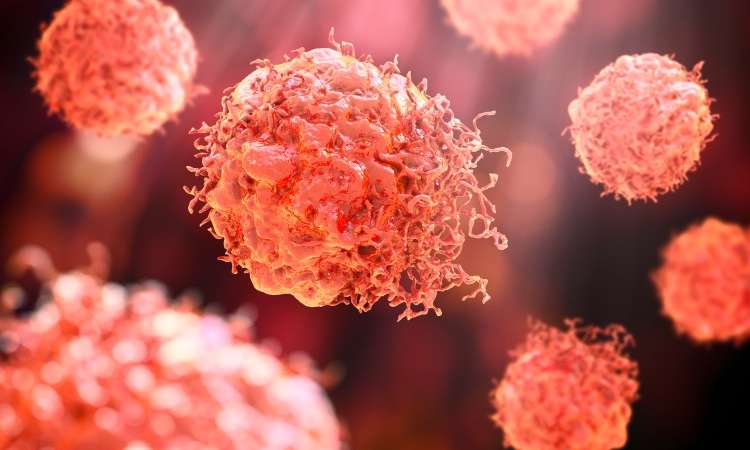

Hosted by Drug Discovery World and supported by Sartorius and BioIVT, this webinar will explore the opportunities and challenges that exist within cancer research drug discovery and development.
You will hear from Dr Sudha Rao, Chief Scientific Officer of Kazia Therapeutics, Karol Budzik, PhD, Business Development Associate at Vyriad Therapeutics and Lars van der Veen, Chief Scientific Officer at iOnctura.
Presentations will cover how cancer treatments have shifted towards reprogramming the biology driving tumour growth, immune escape and treatment resistance, the trajectory that in vivo CAR-T treatments are taking, and how challenging tumours burdened by stroma and immune-mediated resistance can be tackled.
Q&A with the speakers follows the presentations.
The post New webinar: Tackling drug discovery challenges in cancer research appeared first on Drug Discovery World (DDW).
Amid the rise of psychedelics in the mental health space, researchers have begun to explore psilocybin as a treatment for chemotherapy-induced peripheral neuropathy.
Uncategorized
New Spectrometry Technique Could Aid Formulation Development
New Spectrometry Technique Could Aid Formulation Development
A new technique combining two forms of spectrometry could help biopharmaceutical companies improve their choice of formulation buffer for antibody manufacturing by revealing how molecular forms and three-dimensional shapes of complex biologics respond to their environment. That’s the view of Christian Bleiholder, PhD, a professor at Florida State University who helped develop the technique.
According to Bleiholder, what happens structurally when a complex biological molecule, such as an antibody or viral spike protein, binds to its target is currently poorly understood.
“This is where [this approach] can help with the bioprocessing and formulation,” he says, as structural changes “can affect the lifespan [of the product] and lead to issues, such as aggregation.”
Because antibodies are complex, existing techniques tend to be powerful at different levels of complexity, he explains. Mass spectrometry is particularly powerful for distinguishing molecular composition, while structural approaches such as X-ray crystallography and cryo-electron microscopy can provide high-resolution structural information.
The challenge is understanding the link between these things within a heterogeneous sample, he says.
To overcome this, Bleiholder and his team worked with Bruker Daltonics to develop Tandem-Trapped Ion Mobility Spectrometry (Tandem-TIMS). This combines tandem ion mobility spectrometry with tandem mass spectrometry to disentangle three overlapping layers of molecular complexity: molecular form, three-dimensional shape, and binding or assembly state, he says.
He explains that, if the proteins have different structures, they can be characterized with tandem ion mobility spectrometry, and then mass spectrometry can be used to look at their molecular forms and binding states.
Going forward, Bleiholder hopes the technique can be used for formulation development but also earlier, during drug discovery of new products, such as multi-specific antibodies, to determine which molecular states are important and how those change when a biologic engages its target. He also plans to look at automating the technique.
Bleiholder spoke about using Tandem-TIMS at the Bioprocessing Summit in Boston earlier this year.
The post New Spectrometry Technique Could Aid Formulation Development appeared first on GEN – Genetic Engineering and Biotechnology News.


STAT+: FDA has too few staffers to hire more staff

Sling banks $123M for an experimental thyroid eye disease pill

8 biotech IPO prospects testing investor appetite

STAT+: Pharmalittle: We’re reading about FDA hiring delays, a new Bavarian Nordic CEO, and more

STAT+: The FDA’s rebuilding effort is running into a new challenge

FDA drops warning letter on Bausch & Lomb, citing contamination concerns
-
Fierce Biotech6 months ago
Scientists turn pig semen extract into eye drops that kill cancer in mice
-
Endpoints News6 months ago
Novartis to pay $2B upfront to take next-gen PI3Kα inhibitor from Synnovation
-

 Uncategorized6 months ago
Novartis buys Synnovation’s PI3Kα inhibitors for $3 billion
-
Nature Biotechnology6 months ago
Sustained nitric oxide production by engineered E. coli remodels the tumor microenvironment and potentiates immunotherapy
-

 Uncategorized5 months ago
Optical Pooled CRISPR Screen Reveals Regulators of NF-κB Dynamics in Human Cells
-
Uncategorized4 months ago
Relay’s PI3Kα inhibitor clears efficacy bar in Phase 2 vascular anomalies study
-

 STAT News – Biotech6 months ago
STAT+: In private meetings, White House works to win pharma companies’ support for drug pricing bill
-
Nature Biotechnology6 months ago
Mapping cis-regulatory mutations at scale in sorghum enables modulation of gene expression
 Scan to Read