
Uncategorized
Figurate SCADA System Launched to Overcome Digital Bottlenecks During Biopharma Manufacturing

Cytiva and Rockwell Automation launched the figurate supervisory control and data acquisition (SCADA) system designed to remove digital bottlenecks during biopharmaceutical manufacturing. Working across multiple instrument vendors and modalities, Figurate SCADA provides the connectivity needed to enable digital integration to advance modern bioprocessing, according to Matt Weaver, vice president of global industry life sciences at Rockwell.
“Biopharma teams are under pressure to move more quickly, but their systems are often not built to keep up,” says Weaver. “This collaboration with Cytiva marks a pivotal step in our mission to democratize digital manufacturing, enabling biopharma innovators to deploy SCADA faster, smarter and more affordably.”
Many biopharma teams have long juggled proprietary systems that cannot communicate with one another, creating operational silos, manual workarounds, and data integrity risks. The new system directly addresses this roadblock by having an open architecture, allowing for third-party instrument integration, and real-time oversight of integration capable unit operations from a single interface, notes a Cytiva spokesperson, who explains that the platform features include:
- Native interoperability: The platform is natively integrated with Cytiva bioprocessing equipment and Rockwell Automation’s FactoryTalk software suite, enabling seamless interoperability across systems.
- Scalable growth: A single platform expands from process development to commercial manufacturing without system redesign.
- Cost-effective compliance: A streamlined digital manufacturing system reduces capital and operational costs and enables cGMP compliance.
- Rapid implementation: Pre-engineered templates and modular design shorten deployment and validation timelines.
- Enhanced operational insight: Centralized alarms, real-time monitoring, process intensification and batch reporting tailored to bioprocess workflows.
“This collaboration is designed to empower the next generation of biomanufacturers,” says Nicolas Pivet, manufacturing and digital solutions at Cytiva.
Industry data shows increasing demand for next generation process control systems as organizations transition toward data driven process intensification and continuous manufacturing. Equipment fragmentation remains one of the top pain points cited by biomanufacturers, particularly those advancing programs from R&D to clinical scale. By giving teams a unified digital control layer, the Figurate SCADA reduces the risk of human error, accelerates tech transfer, and supports reliable scaleup as workloads grow in complexity, points out the Cytiva spokesperson.
The post Figurate SCADA System Launched to Overcome Digital Bottlenecks During Biopharma Manufacturing appeared first on GEN – Genetic Engineering and Biotechnology News.

Uncategorized
Opinion: Why the space in ‘health care’ matters
Below is a lightly edited, AI-generated transcript of the “First Opinion Podcast” interview with Sarah Mupo. Be sure to sign up for the weekly “First Opinion Podcast” on Apple Podcasts, Spotify, or wherever you get your podcasts. Get alerts about each new episode by signing up for the “First Opinion Podcast” newsletter. And don’t forget to sign up for the First Opinion newsletter, delivered every Sunday.
Torie Bosch: In recent years, there’s been a quiet shift in medicine. I’m not talking about a new drug or a new insurance headache. I’m talking about the way we write “health care.” Historically, it’s been two words. But increasingly, people, especially in the industry, have changed it to one word. At STAT, perhaps no linguistic decision is as important as: Should “health care” be one word or two?
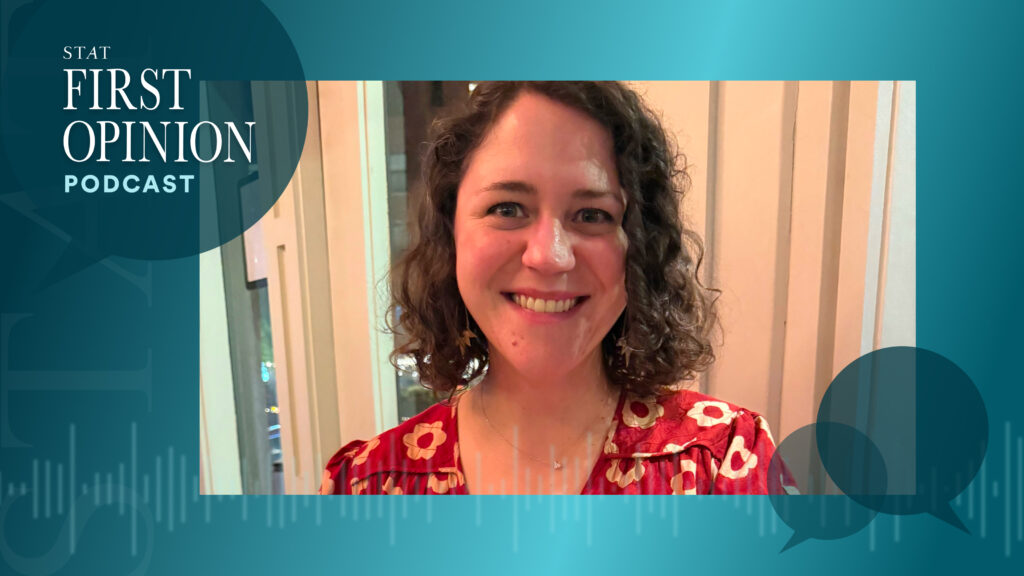
Below is a lightly edited, AI-generated transcript of the “First Opinion Podcast” interview with Sarah Mupo. Be sure to sign up for the weekly “First Opinion Podcast” on Apple Podcasts, Spotify, or wherever you get your podcasts. Get alerts about each new episode by signing up for the “First Opinion Podcast” newsletter. And don’t forget to sign up for the First Opinion newsletter, delivered every Sunday.
Torie Bosch: In recent years, there’s been a quiet shift in medicine. I’m not talking about a new drug or a new insurance headache. I’m talking about the way we write “health care.” Historically, it’s been two words. But increasingly, people, especially in the industry, have changed it to one word. At STAT, perhaps no linguistic decision is as important as: Should “health care” be one word or two?

First Opinion is STAT’s platform for interesting, illuminating, and provocative articles about the life sciences writ large, written by biotech insiders, health care workers, researchers, and others.
To encourage robust, good-faith discussion about issues raised in First Opinion essays, STAT publishes selected Letters to the Editor received in response to them. You can submit a Letter to the Editor here, or find the submission form at the end of any First Opinion essay.
Animals from different species often rely on surprisingly sophisticated communication to work together, whether finding food, cleaning parasites, or gaining protection. New research suggests these interspecies “conversations” are flexible, evolved, and far more important to life in nature than scientists once realized.


Illinois’ financial crisis could bring the state to a halt
The final 6 ‘Game of Thrones’ episodes might feel like a full season
New Season 8 Walking Dead trailer flashes forward in time
Mod turns ‘Counter-Strike’ into a ‘Tekken’ clone with fighting chickens
Meet Superman’s grandfather in new trailer for Krypton
Disney’s live-action Aladdin finally finds its stars

Opinion: STAT readers debate blue zones, open-access publishing fees, and more

Opinion: Why the space in ‘health care’ matters
The secret language behind animal cooperation
Denali sells FDA voucher for $195M to support neurodegenerative pipeline
US launches investigation into German drug pricing, citing unfair R&D burden

STAT+: Up and down the ladder: The latest comings and goings
Illinois’ financial crisis could bring the state to a halt
The final 6 ‘Game of Thrones’ episodes might feel like a full season
New Season 8 Walking Dead trailer flashes forward in time
Mod turns ‘Counter-Strike’ into a ‘Tekken’ clone with fighting chickens
Meet Superman’s grandfather in new trailer for Krypton
Disney’s live-action Aladdin finally finds its stars
-
 Uncategorized9 years ago
These ’90s fashion trends are making a comeback in 2017
-
Endpoints News3 months ago
Novartis to pay $2B upfront to take next-gen PI3Kα inhibitor from Synnovation
-
Uncategorized9 years ago
According to Dior Couture, this taboo fashion accessory is back
-

 Uncategorized3 months ago
Novartis buys Synnovation’s PI3Kα inhibitors for $3 billion
-
Uncategorized9 years ago
Phillies’ Aaron Altherr makes mind-boggling barehanded play
-
Uncategorized9 years ago
Uber and Lyft are finally available in all of New York State
-
Uncategorized9 years ago
Steph Curry finally got the contract he deserves from the Warriors
-
Uncategorized9 years ago
The old and New Edition cast comes together to perform