
Uncategorized
Fibrinogen discovery reshapes our understanding of how wounds heal

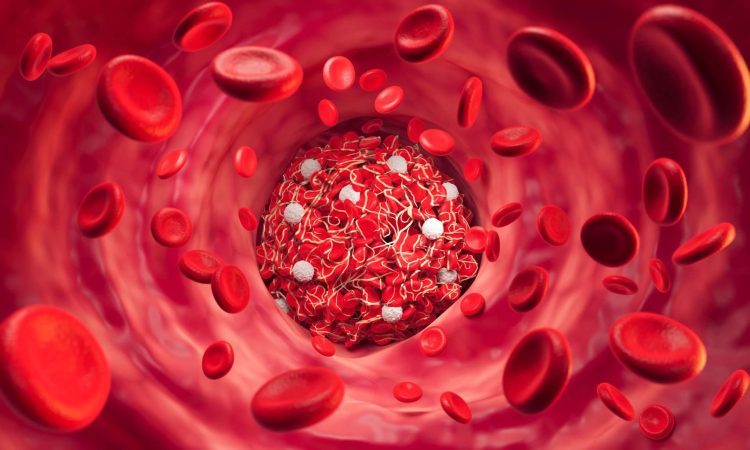

Scientists have redefined how the key blood‑clotting protein fibrinogen behaves when it contacts air, overturning two decades of scientific consensus on wound healing.
The study, ‘Redefining Fibrinogen Self Assembly at the Air–Water Interface: An Intriguing Story with Multiple Layers’, is the culmination of over a decade of international collaboration by Dr Richard Campbell of The University of Manchester, Professor Juan Ruso of the University of Santiago de Compostela in Spain and Dr Natalia Hassan of the Metropolitan Technological University in Chile.
The discovery could have far reaching implications on the treatment of clotting disorders like haemophilia or the healthcare for patients on blood thinners like warfarin, as scabs forming on the surface of blood are vital to sealing a wound and keeping the site free of infection.
It could also explain aspects of how a lung can collapse in acute respiratory distress syndrome (ARDS), as fibrinogen disrupts the oily layer that keeps the airways open during breathing.
It may also transform the design of biosensors that allow people to monitor how their blood is performing, as the sensors rely on understanding how proteins disrupt those surfaces.
For more than 10 years the field has relied on a ‘single tilting layer’ model for fibrinogen where the long protein molecules lay flat on the surface at first and then leaned upright as more of them arrive.
New information on fibrinogen
But the new study, published in the Journal of the American Chemical Society , shows the benchmark model missed that fibrinogen stays lying flat and builds multiple layers that stack like sheets of paper. These layers grow thicker and more complete as more molecules arrive.
This new information helps to explain how the long protein molecules line up on the surface of blood where fibres called fibrin form the basis of the scab, a solid film formed during evaporation of fluid at the blood surface, that seals a wound.
The scientists used an advanced technique called neutron reflectometry at the part-UK-funded Institut Laue-Langevin (ILL) in France, where Dr Campbell was formerly based.
The team demonstrated that this behaviour holds true across multiple ranges of concentration and in very different solution conditions, showing the mechanism is not a rare quirk but a universal feature of fibrinogen when it contacts air.
Principal Investigator Dr Campbell explained: “It’s never easy challenging an established model of how molecules behave in nature. But through using the advanced technique neutron reflectometry on the FIGARO instrument at the ILL research facility, we could see the structure of these protein surfaces in more detail than scientists had seen before.
“Although lab data recorded in the past was compatible with the concept of a ‘single tilting layer’ model, our new data show multiple layering as a fundamentally different way of working.”
Dr Glenn Coope, a former PhD student at The University of Manchester but now based at Lund University in Sweden, said: “When the Covid-19 pandemic struck, I spent time analysing structural data of how fibrinogen gathered at liquid surfaces while working from home. Then after returning to work at the University, I applied additional experimental methods.
“It’s almost like we now have a full circle moment, as our findings may help scientists to understand better the behaviour of fibrinogen in the lungs of patients suffering from ARDS, a condition that tragically claimed so many lives during the pandemic.”
Dr Campbell added: “Our discovery sheds new light on how scabs form on the surface of an open wound, where fibrinogen works in a protein‑rich zone to stop bleeding.
“Having better understanding of the structure of fibrinogen at liquid surfaces can only help in the search for new and better treatments for patients whose wounds refuse to heal.”
The post Fibrinogen discovery reshapes our understanding of how wounds heal appeared first on Drug Discovery World (DDW).

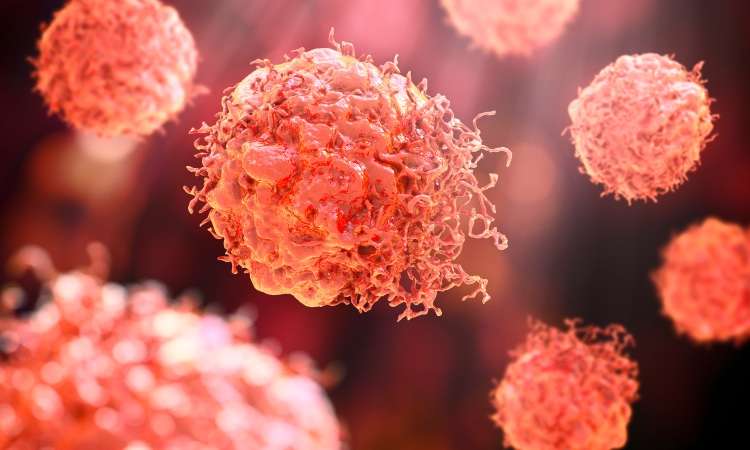

Hosted by Drug Discovery World and supported by Sartorius and BioIVT, this webinar will explore the opportunities and challenges that exist within cancer research drug discovery and development.
You will hear from Dr Sudha Rao, Chief Scientific Officer of Kazia Therapeutics, Karol Budzik, PhD, Business Development Associate at Vyriad Therapeutics and Lars van der Veen, Chief Scientific Officer at iOnctura.
Presentations will cover how cancer treatments have shifted towards reprogramming the biology driving tumour growth, immune escape and treatment resistance, the trajectory that in vivo CAR-T treatments are taking, and how challenging tumours burdened by stroma and immune-mediated resistance can be tackled.
Q&A with the speakers follows the presentations.
The post New webinar: Tackling drug discovery challenges in cancer research appeared first on Drug Discovery World (DDW).
Amid the rise of psychedelics in the mental health space, researchers have begun to explore psilocybin as a treatment for chemotherapy-induced peripheral neuropathy.
Uncategorized
New Spectrometry Technique Could Aid Formulation Development
New Spectrometry Technique Could Aid Formulation Development
A new technique combining two forms of spectrometry could help biopharmaceutical companies improve their choice of formulation buffer for antibody manufacturing by revealing how molecular forms and three-dimensional shapes of complex biologics respond to their environment. That’s the view of Christian Bleiholder, PhD, a professor at Florida State University who helped develop the technique.
According to Bleiholder, what happens structurally when a complex biological molecule, such as an antibody or viral spike protein, binds to its target is currently poorly understood.
“This is where [this approach] can help with the bioprocessing and formulation,” he says, as structural changes “can affect the lifespan [of the product] and lead to issues, such as aggregation.”
Because antibodies are complex, existing techniques tend to be powerful at different levels of complexity, he explains. Mass spectrometry is particularly powerful for distinguishing molecular composition, while structural approaches such as X-ray crystallography and cryo-electron microscopy can provide high-resolution structural information.
The challenge is understanding the link between these things within a heterogeneous sample, he says.
To overcome this, Bleiholder and his team worked with Bruker Daltonics to develop Tandem-Trapped Ion Mobility Spectrometry (Tandem-TIMS). This combines tandem ion mobility spectrometry with tandem mass spectrometry to disentangle three overlapping layers of molecular complexity: molecular form, three-dimensional shape, and binding or assembly state, he says.
He explains that, if the proteins have different structures, they can be characterized with tandem ion mobility spectrometry, and then mass spectrometry can be used to look at their molecular forms and binding states.
Going forward, Bleiholder hopes the technique can be used for formulation development but also earlier, during drug discovery of new products, such as multi-specific antibodies, to determine which molecular states are important and how those change when a biologic engages its target. He also plans to look at automating the technique.
Bleiholder spoke about using Tandem-TIMS at the Bioprocessing Summit in Boston earlier this year.
The post New Spectrometry Technique Could Aid Formulation Development appeared first on GEN – Genetic Engineering and Biotechnology News.


Revolution Medicines Presents Updated Phase 1/2 Data for Rasonque (daraxonrasib) Plus Chemotherapy in First-Line Metastatic Pancreatic Cancer at ENA 2026

StockWatch: Insmed Jumps on Report of Takeover Interest by Sanofi, as Analysts Conclude a Deal Would Make Sense

Single Hyaluronic Acid Injection Matches Three-Dose Therapy for Knee Osteoarthritis

Blood and Gut Cell Analyses Match 140 Inflammatory Bowel Disease Risk Loci

Study Details Chlamydia and Gonorrhea Co-Infection Rates in Hospital Patients

Ribociclib shows promise for specific recurrent endometrial cancer subtypes in clinical trial
-

 Uncategorized8 months ago
Novartis buys Synnovation’s PI3Kα inhibitors for $3 billion
-
Endpoints News8 months ago
Novartis to pay $2B upfront to take next-gen PI3Kα inhibitor from Synnovation
-
 Uncategorized7 months ago
Optical Pooled CRISPR Screen Reveals Regulators of NF-κB Dynamics in Human Cells
-
Uncategorized6 months ago
Relay’s PI3Kα inhibitor clears efficacy bar in Phase 2 vascular anomalies study
-
Uncategorized6 months ago
Hybrid solid−liquid optics enable scalable, high-resolution light-sheet microscopy across diverse immersion media
-
Fierce Biotech8 months ago
Scientists turn pig semen extract into eye drops that kill cancer in mice
-
Nature Biotechnology8 months ago
Sustained nitric oxide production by engineered E. coli remodels the tumor microenvironment and potentiates immunotherapy
-
Nature Biotechnology8 months ago
Mapping cis-regulatory mutations at scale in sorghum enables modulation of gene expression
 Scan to Read