
Uncategorized
Early Genomic Indicators of Praziquantel Resistance in Schistosoma mansoni
Early Genomic Indicators of Praziquantel Resistance in Schistosoma mansoni

The warning signs are subtle—genetic variants scattered across a vast parasite genome—but together they sketch a picture that disease‑control and elimination programs can’t afford to ignore. A new study published in Science Advances, “Extensive parasite transmission and variation in a functional receptor associated with drug resistance in endemic Schistosoma mansoni,” reveals genomic changes in the parasite that cause schistosomiasis, which may reduce its sensitivity to praziquantel, the only drug currently available to treat the disease.
The international team, led by researchers at the Wellcome Sanger Institute, the Royal Veterinary College, and the Medical College of Wisconsin, analyzed whole‑genome sequence data from 570 Schistosoma mansoni parasites collected across Africa and the Caribbean. As the paper noted, “Mass drug administration (MDA) with praziquantel is the cornerstone of schistosomiasis control and elimination efforts.” Yet after two decades of large‑scale treatment campaigns, the parasite’s genome is beginning to show signs of drug resistance.
The study uncovered extensive long‑distance transmission of S. mansoni and a striking degree of genetic diversity across endemic regions. But the most consequential finding lies in Sm.TRPMpzQ, a transient receptor potential (TRP) melastatin ion channel recently identified as praziquantel’s molecular target. Researchers found four naturally occurring variants in this receptor with reduced praziquantel sensitivity.
In some cases, parasites persisted even after treatment. As the paper reports, “Analyses of parasite infrapopulations collected from people pre‑ and post‑praziquantel treatment further identified instances of treatment failure, supporting the potential for praziquantel resistance.”
For global health programs that rely entirely on praziquantel, these findings represent an early but important signal.
Stephen Doyle, PhD, co‑senior author and group leader and UKRI Future Leaders Fellow at the Wellcome Sanger Institute, emphasized the shift this genomic insight enables: “Whole‑genome sequencing gives us an unprecedented window into how schistosome populations are structured and evolving across Africa, and by characterizing variation in the drug’s molecular target at scale, we can move from reactive surveillance to proactive monitoring.”
Professor Joanne Webster, DPhil, of the Royal Veterinary College and director of the Global Centre for Neglected Tropical Disease Research, underscored the stakes: “While praziquantel remains largely highly effective, our findings provide a sobering warning about the reliance on a single drug for schistosomiasis control and highlight the need for comprehensive surveillance to monitor the potential emergence of drug resistance.”
Schistosomiasis affects more than 250 million people worldwide, with 90% of infections occurring in sub‑Saharan Africa. With elimination targets set for 2030, the emergence of resistance could jeopardize decades of progress.
The authors argue that genomic surveillance should become a routine part of schistosomiasis control. Their dataset, the largest genomic analysis of S. mansoni from human infections to date, provides a baseline for tracking resistance‑linked variants as MDA programs continue.
The post Early Genomic Indicators of Praziquantel Resistance in <i>Schistosoma mansoni</i> appeared first on GEN – Genetic Engineering and Biotechnology News.

Uncategorized
Michigan reports first two U.S. deaths in outbreak of cyclospora
LANSING, Mich. — Two people have died in the cyclospora outbreak in Michigan in the first confirmed deaths in the U.S. related to the microscopic parasite, state health officials announced Monday.
The Michigan Department of Health and Human Services said both people had underlying health conditions that may have been impacted by the intestinal illness and dehydration.
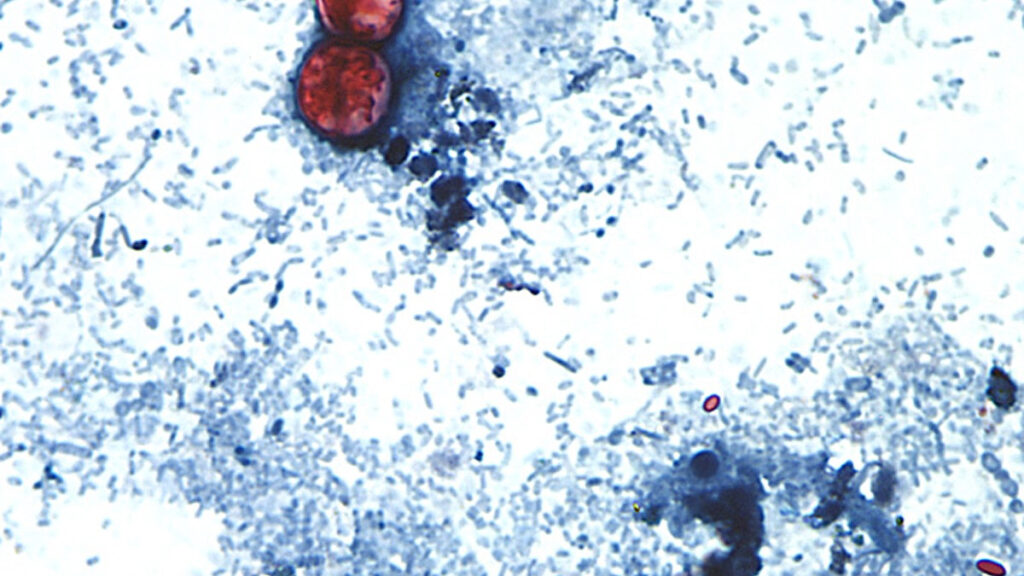
LANSING, Mich. — Two people have died in the cyclospora outbreak in Michigan in the first confirmed deaths in the U.S. related to the microscopic parasite, state health officials announced Monday.
The Michigan Department of Health and Human Services said both people had underlying health conditions that may have been impacted by the intestinal illness and dehydration.
Uncategorized
STAT+: Medicare eliminates key pathways used by ‘breakthrough’ devices for extra payments
Medicare is removing flexibilities that have allowed medical devices designated as “breakthroughs” by the Food and Drug Administration to leapfrog qualifications for extra payments.
Until now, alternative pathways have allowed authorized breakthrough devices to qualify for supplemental payments without proving their novelty or substantial clinical improvement over alternatives. In its rule for inpatient hospital payments, the Centers for Medicare and Medicaid Services finalized a proposal to repeal those pathways for both inpatient and outpatient settings, starting in fiscal year 2028.
Such payments are meant to incentivize hospitals to use new, transformative technology while it’s still expensive, and give its makers time to prove their value. Requiring breakthrough devices to demonstrate substantial clinical improvement, the rule reads, “ensures that additional Medicare payments are used to support Medicare beneficiaries’ access to innovations that are demonstrated to improve outcomes compared to the currently available treatment.”

Medicare is removing flexibilities that have allowed medical devices designated as “breakthroughs” by the Food and Drug Administration to leapfrog qualifications for extra payments.
Until now, alternative pathways have allowed authorized breakthrough devices to qualify for supplemental payments without proving their novelty or substantial clinical improvement over alternatives. In its rule for inpatient hospital payments, the Centers for Medicare and Medicaid Services finalized a proposal to repeal those pathways for both inpatient and outpatient settings, starting in fiscal year 2028.
Such payments are meant to incentivize hospitals to use new, transformative technology while it’s still expensive, and give its makers time to prove their value. Requiring breakthrough devices to demonstrate substantial clinical improvement, the rule reads, “ensures that additional Medicare payments are used to support Medicare beneficiaries’ access to innovations that are demonstrated to improve outcomes compared to the currently available treatment.”
Uncategorized
Evolutionarily Diverse Organisms Switch Genes on Simply and Switch Them off Dynamically
The signals that cells use to switch genes on have remained almost unchanged across two billion years of evolution, but the ones used to switch genes off vary dramatically from one branch of life to another, according to a new study by researchers at the Centre for Genomic Regulation (CRG), Barcelona Institute of Science and Technology (BIST).
The findings result from the broadest comparative exercise to date of how different life forms regulate their genomes. The researchers carried out the first detailed analysis of chromatin, the protein scaffold that controls how DNA is read, in several major branches of life that have been largely absent from studies to date, including lineages such as discobans, rhizarians, ichtyosporeans, and cryptomonads.
The work helps understand how genomes evolved on Earth and could have implications for medical research into diseases involving faulty gene regulation. It also delivers a new method, developed at the CRG, which can help support international efforts to characterize life on Earth at the molecular level.
“The cell’s instructions for activating genes are essentially the same in a human, a sea anemone and a soil amoeba,” said Arnau Sebé-Pedrós, PhD, ICREA Research Professor and senior author of the team’s published paper in Nature Genetics. “But the instructions for silencing genes and other genomic elements like transposons have been continuously evolving since our last common eukaryotic ancestor. Different branches of life have developed different molecular toolkits to do the same thing.” The team’s report is titled “Diversity and evolution of chromatin regulatory states across eukaryotes.”
DNA is wrapped, inside every cell, around proteins called histones. Small chemical tags attached to these proteins tell the cell which stretches of DNA to read and which to ignore. The chemical tags are ancient, dating back roughly two billion years to a single-celled organism known as the last eukaryotic common ancestor, or LECA, the founder of all complex cellular life, from which every plant, animal, fungus and protist on Earth descends. The system, known as chromatin regulation, is what allows the same genome to produce a liver cell or a neuron, and a leaf or a root. Faults in the regulation of chromatin underpin many human diseases, including cancers.
“Histone post-translational modifications (hPTMs) are central to defining functional chromatin states,” the authors explained further. “These hPTMs are conserved across diverse eukaryotes, with dozens tracing back to the last eukaryotic common ancestor, which we confirmed by histone mass spectrometry.”
The enzymes that add and remove the tags are also broadly shared across plants, animals, fungi and microbial eukaryotes. Until now, however, almost all detailed knowledge of how these tags work has come from a handful of laboratory species such as humans, mice, fruit flies, yeast and the model plant Arabidopsis. The vast majority of life’s diversity has remained unexplored at this level.
The authors’ project began in 2017, when Sebé-Pedrós and David Lara-Astiaso, PhD, were using a technique called iChIP to study chromatin in comb jellies and placozoans, animals not traditionally studied in the lab. The researchers wondered whether the approach could be scaled up for use in other species in the eukaryotic tree of life.
“We wanted to map epigenetic states in scarce cell types in mice and humans,” recalls Lara-Astiaso, now at the Arc Institute in California. “Eventually, we managed to transform that precursor into a general method for mapping genome regulation across the tree of life—more streamlined, more sensitive, and finally able to handle the particularities of very different species.”
The new method, iChIP2 can label chromatin from many species with unique molecular barcodes and read them all in a single experiment. Using the technology helped profile twelve chemical tags, or histone modifications, across twelve phylogenetically diverse species, spanning amoebae, fungi, plants, algae, single-celled predators and animals.
Some organisms had never had their chromatin mapped before. “We initially hoped to build a completely universal protocol, but species differ too much for that,” noted co-first author Cristina Navarrete, PhD. Plants and algae have cell walls that require specialized preparation, for example. Once a lab has extracted chromatin from their favorite species, iChIP2 takes over robustly, and from very small amounts of material.”
The researchers found that the signature of an active gene, marked by the pattern of histone modifications clustered around its start and along its body, was nearly identical in every species the team examined. The signature of a silenced gene was not. The results indicated that different lineages used different combinations of modifications, in different patterns, to keep stretches of DNA silent. “Our analyses revealed highly conserved euchromatin states at active gene promoters and gene bodies,” the investigators stated. “In contrast, we observed diverse configurations of repressive heterochromatin states associated with silenced genes and transposable elements …”
In some species, one modification silenced transposable elements while a different tag silenced unused genes. In others, the same modifications piled up together on the same regions. In the soil amoeba Acanthamoeba, a chemical mark that signals gene activation in animals had been repurposed to switch genes off.
“We’ve established so many new rules from looking at such few species,” said study co-author Sean Montgomery, PhD, “It’s the power of looking at non-model organisms to see how evolution has brought about many differing solutions to the same problems.”
The researchers suggest the diversity reflects an ancient and ongoing conflict between genomes and the parasitic DNA within them, like transposable elements, also known as “jumping genes,” and endogenized viruses. Every genome carries within it stretches of jumping genes, sequences that copy and paste themselves into new locations, sometimes harmlessly, sometimes destructively. In a human genome, they account for roughly half of all DNA. In their paper the team wrote, “The diversity of repressive states across eukaryotes, compared with the highly conserved active states, reflects the history of genomic invasions by parasitic elements in different lineages and could also define the permissiveness of these genomes to future invasions.”
Keeping jumping genes silenced is a matter of survival, but they evolve. Their parasitic nature means they acquire new sequences and sometimes even fragments of the chromatin machinery itself to evade detection.
“If a species loses its repressive mechanisms completely, it can’t tolerate parasitic elements like transposable elements or endogenized viruses. The result is that it’s no longer there. It’s dead,” says Sebé-Pedrós.
Over hundreds of millions of years, the result is host and parasite adapting and a tree of life on which each branch has developed its own bespoke strategy to silence genes. Some of those strategies, the team suggests, were later borrowed for other purposes.
The work lands at an important moment for comparative genomics. International efforts such as the Earth BioGenome Project and the Wellcome Sanger Institute’s Tree of Life programme, with which Sebé-Pedrós is affiliated, are sequencing the genomes of life on Earth at unprecedented speed.
The data generated by the initiatives offer potential new insights into how life has evolved on Earth, but a genome sequence alone says little about how the genome is used. Methods like iChIP2 make it possible to ask how life forms regulate their genomes. “… our results exemplify the potential of biodiversity epigenomic profiling,” the team suggested. “As genome sequencing is rapidly advancing across the tree of life, this approach offers a valuable opportunity to similarly expand our understanding of eukaryotic genome function and regulation.”
The post Evolutionarily Diverse Organisms Switch Genes on Simply and Switch Them off Dynamically appeared first on GEN – Genetic Engineering and Biotechnology News.


Illinois’ financial crisis could bring the state to a halt
The final 6 ‘Game of Thrones’ episodes might feel like a full season
New Season 8 Walking Dead trailer flashes forward in time
Mod turns ‘Counter-Strike’ into a ‘Tekken’ clone with fighting chickens
Meet Superman’s grandfather in new trailer for Krypton
Disney’s live-action Aladdin finally finds its stars

Michigan reports first two U.S. deaths in outbreak of cyclospora

STAT+: Medicare eliminates key pathways used by ‘breakthrough’ devices for extra payments
Evolutionarily Diverse Organisms Switch Genes on Simply and Switch Them off Dynamically
Supernus and Indivior merge to create CNS mega-company with 11 approved drugs

STAT+: Is there a pharma mega-merger in the making?
BioNTech picks Sobi CEO Oelkers to lead as founders plot new mRNA biotech
Illinois’ financial crisis could bring the state to a halt
The final 6 ‘Game of Thrones’ episodes might feel like a full season
New Season 8 Walking Dead trailer flashes forward in time
Mod turns ‘Counter-Strike’ into a ‘Tekken’ clone with fighting chickens
Meet Superman’s grandfather in new trailer for Krypton
Disney’s live-action Aladdin finally finds its stars
-
Fierce Biotech4 months ago
Scientists turn pig semen extract into eye drops that kill cancer in mice
-
 Uncategorized9 years ago
These ’90s fashion trends are making a comeback in 2017
-
Endpoints News5 months ago
Novartis to pay $2B upfront to take next-gen PI3Kα inhibitor from Synnovation
-

 Uncategorized4 months ago
Novartis buys Synnovation’s PI3Kα inhibitors for $3 billion
-
Uncategorized9 years ago
According to Dior Couture, this taboo fashion accessory is back
-
Uncategorized9 years ago
Phillies’ Aaron Altherr makes mind-boggling barehanded play
-
Uncategorized9 years ago
Steph Curry finally got the contract he deserves from the Warriors
-
Uncategorized9 years ago
Uber and Lyft are finally available in all of New York State