
Uncategorized
CRISPR Shreds Undruggable Cancer Cells with Precision

When Jingkun Zeng, PhD, joined the lab of Nobel laureate, Jennifer Doudna, PhD, as a postdoctoral researcher in 2024, he was not interested in applying CRISPR for gene editing.
The molecular scissors had demonstrated extraordinary clinical promise in correcting single-point mutations, most strikingly in Baby KJ’s case, where a rare metabolic disorder once presented a 50% mortality rate in infancy.
Yet, Zeng had his ambitious sights on stopping cancer progression, where the biology “became messy.” Cancer can be driven by hundreds of thousands of mutations, making it nearly impossible to correct each mutation one-by-one to restore healthy function.
Zeng, who completed his PhD training in cancer evolution at The Francis Crick Institute, aimed to develop new CRISPR-based technology that could therapeutically access the undruggable tumor suppressor protein, p53. Mutations in this “guardian of the genome” are found in nearly half of all cancers, and up to 70–90% of cases of the most deadly tumors, including ovarian, pancreatic, and non-small cell lung cancer.
In a new study published in Nature titled, “Targeting Cancer-Specific Mutations with RNA-Triggered Chromatin Shredding,” Zeng and colleagues from Innovative Genomics Institute (IGI), University of California (UC) Berkeley, UC San Francisco (UCSF), and Gladstone Institutes, have now engineered a CRISPR system to selectively trigger cancer cell death by chromatin shredding.
The approach recognizes cancer cells using the RNA-guided nuclease, CRISPR-Cas12a2, to recognize mutant p53 mRNA transcripts. Therapeutic effectiveness was demonstrated in mouse models of lung and liver tumors.
Bacterial roots
Mutations in p53 are early drivers in the cancer-causing cascade, making the tumor suppressor one of the most sought-after targets in cancer therapy. Yet despite decades of effort, no approved p53 drugs exist on the market.
Unlike many druggable proteins, p53 lacks a well-defined binding pocket traditionally required by established modalities, such as small molecules or antibodies. Additionally, most cancer therapeutics are designed to inhibit disease-driving proteins, whereas restoring p53 function demands precise, controlled activation of a tumor suppressor.
“It’s the first time we managed to target p53 with such precision,” Zeng told GEN, emphasizing that CRISPR-Cas12a2 can distinguish healthy and disease cells that differed by just one nucleotide.
The novel drug modality takes advantage of CRISPR’s bacterial roots as a defense system that protects against infection by cutting the genetic material of invading viruses, preventing replication and spread.
Zeng also emphasizes that the guide RNA is easily programmable for additional therapeutic areas, such as destroying viral infected cells or abnormal cells due to aging. The technology can also be multiplexed to recognize multiple cancer mutations simultaneously.
The work joins a growing industry effort to develop scalable and generalizable genetic medicines.
Looking ahead, the authors aim to improve the delivery efficiency to cancer cells, a longstanding challenge across CRISPR therapies. The team is also undergoing collaborations to apply the technology across diverse cancer types, including brain, prostate, and ovarian cancer.
The post CRISPR Shreds Undruggable Cancer Cells with Precision appeared first on GEN – Genetic Engineering and Biotechnology News.

Uncategorized
STAT+: Updated: Tracking RFK Jr.’s promises to remake health in America
Updated June 11, 2026
WASHINGTON — A pledge to “Make America Healthy Again” earned Robert F. Kennedy Jr. his job atop U.S. health agencies a year and some change ago. He’s now had the opportunity to turn his words into action, with mixed results.
“All one needs” to prove the health secretary’s attentiveness is to “review my unprecedented list of accomplishments on a wide range of issues, all of which I drove,” Kennedy posted on X on Wednesday in response to a journalist.

Updated June 11, 2026
WASHINGTON — A pledge to “Make America Healthy Again” earned Robert F. Kennedy Jr. his job atop U.S. health agencies a year and some change ago. He’s now had the opportunity to turn his words into action, with mixed results.
“All one needs” to prove the health secretary’s attentiveness is to “review my unprecedented list of accomplishments on a wide range of issues, all of which I drove,” Kennedy posted on X on Wednesday in response to a journalist.

Can any of the new obesity medications in development stand out from the pack? Which company just broke records with its IPO? And will the Food and Drug Administration allow greater access to experimental peptides?
We discuss all that and more on this week’s episode of “The Readout LOUD,” STAT’s biotech podcast.
Uncategorized
RFK Jr. claims his calendar is publicly available. We’ve been trying to get it for a year
WASHINGTON — Health secretary Robert F. Kennedy Jr. on Wednesday pointed to his “publicly available calendar” as an example of his commitment to transparency and to beat back unfavorable reporting.
But no such calendar, detailing who Kennedy meets with or how he spends his time, has been released by the administration. STAT has been asking the Department of Health and Human Services for Kennedy’s calendar for more than a year, via Freedom of Information Act requests and emails to the press office.
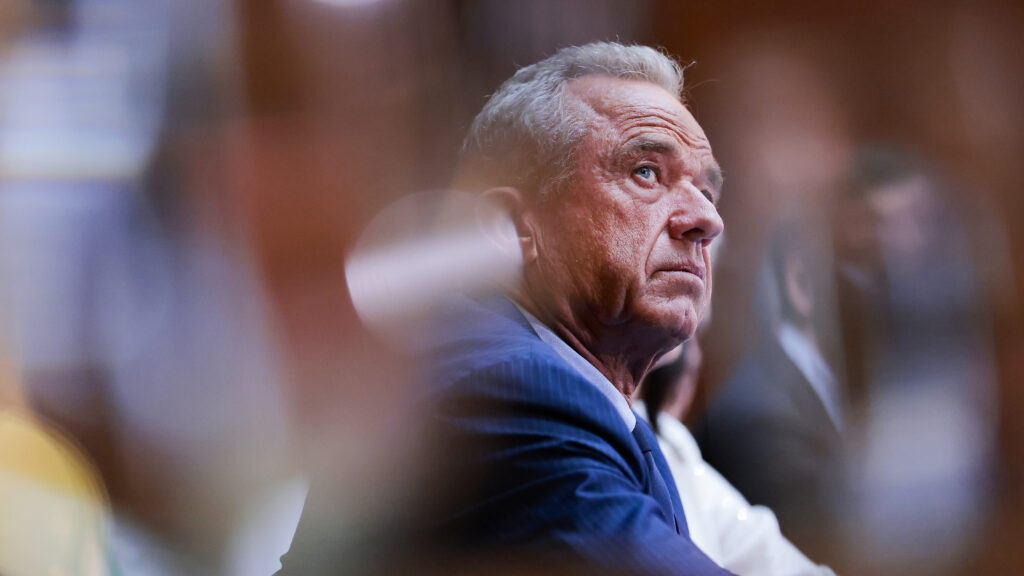
WASHINGTON — Health secretary Robert F. Kennedy Jr. on Wednesday pointed to his “publicly available calendar” as an example of his commitment to transparency and to beat back unfavorable reporting.
But no such calendar, detailing who Kennedy meets with or how he spends his time, has been released by the administration. STAT has been asking the Department of Health and Human Services for Kennedy’s calendar for more than a year, via Freedom of Information Act requests and emails to the press office.


Illinois’ financial crisis could bring the state to a halt
The final 6 ‘Game of Thrones’ episodes might feel like a full season
New Season 8 Walking Dead trailer flashes forward in time
Mod turns ‘Counter-Strike’ into a ‘Tekken’ clone with fighting chickens
Meet Superman’s grandfather in new trailer for Krypton
Disney’s live-action Aladdin finally finds its stars

STAT+: Updated: Tracking RFK Jr.’s promises to remake health in America

An obesity drug deep-dive, and peptides move mainstream

RFK Jr. claims his calendar is publicly available. We’ve been trying to get it for a year

Nonprofit buys experimental cancer drug to maintain patient access
Potential Cocaine Addiction Targets Identified Through Genetic Mapping in Rats
New mRNA Delivery Platform Restores Muscle Function in DMD Models
Illinois’ financial crisis could bring the state to a halt
The final 6 ‘Game of Thrones’ episodes might feel like a full season
New Season 8 Walking Dead trailer flashes forward in time
Mod turns ‘Counter-Strike’ into a ‘Tekken’ clone with fighting chickens
Meet Superman’s grandfather in new trailer for Krypton
Disney’s live-action Aladdin finally finds its stars
-
 Uncategorized9 years ago
These ’90s fashion trends are making a comeback in 2017
-
Uncategorized9 years ago
According to Dior Couture, this taboo fashion accessory is back
-
Endpoints News3 months ago
Novartis to pay $2B upfront to take next-gen PI3Kα inhibitor from Synnovation
-
Uncategorized9 years ago
Phillies’ Aaron Altherr makes mind-boggling barehanded play
-
Uncategorized9 years ago
Uber and Lyft are finally available in all of New York State
-
Contributors9 years ago
The final 6 ‘Game of Thrones’ episodes might feel like a full season
-
Uncategorized9 years ago
Steph Curry finally got the contract he deserves from the Warriors
-
Uncategorized9 years ago
The old and New Edition cast comes together to perform