
Uncategorized
Colorectal Cancer Targeted with Mass-Produced iPSC-Derived Allogeneic T Cells

Researchers at Kobe University have generated off-the-shelf, mass-producible induced pluripotent stem cell (iPSC)-derived gamma delta T cells (γδT cells) that in a small preclinical study suppressed tumor growth in mouse colorectal cancer (CRC) xenograft models. The team says their development could point to the potential for developing faster, cheaper cancer immunotherapy.
Research lead Takashi Aoi, PhD, and colleagues reported on the work in Stem Cell Reports, in a paper titled “Allogeneic iPSC-derived γδT cells demonstrate antitumor efficacy against patient-derived tissues,” commenting “Our current findings provide robust preclinical evidence supporting the efficacy of T cell therapy for CRC.”
“Various immunotherapies have been developed to treat malignant tumors, and autologous CAR T-cell therapy is clinically used for certain malignancies,” the authors wrote. However, CAR T-cell therapies demonstrate limited efficacy against solid tumors, and current techniques for modifying T cells extracted from the patient are expensive and time consuming. “… obstacles such as the time and cost required to initiate autologous treatment impede their widespread adoption.”
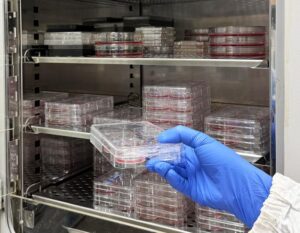
![In the journal Stem Cell Reports, Kobe University stem cell researcher AOI Takashi and his team report that they created iPS cells from a subclass of T cells that can be used across patients and could reproducibly turn them back into T cells with an overall 80,000-fold multiplication and without using animal cells or extracts, and that the resulting T cells attack and shrink human patient-derived colorectal cancer tumors that were implanted into mice. [AOI Takashi]](https://www.genengnews.com/wp-content/uploads/2026/07/Low-Res_260723-Aoi-CRC-Incubator-300x233.jpg)
Consequently, the authors noted, there is growing interest in allogeneic, or off-the-shelf, cell therapy. Researchers have considered turning to a subclass of T cells called gamma-delta (γδ) T cells that don’t need to be tailored toward each individual patient but can be harvested from a donor and used in other people. “… the development of novel therapies for CRC, a highly heterogeneous cancer, remains a paramount challenge in global healthcare, and γδT cells are considered a promising candidate modality,” the authors stated. “γδT cells represent approximately 3–5% of peripheral blood lymphocytes and are capable of targeting various types of tumors in an MHC-unrestricted manner with a single type of γδT cell receptor.”
However, these cells are much fewer, making the harvesting approach infeasible, and they also cannot be directly multiplied well in the lab. Aoi stated, “Based on our experience with induced pluripotent stem cells, also called iPS cells, we thought that we could approach this issue by creating such easily storable and growable cells from these specific T cells, and then only turning them back into T cells when actually needed.” In their paper the authors added “We focused on γδT cells as a potential therapeutic modality for colorectal cancer (CRC).”
Through their reported study the investigators showed that they could create iPS cells from the subclass of T cells that can be used across patients and reproducibly turn them back into those T cells with an overall 80,000-fold multiplication. Importantly, they achieved this without relying on animal cells or extracts, which is a requirement for clinical applications. “To the best of our knowledge, this is the first study to report the successful induction of differentiation of γδT cells from iPS cells under feeder-free, serum-free conditions.”
Their study was also the first to show, on a small preclinical scale, that the resulting iPSC-derived γδT cells (iγδT cells) attack and shrink human patient-derived colorectal cancer tumors that were implanted into mice, with tumor weights in treated animals reduced by up to 88%, when compared with control mice.
“We demonstrated that these iγδTs exhibit cytotoxic activity against CRC and leukemia cell lines, as well as against patient-derived CRC organoids in vitro, while also exerting antitumor effects in vivo in xenograft models,” they noted. “Cancers from cell culture lines don’t have the same drug insensitivities as actual cancers and also don’t emulate the physical barriers that actual tumors have,” explained first author Ryoko Futai, PhD. “That’s why patient-derived organoids are highly significant for evaluating new cancer treatment approaches,” explained first author.
When they designed the study, the Kobe University team imagined that their approach would be used fighting metastasizing cancers. They also checked whether their T cells would find their targets not only when administered close to the tumor but when administered intravenously a week after the tumor was implanted. And indeed, even in this setting tumor weights decreased 43%, 82% and 92% in the three treated mice. Futai noted, “This suggests potential for future systemic therapy. We believe this achievement represents an important step toward the development of a new immunotherapy for solid tumors.”
The study was conducted at a small scale, with only three or four mice in each experiment and tumor models derived from only two different patients. This is especially important because colorectal cancer tumors are known for their high variability. “This study is a preclinical investigation demonstrating the potential using iPS cell-derived T cells and is not yet at a stage where it can be used on patients,” cautions Futai.
But by conducting further studies using these easily multipliable and very standardized cells, the Kobe University development may also be used to elucidate where the variability comes from and what steps to take to counter it. Aoi commented, “Furthermore, by combining this approach with cell modification techniques such as CAR therapy, we hope that this research will eventually lead to the development of new therapeutic possibilities for patients with solid tumors.” And in their paper the authors concluded, “Our findings will pave the way for the realization of off-the-shelf allogeneic γδT cell therapy.”
The post Colorectal Cancer Targeted with Mass-Produced iPSC-Derived Allogeneic T Cells appeared first on GEN – Genetic Engineering and Biotechnology News.


The California Supreme Court sided with Gilead Sciences in a closely watched case brought by thousands of patients who argued the company was negligent for slow-walking development of an HIV medicine that was safer than another drug it was already selling.
In a 6-1 decision, the court overturned a state appeals court ruling two years ago that Gilead could be held liable, raising alarm in the pharmaceutical industry that drug development decisions could be influenced by the fear of legal liability.
The case began after more than 24,000 people claimed in federal and state court lawsuits that they unnecessarily suffered kidney injury and bone loss from the older drug. They maintained that Gilead cynically managed its product pipeline at the expense of people who should have been treated with a safer medicine.
Uncategorized
Combined Phage Therapy and FMT Reduces Recurrent UTIs and Antibiotic Use in First Human Case Series
Recurrent urinary tract infections (rUTIs) are among the most common bacterial infections worldwide. The difficult-to-treat condition, which affects primarily women, is defined as two urinary tract infections (UTIs) within six months or three UTIs within the past year. They are a leading cause of outpatient antibiotic use, accounting for more than 15% of all prescriptions.
While antibiotics remain the standard treatment, frequent recurrences and rising antibiotic resistance highlight the need for alternative therapeutic approaches. Now, researchers have, for the first time, administered a combined phage therapy (PT) with fecal microbiota transplantation (FMT), to decolonize urinary and intestinal reservoirs of rUTI patients.
The novel treatment approach, combining PT and elective FMT, was administered to three female patients, between May and July 2023, with rUTI that did not respond to antibiotics and commonly used non-antibiotic strategies. All had microbiologically confirmed E. coli in multiple infections.
All three women received PT orally and intravesically (locally applied to the bladder via catheter) for eight days outside of acute episodes. Two of these three patients were elected to receive subsequent FMT. Since the bacteria causing the recurring infections often reside in the gut as well as the urinary tract, the FMT treatment targeted the intestinal reservoirs of E. coli that survive antibiotic treatment of acute infections and can become increasingly resistant.
“While phage therapy acts to remove the pathogen, FMT aims to restore a healthy microbiome, combining both immediate and long-term effects,” Lena Biehl, MD, PhD, group leader at Fraunhofer ITMP, deputy lead of Cologne Microbiota Bank, University Hospital Cologne.
This work is published in Nature Microbiology in the paper, “Combined Phage therapy and fecal microbiota transplantation to treat recurrent urinary tract infection: a case series.”
The treatments were well tolerated and did not result in noticeable side effects. The two patients who received the combination therapy have experienced a long-term reduction of UTIs over the course of two years, while the one patient with PT only has experienced further episodes but with reduced symptoms. For all patients, although E. coli was detected in follow-up samples, quality of life improved significantly, while the need for antibiotic treatment was substantially reduced.
“Three patients are not a sufficiently large sample to establish this new therapy, and control groups were lacking. However, this experience has helped to lay the foundation for a clinical trial in order to test the clinical utility of this treatment approach and make it more widely available and sustainable for patients,” comments Shawna McCallin, MD, at the Balgrist University Hospital in Zurich.
The clinical trial is scheduled to begin in June 2027 at the participating institutions as part of the REPhRAME project, which is funded by the European Commission through the Horizon Europe funding programme.
The post Combined Phage Therapy and FMT Reduces Recurrent UTIs and Antibiotic Use in First Human Case Series appeared first on GEN – Genetic Engineering and Biotechnology News.
Uncategorized
STAT+: After Eli Lilly granted one man special access to obesity drug, doctors struggle to get answers
Last month, STAT reported that Eli Lilly granted a single 79-year-old patient special access to retatrutide, an unapproved obesity drug that has demonstrated bariatric-surgery levels of weight loss.
Since then, at least a handful of clinicians have tried to seek the same access for their patients. Two of them haven’t received answers from the drugmaker for weeks; one heard back on Monday, only after STAT reached out to Lilly with questions for this story, that his patient might qualify for access to the drug.
The lack of clarity from Lilly raises new questions about why the company gave extraordinary access to an experimental obesity drug to a single patient. Clinicians are calling for more transparency from Lilly on whether the company plans to expand access, or whether this was a one-time, special circumstance.

Last month, STAT reported that Eli Lilly granted a single 79-year-old patient special access to retatrutide, an unapproved obesity drug that has demonstrated bariatric-surgery levels of weight loss.
Since then, at least a handful of clinicians have tried to seek the same access for their patients. Two of them haven’t received answers from the drugmaker for weeks; one heard back on Monday, only after STAT reached out to Lilly with questions for this story, that his patient might qualify for access to the drug.
The lack of clarity from Lilly raises new questions about why the company gave extraordinary access to an experimental obesity drug to a single patient. Clinicians are calling for more transparency from Lilly on whether the company plans to expand access, or whether this was a one-time, special circumstance.


Illinois’ financial crisis could bring the state to a halt
The final 6 ‘Game of Thrones’ episodes might feel like a full season
New Season 8 Walking Dead trailer flashes forward in time
Mod turns ‘Counter-Strike’ into a ‘Tekken’ clone with fighting chickens
Meet Superman’s grandfather in new trailer for Krypton
Disney’s live-action Aladdin finally finds its stars

STAT+: California Supreme Court sides with Gilead in ‘duty’ to innovate case
Combined Phage Therapy and FMT Reduces Recurrent UTIs and Antibiotic Use in First Human Case Series

STAT+: After Eli Lilly granted one man special access to obesity drug, doctors struggle to get answers

Michigan reports first two U.S. deaths in outbreak of cyclospora

An AstraZeneca-Bristol Myers megamerger? Wall Street isn’t thrilled.

STAT+: Medicare eliminates key pathways used by ‘breakthrough’ devices for extra payments
Illinois’ financial crisis could bring the state to a halt
The final 6 ‘Game of Thrones’ episodes might feel like a full season
New Season 8 Walking Dead trailer flashes forward in time
Mod turns ‘Counter-Strike’ into a ‘Tekken’ clone with fighting chickens
Meet Superman’s grandfather in new trailer for Krypton
Disney’s live-action Aladdin finally finds its stars
-
Fierce Biotech4 months ago
Scientists turn pig semen extract into eye drops that kill cancer in mice
-
 Uncategorized9 years ago
These ’90s fashion trends are making a comeback in 2017
-
Endpoints News5 months ago
Novartis to pay $2B upfront to take next-gen PI3Kα inhibitor from Synnovation
-

 Uncategorized4 months ago
Novartis buys Synnovation’s PI3Kα inhibitors for $3 billion
-
Uncategorized9 years ago
According to Dior Couture, this taboo fashion accessory is back
-
Uncategorized9 years ago
Steph Curry finally got the contract he deserves from the Warriors
-
Uncategorized9 years ago
Phillies’ Aaron Altherr makes mind-boggling barehanded play
-
Uncategorized9 years ago
Uber and Lyft are finally available in all of New York State