

Uncategorized
Codon Optimization Isn’t Equal: Benchmarking Gene Design for Antibody Expression
Codon Optimization Isn’t Equal: Benchmarking Gene Design for Antibody Expression


Justin Byers
Founder and CEO
Axio BioPharma
Panelist
Justin Byers
Justin Byers is the founder and CEO of Axio BioPharma. He holds a BS in biochemistry and molecular biology from Illinois State University and has held leadership roles at Illumina, Danaher, and Fujifilm. Throughout his career, Byers has led commercial, operational, and cross-functional initiatives supporting biologics programs from early development through manufacturing. He has worked closely with scientific teams to scale workflows, improve process rigor, and align technical execution with strategic objectives. At Axio, Byers oversees corporate strategy, partnerships, and scientific direction. His focus is positioning the company at the intersection of structured data and biologics workflow execution. Axio is accelerating biologics development through mAb production services for R&D while partnering with innovators and CDMOs to ensure the data required for rigorous decision making and a digitally enabled future is generated, structured, and accessible.

Daniel Lin-Arlow, PhD
Chief Scientific Officer and Co-founder
Ansa Biotechnologies
Panelist
Daniel Lin-Arlow, PhD
Daniel Lin-Arlow, PhD, is a scientist-entrepreneur with deep expertise in synthetic biology and biophysics. Motivated by firsthand challenges in obtaining DNA constructs for metabolic engineering in graduate school, he is deeply committed to providing scientists with the DNA constructs they need for their research. As Ansa’s founding CEO, Lin-Arlow grew the company from two employees in 2018 to more than 70 by 2024, raising over $130 million in venture capital and grant funding to support technology development and commercialization. He transitioned to the role of chief scientific officer in 2024, where he leads the development of new applications of the company’s technologies. Lin-Arlow received his PhD from the University of California, Berkeley for his work in Jay Keasling’s lab for developing the DNA synthesis technology commercialized by Ansa. Prior to graduate school, he was a scientific associate at D.E. Shaw Research where he studied the biophysical properties of G protein-coupled receptors, including how drugs bind and modulate their activity. Dan began his scientific career at MIT, where he earned dual SB degrees in math with computer science and biology, and developed computation tools for the analysis of regulation of gene expression at the Broad Institute of MIT and Harvard. Lin-Arlow is a co-inventor of nine patent families and has co-authored scientific publications in Nature, Science, Cell, PNAS, and Nature Biotechnology.
- Time:
Antibody expression titers are key drivers of screening efficiency in discovery, developability, manufacturing economics, and development timelines. Although it is possible to address poor antibody expression by increasing overall batch size and optimizing downstream processes, the root cause often lies in the underlying DNA sequences. Controlled benchmarking studies are helpful for systematically evaluating DNA construct design decisions that impact titers.
In this GEN webinar, Justin Byers and Daniel Lin-Arlow, PhD, examine how enzymatic DNA synthesis and DNA construct design mitigate antibody expression challenges.
Byers will walk through a controlled benchmarking study of codon-optimization approaches, including details of the study design and how structured, gene-to-protein workflows can help identify optimal constructs before they become downstream problems. He will show that under matched CHO and HEK293 conditions, antibody constructs codon-optimized with an AI codon language model had consistently higher transient expression titers than other approaches. The AI codon-optimized sequences contained “complex” features such as repeats and GC skew that challenge traditional gene synthesis processes but were readily manufactured by Ansa’s DNA synthesis platform. These results suggest that complex sequence features can be important for optimal gene expression, which makes the ability to manufacture them as relevant as the codon strategy.
Lin-Arlow will present Ansa’s enzymatic DNA synthesis technology and the benefits to clients working on antibody production, cell and gene therapies, and other synthetic biology applications. Key takeaways include:
- An AI-powered codon optimization strategy that measurably improves transient antibody expression yield
- Why controlled side-by-side benchmarking under standardized conditions is the only reliable way to objectively evaluate DNA construct design choices
- How integrating rigorous sequence evaluation upstream compresses timelines and reduces the risks of expression failures late in development
- How Ansa’s fully enzymatic DNA synthesis addresses complex sequences, including: High or low GC content, secondary structures, inverted terminal repeats (ITRs), and homopolymers
- The Ansa On-Time Guarantee—DNA orders shipped on time, or the complete order is free
A live Q&A session will follow the presentation offering you a chance to pose questions to our expert panelists.
Produced with support from:

The post Codon Optimization Isn’t Equal: Benchmarking Gene Design for Antibody Expression appeared first on GEN – Genetic Engineering and Biotechnology News.

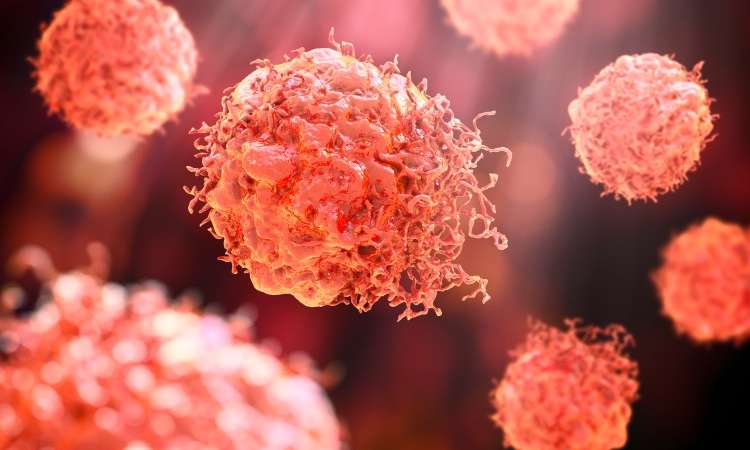

Hosted by Drug Discovery World and supported by Sartorius and BioIVT, this webinar will explore the opportunities and challenges that exist within cancer research drug discovery and development.
You will hear from Dr Sudha Rao, Chief Scientific Officer of Kazia Therapeutics, Karol Budzik, PhD, Business Development Associate at Vyriad Therapeutics and Lars van der Veen, Chief Scientific Officer at iOnctura.
Presentations will cover how cancer treatments have shifted towards reprogramming the biology driving tumour growth, immune escape and treatment resistance, the trajectory that in vivo CAR-T treatments are taking, and how challenging tumours burdened by stroma and immune-mediated resistance can be tackled.
Q&A with the speakers follows the presentations.
The post New webinar: Tackling drug discovery challenges in cancer research appeared first on Drug Discovery World (DDW).
Amid the rise of psychedelics in the mental health space, researchers have begun to explore psilocybin as a treatment for chemotherapy-induced peripheral neuropathy.
Uncategorized
New Spectrometry Technique Could Aid Formulation Development
New Spectrometry Technique Could Aid Formulation Development
A new technique combining two forms of spectrometry could help biopharmaceutical companies improve their choice of formulation buffer for antibody manufacturing by revealing how molecular forms and three-dimensional shapes of complex biologics respond to their environment. That’s the view of Christian Bleiholder, PhD, a professor at Florida State University who helped develop the technique.
According to Bleiholder, what happens structurally when a complex biological molecule, such as an antibody or viral spike protein, binds to its target is currently poorly understood.
“This is where [this approach] can help with the bioprocessing and formulation,” he says, as structural changes “can affect the lifespan [of the product] and lead to issues, such as aggregation.”
Because antibodies are complex, existing techniques tend to be powerful at different levels of complexity, he explains. Mass spectrometry is particularly powerful for distinguishing molecular composition, while structural approaches such as X-ray crystallography and cryo-electron microscopy can provide high-resolution structural information.
The challenge is understanding the link between these things within a heterogeneous sample, he says.
To overcome this, Bleiholder and his team worked with Bruker Daltonics to develop Tandem-Trapped Ion Mobility Spectrometry (Tandem-TIMS). This combines tandem ion mobility spectrometry with tandem mass spectrometry to disentangle three overlapping layers of molecular complexity: molecular form, three-dimensional shape, and binding or assembly state, he says.
He explains that, if the proteins have different structures, they can be characterized with tandem ion mobility spectrometry, and then mass spectrometry can be used to look at their molecular forms and binding states.
Going forward, Bleiholder hopes the technique can be used for formulation development but also earlier, during drug discovery of new products, such as multi-specific antibodies, to determine which molecular states are important and how those change when a biologic engages its target. He also plans to look at automating the technique.
Bleiholder spoke about using Tandem-TIMS at the Bioprocessing Summit in Boston earlier this year.
The post New Spectrometry Technique Could Aid Formulation Development appeared first on GEN – Genetic Engineering and Biotechnology News.


Considerations for Potential Future Therapeutic Use of Psychedelic Drugs Public Hearing – 09/14/2026

Takeda’s Plump, GV’s Yeshwant announce retirement plans

STAT+: Scholar Rock wins FDA approval for first drug to target SMA muscle loss

STAT+: Pharma wins a battle over the cost of wastewater treatment in Europe

Notable Approvals | Drugs

FDA Approves First Therapy to Target Muscle Loss in Spinal Muscular Atrophy
-
Fierce Biotech6 months ago
Scientists turn pig semen extract into eye drops that kill cancer in mice
-
Endpoints News6 months ago
Novartis to pay $2B upfront to take next-gen PI3Kα inhibitor from Synnovation
-

 Uncategorized6 months ago
Novartis buys Synnovation’s PI3Kα inhibitors for $3 billion
-
Nature Biotechnology6 months ago
Sustained nitric oxide production by engineered E. coli remodels the tumor microenvironment and potentiates immunotherapy
-

 Uncategorized4 months ago
Optical Pooled CRISPR Screen Reveals Regulators of NF-κB Dynamics in Human Cells
-
Uncategorized4 months ago
Relay’s PI3Kα inhibitor clears efficacy bar in Phase 2 vascular anomalies study
-

 STAT News – Biotech6 months ago
STAT+: In private meetings, White House works to win pharma companies’ support for drug pricing bill
-
Nature Biotechnology6 months ago
Mapping cis-regulatory mutations at scale in sorghum enables modulation of gene expression
 Scan to Read