

Uncategorized
Clot-busting drug could harm stroke treatment response

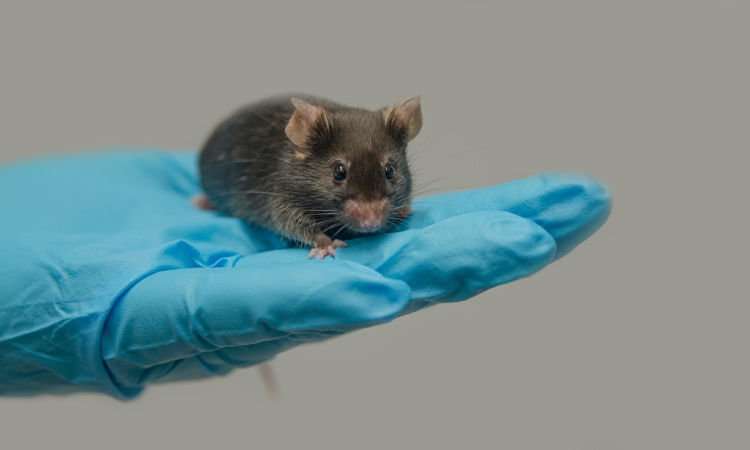

A clot-busting drug may stop promising stroke medicine from working properly, research reveals.
Researchers at the University of Manchester found the clot-busting therapy, known as tissue plasminogen activator (tPA), interacts negatively with the anti-inflammatory treatment anakinra, highlighting the need for new stroke therapies alongside existing standard care.
Results from the study on mice, published in the American Heart Association Stroke journal, show the timing of anakinra delivery must be adjusted to avoid reducing the benefits of tPA.
Anakinra, an interleukin1 receptor antagonist (IL-1Ra), blocks IL1 and has shown promise in reducing inflammation in both laboratory and early clinical studies of stroke.
“Our findings suggest that IL-1Ra can interfere with tPA’s ability to dissolve clots when the two drugs are present in the bloodstream at the same time,” said Dr Ioana-Emilia Mosneag, lead author on the study.
“The results also help explain why IL-1Ra levels were lower in patients who received tPA first, as plasmin generated during clot-busting appears to break down IL-1Ra.
“However, the effect of tPA on IL-1Ra – the opposite order – isn’t necessarily a problem as IL-1RA was still active in reducing IL-6 in the SCIL-STROKE study, but this needs further evaluation.”
Trial results ‘raise questions’ about drug interaction
Stroke is the second leading cause of death and disability worldwide, as experts estimate the number of people affected could rise by more than 80% over the next 25 years.
Despite decades of research and thousands of experimental drugs, the only approved medicines for treating the most common type of stroke, ischaemic stroke, are clot-busting drugs known as plasminogen activators, like tPA.
Though tPA can be lifesaving for acute ischaemic stroke, about 2–6% of treated patients develop potentially fatal brain bleeding, according to the ECASS III trial of the early 2000s.
Scientists now know that inflammation plays a major role in worsening brain injury after a stroke, mostly driven by a molecule called interleukin1 (IL1). The IL-1RA anakinra is a therapy used to reduce inflammation.
However, a Phase II clinical trial (SCILSTROKE) found that IL1Ra did not improve patient recovery overall.
“The findings of SCILSTROKE raise questions about whether the drug might interact negatively with standard clotbusting treatment,” said Mosneag.
Wirth nearly three quarters of patients in the SCILSTROKE trial receiving the clotbusting drug tPA before IL-1Ra, researchers set out to investigate whether the two treatments might negatively interact with each other.
They re-examined data from the SCILSTROKE trial and discovered that patients who received tPA before IL-1Ra had significantly lower levels of IL-1Ra in their blood, suggesting the drug was being broken down.
Laboratory research confirmed that IL-1Ra can be cut apart by plasmin, an enzyme produced during tPA treatment, meaning the anti-inflammatory drug may be degraded before it can work.
Timing of drug delivery ‘very likely to be a critical factor’
Following results from the SCILSTROOKE trial, researchers tested drug interaction in a mouse model of stroke, using dosing schedules that matched those used in the clinical trial.
When IL-1Ra was given after tPA, no harmful interaction was seen and the protective effects of tPA were preserved.
However, when IL-1Ra was given at the same time as tPA — during the clot-busting process — the benefits of tPA were dramatically reduced, with brain damage shrinking by only 15% compared to 68% with tPA alone.
The mice receiving both drugs together also showed poorer blood flow in the brain, more inflammatory immune cells entering damaged tissue, and higher levels of harmful structures called neutrophil extracellular traps. This indicates that the drug interaction is also detrimental to the anti-inflammatory effect of IL-1Ra.
“This study shows that timing is very likely to be a critical factor in the efficacy of IL-1Ra, which will be beneficial if given after tPA rather than alongside it,” said Professor Stuart Allan, co-author on the study.
“We also need to test whether similar interactions occur with other clot-busting drugs such as tenecteplase, which may be less likely to break down IL-1Ra due to its greater specificity.”
The post Clot-busting drug could harm stroke treatment response appeared first on Drug Discovery World (DDW).


Hosted by Drug Discovery World and supported by Sartorius and BioIVT, this webinar will explore the opportunities and challenges that exist within cancer research drug discovery and development.
You will hear from Dr Sudha Rao, Chief Scientific Officer of Kazia Therapeutics, Karol Budzik, PhD, Business Development Associate at Vyriad Therapeutics and Lars van der Veen, Chief Scientific Officer at iOnctura.
Presentations will cover how cancer treatments have shifted towards reprogramming the biology driving tumour growth, immune escape and treatment resistance, the trajectory that in vivo CAR-T treatments are taking, and how challenging tumours burdened by stroma and immune-mediated resistance can be tackled.
Q&A with the speakers follows the presentations.
The post New webinar: Tackling drug discovery challenges in cancer research appeared first on Drug Discovery World (DDW).
Amid the rise of psychedelics in the mental health space, researchers have begun to explore psilocybin as a treatment for chemotherapy-induced peripheral neuropathy.
Uncategorized
New Spectrometry Technique Could Aid Formulation Development
New Spectrometry Technique Could Aid Formulation Development
A new technique combining two forms of spectrometry could help biopharmaceutical companies improve their choice of formulation buffer for antibody manufacturing by revealing how molecular forms and three-dimensional shapes of complex biologics respond to their environment. That’s the view of Christian Bleiholder, PhD, a professor at Florida State University who helped develop the technique.
According to Bleiholder, what happens structurally when a complex biological molecule, such as an antibody or viral spike protein, binds to its target is currently poorly understood.
“This is where [this approach] can help with the bioprocessing and formulation,” he says, as structural changes “can affect the lifespan [of the product] and lead to issues, such as aggregation.”
Because antibodies are complex, existing techniques tend to be powerful at different levels of complexity, he explains. Mass spectrometry is particularly powerful for distinguishing molecular composition, while structural approaches such as X-ray crystallography and cryo-electron microscopy can provide high-resolution structural information.
The challenge is understanding the link between these things within a heterogeneous sample, he says.
To overcome this, Bleiholder and his team worked with Bruker Daltonics to develop Tandem-Trapped Ion Mobility Spectrometry (Tandem-TIMS). This combines tandem ion mobility spectrometry with tandem mass spectrometry to disentangle three overlapping layers of molecular complexity: molecular form, three-dimensional shape, and binding or assembly state, he says.
He explains that, if the proteins have different structures, they can be characterized with tandem ion mobility spectrometry, and then mass spectrometry can be used to look at their molecular forms and binding states.
Going forward, Bleiholder hopes the technique can be used for formulation development but also earlier, during drug discovery of new products, such as multi-specific antibodies, to determine which molecular states are important and how those change when a biologic engages its target. He also plans to look at automating the technique.
Bleiholder spoke about using Tandem-TIMS at the Bioprocessing Summit in Boston earlier this year.
The post New Spectrometry Technique Could Aid Formulation Development appeared first on GEN – Genetic Engineering and Biotechnology News.


Generic Drugs

China plans to transform $3M biotech sector into $522B powerhouse by 2030

FDA approves imlunestrant in combination with abemaciclib for ER-positive, HER2-negative, ESR1-mutated advanced or metastatic breast cancer

Time-Restricted Eating Linked to Improved Huntington’s Disease Markers

Discovery of CRISPR’s long lost ancestor may expand gene-editing toolkit

Asahi Kasei Introduces VANTIJ® SU-VFC Benchtop Virus-Filtration System
-
Fierce Biotech6 months ago
Scientists turn pig semen extract into eye drops that kill cancer in mice
-
Endpoints News6 months ago
Novartis to pay $2B upfront to take next-gen PI3Kα inhibitor from Synnovation
-

 Uncategorized6 months ago
Novartis buys Synnovation’s PI3Kα inhibitors for $3 billion
-
Nature Biotechnology6 months ago
Sustained nitric oxide production by engineered E. coli remodels the tumor microenvironment and potentiates immunotherapy
-

 Uncategorized5 months ago
Optical Pooled CRISPR Screen Reveals Regulators of NF-κB Dynamics in Human Cells
-
Uncategorized4 months ago
Relay’s PI3Kα inhibitor clears efficacy bar in Phase 2 vascular anomalies study
-

 STAT News – Biotech6 months ago
STAT+: In private meetings, White House works to win pharma companies’ support for drug pricing bill
-
Nature Biotechnology6 months ago
Mapping cis-regulatory mutations at scale in sorghum enables modulation of gene expression
 Scan to Read