
Uncategorized
Chikungunya Vaccine Development in Africa Accelerated by ACT-CHIK

Institut Pasteur is launching ACT-CHIK (Accelerating Clinical Trials for CHIKungunya Vaccine in Africa), a four-year research project funded by the Global Health EDCTP3 Joint Undertaking under the European Union’s Horizon Europe program that aims to advance clinical trials and prepare for the manufacturing of a chikungunya vaccine in Africa.
With €15.3 million in EU funding, ACT-CHIK will advance the development of MV-CHIK—a measles-virus-based chikungunya vaccine originally developed at Institut Pasteur—through a large-scale Phase Ib/III clinical trial in four African countries, while preparing for technology transfer to an African vaccine manufacturer.
“Chikungunya remains a neglected disease in Africa despite its growing burden. ACT-CHIK represents a unique opportunity to generate critical clinical data in the populations that need this vaccine most, while simultaneously building the foundation for regional vaccine manufacturing on the continent,” notes Sotiris Missailidis, DPhil, ACT-CHIK project coordinator at Institut Pasteur.
Chikungunya is a mosquito-borne viral disease transmitted by Aedes aegypti and Aedes albopictus mosquitoes. It causes debilitating symptoms, including high fever, severe joint pain that can persist for months or even years, headache, rash, and fatigue. Over the past two decades, the number of chikungunya cases reported across Africa has risen sharply. Yet, the disease remains largely underdiagnosed and under-reported, particularly in regions where multiple arboviruses and malaria co-circulate. Climate change is further expanding the range of mosquito vectors, increasing the risk of outbreaks across the globe, and most notably in Africa.
Although chikungunya vaccines have recently become available, their use remains limited largely among travelers, with cost and access constraints hindering their deployment in endemic regions. The MV-CHIK candidate is designed to be accessible to populations in endemic areas and aims to support local production. This positioning will address a major gap in equitable access to vaccination and to strengthen outbreak preparedness in regions where the need is greatest.
The MV-CHIK vaccine is a live-attenuated, recombinant vaccine using the well-established measles virus Schwarz vaccine strain as a vector—a platform technology originally developed at the Institut Pasteur in Paris. Six Phase I and II clinical trials conducted in Europe, the United States, and Puerto Rico, including approximately 600 adult participants in total, have demonstrated satisfactory safety, tolerability, and immunogenicity profiles.
Building on these results, ACT-CHIK will conduct a Phase Ib/III multicenter, international clinical trial to evaluate the safety and immunogenicity of MV-CHIK in adults, adolescents, and children living in Rwanda, Kenya, Nigeria, and Senegal. By enrolling 940 participants across both endemic and non-endemic areas, the trial will generate essential data to advance the clinical development plan for African populations, including younger age groups.
Beyond clinical evaluation, the project has a strategic manufacturing dimension. ACT-CHIK will conduct comprehensive due diligence, gap analysis, and prepare for the technology transfer of the MV-CHIK vaccine manufacturing process to the Institut Pasteur de Dakar (IPD), Africa’s only WHO-prequalified vaccine manufacturer. Fundação Oswaldo Cruz (Fiocruz) in Brazil, a fellow member of the Pasteur Network, will prepare the clinical trial materials and contribute its extensive vaccine manufacturing expertise to the technology transfer process.
The project will also develop a regulatory pathway for the licensure of the MV-CHIK vaccine in Africa through engagement with national regulatory authorities and the World Health Organization prequalification teams, to obtain prequalification.
ACT-CHIK directly supports Africa’s ambition—as set by the African Union—to produce 60% of the continent’s vaccine needs locally by 2040, and is aligned with the European Union’s Team Europe Initiative on Manufacturing and Access to Vaccines (TEI MAV+).
“ACT-CHIK will mobilize the full breadth of expertise at Institut Pasteur de Dakar: from clinical trials to cutting-edge virology and immunology laboratories, from vaccine research to manufacturing expertise. This project embodies our vision: an Africa that develops, evaluates, and produces its own vaccines—for the populations that need them most,” notes Ibrahima Socé Fall, PhD, CEO of Institut Pasteur de Dakar.
The ACT-CHIK consortium brings together seven partner institutions with complementary expertise:
- Institut Pasteur (Paris, France) — Project coordinator; developer of the MV-CHIK vaccine platform
- University of Rwanda (Kigali, Rwanda) — Scientific project leadership; clinical trial site
- Institut Pasteur de Dakar (Dakar, Senegal) — Vaccine technology transfer recipient; clinical laboratory assays; clinical trial site
- Fundação Oswaldo Cruz – Fiocruz (Rio de Janeiro, Brazil) — Clinical trial material manufacturing (fill & finish); technology transfer support
- Irrua Specialist Teaching Hospital (Irrua, Nigeria) — Clinical trial site; Coordinating Principal Investigator
- Kenya Medical Research Institute – KEMRI (Nairobi, Kenya) — Clinical trial site; Lead of data dissemination and communication
- International Vaccine Institute – IVI (Seoul, South Korea) — Clinical trial sponsor, regulatory strategy, and capacity building
The post Chikungunya Vaccine Development in Africa Accelerated by ACT-CHIK appeared first on GEN – Genetic Engineering and Biotechnology News.


Can any of the new obesity medications in development stand out from the pack? Which company just broke records with its IPO? And will the Food and Drug Administration allow greater access to experimental peptides?
We discuss all that and more on this week’s episode of “The Readout LOUD,” STAT’s biotech podcast.
Uncategorized
RFK Jr. claims his calendar is publicly available. We’ve been trying to get it for a year
WASHINGTON — Health secretary Robert F. Kennedy Jr. on Wednesday pointed to his “publicly available calendar” as an example of his commitment to transparency and to beat back unfavorable reporting.
But no such calendar, detailing who Kennedy meets with or how he spends his time, has been released by the administration. STAT has been asking the Department of Health and Human Services for Kennedy’s calendar for more than a year, via Freedom of Information Act requests and emails to the press office.
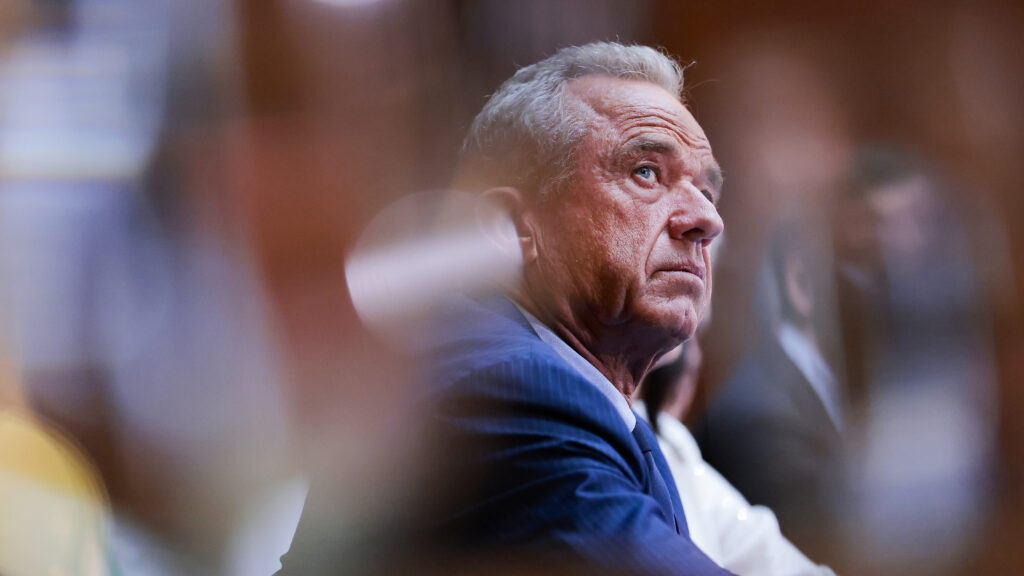
WASHINGTON — Health secretary Robert F. Kennedy Jr. on Wednesday pointed to his “publicly available calendar” as an example of his commitment to transparency and to beat back unfavorable reporting.
But no such calendar, detailing who Kennedy meets with or how he spends his time, has been released by the administration. STAT has been asking the Department of Health and Human Services for Kennedy’s calendar for more than a year, via Freedom of Information Act requests and emails to the press office.
Uncategorized
Nonprofit buys experimental cancer drug to maintain patient access
In a rare move, nonprofit organization Blood Cancer United announced Thursday it was buying the remaining supplies of Luvelta, a discontinued investigational cancer drug.
As part of the transaction, Blood Cancer United, previously known as the Leukemia & Lymphoma Society, will also acquire the investigational new drug designation and manage the compassionate-use program for children with a rare form of blood cancer, distributing the medication to patients at no cost while supplies last.

In a rare move, nonprofit organization Blood Cancer United announced Thursday it was buying the remaining supplies of Luvelta, a discontinued investigational cancer drug.
As part of the transaction, Blood Cancer United, previously known as the Leukemia & Lymphoma Society, will also acquire the investigational new drug designation and manage the compassionate-use program for children with a rare form of blood cancer, distributing the medication to patients at no cost while supplies last.


Illinois’ financial crisis could bring the state to a halt
The final 6 ‘Game of Thrones’ episodes might feel like a full season
New Season 8 Walking Dead trailer flashes forward in time
Mod turns ‘Counter-Strike’ into a ‘Tekken’ clone with fighting chickens
Meet Superman’s grandfather in new trailer for Krypton
Disney’s live-action Aladdin finally finds its stars

An obesity drug deep-dive, and peptides move mainstream

RFK Jr. claims his calendar is publicly available. We’ve been trying to get it for a year

Nonprofit buys experimental cancer drug to maintain patient access
Potential Cocaine Addiction Targets Identified Through Genetic Mapping in Rats
New mRNA Delivery Platform Restores Muscle Function in DMD Models

STAT+: Abridge inks deals with Nvidia and Lilly
Illinois’ financial crisis could bring the state to a halt
The final 6 ‘Game of Thrones’ episodes might feel like a full season
New Season 8 Walking Dead trailer flashes forward in time
Mod turns ‘Counter-Strike’ into a ‘Tekken’ clone with fighting chickens
Meet Superman’s grandfather in new trailer for Krypton
Disney’s live-action Aladdin finally finds its stars
-
 Uncategorized9 years ago
These ’90s fashion trends are making a comeback in 2017
-
Uncategorized9 years ago
According to Dior Couture, this taboo fashion accessory is back
-
Endpoints News3 months ago
Novartis to pay $2B upfront to take next-gen PI3Kα inhibitor from Synnovation
-
Uncategorized9 years ago
Phillies’ Aaron Altherr makes mind-boggling barehanded play
-
Uncategorized9 years ago
Uber and Lyft are finally available in all of New York State
-
Contributors9 years ago
The final 6 ‘Game of Thrones’ episodes might feel like a full season
-
Uncategorized9 years ago
Steph Curry finally got the contract he deserves from the Warriors
-
Uncategorized9 years ago
The old and New Edition cast comes together to perform