
Uncategorized
Carterra at centre of US$7bn antibody discovery market

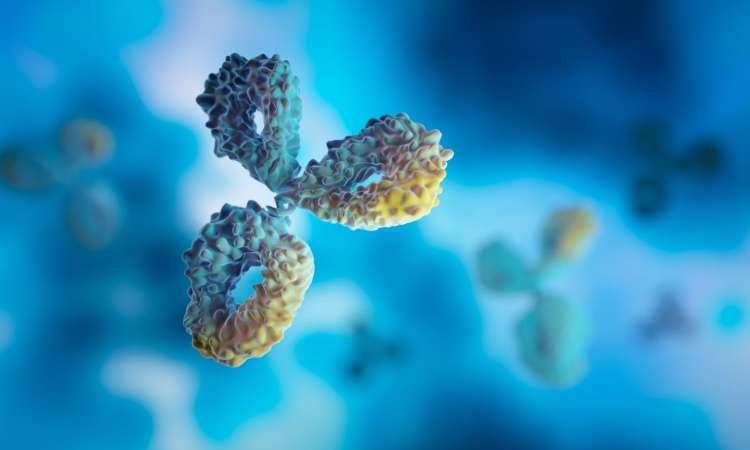

In a report published on July 16 2026, titled Lab-in-the-Loop: AI Rewires Antibody Discovery, Unlocking a US$7 billion LST Opportunity, “Lab-in-the-Loop” (LitL) is described as an emerging approach in which AI models propose candidate antibody sequences, wet lab experiments test them, and the resulting data is fed back into the AI to improve the next round of designs. This transforms what was once a slow, serial discovery process into a faster, guided one.
In the report, Leerink Partners has identified Carterra, a provider of high-throughput surface plasmon resonance (HT-SPR) platforms for antibody and small molecule discovery, as a key enabling technology in the fast-growing market for AI-driven biologics drug discovery.
Leerink Partners analyst Puneet Souda and colleagues estimate a total addressable market of roughly US$7 billion in life science tools demand tied to AI-enabled antibody discovery — including a US$4 billion biologics drug discovery layer, of which an estimated US$1.3 billion is currently outsourced to service providers.
The Leerink report concludes that this shift increases rather than diminishes the need for wet lab data and identifies binding affinity measurement, where surface plasmon resonance (SPR) instruments quantify how tightly an antibody binds its target, as a segment expected to remain central to the discovery process rather than simply benefiting from higher project volumes. Its competitive landscape analysis names Carterra, alongside other technologies, as a primary supplier of this binding affinity infrastructure.
Josh Eckman, Chief Executive Officer and Co-Founder of Carterra, said: “This report reinforces what we’re hearing directly from our customers: as AI generates larger and more complex sets of antibody candidates, the bottleneck shifts to how quickly and accurately those candidates can be validated at the bench.
“Carterra’s high-throughput SPR platforms were built for exactly this kind of scale, and we believe we’re well positioned to benefit as Lab-in-the-Loop becomes the default way biologics programs are run.”
Industry voices point to rising demand
According to Carterra, ten of its customers are named in the Leerink report and are already describing the increase in scale anticipated by the analysts.
Twist Bioscience, which the report identifies as the largest structural beneficiary of the LitL shift, has highlighted Carterra’s role in generating the antibody binding datasets that large-scale AI discovery programmes depend on. At the Protein and Antibody Engineering Summit (PEGS Boston) in May 2026, Twist Biopharma Solutions’ Chief Scientific Officer Dr Colby Souders described the role Carterra’s platforms play in its partnership with AWS Biodiscovery to generate binding data at the scale required by modern AI-guided discovery campaigns.
Julian Englert, Chief Executive Officer and Co-Founder of Adaptyv Bio, a protein engineering company supporting AI-driven biologics programmes that is also named in the report, said: “The market opportunity may be understated. AI in drug discovery is here to stay and we believe Leerink’s estimate of a ~US$4 billion antibody discovery market may be low. At Adaptyv, we are seeing massive increases in both orders for our protein synthesis but also the size of projects being requested. We have deployed the most sophisticated and high-throughput technologies, like Carterra platforms, to maintain our leadership in the space.”
Why binding data matters
The Leerink report argues that AI models are only as effective as the experimental data used to train and refine them. Each round of the Lab-in-the-Loop cycle depends on fast, accurate, high-volume binding affinity data to identify which candidates perform successfully, with that information generated through wet lab testing. The analysis notes that legacy approaches to binding characterisation, often limited to simple yes/no assays or low-throughput instruments, are increasingly being replaced by platforms designed to match the scale of candidate pools generated by AI models.
The post Carterra at centre of US$7bn antibody discovery market appeared first on Drug Discovery World (DDW).

Post Content
Uncategorized
Capricor CEO won’t rule out legal action against FDA after negative adcomm
Capricor CEO won’t rule out legal action against FDA after negative adcomm
After an FDA advisory committee voted 9-3 on Wednesday against recommending Capricor Therapeutics’ Duchenne muscular dystrophy cardiomyopathy drug for approval, stakeholders allege an “ulterior motive” and “biased intentions.” Read More
During ketamine anesthesia the brain’s nerve cells fall silent, and as consciousness returns, they begin to reconnect. A study in mice by researchers at the Institute of Science and Technology Austria (ISTA) and colleagues at Allen Institute for Brain Science in Seattle, has now for the first time shown that immune cells in the brain play a critical role in this process, and indicates that there are differences between female and male brains.
Senior and corresponding author Sandra Siegert, PhD, at ISTA, reported on their findings in Science Advances, in a paper titled “Corticosterone-linked microglial activity underpins sexually dimorphic neuroplasticity after ketamine anesthesia,” in which they concluded “Our study uncovers significant sex-specific differences in neuronal adaptation during recovery from ketamine anesthesia, driven by microglia.”
Recovery from anesthesia is critical for resuming normal physiological and neuronal functions, but the mechanisms involved remain elusive, the authors wrote. “Ketamine distinguishes itself from other anesthetics by its unique pharmacological properties as an N-methyl D-aspartate (NMDA) receptor antagonist, which preferentially targets GABAergic inhibitory interneurons.”
And unlike many other anesthetics, ketamine does more than induce unconsciousness. It alters how we perceive pain and form memories. It dampens communication between neurons—the very network that must later resume normal function as the patient awakens. Exactly how this recovery process unfolds—and whether male and female brains differ in this regard—has been unclear. “… ketamine anesthesia induces mild anxiety behavior phenotypes, interestingly, only in females,” the team continued, “suggesting inherent sex differences in anesthesia recovery with neuronal consequences that extend beyond the immediate sex-dependent metabolic processing described for low-dose ketamine.”
Working with mice, Siegert, together with Alessandro Venturino, PhD, and their colleagues at ISTA, and researchers at the Allen Institute, now offer the first answers to some of these questions. Microglia are specialized immune cells that constantly scan the brain and, when needed, trigger anti‑inflammatory responses. They also monitor neurons and their connections, thus helping to maintain optimal brain function. “Ketamine, across different dosages, affects microglia, which are embedded within the neuronal network,” the team explained. “Locally, microglia influence the synaptic machinery and neuronal firing properties by responding to environmental changes.”
As early as 2017, Siegert’s group at ISTA noticed that male and female mice respond differently to ketamine anesthesia, and more precisely, their microglia do.
For the newly reported study, using a cranial window—a surgically implanted opening that allows microscopic access to the living brain—Venturino analyzed how microglia and neurons behave while mice recover from ketamine anesthesia. Both cell types were labeled with fluorescent markers to glow under the microscope.
The researchers observed microglia processes in their dynamic action towards neurons. Surprisingly, as female mice recovered from anesthesia, microglia began forming prolonged contacts with neurons, coinciding with the onset of synaptic remodeling and plasticity. Notably, this phenomenon was not observable in male mice.
Furthermore, in mice lacking microglia, no such synaptic remodeling occurred, indicating that microglia are critical mediators of this recovery-associated plasticity. “What was fascinating,” Venturino explains, “was that we observed this plasticity—the brain’s ability to change, adapt, and in this case recover—only in females.”
Despite many other projects—or perhaps because of them—the researchers kept returning to their initial observation. “I’ve always believed that women have greater brain plasticity,” Siegert said with a smile. “Alessandro and I just couldn’t let it go—we wanted to know why.”
Further experiments revealed that this plasticity depends on corticosterone, one of the major stress hormones. “During recovery from anesthesia, corticosterone levels rise,” Venturino explained. “In female mice, this specifically activates the stress‑response gene Fkbp5 in microglia. The gene encodes the protein FKBP51, which helps the cell manage stress signals—and apparently prompts microglia to interact with neurons.”
The authors further noted, “Mechanistically, we found that female microglia selectively up-regulated the cochaperone Fkbp5/FK506-binding protein 51 (FKBP51), which is a key intermediary in the corticosteroid-induced stress response … Our findings underscore that microglia serve as a relevant interface between the endocrine stress response and the brain -immune cell system.”
To confirm this link, the team removed the adrenal glands—the endocrine organs that produce corticosterone. Without them, the close contact between microglia and neurons during recovery disappeared. “These results clearly show that corticosterone triggers this reaction in female mice,” said Venturino.
Siegert added, “They also remind us that stress is not always harmful—stress hormones are essential for certain processes in the brain.” In their paper the investigators commented, “The selective hypothalamic activation and elevated blood plasma corticosterone levels during the recovery phase in females shape the microglia-neuron interactions, highlighting a link between the endocrine and the brain-immune axes.”
Why this process differs between female and male mice remains uncertain; it is still unclear whether the male brain uses a similar mechanism, just delayed, or has another strategy. “Microglia enable rapid adaptation, and these cells in females are likely more sensitive to specific stress signals,” Siegert noted.
From an evolutionary viewpoint, she speculates, females may have faced greater demands for social, emotional, and multitasking adaptability—for example, in childcare, food gathering, or coordinating group activities. The female brain, therefore, had to adapt and respond more swiftly. “That’s a good thing,” Siegert added “But if this plasticity becomes too frequent or too intense, it can increase the risk of depression. We also know that psychiatric disorders are more prevalent in women than in men.”
Siegert further pointed out that during the literature review, her team found very few studies in which ketamine had been tested in females. “There were only a handful of anecdotal studies showing that women experience nausea and sickness more often after ketamine anesthesia,” she stated. Given that ketamine is also used as an antidepressant, understanding how its mechanisms differ between the sexes is all the more important. “It’s astonishing how readily people assume that men and women respond to drugs in the same way—when clearly they do not,” Siegert stressed.
Research like this is a step in the right direction: it highlights that medications can act differently in women and men and serves as a call to consider sex‑specific differences in future studies. “Our findings contribute to a growing body of evidence recognizing sex-specific differences in brain function and immune responses, the latter of which is already well known for increased susceptibility to infection and autoimmune diseases,” the team pointed out. “Our results identified a link between microglia-specific Fkbp5 expression and ketamine action, warranting a reevaluation of assumptions that ketamine is a general anesthetic and fully reversible across sexes.”
Insights into the microglia response to ketamine have since inspired Siegert and Venturino to co‑found Syntropic Medical, a start‑up in ISTA’s XISTA ecosystem exploring how 60 Hz flickering light can soften such neural networks in the brain.
The post Ketamine Triggers Sex-Specific Brain Recovery Responses appeared first on GEN – Genetic Engineering and Biotechnology News.


Illinois’ financial crisis could bring the state to a halt
The final 6 ‘Game of Thrones’ episodes might feel like a full season
New Season 8 Walking Dead trailer flashes forward in time
Mod turns ‘Counter-Strike’ into a ‘Tekken’ clone with fighting chickens
Meet Superman’s grandfather in new trailer for Krypton
Disney’s live-action Aladdin finally finds its stars
De novo L-(+)-tartaric acid biosynthesis in multi-modular engineered yeasts
Capricor CEO won’t rule out legal action against FDA after negative adcomm
Ketamine Triggers Sex-Specific Brain Recovery Responses

STAT+: Trump administration revises rebate pilot for 340B drug discount program, angering hospitals
Microbiota-Derived Metabolite Enhances HIV Therapy in Monkeys
Lilly and Resilience invest $750M in diabetes and obesity drug device supply
Illinois’ financial crisis could bring the state to a halt
The final 6 ‘Game of Thrones’ episodes might feel like a full season
New Season 8 Walking Dead trailer flashes forward in time
Mod turns ‘Counter-Strike’ into a ‘Tekken’ clone with fighting chickens
Meet Superman’s grandfather in new trailer for Krypton
Disney’s live-action Aladdin finally finds its stars
-
Fierce Biotech4 months ago
Scientists turn pig semen extract into eye drops that kill cancer in mice
-
 Uncategorized9 years ago
These ’90s fashion trends are making a comeback in 2017
-
Endpoints News4 months ago
Novartis to pay $2B upfront to take next-gen PI3Kα inhibitor from Synnovation
-

 Uncategorized4 months ago
Novartis buys Synnovation’s PI3Kα inhibitors for $3 billion
-
Uncategorized9 years ago
According to Dior Couture, this taboo fashion accessory is back
-
Uncategorized9 years ago
Phillies’ Aaron Altherr makes mind-boggling barehanded play
-
Uncategorized9 years ago
Steph Curry finally got the contract he deserves from the Warriors
-
Uncategorized9 years ago
Uber and Lyft are finally available in all of New York State