
Uncategorized
Cancer-Fighting Abilities of NK Immune Cells May Be Disrupted by Some Omega Fatty Acids

Polyunsaturated fatty acids (PUFAs), and especially some omega PUFAs, are recognized for their myriad health benefits, but their role in the biology of cancer cells and tumor immunity has been less clear. The results of a preclinical study by researchers at Yale University School of Medicine now indicate that some omega fatty acids can restrain the cancer-killing capabilities of natural killer (NK) cells by acting through a receptor, LRP5.
In their paper in Science Signaling, titled “LRP5-dependent transport of polyunsaturated fatty acids serves as an immune checkpoint for natural killer cells,” first author Yi Luan, PhD, and colleagues stated, “Given the widespread promotion of polyunsaturated fatty acids (PUFAs) as beneficial dietary supplements, greater public awareness of their potential unintended effects is warranted.” The authors call for further work to explore the mechanisms that shape the expression of LRP5 in different contexts, which they say could unveil potential therapeutic targets.
PUFAs are essential lipid molecules characterized by multiple double bonds in their hydrocarbon chains, the authors wrote. They are broadly classified into two groups, omega-3 (n-3) and omega-6 (n-6) PUFAs, which are found mostly in fish, nuts, and vegetable oils. They play many essential roles in the body, including by maintaining the fluidity of cell membranes and supporting signaling within cells. “Their uptake and intracellular distribution rely on lipid transporters, which facilitate their availability for metabolic and signaling functions,” the team explained.
PUFAs, especially the omega-3s, have become widely touted for their various health benefits and anti-inflammatory properties. However, PUFAs have a more complex role in tumor biology than generally assumed, as some research indicates they can influence the biology of both tumor cells and anticancer immune cells such as natural killer cells. Research has highlighted the role of n-3 PUFAs in preventing tumor progression, the team noted. “Beyond their direct influence on tumor cells, they also modulate immune cell function within the tumor microenvironment, further emphasizing the complex role of PUFAs in tumor development,” they commented. “However, their specific impact on NK cell biology remains poorly understood.”
For their newly reported study, Luan and colleagues probed how PUFAs shape the biology of natural killer cells, which play a central role in immune surveillance. They knocked out the LRP5 receptor, which acts as the conduit for PUFA transport into natural killer cells, and found that this reduced the intake of PUFAs. However, the loss of LRP5 enhanced the cells’ ability to eliminate colon cancer cells and slowed the growth of tumors in mice.
Feeding wild-type mice a diet free of PUFAs similarly suppressed tumor growth. Additional work showed that PUFAs constrained natural killer cells by suppressing the mTORC1 signaling pathway and glycolysis metabolism. “Mechanistically, LRP5-mediated PUFA transport suppressed mTORC1 signaling and glycolysis in NK cells, a metabolic pathway essential for NK cell cytotoxicity,” they stated. “Thus, our study identified LRP5 as an immune checkpoint that restrains NK cell activity through PUFA transport–dependent suppression of mTORC1 signaling.” They suggest that future studies should further explore the regulatory mechanisms governing LRP5 expression in different contexts, “… potentially revealing therapeutic opportunities.”
The post Cancer-Fighting Abilities of NK Immune Cells May Be Disrupted by Some Omega Fatty Acids appeared first on GEN – Genetic Engineering and Biotechnology News.

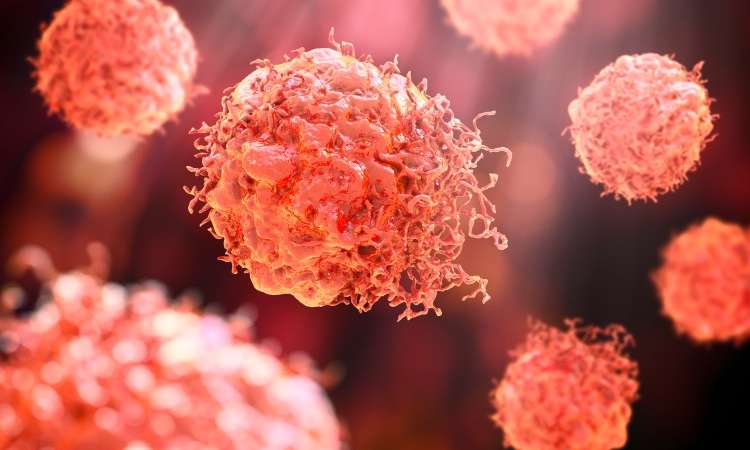

Hosted by Drug Discovery World and supported by Sartorius and BioIVT, this webinar will explore the opportunities and challenges that exist within cancer research drug discovery and development.
You will hear from Dr Sudha Rao, Chief Scientific Officer of Kazia Therapeutics, Karol Budzik, PhD, Business Development Associate at Vyriad Therapeutics and Lars van der Veen, Chief Scientific Officer at iOnctura.
Presentations will cover how cancer treatments have shifted towards reprogramming the biology driving tumour growth, immune escape and treatment resistance, the trajectory that in vivo CAR-T treatments are taking, and how challenging tumours burdened by stroma and immune-mediated resistance can be tackled.
Q&A with the speakers follows the presentations.
The post New webinar: Tackling drug discovery challenges in cancer research appeared first on Drug Discovery World (DDW).
Amid the rise of psychedelics in the mental health space, researchers have begun to explore psilocybin as a treatment for chemotherapy-induced peripheral neuropathy.
Uncategorized
New Spectrometry Technique Could Aid Formulation Development
New Spectrometry Technique Could Aid Formulation Development
A new technique combining two forms of spectrometry could help biopharmaceutical companies improve their choice of formulation buffer for antibody manufacturing by revealing how molecular forms and three-dimensional shapes of complex biologics respond to their environment. That’s the view of Christian Bleiholder, PhD, a professor at Florida State University who helped develop the technique.
According to Bleiholder, what happens structurally when a complex biological molecule, such as an antibody or viral spike protein, binds to its target is currently poorly understood.
“This is where [this approach] can help with the bioprocessing and formulation,” he says, as structural changes “can affect the lifespan [of the product] and lead to issues, such as aggregation.”
Because antibodies are complex, existing techniques tend to be powerful at different levels of complexity, he explains. Mass spectrometry is particularly powerful for distinguishing molecular composition, while structural approaches such as X-ray crystallography and cryo-electron microscopy can provide high-resolution structural information.
The challenge is understanding the link between these things within a heterogeneous sample, he says.
To overcome this, Bleiholder and his team worked with Bruker Daltonics to develop Tandem-Trapped Ion Mobility Spectrometry (Tandem-TIMS). This combines tandem ion mobility spectrometry with tandem mass spectrometry to disentangle three overlapping layers of molecular complexity: molecular form, three-dimensional shape, and binding or assembly state, he says.
He explains that, if the proteins have different structures, they can be characterized with tandem ion mobility spectrometry, and then mass spectrometry can be used to look at their molecular forms and binding states.
Going forward, Bleiholder hopes the technique can be used for formulation development but also earlier, during drug discovery of new products, such as multi-specific antibodies, to determine which molecular states are important and how those change when a biologic engages its target. He also plans to look at automating the technique.
Bleiholder spoke about using Tandem-TIMS at the Bioprocessing Summit in Boston earlier this year.
The post New Spectrometry Technique Could Aid Formulation Development appeared first on GEN – Genetic Engineering and Biotechnology News.


Fatal toxicities test autoimmune CAR T’s safety thesis

Ultragenyx wins first approval for MPS IIIA, closing a bumpy four-year path

EMA’s CHMP backs eight new medicines in September

Electra dips after pricing upsized IPO, bucking trend: Public Equity Report

Generic Drugs

Lily gets FDA nod for SERD-CDK 4/6 combo in breast cancer
-
Fierce Biotech6 months ago
Scientists turn pig semen extract into eye drops that kill cancer in mice
-
Endpoints News6 months ago
Novartis to pay $2B upfront to take next-gen PI3Kα inhibitor from Synnovation
-

 Uncategorized6 months ago
Novartis buys Synnovation’s PI3Kα inhibitors for $3 billion
-
Nature Biotechnology6 months ago
Sustained nitric oxide production by engineered E. coli remodels the tumor microenvironment and potentiates immunotherapy
-

 Uncategorized5 months ago
Optical Pooled CRISPR Screen Reveals Regulators of NF-κB Dynamics in Human Cells
-
Uncategorized4 months ago
Relay’s PI3Kα inhibitor clears efficacy bar in Phase 2 vascular anomalies study
-

 STAT News – Biotech6 months ago
STAT+: In private meetings, White House works to win pharma companies’ support for drug pricing bill
-
 BioPharma Dive – AI / Data6 months ago
AstraZeneca lung drug gets ‘surprise’ win in COPD trials
 Scan to Read