Uncategorized
Can AI Agents Automate Scientific Discovery?

Nvidia CEO Jensen Huang asserts that agentic AI systems are driving innovation across industries. At his annual NVIDIA GTC keynote, Huang highlighted OpenClaw, the personal AI assistant that went from a solo developer’s side project to one of the fastest-growing open-source projects in history.
More researchers are customizing agents for specific use cases. GTC brought together life science leaders to discuss how these advances are transforming biology.
Andrew Beam, PhD, chief technology officer at Lila Sciences, explains why AI advanced so rapidly in certain domains. The combination of internet-scale data and the rise of transformer architectures enabled the development of large language models. Progress then accelerated in areas that were “easy to verify,” such as mathematics, where proofs can be quickly and objectively evaluated.
However, science is difficult to interrogate at scale.
“When you’re talking about the discovery of new knowledge, you need verification,” Beam said. “In science, we call it an experiment.”
Lila’s aims to build “scientific superintelligence” by scaling the scientific method through autonomous labs. Beam asserts that boosting the throughput of experiments describing the physical world will provide an invaluable data stream for the next generation of AI models.
Marinka Zitnik, PhD, associate professor of biomedical informatics at Harvard Medical School, adds that agents must be tightly connected to the wet lab, particularly given strong biases in the literature.
“95% of all life sciences publications focus on 5,000 of the most well-studied human genes,” she said. “If our AI agent just reads the literature, there are limitations to the hypotheses that can be generated.”
Ensuring that agents have access to diverse data modalities—such as molecular structures, single-cell sequencing, and longitudinal clinical trajectories—will be critical to inform actionable experiments for closed loop discovery.
Rory Kelleher, senior director, global head of business development, healthcare and life sciences at Nvidia, emphasizes that as agent development accelerates, engaging with these frontier technologies will be essential to stay ahead.
“It’s not that AI is going to replace scientists,” he says, “but perhaps the scientists who use AI are going to phase out the ones who don’t.”
At GTC, I noted the following agentic systems augmenting the life science lab:
AI scientist – Kosmos
Kosmos, the autonomous AI scientist developed by Edison Scientific, reduces human overhead for routine tasks, such as literature searches and data analysis, while performing hundreds of research tasks in parallel to compress months of work into a single day.
“What’s nice about an AI scientist is decoupling the number of humans using the tool from how much can be done,” said Andrew White, PhD, CTO of Edison.
The platform’s technical report describes seven discoveries made by Kosmos: three reproduced findings from preprinted or unpublished manuscripts, while the remaining four were novel literature contributions. Among the examples, Kosmos identified a new clinically relevant mechanism of neuronal aging, and generated statistical evidence that high circulating levels of superoxide dismutase 2 (SOD2) may causally reduce myocardial fibrosis in humans.
Edison is the commercial spinout of FutureHouse, an AI scientist non-profit backed by former Google CEO Eric Schmidt and co-founded by Sam Rodriques, PhD, former group leader at the Francis Crick Institute and Edison’s CEO. Edison serves more than 50,000 researchers worldwide.
To the physical lab – LabOS
Le Cong, PhD, associate professor at Stanford University and Mengdi Wang, PhD, professor at Princeton University, have developed LabOS, an AI extended reality (XR) operating system, which unites computational reasoning with physical experiments.
Recently embedded into “LabClaw” with OpenClaw, the co-scientist connects multi-model AI agents, smart glasses, and robots to allow the platform to understand experimental context and assist in real-time execution.
LabOS extends the capabilities of CRISPR-GPT, an agentic AI system for CRISPR research, to the physical lab. The XR system is also an answer to science’s reproducibility challenges, where 70% of biomedical scientists cannot reproduce experiments from colleagues, while 50% cannot reproduce their own work after a few months, reports a Nature survey with support from a follow-up study from PLOS.
Cong is also scientific co-founder of Phylo. Launched in February, the new enterprise is an applied research lab dedicated to agentic intelligence for biomedical scientists.
From text prompt to drug – Latent-Y
On the heels of GTC, Latent Labs announced Latent-Y, an AI agent that designs therapeutic antibodies from a text prompt. Latent-Y produced lab-confirmed nanobody binders against six out of nine targets, achieving a 67% target-level success rate without human filtering or intervention. Binding affinities reached the single-digit nanomolar range. Additionally, Latent-Y is integrated within the full Latent Labs platform, enabling researchers to audit and query the reasoning traces.
Simon Kohl, PhD, CEO and founder of Latent Labs, describes the agent as a “force multiplier” that completes design campaigns 56-fold faster than traditional approaches.
“What’s exciting about science is that we barely run out of ideas,” said Kohl. “We’re constrained by the lab and what’s practically possible. It’s exciting to lift that bottleneck.”
Additionally, Latent-Y achieves cross-species binder design for translational studies and can generate binders based on a scientific paper input. In one campaign, the agent processed a publication on blood-brain barrier crossing and designed lab validated antibodies targeting human transferrin receptor (hTFR1).
Filter your binders – Dyno Psi-Phi
Eric Kelsic, PhD, CEO and co-founder of Dyno Therapeutics, says that agents capable of automating therapy design can reduce costs and foster competition among developers, ultimately offering patients more treatment options.
Dyno is a genetic medicines company that has spent the past decade addressing the delivery challenge, having developed capsids to target the central nervous system, muscle, and brain. Kelsic emphasizes that the promise of gene therapy lies in the combination of delivery technologies and therapeutic payload design.
At GTC, Dyno announced Dyno Psi-Phi, a generative and agentic interface for protein binder design. The workflow, developed in collaboration with Nvidia, connects Dyno Psi-1, a molecular model influenced by Nvidia’s La-Proteina family, with Dyno Phi, a collection of filters that select designs most likely to succeed in experimental validation.
Sam Sinai, PhD, head of machine learning and co-founder at Dyno Therapeutics says much of today’s progress is measured against a narrow set of computational filters, which limits exploration of the broader functional space of proteins.
“With Psi-Phi, we democratize the filters that work, while introducing models that generate greater diversity and pair naturally with high-throughput experiments,” said Sinai. “Designs succeed not just at binding, but across downstream requirements.”
Kelsic puts into context that most tools built in recent decades have been for human use. “Agents are now becoming more capable. It’s a new opportunity to build tools that are easy for agents to use,” he said.
The Psi-Phi platform is accessible through Claude Code to facilitate incorporation into existing AI pipelines.
The post Can AI Agents Automate Scientific Discovery? appeared first on GEN – Genetic Engineering and Biotechnology News.

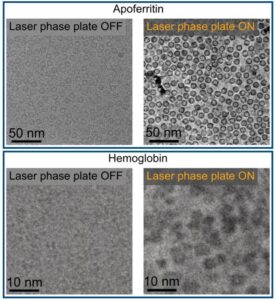
You know when you are at the eye doctor getting an updated prescription, and suddenly the world snaps into sharper focus? Physicists at the University of California (UC), Berkeley, have now done something similar for electron microscopy. By introducing phase contrast into a cryo‑electron microscope, they have delivered dramatically sharper images of some of biology’s smallest and most elusive proteins.
The advance comes from a new laser phase plate (LPP), described in the paper “Laser phase plate improves structure determination of small proteins by cryo‑EM,” which was published recently in Science. Led by physicist Holger Mueller, PhD, of UC Berkeley and Lawrence Berkeley National Laboratory, the team demonstrated that a laser‑driven phase plate can overcome one of cryo‑EM’s most persistent limitations: poor contrast for small proteins.
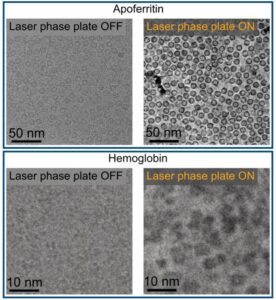
Cryo‑EM has transformed structural biology over the past decade, earning a Nobel Prize in 2017 for enabling high‑resolution structures without crystallization. But despite its impact, the technique still struggles with proteins below ~70 kilodaltons—a size range that includes about 90% of the human proteome. “Because of signal-to-noise limitations, the majority of human and animal proteins are too small to be analyzed by these methods [cryo-EM and cryoelectron tomography]. The increase in signal-to-noise ratio provided by this laser phase plate is expected to overcome these important limitations.”
The new LPP begins to address that problem. The LPP uses an intense, continuous‑wave laser to shift the phase of the electron beam itself. This produces true phase contrast without dimming or destabilizing the beam. Mueller described the laser focus as “75 kilowatts focused to a few microns… That’s more powerful than what you use for welding. It has more power than a military laser. It builds up the brightest continuous laser focus ever.”
Installed in a custom Thermo Fisher Titan Krios, the LPP immediately improved the clarity and resolvability of small proteins, including hemoglobin, which sits at the lower limit of what today’s cryo‑EM instruments can handle. As the authors wrote in the abstract: “Here, we show that the laser phase plate (LPP)… enhances the resolution in single-particle reconstruction of small proteins by improving specimen-motion correction, recovery of information from the early frames, as well as particle visualization, 3D classification, and alignment.”
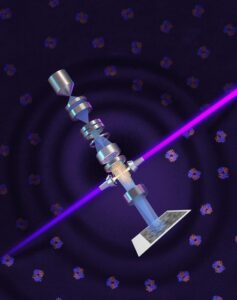
These improvements were achieved using standard defocus ranges and reconstruction workflows. “For the most challenging cases—small particles, bad specimens—the laser produces a very considerable advantage,” Mueller said.
The impact extends beyond single‑particle analysis. Cryo‑electron tomography (cryo‑ET), which assembles multiple angular views of a molecule or protein into a three-dimensional image, stands to benefit even more. “With cryo-ET, we’re looking at small, very complicated cellular material that’s incredibly crowded inside the cell,” said Bridget Carragher, PhD, founding technical director of imaging at Biohub. “It’s like a forest of trees, and you’re trying to find one leaf on one tree in there. Cryo-ET needs a dramatic step forward in contrast, so we can start to see what’s going on inside the cell. That’s what the laser phase plate promises to give us.”
Biohub is developing a dual‑laser version of the system, designed to reduce component wear and minimize aberrations. Meanwhile, Mueller’s team is pushing toward imaging proteins as small as 17 kilodaltons, a threshold that would open access to vast regions of the human proteome previously invisible to cryo‑EM.
“This technology is a step function change for biology,” said Stephani Otte, PhD, Biohub’s vice president of imaging science. “What was once invisible will become visible—and that changes everything about how we understand disease.”
“The bottom line is, if you have a large protein and a really good sample—a fresh one or one frozen without bubbles, for example—you may not need the phase plate to get a single, high-quality image. But for a small protein and a bad sample, laser-on is best,” Mueller said. “This could fill an enormous gap in our knowledge of protein structures that can’t be crystallized or are too small for today’s cryo-EM. And it will be revolutionary for cryo-ET.”
The post Laser‑Driven Phase Contrast Enhances Cryo‑EM Resolution of Small Proteins appeared first on GEN – Genetic Engineering and Biotechnology News.
Uncategorized
STAT+: Updated: Tracking RFK Jr.’s promises to remake health in America
Updated June 11, 2026
WASHINGTON — A pledge to “Make America Healthy Again” earned Robert F. Kennedy Jr. his job atop U.S. health agencies a year and some change ago. He’s now had the opportunity to turn his words into action, with mixed results.
“All one needs” to prove the health secretary’s attentiveness is to “review my unprecedented list of accomplishments on a wide range of issues, all of which I drove,” Kennedy posted on X on Wednesday in response to a journalist.

Updated June 11, 2026
WASHINGTON — A pledge to “Make America Healthy Again” earned Robert F. Kennedy Jr. his job atop U.S. health agencies a year and some change ago. He’s now had the opportunity to turn his words into action, with mixed results.
“All one needs” to prove the health secretary’s attentiveness is to “review my unprecedented list of accomplishments on a wide range of issues, all of which I drove,” Kennedy posted on X on Wednesday in response to a journalist.

Can any of the new obesity medications in development stand out from the pack? Which company just broke records with its IPO? And will the Food and Drug Administration allow greater access to experimental peptides?
We discuss all that and more on this week’s episode of “The Readout LOUD,” STAT’s biotech podcast.


Illinois’ financial crisis could bring the state to a halt
The final 6 ‘Game of Thrones’ episodes might feel like a full season
New Season 8 Walking Dead trailer flashes forward in time
Mod turns ‘Counter-Strike’ into a ‘Tekken’ clone with fighting chickens
Meet Superman’s grandfather in new trailer for Krypton
Disney’s live-action Aladdin finally finds its stars

Laser‑Driven Phase Contrast Enhances Cryo‑EM Resolution of Small Proteins

STAT+: Updated: Tracking RFK Jr.’s promises to remake health in America

An obesity drug deep-dive, and peptides move mainstream

RFK Jr. claims his calendar is publicly available. We’ve been trying to get it for a year

Nonprofit buys experimental cancer drug to maintain patient access
Potential Cocaine Addiction Targets Identified Through Genetic Mapping in Rats
Illinois’ financial crisis could bring the state to a halt
The final 6 ‘Game of Thrones’ episodes might feel like a full season
New Season 8 Walking Dead trailer flashes forward in time
Mod turns ‘Counter-Strike’ into a ‘Tekken’ clone with fighting chickens
Meet Superman’s grandfather in new trailer for Krypton
Disney’s live-action Aladdin finally finds its stars
-
 Uncategorized9 years ago
These ’90s fashion trends are making a comeback in 2017
-
Uncategorized9 years ago
According to Dior Couture, this taboo fashion accessory is back
-
Endpoints News3 months ago
Novartis to pay $2B upfront to take next-gen PI3Kα inhibitor from Synnovation
-
Uncategorized9 years ago
Phillies’ Aaron Altherr makes mind-boggling barehanded play
-
Uncategorized9 years ago
Uber and Lyft are finally available in all of New York State
-
Contributors9 years ago
The final 6 ‘Game of Thrones’ episodes might feel like a full season
-
Uncategorized9 years ago
Steph Curry finally got the contract he deserves from the Warriors
-
Uncategorized9 years ago
The old and New Edition cast comes together to perform