
Uncategorized
Brain-Targeted Drug Discovery Barriers Drive Deep Science Ventures and Medicines Discovery Catapult Deal

Deep Science Ventures (DSV) and Medicine Discovery Catapult (MDC) agreed to collaborate to address challenges in delivering medicines into the brain.
One of medicine’s greatest challenges is ensuring that treatments reach the precise area of the body where they are needed. While recent scientific breakthroughs have identified numerous targets for neurological conditions, the difficulty of effectively transporting these treatments across the blood-brain barrier and into the central nervous system (CNS) remains a primary challenge for global health.
According to the World Health Organization’s Global Status Report on Neurology, over 40% of the global population is living with CNS diseases, making them a leading global cause of ill health and disability.
Directly addressing critical gaps in healthcare means these innovations have the potential to improve patient outcomes while creating clinical and commercial opportunities for biotech and pharma companies. Developing new solutions could unlock access for rare neurological disorders and expand treatment to large or underserved patient populations, including those with diseases such as Alzheimer’s, Parkinson’s, and various brain cancers.
The first phase of the partnership will see an in-depth review of the current medicines landscape conducted to identify opportunities for innovation. This information will then be used to identify systemic gaps in brain-entry technologies. The long-term ambition is for novel approaches that meet the investment criteria of the partners to be spun out into new ventures focused on high-impact solutions and to provide them with pre-seed funding.
A core part of DSV’s approach involves building future founding teams to form new companies that will address challenges across multiple sectors. Future founders will work on opportunities that have been pre-scoped by DSV, de-risking the standard founder proposition.
By combining DSV’s venture-building model with MDC’s drug discovery expertise and infrastructure, the partnership will aim to develop new approaches to ensure life-changing medicines reach the brain, according to Adam Tomassi-Russell, senior director, DSV.
“The blood-brain barrier remains one of the most complex issues in modern medicine and with over 40% of the world’s population facing neurological conditions, it’s imperative that we find an optimal solution to this problem,” said Tomassi-Russell. “By pooling our venture-creation expertise with MDC’s discovery capabilities, we can offer the right founders a frictionless environment in which to tackle the CNS delivery gap. If we can solve the ‘how’ of brain entry more effectively, we can unlock a new frontier of CNS therapeutics and address the huge unmet need in these diseases.”
“At MDC, we are committed to transforming bold ideas into better treatments,” added Nicola Heron, chief strategy officer, MDC. “This collaboration presents an opportunity to discover new technologies that could have a significant impact on patients and society. Through this partnership, we will strengthen the ecosystem for CNS innovation in the U.K. and beyond, enabling more medicines to reach patients faster.”
The post Brain-Targeted Drug Discovery Barriers Drive Deep Science Ventures and Medicines Discovery Catapult Deal appeared first on GEN – Genetic Engineering and Biotechnology News.

Uncategorized
STAT+: Updated: Tracking RFK Jr.’s promises to remake health in America
Updated June 11, 2026
WASHINGTON — A pledge to “Make America Healthy Again” earned Robert F. Kennedy Jr. his job atop U.S. health agencies a year and some change ago. He’s now had the opportunity to turn his words into action, with mixed results.
“All one needs” to prove the health secretary’s attentiveness is to “review my unprecedented list of accomplishments on a wide range of issues, all of which I drove,” Kennedy posted on X on Wednesday in response to a journalist.

Updated June 11, 2026
WASHINGTON — A pledge to “Make America Healthy Again” earned Robert F. Kennedy Jr. his job atop U.S. health agencies a year and some change ago. He’s now had the opportunity to turn his words into action, with mixed results.
“All one needs” to prove the health secretary’s attentiveness is to “review my unprecedented list of accomplishments on a wide range of issues, all of which I drove,” Kennedy posted on X on Wednesday in response to a journalist.
Can any of the new obesity medications in development stand out from the pack? Which company just broke records with its IPO? And will the Food and Drug Administration allow greater access to experimental peptides?
We discuss all that and more on this week’s episode of “The Readout LOUD,” STAT’s biotech podcast.
Uncategorized
RFK Jr. claims his calendar is publicly available. We’ve been trying to get it for a year
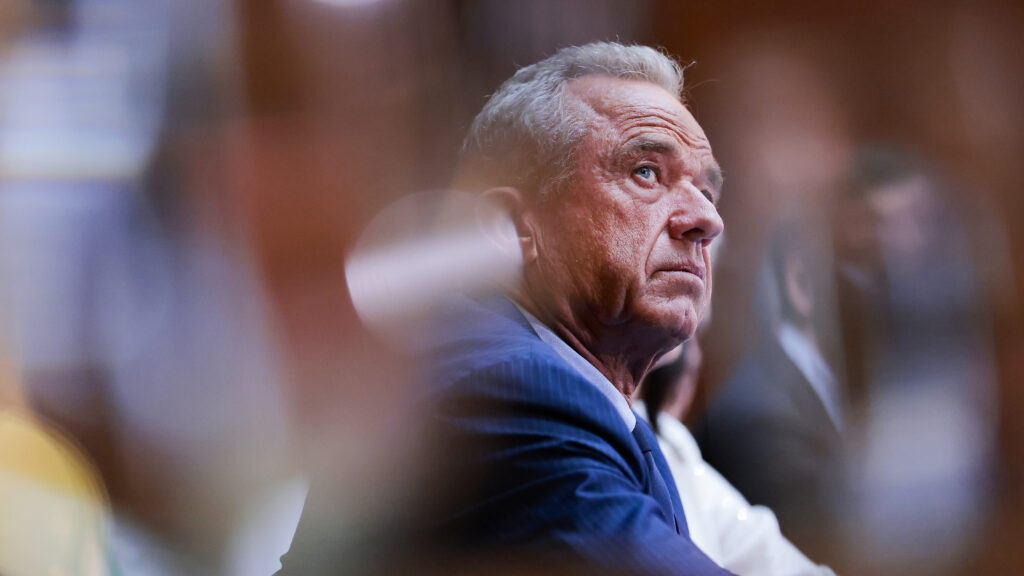
WASHINGTON — Health secretary Robert F. Kennedy Jr. on Wednesday pointed to his “publicly available calendar” as an example of his commitment to transparency and to beat back unfavorable reporting.
But no such calendar, detailing who Kennedy meets with or how he spends his time, has been released by the administration. STAT has been asking the Department of Health and Human Services for Kennedy’s calendar for more than a year, via Freedom of Information Act requests and emails to the press office.
WASHINGTON — Health secretary Robert F. Kennedy Jr. on Wednesday pointed to his “publicly available calendar” as an example of his commitment to transparency and to beat back unfavorable reporting.
But no such calendar, detailing who Kennedy meets with or how he spends his time, has been released by the administration. STAT has been asking the Department of Health and Human Services for Kennedy’s calendar for more than a year, via Freedom of Information Act requests and emails to the press office.


Illinois’ financial crisis could bring the state to a halt
The final 6 ‘Game of Thrones’ episodes might feel like a full season
New Season 8 Walking Dead trailer flashes forward in time
Mod turns ‘Counter-Strike’ into a ‘Tekken’ clone with fighting chickens
Meet Superman’s grandfather in new trailer for Krypton
Disney’s live-action Aladdin finally finds its stars

STAT+: Updated: Tracking RFK Jr.’s promises to remake health in America

An obesity drug deep-dive, and peptides move mainstream

RFK Jr. claims his calendar is publicly available. We’ve been trying to get it for a year

Nonprofit buys experimental cancer drug to maintain patient access
Potential Cocaine Addiction Targets Identified Through Genetic Mapping in Rats
New mRNA Delivery Platform Restores Muscle Function in DMD Models
Illinois’ financial crisis could bring the state to a halt
The final 6 ‘Game of Thrones’ episodes might feel like a full season
New Season 8 Walking Dead trailer flashes forward in time
Mod turns ‘Counter-Strike’ into a ‘Tekken’ clone with fighting chickens
Meet Superman’s grandfather in new trailer for Krypton
Disney’s live-action Aladdin finally finds its stars
-
 Uncategorized9 years ago
These ’90s fashion trends are making a comeback in 2017
-
Uncategorized9 years ago
According to Dior Couture, this taboo fashion accessory is back
-
Endpoints News3 months ago
Novartis to pay $2B upfront to take next-gen PI3Kα inhibitor from Synnovation
-
Uncategorized9 years ago
Phillies’ Aaron Altherr makes mind-boggling barehanded play
-
Uncategorized9 years ago
Uber and Lyft are finally available in all of New York State
-
Contributors9 years ago
The final 6 ‘Game of Thrones’ episodes might feel like a full season
-
Uncategorized9 years ago
Steph Curry finally got the contract he deserves from the Warriors
-
Uncategorized9 years ago
The old and New Edition cast comes together to perform