

Uncategorized
Algae microbots increase drug penetration 10x in bladder cancer

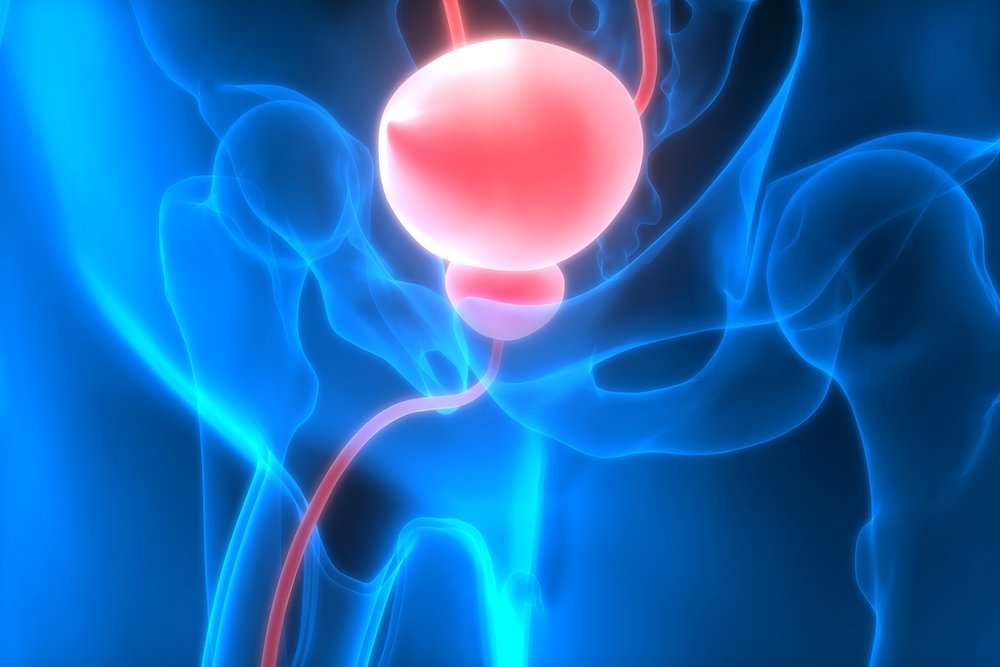

Tiny algae-based robots guided by magnets could improve bladder cancer treatment by boosting delivery of chemotherapy drugs into tumours, researchers say.
Tracked using real-time imaging, the miniature robots help drugs penetrate deep into tumour tissue while limiting damage to healthy cells.
In lab tests with mice, the approach increased drug penetration by more than 10 times compared with the standard treatment method. After one week of therapy, tumour burden was reduced to less than 3% of that seen in the conventional treatment group.
Experts say the technology could improve the efficiency of local chemotherapy delivery, as bladder cancer drugs often struggle to penetrate deeply into the tumour tissue.
Researchers at the University of Edinburgh and Xiamen University in China developed biohybrid magnetic microbots engineered from natural microalgae to overcome this challenge.
The single-celled algae are biocompatible and biodegradable, allowing them to be used safely in the body, and their delicate nanoporous structure is well suited for secure packaging and controlled release of drugs. They are also abundant in nature, cost-effective and suitable for scalable production, researchers say.
The microbots are loaded with the chemotherapy drug doxorubicin and guided towards tumours using externally programmed magnetic fields.
Using real-time ultrasound imaging feedback, researchers can precisely control how the swarm of drug-loaded robots move inside the bladder, causing them to roll and rotate to switch between transport and release modes for targeted drug delivery.
Study co-lead Dr Qi Zhou, Lecturer in Biomedical Informatics at the University of Edinburgh’s Institute for Neuroscience and Cardiovascular Research, said: “Our microrobots are engineered from tablet-like microalgae, can be remotely guided to the tumour using real-time imaging feedback, and release drugs exactly where they are needed to drive rapid tissue penetration in a minimally invasive way.”
The post Algae microbots increase drug penetration 10x in bladder cancer appeared first on Drug Discovery World (DDW).



Hosted by Drug Discovery World and supported by Sartorius and BioIVT, this webinar will explore the opportunities and challenges that exist within cancer research drug discovery and development.
You will hear from Dr Sudha Rao, Chief Scientific Officer of Kazia Therapeutics, Karol Budzik, PhD, Business Development Associate at Vyriad Therapeutics and Lars van der Veen, Chief Scientific Officer at iOnctura.
Presentations will cover how cancer treatments have shifted towards reprogramming the biology driving tumour growth, immune escape and treatment resistance, the trajectory that in vivo CAR-T treatments are taking, and how challenging tumours burdened by stroma and immune-mediated resistance can be tackled.
Q&A with the speakers follows the presentations.
The post New webinar: Tackling drug discovery challenges in cancer research appeared first on Drug Discovery World (DDW).
Amid the rise of psychedelics in the mental health space, researchers have begun to explore psilocybin as a treatment for chemotherapy-induced peripheral neuropathy.
Uncategorized
New Spectrometry Technique Could Aid Formulation Development
New Spectrometry Technique Could Aid Formulation Development
A new technique combining two forms of spectrometry could help biopharmaceutical companies improve their choice of formulation buffer for antibody manufacturing by revealing how molecular forms and three-dimensional shapes of complex biologics respond to their environment. That’s the view of Christian Bleiholder, PhD, a professor at Florida State University who helped develop the technique.
According to Bleiholder, what happens structurally when a complex biological molecule, such as an antibody or viral spike protein, binds to its target is currently poorly understood.
“This is where [this approach] can help with the bioprocessing and formulation,” he says, as structural changes “can affect the lifespan [of the product] and lead to issues, such as aggregation.”
Because antibodies are complex, existing techniques tend to be powerful at different levels of complexity, he explains. Mass spectrometry is particularly powerful for distinguishing molecular composition, while structural approaches such as X-ray crystallography and cryo-electron microscopy can provide high-resolution structural information.
The challenge is understanding the link between these things within a heterogeneous sample, he says.
To overcome this, Bleiholder and his team worked with Bruker Daltonics to develop Tandem-Trapped Ion Mobility Spectrometry (Tandem-TIMS). This combines tandem ion mobility spectrometry with tandem mass spectrometry to disentangle three overlapping layers of molecular complexity: molecular form, three-dimensional shape, and binding or assembly state, he says.
He explains that, if the proteins have different structures, they can be characterized with tandem ion mobility spectrometry, and then mass spectrometry can be used to look at their molecular forms and binding states.
Going forward, Bleiholder hopes the technique can be used for formulation development but also earlier, during drug discovery of new products, such as multi-specific antibodies, to determine which molecular states are important and how those change when a biologic engages its target. He also plans to look at automating the technique.
Bleiholder spoke about using Tandem-TIMS at the Bioprocessing Summit in Boston earlier this year.
The post New Spectrometry Technique Could Aid Formulation Development appeared first on GEN – Genetic Engineering and Biotechnology News.


Low Palladium Zinc Oxide Boosts Antibiotic Removal Without Adding Water Toxicity

Brodalumab Treatment for Palmoplantar Pustulosis Linked to Rare Pyoderma Gangrenosum Cases

Activities Report of the Generic Drug Program | FDARA Title VIII Sections 807 and 805

BIO’s plan for ‘securing America’s biotech century’

China’s innovation moment sees a rise in first in class

Windward prices IPO, Rezera postpones its offering: Finance Report
-

 Uncategorized8 months ago
Novartis buys Synnovation’s PI3Kα inhibitors for $3 billion
-
Endpoints News8 months ago
Novartis to pay $2B upfront to take next-gen PI3Kα inhibitor from Synnovation
-

 Uncategorized7 months ago
Optical Pooled CRISPR Screen Reveals Regulators of NF-κB Dynamics in Human Cells
-
Uncategorized6 months ago
Relay’s PI3Kα inhibitor clears efficacy bar in Phase 2 vascular anomalies study
-
Uncategorized5 months ago
Hybrid solid−liquid optics enable scalable, high-resolution light-sheet microscopy across diverse immersion media
-
Fierce Biotech8 months ago
Scientists turn pig semen extract into eye drops that kill cancer in mice
-
Nature Biotechnology8 months ago
Sustained nitric oxide production by engineered E. coli remodels the tumor microenvironment and potentiates immunotherapy
-

 BioPharma Dive – AI / Data8 months ago
AstraZeneca lung drug gets ‘surprise’ win in COPD trials
 Scan to Read