
Uncategorized
AI In Silico Multi-Omics Technique Cuts Therapeutic Development Costs

Bringing a drug from discovery through clinical trials takes too long and is too expensive, with preclinical costs alone estimated at $15 to $100 million. Employing artificial intelligence (AI) early in the process can lower those costs dramatically.
AI itself isn’t a panacea, though, Jayson Uffens, CTO and chairman of GATC Health, tells GEN. Instead, “Smart computing makes smart people smarter. There’s still a lot of expertise from people on the ground who bring a lot of value—maybe the ultimate value—to the mix.”
GATC Health, an AI-driven therapeutic discovery company, uses AI to raise the floor on opportunities to get high-potential compounds into human studies faster and thereby drive success.
Its proprietary approach to hit and lead identification and program derisking can cut preclinical development costs, according to Uffens, who maintains that the earlier AI is used in a program, the more dramatic the results.
The success GATC Health touts is based on deploying Operon , the company’s proprietary AI platform. Operon deploys in silico models to simulate human biology and takes a multi-omics approach to analysis. That approach has allowed GATC to deliver three to five optimized compounds within six months, claims Uffens, versus the up to 48 months associated with traditional high-throughput screening methods.
Such acceleration occurs by using advanced in silico models to circumvent the “hundreds of thousands of dollars’ worth of experiments performed to get a hit and, ultimately, a lead,” Uffens says.
Rather than relying upon one huge model, he elaborates, “We attack the problem from multiple facets, looking at individual problems with various models and different architectures…and coordinate hundreds of AI models to answer different questions. That’s the starting point. There’s a lot of value in how we curate and parameterize our data in those specific contexts.”
The company also launched the Derisq AI Report, an in-depth analysis of drug candidates that highlights safety concerns, efficacy, and non-obvious risks early, while decision-makers can still modulate those risks.
This predictive intelligence layer is, in fact, a key element of GATC’s clinical trial insurance product. Underwritten by Medical and Commercial International (MCI) under the Lloyd’s of London framework, this insurance product leverages GATC’s predictive capabilities to identify risk. It reimburses the full cost of the trial if safety or efficacy endpoints aren’t met.
Typically, MCI’s preclinical trial insurance clients would provide that company with the relevant trial information, which would be run through the Derisq tool as part of their risk analysis.
Buyers for this insurance tend to be biopharma companies that aren’t large enough to self-insure their own trials. “Capital is expensive for them,” Uffens points out. “The insurance product is there to help them lower the cost of capital and open capital doors that may not be open otherwise.”
Multiomics to Discovery
What’s different about GATC’s approach to AI, Uffens says, is that “We come in, generally, as outsiders.” The founding team includes computer scientists as well as those with strong biology and genetics backgrounds, but not necessarily industry experience.
“We built our technology originally as a genetics interpretation platform,” he recalls, “and expanded it to find additional value.” The company was formed officially in 2020.
The turning point came when GATC became involved in a failed, big pharma program for addiction research.
“(The big pharma company) hadn’t found a solution, but had really valuable data and samples. A partner of ours was working with it to identify biomarkers and thought we could validate them. We discovered that not only could we validate the biomarkers, but we could also identify the therapeutic targets. That’s how we moved from multi-omics analysis into discovery,” Uffens recalls.
Moving forward, “We want to empower researchers,” he says. This means not only helping clients advance existing programs but also by identifying potentially more valuable targets.
Working with GATC
GATC’s key partners most likely will be biotech rather than big pharma, Uffens predicts. And, he notes, “We’re fairly agnostic to therapeutic area.”
“Most of our customers have called us because they want to realize the benefits of AI sooner rather than later,” Uffens says. “There is a lot of risk in the space. Folks who are willing to adopt AI at this stage…are looking for additional help before they risk more capital…” to solve particular challenges.
For a company to begin working with GATC, he explains, “The data we’re looking for is very similar to what they would include in an Investigational New Drug (IND) package. The earlier they are in the process, the less data they will have, but, at a minimum, we need some particulars on their therapeutic’s chemistry and the intended mechanism of action.”
Challenges
Drug development is a difficult space with plentiful challenges, he admits. Therefore, “We approach things as a tech company. We iterate through a problem and find where we can succeed or fail as quickly as we can to develop a solution. We’ve gone through multiple generations of architectures, finding ways that work best.”
The next milestone is to accumulate multiple successes with Operon and Derisq in human trials. “‘Wins in humans’ is our [next] frontier,” he says. That includes wins for its insurance underwriting partners as well as for companies working directly with GATC to advance therapeutics to human trials.
As part of that goal, GATC and BioAtla are closing a deal for a Phase III trial of ozuriftamab vedotin for oropharyngeal squamous cell carcinoma and to further develop conditionally active biologic senolytic therapies. Termed a special purpose vehicle transaction—a financial entity designed to hold specific assets that last for the life of the project—the $40 million deal formed Inversagen AI, LLC, to leverage the strengths of the founding companies.
“GATC and BioAtla are equal partners in Inversagen,” Uffens says. “GATC will own a percentage of ozuriftamab vedotin and a larger stake in future joint discoveries,” thus potentially discovering new therapeutic combinations that may be effective as conditionally active biologics.
Currently, the GATC is fine-tuning its own project prioritization. “The AI landscape is both beneficial and challenging,” Uffens acknowledges. “People have certain expectations about what AI can and should do, how it works, and how they might adopt it. Getting them to hear our unique perspective comes back to our focus on wins in humans.”
The post AI <i>In Silico</i> Multi-Omics Technique Cuts Therapeutic Development Costs appeared first on GEN – Genetic Engineering and Biotechnology News.

Uncategorized
Opinion: STAT+: Former Geisinger CEO: U.S. health systems must replace huge numbers of people with AI
About 20 years ago, I stepped on stage at one of our Geisinger town halls and looked out upon a sea of people: thousands of full-time employees at an integrated health system charged with the health and well-being of millions of Pennsylvanians.
Only a fraction of the people in that room were clinicians.
That was the first time I fully visualized the problem: We employed more people in our revenue cycle department to process bills and reconcile data than we did doctors. And we weren’t alone. It’s the same story at every health system in America, large and small, and over the past two decades, the ratio has become dramatically more disparate.

About 20 years ago, I stepped on stage at one of our Geisinger town halls and looked out upon a sea of people: thousands of full-time employees at an integrated health system charged with the health and well-being of millions of Pennsylvanians.
Only a fraction of the people in that room were clinicians.
That was the first time I fully visualized the problem: We employed more people in our revenue cycle department to process bills and reconcile data than we did doctors. And we weren’t alone. It’s the same story at every health system in America, large and small, and over the past two decades, the ratio has become dramatically more disparate.
Uncategorized
A star scientist showed that better genetics lessons could reduce racism. It was the death knell for his career
Every year, the Genetics Society of America bestows the Elizabeth W. Jones Award for Excellence in Education, recognizing someone who has helped the public better understand the science of DNA. It’s understood to be a lifetime achievement award; past recipients tend toward retirement age with decades of work behind them and stacks of textbooks to their names.
When this year’s winner, Brian Donovan, was announced at the end of February, many geneticists and science educators found it hard to celebrate the news. Not because he’s undeserving of the honor. Far from it. But because it seemed to confirm what many feared: that Donovan’s incandescent research career was over before it had barely begun.

Every year, the Genetics Society of America bestows the Elizabeth W. Jones Award for Excellence in Education, recognizing someone who has helped the public better understand the science of DNA. It’s understood to be a lifetime achievement award; past recipients tend toward retirement age with decades of work behind them and stacks of textbooks to their names.
When this year’s winner, Brian Donovan, was announced at the end of February, many geneticists and science educators found it hard to celebrate the news. Not because he’s undeserving of the honor. Far from it. But because it seemed to confirm what many feared: that Donovan’s incandescent research career was over before it had barely begun.
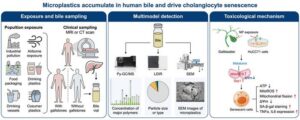
Microplastics have become a defining environmental signature of modern life, turning up in oceans, soil, food, drinking water, and even the air. But their biological fate inside the human body remains far less understood. A new study suggests that these particles may be doing more than simply passing through. Instead, they may be accumulating in one of the body’s most overlooked fluids—bile—and leaving behind measurable cellular damage that could shape future thinking about environmentally driven biliary injury and long‑term health effects. As the authors noted in their abstract, “the long-term accumulation patterns and chronic toxic effects of microplastics within the human biliary system are largely unknown,” underscoring the need for deeper investigation into how these particles behave in the enterohepatic circulation.
Researchers from the Tenth Affiliated Hospital of Southern Medical University (Dongguan People’s Hospital), Sun Yat-sen University, Guilin Medical University, and collaborating institutions reported the findings in Environmental Science and Ecotechnology. Their study, “Microplastics accumulate in human bile and drive cholangiocyte senescence,” provides the first direct evidence that microplastics are not only present in bile but may also contribute to mitochondrial dysfunction and premature aging in cholangiocytes, the epithelial cells that line the bile ducts.
The team collected bile from 14 surgical patients (five without gallstones and nine with gallstones) and used a multimodal analytical approach—pyrolysis–gas chromatography–mass spectrometry, laser direct infrared spectroscopy, and scanning electron microscopy—to characterize the particles. According to the paper, “we show the universal presence of microplastics in human bile,” identifying six polymer types dominated by polyethylene terephthalate and polyethylene, with most particles measuring 20–50 μm. Patients with gallstones carried substantially higher microplastic burdens, raising questions about whether biliary stasis or altered bile composition may influence microplastic retention.

To probe biological effects, the researchers exposed cultured human cholangiocytes to low-dose polystyrene nanoplastics for seven days, simulating chronic exposure. The cells exhibited mitochondrial dysfunction, elevated reactive oxygen species, reduced ATP, Drp1‑mediated mitochondrial fission, and G1 cell‑cycle arrest—hallmarks of senescence. As the authors wrote, chronic exposure “induces mitochondrial dysfunction-associated senescence in cholangiocytes,” suggesting a mechanistic link between environmental microplastics and biliary aging.
One of the most intriguing findings is that melatonin, a widely used antioxidant, partially reversed the mitochondrial and inflammatory damage. While far from a therapeutic recommendation, the result hints at a potential intervention point and gives the study translational relevance.
The work reframes the biliary system as something far more active than a simple transit channel. The data indicate that bile can serve as a reservoir for microplastics and that prolonged exposure may age cholangiocytes by driving mitochondrial dysfunction. The partial rescue with melatonin adds a mechanistic foothold for future intervention, even as the authors caution that broader human studies are essential.
For biotech, the implications are broad. The work highlights bile as a clinically accessible matrix for exposure assessment, opening the door to new diagnostics for environmental toxicology. The mitochondrial stress signature aligns with pathways already being targeted by companies developing senolytics, mitoprotective agents, and anti‑inflammatory therapeutics. The authors wrote that the research provides “a mechanistic foundation for assessing the health risks of plastic pollution and developing therapeutic interventions for environmentally driven biliary disorders.”
The post Microplastics in Human Bile Drive Mitochondrial Dysfunction and Senescence appeared first on GEN – Genetic Engineering and Biotechnology News.


Illinois’ financial crisis could bring the state to a halt
The final 6 ‘Game of Thrones’ episodes might feel like a full season
New Season 8 Walking Dead trailer flashes forward in time
Mod turns ‘Counter-Strike’ into a ‘Tekken’ clone with fighting chickens
Meet Superman’s grandfather in new trailer for Krypton
Disney’s live-action Aladdin finally finds its stars

A star scientist showed that better genetics lessons could reduce racism. It was the death knell for his career

Opinion: STAT+: Former Geisinger CEO: U.S. health systems must replace huge numbers of people with AI

Microplastics in Human Bile Drive Mitochondrial Dysfunction and Senescence

STAT+: Health insurers score major win with higher 2027 Medicare Advantage rates

CRISPR at 25: The Past, Present, and Future of Genome Editing
Immunotherapy Enhanced by Restoring Mitochondrial Function in Dendritic Cells
Illinois’ financial crisis could bring the state to a halt
The final 6 ‘Game of Thrones’ episodes might feel like a full season
New Season 8 Walking Dead trailer flashes forward in time
Mod turns ‘Counter-Strike’ into a ‘Tekken’ clone with fighting chickens
Meet Superman’s grandfather in new trailer for Krypton
Disney’s live-action Aladdin finally finds its stars
-
 Uncategorized9 years ago
These ’90s fashion trends are making a comeback in 2017
-
Contributors9 years ago
The final 6 ‘Game of Thrones’ episodes might feel like a full season
-
Uncategorized9 years ago
According to Dior Couture, this taboo fashion accessory is back
-
Uncategorized9 years ago
The old and New Edition cast comes together to perform
-
Uncategorized9 years ago
Phillies’ Aaron Altherr makes mind-boggling barehanded play
-
Uncategorized9 years ago
Uber and Lyft are finally available in all of New York State
-
Uncategorized9 years ago
Disney’s live-action Aladdin finally finds its stars
-
Uncategorized9 years ago
Steph Curry finally got the contract he deserves from the Warriors