

Uncategorized
Advancing the Manufacture of Patient Accessible Cell and Gene Therapies at Place-of-Care

A partnership involving a medical school, a non-profit organization, and a biotech company have formed a partnership for the development and manufacture of an accessible and commercially viable hematopoietic stem cell (HSC) manufacturing platform for diseases like sickle cell disease (SCD). The alliance combines Trenchant BioSystems’ technology for automating patient-specific cell and gene therapy (CGT) processes, the University of Massachusetts Chan Medical School’s expertise on blood stem cell processes, and Caring Cross’s expertise in increasing patient access.
The collaboration will focus on developing a gene-modified stem cell manufacturing process with Trenchant’s AutoCell automated CGT manufacturing platform that is designed to be scalable and operate at place-of-care in an ISO class 7 environment to increase efficiencies and decrease costs.
A key reason Trenchant BioSystems’ automated CGT manufacturing platform was selected is its use of a microbubble separation approach as an alternative to immunomagnetic bead-based separation for stem cell gene therapies, point out officials at Caring Cross and Chan Medical School. In addition, AutoCell has a small footprint and significantly fewer facility requirements, important factors for lowering the cost of these therapies, adds Jon Ellis, CEO, Trenchant BioSystems.
In the first phase of the collaboration, UMass Chan researchers will work with Trenchant BioSystems to start evaluating blood products to separate stem cells and build the automated gene transfer genetic engineering platform with lentiviral vectors from Caring Cross. In the next post-validation phase, Caring Cross will evaluate the system and process for simplicity and cost before offering it as a potential alternative to its collaborators worldwide. UMass Chan and Caring Cross will conduct preclinical studies to launch a Phase I/II clinical trial of autologous gene-modified HSCs for patients with SCD or beta thalassemia.
The alliance currently plans to hold an INTERACT meeting with the FDA during the first quarter of 2027 and launch the clinical trial later that year.
“Disruptive technologies such as the AutoCell platform that empower us to tap into the immense unexplored runway between current state of the art ex vivo and in vivo blood cell gene therapies stand to significantly expand and improve access to these transformative medicines,” says Jennifer E. Adair, PhD, vice chair and professor of genetic & cellular medicine and director of the Horae Gene Therapy Center at UMass Chan Medical School.
“Caring Cross is dedicated to ensuring the global affordability of advanced therapies, and a key driver for this is the adoption of cell processing platforms that effectively lower barriers to patient care,” notes Boro Dropulic, PhD, executive director of Caring Cross. He is also CEO of Vector Biomed, which also designs and manufactures lentiviral.
“Current cell and gene therapy manufacturing practices are too time consuming and costly to actually deliver CGT therapies to large-scale patient populations,” maintains Trenchant’s Ellis. “Trenchant BioSystems has now released internal and independent data that confirms that its AutoCell platform is integral to the solution to these challenges.”
The post Advancing the Manufacture of Patient Accessible Cell and Gene Therapies at Place-of-Care appeared first on GEN – Genetic Engineering and Biotechnology News.

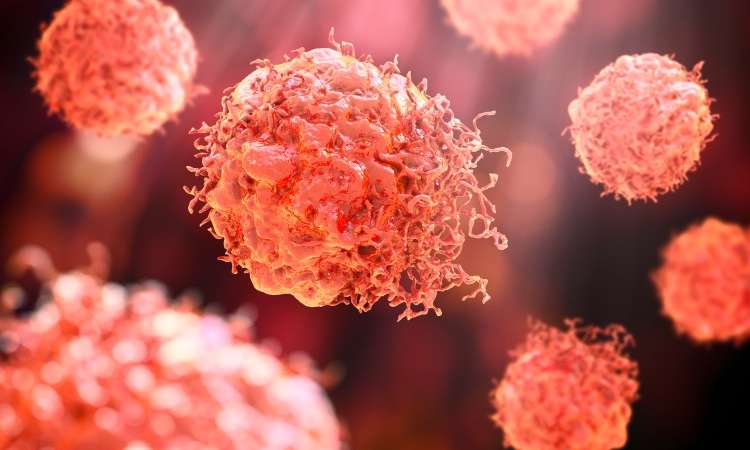

Hosted by Drug Discovery World and supported by Sartorius and BioIVT, this webinar will explore the opportunities and challenges that exist within cancer research drug discovery and development.
You will hear from Dr Sudha Rao, Chief Scientific Officer of Kazia Therapeutics, Karol Budzik, PhD, Business Development Associate at Vyriad Therapeutics and Lars van der Veen, Chief Scientific Officer at iOnctura.
Presentations will cover how cancer treatments have shifted towards reprogramming the biology driving tumour growth, immune escape and treatment resistance, the trajectory that in vivo CAR-T treatments are taking, and how challenging tumours burdened by stroma and immune-mediated resistance can be tackled.
Q&A with the speakers follows the presentations.
The post New webinar: Tackling drug discovery challenges in cancer research appeared first on Drug Discovery World (DDW).
Amid the rise of psychedelics in the mental health space, researchers have begun to explore psilocybin as a treatment for chemotherapy-induced peripheral neuropathy.
Uncategorized
New Spectrometry Technique Could Aid Formulation Development
New Spectrometry Technique Could Aid Formulation Development
A new technique combining two forms of spectrometry could help biopharmaceutical companies improve their choice of formulation buffer for antibody manufacturing by revealing how molecular forms and three-dimensional shapes of complex biologics respond to their environment. That’s the view of Christian Bleiholder, PhD, a professor at Florida State University who helped develop the technique.
According to Bleiholder, what happens structurally when a complex biological molecule, such as an antibody or viral spike protein, binds to its target is currently poorly understood.
“This is where [this approach] can help with the bioprocessing and formulation,” he says, as structural changes “can affect the lifespan [of the product] and lead to issues, such as aggregation.”
Because antibodies are complex, existing techniques tend to be powerful at different levels of complexity, he explains. Mass spectrometry is particularly powerful for distinguishing molecular composition, while structural approaches such as X-ray crystallography and cryo-electron microscopy can provide high-resolution structural information.
The challenge is understanding the link between these things within a heterogeneous sample, he says.
To overcome this, Bleiholder and his team worked with Bruker Daltonics to develop Tandem-Trapped Ion Mobility Spectrometry (Tandem-TIMS). This combines tandem ion mobility spectrometry with tandem mass spectrometry to disentangle three overlapping layers of molecular complexity: molecular form, three-dimensional shape, and binding or assembly state, he says.
He explains that, if the proteins have different structures, they can be characterized with tandem ion mobility spectrometry, and then mass spectrometry can be used to look at their molecular forms and binding states.
Going forward, Bleiholder hopes the technique can be used for formulation development but also earlier, during drug discovery of new products, such as multi-specific antibodies, to determine which molecular states are important and how those change when a biologic engages its target. He also plans to look at automating the technique.
Bleiholder spoke about using Tandem-TIMS at the Bioprocessing Summit in Boston earlier this year.
The post New Spectrometry Technique Could Aid Formulation Development appeared first on GEN – Genetic Engineering and Biotechnology News.


Mikhail, Davis on board with regulatory framework tailored to rare disease therapies

Telomerase and β-Catenin Join Forces to Drive Aggressive Liver Cancer

STAT+: Radiopharma companies merge after one receives surprise FDA rejection

Lilly’s GIP/GLP-1 Candidate Brenipatide Shows Early Clinical Promise in Substance, Psych Disorders

Fatal toxicities test autoimmune CAR T’s safety thesis

Ultragenyx wins first approval for MPS IIIA, closing a bumpy four-year path
-
Fierce Biotech6 months ago
Scientists turn pig semen extract into eye drops that kill cancer in mice
-
Endpoints News6 months ago
Novartis to pay $2B upfront to take next-gen PI3Kα inhibitor from Synnovation
-

 Uncategorized6 months ago
Novartis buys Synnovation’s PI3Kα inhibitors for $3 billion
-
Nature Biotechnology6 months ago
Sustained nitric oxide production by engineered E. coli remodels the tumor microenvironment and potentiates immunotherapy
-
 Uncategorized5 months ago
Optical Pooled CRISPR Screen Reveals Regulators of NF-κB Dynamics in Human Cells
-
Uncategorized4 months ago
Relay’s PI3Kα inhibitor clears efficacy bar in Phase 2 vascular anomalies study
-

 STAT News – Biotech6 months ago
STAT+: In private meetings, White House works to win pharma companies’ support for drug pricing bill
-

 BioPharma Dive – AI / Data6 months ago
AstraZeneca lung drug gets ‘surprise’ win in COPD trials
 Scan to Read