
Uncategorized
Advancing the Manufacture of Patient Accessible Cell and Gene Therapies at Place-of-Care

A partnership involving a medical school, a non-profit organization, and a biotech company have formed a partnership for the development and manufacture of an accessible and commercially viable hematopoietic stem cell (HSC) manufacturing platform for diseases like sickle cell disease (SCD). The alliance combines Trenchant BioSystems’ technology for automating patient-specific cell and gene therapy (CGT) processes, the University of Massachusetts Chan Medical School’s expertise on blood stem cell processes, and Caring Cross’s expertise in increasing patient access.
The collaboration will focus on developing a gene-modified stem cell manufacturing process with Trenchant’s AutoCell automated CGT manufacturing platform that is designed to be scalable and operate at place-of-care in an ISO class 7 environment to increase efficiencies and decrease costs.
A key reason Trenchant BioSystems’ automated CGT manufacturing platform was selected is its use of a microbubble separation approach as an alternative to immunomagnetic bead-based separation for stem cell gene therapies, point out officials at Caring Cross and Chan Medical School. In addition, AutoCell has a small footprint and significantly fewer facility requirements, important factors for lowering the cost of these therapies, adds Jon Ellis, CEO, Trenchant BioSystems.
In the first phase of the collaboration, UMass Chan researchers will work with Trenchant BioSystems to start evaluating blood products to separate stem cells and build the automated gene transfer genetic engineering platform with lentiviral vectors from Caring Cross. In the next post-validation phase, Caring Cross will evaluate the system and process for simplicity and cost before offering it as a potential alternative to its collaborators worldwide. UMass Chan and Caring Cross will conduct preclinical studies to launch a Phase I/II clinical trial of autologous gene-modified HSCs for patients with SCD or beta thalassemia.
The alliance currently plans to hold an INTERACT meeting with the FDA during the first quarter of 2027 and launch the clinical trial later that year.
“Disruptive technologies such as the AutoCell platform that empower us to tap into the immense unexplored runway between current state of the art ex vivo and in vivo blood cell gene therapies stand to significantly expand and improve access to these transformative medicines,” says Jennifer E. Adair, PhD, vice chair and professor of genetic & cellular medicine and director of the Horae Gene Therapy Center at UMass Chan Medical School.
“Caring Cross is dedicated to ensuring the global affordability of advanced therapies, and a key driver for this is the adoption of cell processing platforms that effectively lower barriers to patient care,” notes Boro Dropulic, PhD, executive director of Caring Cross. He is also CEO of Vector Biomed, which also designs and manufactures lentiviral.
“Current cell and gene therapy manufacturing practices are too time consuming and costly to actually deliver CGT therapies to large-scale patient populations,” maintains Trenchant’s Ellis. “Trenchant BioSystems has now released internal and independent data that confirms that its AutoCell platform is integral to the solution to these challenges.”
The post Advancing the Manufacture of Patient Accessible Cell and Gene Therapies at Place-of-Care appeared first on GEN – Genetic Engineering and Biotechnology News.

Uncategorized
Sanofi Bispecific Scores in Asthma, Rhinosinusitis, but Eczema Bet Doesn’t Pay Off
Sanofi Bispecific Scores in Asthma, Rhinosinusitis, but Eczema Bet Doesn’t Pay Off
Sanofi has faced questions about the potential of lunsekimig in eczema, with executives calling the clinical trial a “measured risk.” Read More
Uncategorized
STAT+: Gilead to buy cancer biotech Tubulis for more than $3 billion
In a move that will grow its oncology pipeline, Gilead Sciences is spending more than $3 billion to buy the German biotech Tubulis, the companies said Tuesday.
The deal includes an upfront payment of $3.15 billion and up to $1.85 billion more if certain milestones are reached. It also highlights both the therapeutic and commercial promise of antibody-drug conjugates, the next-generation chemotherapy treatments that the privately held Tubulis is developing.
Gilead’s latest move comes just months after it said it would acquire Arcellx in a deal worth $7.8 billion. The two companies had already been working together on a multiple myeloma CAR-T therapy that could be approved later this year. Gilead last month also announced that it was buying Ouro Therapeutics, which is focused on drugs for autoimmune disease, for up to $2.18 billion.
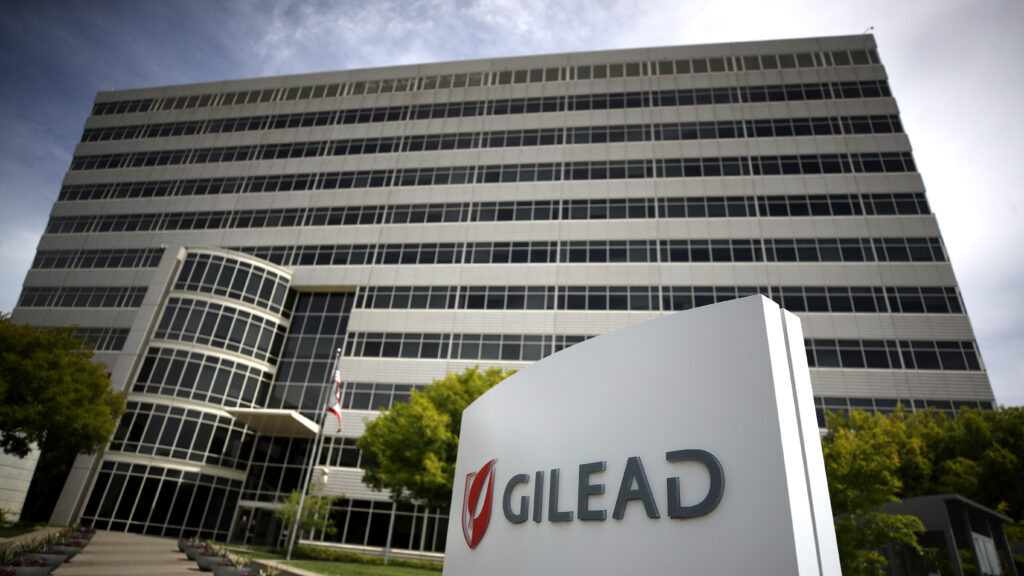
In a move that will grow its oncology pipeline, Gilead Sciences is spending more than $3 billion to buy the German biotech Tubulis, the companies said Tuesday.
The deal includes an upfront payment of $3.15 billion and up to $1.85 billion more if certain milestones are reached. It also highlights both the therapeutic and commercial promise of antibody-drug conjugates, the next-generation chemotherapy treatments that the privately held Tubulis is developing.
Gilead’s latest move comes just months after it said it would acquire Arcellx in a deal worth $7.8 billion. The two companies had already been working together on a multiple myeloma CAR-T therapy that could be approved later this year. Gilead last month also announced that it was buying Ouro Therapeutics, which is focused on drugs for autoimmune disease, for up to $2.18 billion.
In its third acquisition of 2026, Gilead is spending $3.15 billion upfront to snag a next-generation antibody-drug conjugate platform from German startup Tubulis.
The California biopharma could pay out another $1.85 billion down the road …


Illinois’ financial crisis could bring the state to a halt
The final 6 ‘Game of Thrones’ episodes might feel like a full season
New Season 8 Walking Dead trailer flashes forward in time
Mod turns ‘Counter-Strike’ into a ‘Tekken’ clone with fighting chickens
Meet Superman’s grandfather in new trailer for Krypton
Disney’s live-action Aladdin finally finds its stars
Sanofi Bispecific Scores in Asthma, Rhinosinusitis, but Eczema Bet Doesn’t Pay Off

STAT+: Gilead to buy cancer biotech Tubulis for more than $3 billion
Gilead continues dealmaking streak with $3.15B Tubulis buy for ADCs
BioNTech to shutter Singapore HQ after ‘comprehensive review’
Amgen Seeks ‘Return to Growth’ for Tepezza as More Convenient Formulation Aces Phase 3

STAT+: Merck’s experimental HIV prevention pill could be made for less than $5 a year, researchers say
Illinois’ financial crisis could bring the state to a halt
The final 6 ‘Game of Thrones’ episodes might feel like a full season
New Season 8 Walking Dead trailer flashes forward in time
Mod turns ‘Counter-Strike’ into a ‘Tekken’ clone with fighting chickens
Meet Superman’s grandfather in new trailer for Krypton
Disney’s live-action Aladdin finally finds its stars
-
 Uncategorized9 years ago
These ’90s fashion trends are making a comeback in 2017
-
Contributors9 years ago
The final 6 ‘Game of Thrones’ episodes might feel like a full season
-
Uncategorized9 years ago
According to Dior Couture, this taboo fashion accessory is back
-
Uncategorized9 years ago
The old and New Edition cast comes together to perform
-
Uncategorized9 years ago
Phillies’ Aaron Altherr makes mind-boggling barehanded play
-
Uncategorized9 years ago
Uber and Lyft are finally available in all of New York State
-
Uncategorized9 years ago
Disney’s live-action Aladdin finally finds its stars
-
Uncategorized9 years ago
Steph Curry finally got the contract he deserves from the Warriors