

Uncategorized
Carterra at centre of US$7bn antibody discovery market

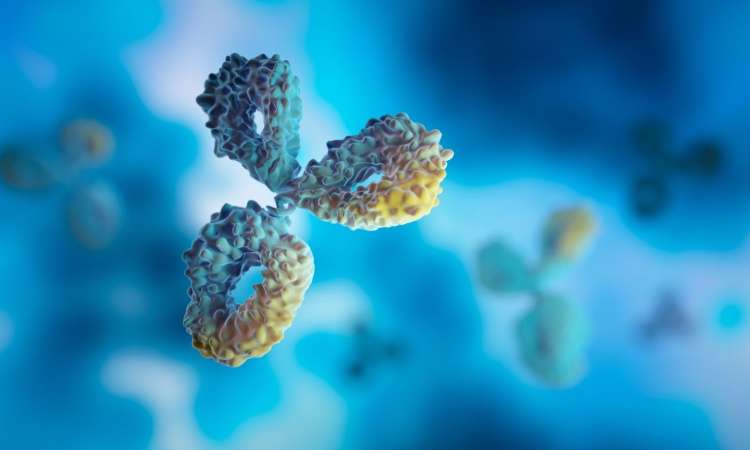

In a report published on July 16 2026, titled Lab-in-the-Loop: AI Rewires Antibody Discovery, Unlocking a US$7 billion LST Opportunity, “Lab-in-the-Loop” (LitL) is described as an emerging approach in which AI models propose candidate antibody sequences, wet lab experiments test them, and the resulting data is fed back into the AI to improve the next round of designs. This transforms what was once a slow, serial discovery process into a faster, guided one.
In the report, Leerink Partners has identified Carterra, a provider of high-throughput surface plasmon resonance (HT-SPR) platforms for antibody and small molecule discovery, as a key enabling technology in the fast-growing market for AI-driven biologics drug discovery.
Leerink Partners analyst Puneet Souda and colleagues estimate a total addressable market of roughly US$7 billion in life science tools demand tied to AI-enabled antibody discovery — including a US$4 billion biologics drug discovery layer, of which an estimated US$1.3 billion is currently outsourced to service providers.
The Leerink report concludes that this shift increases rather than diminishes the need for wet lab data and identifies binding affinity measurement, where surface plasmon resonance (SPR) instruments quantify how tightly an antibody binds its target, as a segment expected to remain central to the discovery process rather than simply benefiting from higher project volumes. Its competitive landscape analysis names Carterra, alongside other technologies, as a primary supplier of this binding affinity infrastructure.
Josh Eckman, Chief Executive Officer and Co-Founder of Carterra, said: “This report reinforces what we’re hearing directly from our customers: as AI generates larger and more complex sets of antibody candidates, the bottleneck shifts to how quickly and accurately those candidates can be validated at the bench.
“Carterra’s high-throughput SPR platforms were built for exactly this kind of scale, and we believe we’re well positioned to benefit as Lab-in-the-Loop becomes the default way biologics programs are run.”
Industry voices point to rising demand
According to Carterra, ten of its customers are named in the Leerink report and are already describing the increase in scale anticipated by the analysts.
Twist Bioscience, which the report identifies as the largest structural beneficiary of the LitL shift, has highlighted Carterra’s role in generating the antibody binding datasets that large-scale AI discovery programmes depend on. At the Protein and Antibody Engineering Summit (PEGS Boston) in May 2026, Twist Biopharma Solutions’ Chief Scientific Officer Dr Colby Souders described the role Carterra’s platforms play in its partnership with AWS Biodiscovery to generate binding data at the scale required by modern AI-guided discovery campaigns.
Julian Englert, Chief Executive Officer and Co-Founder of Adaptyv Bio, a protein engineering company supporting AI-driven biologics programmes that is also named in the report, said: “The market opportunity may be understated. AI in drug discovery is here to stay and we believe Leerink’s estimate of a ~US$4 billion antibody discovery market may be low. At Adaptyv, we are seeing massive increases in both orders for our protein synthesis but also the size of projects being requested. We have deployed the most sophisticated and high-throughput technologies, like Carterra platforms, to maintain our leadership in the space.”
Why binding data matters
The Leerink report argues that AI models are only as effective as the experimental data used to train and refine them. Each round of the Lab-in-the-Loop cycle depends on fast, accurate, high-volume binding affinity data to identify which candidates perform successfully, with that information generated through wet lab testing. The analysis notes that legacy approaches to binding characterisation, often limited to simple yes/no assays or low-throughput instruments, are increasingly being replaced by platforms designed to match the scale of candidate pools generated by AI models.
The post Carterra at centre of US$7bn antibody discovery market appeared first on Drug Discovery World (DDW).



Hosted by Drug Discovery World and supported by Sartorius and BioIVT, this webinar will explore the opportunities and challenges that exist within cancer research drug discovery and development.
You will hear from Dr Sudha Rao, Chief Scientific Officer of Kazia Therapeutics, Karol Budzik, PhD, Business Development Associate at Vyriad Therapeutics and Lars van der Veen, Chief Scientific Officer at iOnctura.
Presentations will cover how cancer treatments have shifted towards reprogramming the biology driving tumour growth, immune escape and treatment resistance, the trajectory that in vivo CAR-T treatments are taking, and how challenging tumours burdened by stroma and immune-mediated resistance can be tackled.
Q&A with the speakers follows the presentations.
The post New webinar: Tackling drug discovery challenges in cancer research appeared first on Drug Discovery World (DDW).
Amid the rise of psychedelics in the mental health space, researchers have begun to explore psilocybin as a treatment for chemotherapy-induced peripheral neuropathy.
Uncategorized
New Spectrometry Technique Could Aid Formulation Development
New Spectrometry Technique Could Aid Formulation Development
A new technique combining two forms of spectrometry could help biopharmaceutical companies improve their choice of formulation buffer for antibody manufacturing by revealing how molecular forms and three-dimensional shapes of complex biologics respond to their environment. That’s the view of Christian Bleiholder, PhD, a professor at Florida State University who helped develop the technique.
According to Bleiholder, what happens structurally when a complex biological molecule, such as an antibody or viral spike protein, binds to its target is currently poorly understood.
“This is where [this approach] can help with the bioprocessing and formulation,” he says, as structural changes “can affect the lifespan [of the product] and lead to issues, such as aggregation.”
Because antibodies are complex, existing techniques tend to be powerful at different levels of complexity, he explains. Mass spectrometry is particularly powerful for distinguishing molecular composition, while structural approaches such as X-ray crystallography and cryo-electron microscopy can provide high-resolution structural information.
The challenge is understanding the link between these things within a heterogeneous sample, he says.
To overcome this, Bleiholder and his team worked with Bruker Daltonics to develop Tandem-Trapped Ion Mobility Spectrometry (Tandem-TIMS). This combines tandem ion mobility spectrometry with tandem mass spectrometry to disentangle three overlapping layers of molecular complexity: molecular form, three-dimensional shape, and binding or assembly state, he says.
He explains that, if the proteins have different structures, they can be characterized with tandem ion mobility spectrometry, and then mass spectrometry can be used to look at their molecular forms and binding states.
Going forward, Bleiholder hopes the technique can be used for formulation development but also earlier, during drug discovery of new products, such as multi-specific antibodies, to determine which molecular states are important and how those change when a biologic engages its target. He also plans to look at automating the technique.
Bleiholder spoke about using Tandem-TIMS at the Bioprocessing Summit in Boston earlier this year.
The post New Spectrometry Technique Could Aid Formulation Development appeared first on GEN – Genetic Engineering and Biotechnology News.


Staged Bone Grafts Enable Stock Joint Implants in Hemifacial Microsomia

Case Study Analyzes Recurrent Obstructing Nipple Duct Stones in Two Lactating Patients

Genotype D1 Hepatitis B Virus Protein Mutations Follow Phase-Dependent Structural Shifts

Routine PSA Machine Learning Model Improves Prostate Cancer Triage in Multicenter Study

Sanofi gains FDA clearance for Gaucher disease pill

STAT+: Peptide market poised to explode with new Hims and Noom launches
-

 Uncategorized8 months ago
Novartis buys Synnovation’s PI3Kα inhibitors for $3 billion
-
Endpoints News8 months ago
Novartis to pay $2B upfront to take next-gen PI3Kα inhibitor from Synnovation
-

 Uncategorized7 months ago
Optical Pooled CRISPR Screen Reveals Regulators of NF-κB Dynamics in Human Cells
-
Uncategorized6 months ago
Relay’s PI3Kα inhibitor clears efficacy bar in Phase 2 vascular anomalies study
-
Uncategorized5 months ago
Hybrid solid−liquid optics enable scalable, high-resolution light-sheet microscopy across diverse immersion media
-
Fierce Biotech8 months ago
Scientists turn pig semen extract into eye drops that kill cancer in mice
-
Nature Biotechnology8 months ago
Sustained nitric oxide production by engineered E. coli remodels the tumor microenvironment and potentiates immunotherapy
-
Nature Biotechnology8 months ago
Mapping cis-regulatory mutations at scale in sorghum enables modulation of gene expression
 Scan to Read