

Uncategorized
Parkinson’s Disease Medication Monitored with Fingertip Sweat Patch

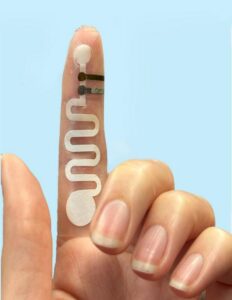
Engineers and neuroscientists at the University of California (UC) San Diego have developed a soft, wearable fingertip patch that continuously tracks a Parkinson’s disease (PD) patient’s levodopa medication levels by measuring chemicals in their sweat, with no batteries required. Tests in healthy volunteers and in Parkinson’s disease patients showed that measurements generated using the device were comparable to those obtained by standard laboratory blood tests.
The wearable device offers a way to continuously track real-time concentrations of levodopa in the body and could enable doctors to precisely customize daily medication schedules for patients at home.
The research was led by Tamoghna Saha, PhD, a postdoctoral researcher in the lab of Joseph Wang, DSc, professor in the Aiiso Yufeng Li Family Department of Chemical and Nano Engineering at the UC San Diego Jacobs School of Engineering. Saha is co-first author of the team’s published paper in PNAS titled “A wearable patch for continuous levodopa monitoring in sweat: Towards exertion and power-free pharmacodynamic assessment in Parkinson’s disease.” In their paper the authors wrote in summary, “Overall, our easy-to-use, energy-efficient wearable supports real-time, stimulation-free monitoring, potentially enabling at-home dosage adjustments and paving the way for future autonomous closed-loop L-dopa therapeutic system development.”
Parkinson’s disease is the second most common and fastest-growing neurodegenerative disorder worldwide, the author wrote. “While no cure for PD exists, levodopa (L-dopa) is the most effective symptomatic treatment, which is typically administered via oral tablets or capsules, and in advanced cases, through inhaled powder or continuous intrajejunal or subcutaneous infusions.” Prescribing the right dose is challenging: reducing levodopa leaves patients unable to move, while too much triggers severe, uncontrollable jerking movements. Initially, the drug’s effects can last several hours.
But as the disease progresses, the therapeutic window narrows down to two hours. Currently, clinicians must rely on subjective patient diaries to adjust treatment. Unfortunately, these methods fail to catch dangerous dosing gaps. “Precision management of Parkinson’s disease (PD) requires frequent levodopa (L-dopa) dose adjustments, yet current monitoring relies on subjective symptom reporting and infrequent blood testing,” the team continued.

Saha and the engineering team developed the new finger patch technology in joint collaboration with the lab of Irene Litvan, MD, MPhil, professor in the department of neurosciences at UC San Diego School of Medicine. The project is part of a longstanding collaboration between the Wang and Litvan teams to develop wearable levodopa monitors that can improve personalized care for people living with PD.
Worn on the fingertip, which is packed with a high density of sweat glands, the patch is equipped with a specially engineered absorbent gel that acts like a sweat sponge. The gel contains a highly-concentrated mixture of salts and benign solvents—and that draws sweat out of the pores, since water naturally flows toward areas with higher salt concentrations. Collected sweat is drawn into a serpentine fluidic channel with a self-powered levodopa biosensor connected to a wireless transmitter.
When levodopa in the patient’s sweat comes into contact with enzymes embedded in the patch it triggers a chemical reaction, which in turn generates a small, measurable voltage. This chemical reaction is what powers the patch. The amount of voltage generated also serves as an indicator of the patient’s levodopa level, such that lower voltage signals low levels, while higher voltage signals high levels.

Experimental results from three to five healthy participants and four individuals with PD indicated that levodopa concentrations in sweat measured by the patch are strongly correlated with blood concentrations measured by high-performance liquid chromatography. The patches captured pharmacodynamic responses and patient-specific levodopa clearance trends that could be used to calibrate dosage estimates for individuals.
The data revealed that individuals with Parkinson’s clear levodopa from their systems significantly faster than healthy individuals. This result explains why a patient’s Parkinson’s symptoms can deteriorate so suddenly, the researchers noted.
This technology could lay the groundwork for a closed-loop system, where a levodopa monitoring patch could communicate with a pump to automatically deliver the precise doses of the drug right when the body needs it, the authors suggested. “This approach establishes a foundation for real-time, at-home therapeutic optimization and advances the development of future closed-loop treatment systems for PD.”
The post Parkinson’s Disease Medication Monitored with Fingertip Sweat Patch appeared first on GEN – Genetic Engineering and Biotechnology News.



Hosted by Drug Discovery World and supported by Sartorius and BioIVT, this webinar will explore the opportunities and challenges that exist within cancer research drug discovery and development.
You will hear from Dr Sudha Rao, Chief Scientific Officer of Kazia Therapeutics, Karol Budzik, PhD, Business Development Associate at Vyriad Therapeutics and Lars van der Veen, Chief Scientific Officer at iOnctura.
Presentations will cover how cancer treatments have shifted towards reprogramming the biology driving tumour growth, immune escape and treatment resistance, the trajectory that in vivo CAR-T treatments are taking, and how challenging tumours burdened by stroma and immune-mediated resistance can be tackled.
Q&A with the speakers follows the presentations.
The post New webinar: Tackling drug discovery challenges in cancer research appeared first on Drug Discovery World (DDW).
Amid the rise of psychedelics in the mental health space, researchers have begun to explore psilocybin as a treatment for chemotherapy-induced peripheral neuropathy.
Uncategorized
New Spectrometry Technique Could Aid Formulation Development
New Spectrometry Technique Could Aid Formulation Development
A new technique combining two forms of spectrometry could help biopharmaceutical companies improve their choice of formulation buffer for antibody manufacturing by revealing how molecular forms and three-dimensional shapes of complex biologics respond to their environment. That’s the view of Christian Bleiholder, PhD, a professor at Florida State University who helped develop the technique.
According to Bleiholder, what happens structurally when a complex biological molecule, such as an antibody or viral spike protein, binds to its target is currently poorly understood.
“This is where [this approach] can help with the bioprocessing and formulation,” he says, as structural changes “can affect the lifespan [of the product] and lead to issues, such as aggregation.”
Because antibodies are complex, existing techniques tend to be powerful at different levels of complexity, he explains. Mass spectrometry is particularly powerful for distinguishing molecular composition, while structural approaches such as X-ray crystallography and cryo-electron microscopy can provide high-resolution structural information.
The challenge is understanding the link between these things within a heterogeneous sample, he says.
To overcome this, Bleiholder and his team worked with Bruker Daltonics to develop Tandem-Trapped Ion Mobility Spectrometry (Tandem-TIMS). This combines tandem ion mobility spectrometry with tandem mass spectrometry to disentangle three overlapping layers of molecular complexity: molecular form, three-dimensional shape, and binding or assembly state, he says.
He explains that, if the proteins have different structures, they can be characterized with tandem ion mobility spectrometry, and then mass spectrometry can be used to look at their molecular forms and binding states.
Going forward, Bleiholder hopes the technique can be used for formulation development but also earlier, during drug discovery of new products, such as multi-specific antibodies, to determine which molecular states are important and how those change when a biologic engages its target. He also plans to look at automating the technique.
Bleiholder spoke about using Tandem-TIMS at the Bioprocessing Summit in Boston earlier this year.
The post New Spectrometry Technique Could Aid Formulation Development appeared first on GEN – Genetic Engineering and Biotechnology News.


Staged Bone Grafts Enable Stock Joint Implants in Hemifacial Microsomia

Case Study Analyzes Recurrent Obstructing Nipple Duct Stones in Two Lactating Patients

Genotype D1 Hepatitis B Virus Protein Mutations Follow Phase-Dependent Structural Shifts

Routine PSA Machine Learning Model Improves Prostate Cancer Triage in Multicenter Study

Sanofi gains FDA clearance for Gaucher disease pill

STAT+: Peptide market poised to explode with new Hims and Noom launches
-

 Uncategorized8 months ago
Novartis buys Synnovation’s PI3Kα inhibitors for $3 billion
-
Endpoints News8 months ago
Novartis to pay $2B upfront to take next-gen PI3Kα inhibitor from Synnovation
-

 Uncategorized7 months ago
Optical Pooled CRISPR Screen Reveals Regulators of NF-κB Dynamics in Human Cells
-
Uncategorized6 months ago
Relay’s PI3Kα inhibitor clears efficacy bar in Phase 2 vascular anomalies study
-
Uncategorized5 months ago
Hybrid solid−liquid optics enable scalable, high-resolution light-sheet microscopy across diverse immersion media
-
Fierce Biotech8 months ago
Scientists turn pig semen extract into eye drops that kill cancer in mice
-
Nature Biotechnology8 months ago
Sustained nitric oxide production by engineered E. coli remodels the tumor microenvironment and potentiates immunotherapy
-
Nature Biotechnology8 months ago
Mapping cis-regulatory mutations at scale in sorghum enables modulation of gene expression
 Scan to Read