

Uncategorized
Colorectal Cancer Targeted with Mass-Produced iPSC-Derived Allogeneic T Cells

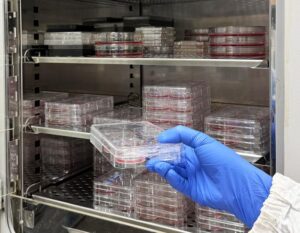
Researchers at Kobe University have generated off-the-shelf, mass-producible induced pluripotent stem cell (iPSC)-derived gamma delta T cells (γδT cells) that in a small preclinical study suppressed tumor growth in mouse colorectal cancer (CRC) xenograft models. The team says their development could point to the potential for developing faster, cheaper cancer immunotherapy.
Research lead Takashi Aoi, PhD, and colleagues reported on the work in Stem Cell Reports, in a paper titled “Allogeneic iPSC-derived γδT cells demonstrate antitumor efficacy against patient-derived tissues,” commenting “Our current findings provide robust preclinical evidence supporting the efficacy of T cell therapy for CRC.”
“Various immunotherapies have been developed to treat malignant tumors, and autologous CAR T-cell therapy is clinically used for certain malignancies,” the authors wrote. However, CAR T-cell therapies demonstrate limited efficacy against solid tumors, and current techniques for modifying T cells extracted from the patient are expensive and time consuming. “… obstacles such as the time and cost required to initiate autologous treatment impede their widespread adoption.”

Consequently, the authors noted, there is growing interest in allogeneic, or off-the-shelf, cell therapy. Researchers have considered turning to a subclass of T cells called gamma-delta (γδ) T cells that don’t need to be tailored toward each individual patient but can be harvested from a donor and used in other people. “… the development of novel therapies for CRC, a highly heterogeneous cancer, remains a paramount challenge in global healthcare, and γδT cells are considered a promising candidate modality,” the authors stated. “γδT cells represent approximately 3–5% of peripheral blood lymphocytes and are capable of targeting various types of tumors in an MHC-unrestricted manner with a single type of γδT cell receptor.”
However, these cells are much fewer, making the harvesting approach infeasible, and they also cannot be directly multiplied well in the lab. Aoi stated, “Based on our experience with induced pluripotent stem cells, also called iPS cells, we thought that we could approach this issue by creating such easily storable and growable cells from these specific T cells, and then only turning them back into T cells when actually needed.” In their paper the authors added “We focused on γδT cells as a potential therapeutic modality for colorectal cancer (CRC).”
Through their reported study the investigators showed that they could create iPS cells from the subclass of T cells that can be used across patients and reproducibly turn them back into those T cells with an overall 80,000-fold multiplication. Importantly, they achieved this without relying on animal cells or extracts, which is a requirement for clinical applications. “To the best of our knowledge, this is the first study to report the successful induction of differentiation of γδT cells from iPS cells under feeder-free, serum-free conditions.”
Their study was also the first to show, on a small preclinical scale, that the resulting iPSC-derived γδT cells (iγδT cells) attack and shrink human patient-derived colorectal cancer tumors that were implanted into mice, with tumor weights in treated animals reduced by up to 88%, when compared with control mice.
“We demonstrated that these iγδTs exhibit cytotoxic activity against CRC and leukemia cell lines, as well as against patient-derived CRC organoids in vitro, while also exerting antitumor effects in vivo in xenograft models,” they noted. “Cancers from cell culture lines don’t have the same drug insensitivities as actual cancers and also don’t emulate the physical barriers that actual tumors have,” explained first author Ryoko Futai, PhD. “That’s why patient-derived organoids are highly significant for evaluating new cancer treatment approaches,” explained first author.
When they designed the study, the Kobe University team imagined that their approach would be used fighting metastasizing cancers. They also checked whether their T cells would find their targets not only when administered close to the tumor but when administered intravenously a week after the tumor was implanted. And indeed, even in this setting tumor weights decreased 43%, 82% and 92% in the three treated mice. Futai noted, “This suggests potential for future systemic therapy. We believe this achievement represents an important step toward the development of a new immunotherapy for solid tumors.”
The study was conducted at a small scale, with only three or four mice in each experiment and tumor models derived from only two different patients. This is especially important because colorectal cancer tumors are known for their high variability. “This study is a preclinical investigation demonstrating the potential using iPS cell-derived T cells and is not yet at a stage where it can be used on patients,” cautions Futai.
But by conducting further studies using these easily multipliable and very standardized cells, the Kobe University development may also be used to elucidate where the variability comes from and what steps to take to counter it. Aoi commented, “Furthermore, by combining this approach with cell modification techniques such as CAR therapy, we hope that this research will eventually lead to the development of new therapeutic possibilities for patients with solid tumors.” And in their paper the authors concluded, “Our findings will pave the way for the realization of off-the-shelf allogeneic γδT cell therapy.”
The post Colorectal Cancer Targeted with Mass-Produced iPSC-Derived Allogeneic T Cells appeared first on GEN – Genetic Engineering and Biotechnology News.



Hosted by Drug Discovery World and supported by Sartorius and BioIVT, this webinar will explore the opportunities and challenges that exist within cancer research drug discovery and development.
You will hear from Dr Sudha Rao, Chief Scientific Officer of Kazia Therapeutics, Karol Budzik, PhD, Business Development Associate at Vyriad Therapeutics and Lars van der Veen, Chief Scientific Officer at iOnctura.
Presentations will cover how cancer treatments have shifted towards reprogramming the biology driving tumour growth, immune escape and treatment resistance, the trajectory that in vivo CAR-T treatments are taking, and how challenging tumours burdened by stroma and immune-mediated resistance can be tackled.
Q&A with the speakers follows the presentations.
The post New webinar: Tackling drug discovery challenges in cancer research appeared first on Drug Discovery World (DDW).
Amid the rise of psychedelics in the mental health space, researchers have begun to explore psilocybin as a treatment for chemotherapy-induced peripheral neuropathy.
Uncategorized
New Spectrometry Technique Could Aid Formulation Development
New Spectrometry Technique Could Aid Formulation Development
A new technique combining two forms of spectrometry could help biopharmaceutical companies improve their choice of formulation buffer for antibody manufacturing by revealing how molecular forms and three-dimensional shapes of complex biologics respond to their environment. That’s the view of Christian Bleiholder, PhD, a professor at Florida State University who helped develop the technique.
According to Bleiholder, what happens structurally when a complex biological molecule, such as an antibody or viral spike protein, binds to its target is currently poorly understood.
“This is where [this approach] can help with the bioprocessing and formulation,” he says, as structural changes “can affect the lifespan [of the product] and lead to issues, such as aggregation.”
Because antibodies are complex, existing techniques tend to be powerful at different levels of complexity, he explains. Mass spectrometry is particularly powerful for distinguishing molecular composition, while structural approaches such as X-ray crystallography and cryo-electron microscopy can provide high-resolution structural information.
The challenge is understanding the link between these things within a heterogeneous sample, he says.
To overcome this, Bleiholder and his team worked with Bruker Daltonics to develop Tandem-Trapped Ion Mobility Spectrometry (Tandem-TIMS). This combines tandem ion mobility spectrometry with tandem mass spectrometry to disentangle three overlapping layers of molecular complexity: molecular form, three-dimensional shape, and binding or assembly state, he says.
He explains that, if the proteins have different structures, they can be characterized with tandem ion mobility spectrometry, and then mass spectrometry can be used to look at their molecular forms and binding states.
Going forward, Bleiholder hopes the technique can be used for formulation development but also earlier, during drug discovery of new products, such as multi-specific antibodies, to determine which molecular states are important and how those change when a biologic engages its target. He also plans to look at automating the technique.
Bleiholder spoke about using Tandem-TIMS at the Bioprocessing Summit in Boston earlier this year.
The post New Spectrometry Technique Could Aid Formulation Development appeared first on GEN – Genetic Engineering and Biotechnology News.


Sanofi gains FDA clearance for Gaucher disease pill

STAT+: Peptide market poised to explode with new Hims and Noom launches

China could ‘corner’ biopharma sector with new plan, US panel warns

Novartis projects slowed growth, pins hopes on billions in pipeline potential

Actinogen’s sole drug fails pivotal Alzheimer’s study, sinking stock 80%

AMR Awareness Week: C. diff patient finds her voice in advocacy
-

 Uncategorized8 months ago
Novartis buys Synnovation’s PI3Kα inhibitors for $3 billion
-
Endpoints News8 months ago
Novartis to pay $2B upfront to take next-gen PI3Kα inhibitor from Synnovation
-

 Uncategorized7 months ago
Optical Pooled CRISPR Screen Reveals Regulators of NF-κB Dynamics in Human Cells
-
Uncategorized6 months ago
Relay’s PI3Kα inhibitor clears efficacy bar in Phase 2 vascular anomalies study
-
Uncategorized5 months ago
Hybrid solid−liquid optics enable scalable, high-resolution light-sheet microscopy across diverse immersion media
-
Fierce Biotech8 months ago
Scientists turn pig semen extract into eye drops that kill cancer in mice
-
Nature Biotechnology8 months ago
Sustained nitric oxide production by engineered E. coli remodels the tumor microenvironment and potentiates immunotherapy
-
Nature Biotechnology8 months ago
Mapping cis-regulatory mutations at scale in sorghum enables modulation of gene expression
 Scan to Read