

Uncategorized
Smile Please: Wisconsin Welcomes FUJIFILM Cellular Dynamics New Headquarters

In January 2012, Kodak, a name synonymous with analog photography, filed for Chapter 11 bankruptcy protection, an event caused in part by the company’s inability to anticipate and adapt to the digital revolution.
A similar fate might well have befallen its Japanese competitor, Fujifilm. But last year, the Japanese giant recorded record sales and record profits, priding itself on its ability to innovate and evolve.
Part of that evolution and commitment to growth was on full display this week in Madison, Wisconsin, as Fujifilm executives and state officials officially opened the new facility of FUJIFILM Cellular Dynamics, Inc. (FCDI), which houses nearly 200 employees with a view to developing tomorrow’s life-saving therapies.
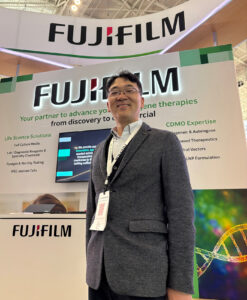
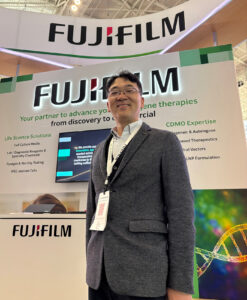
“The collaboration between Wisconsin and Japan has been fantastic,” said Tomoyuki (Tom) Hasegawa, CEO of FCDI for the past four years. “We are making a global impact together.”
The work here is “incredible,” Hasegawa continued. “All our employees are excited!”
Among the dignitaries speaking prior to the official ribbon-cutting ceremony were Wisconsin Governor Tony Evers, a 74-year-old Democrat. “Cleaning out a drawer the other day,” Evers joked, “I found a box of Fujifilm. I’m not sure what to do with it!”
Having toured Fujifilm’s Japan headquarters in 2019, Evers called the opening “a full-circle moment” and “a true Wisconsin success story.” The state’s expertise in stem cell biology began more than 20 years ago with the pioneering research of James Thompson, PhD, who co-founded Cellular Dynamics in 2004. The company was acquired by Fujifilm in 2015.
The new facility will quadruple FCDI’s cell therapy research and manufacturing, which Evers said, “may hold the key to Parkinson’s disease, Alzheimer’s, cancers, autoimmune and liver disease and other serious health conditions.”
Also speaking was Toshihisa “Toshi” Iida, a 30-year Fujifilm veteran who currently serves as corporate vice president and general manager of Fujifilm’s Life Sciences Strategy Headquarters and Bio CDMO Division.
Fujifilm was founded in 1934, Iida said, with a continuous push to combine technology and innovation. “Our journey has not always been easy,” he said. In 2000, the company’s core film business accounted for 70 percent of the firm’s profits. The business did not just decline; “It was a collapse,” he said.
“We overcame this challenge. I am a living witness to this transformation story.”
While Fujifilm’s business has evolved and diversified, the company’s purpose pays tribute to its photographic roots: “Giving our world more smiles.” The company’s interest in human health dates back to its early years. Just two years after its founding, Fujifilm produced the first X-ray film. “Our technology must serve people and improve lives,” Iida said.
Over the past 15 years, Fujifilm has invested some $10 billion in health and biologics. The investment in Madison is just a part of that bigger program. “This site is not just a building, but a platform to support innovation,” Iida said. “Japan is the birthplace of iPS cells. This has the potential to change medicine.”
Field of dreams
Hasegawa has been with Fujifilm for his entire professional career of 28 years, joining the company fresh from completing a law degree at the University of Tokyo. The one thing he knew was that he did not want to pursue a law career.
It was the late 1990s and the dawn of the digital camera revolution. “The company’s transformation story sounded very interesting to me,” Hasegawa told me in an interview in the exhibit hall at the American Society of Gene and Cell Therapy in Boston. “Especially right after Windows 95 came out, those were very exciting days expanding the digital capability of the company globally.”
Before long, the company set its sights on the U.S. market, and Hasegawa moved to New York to lead that effort, before returning to Tokyo in 2011 and assuming direction of the global marketing team. Three years later, he moved into business development and was put in charge of corporate planning and cultural affairs.
Hasegawa recalls reading about the induced pluripotent stem cells (iPSCs) by accident. In 2012, the Japanese scientist Shinya Yamanaka, PhD, famously won the Nobel Prize in Physiology or Medicine for the identification of factors crucial in the reprogramming of mature cells into pluripotent stem cells.
Following the acquisition of Cellular Dynamics, Fujifilm “asked me to be in charge” of this fledgling program in regenerative medicine, Hasegawa said. “This is a very well-known story in Japan because [Yamanaka] won the Nobel Prize and it is a very interesting technique. He’s a superstar! That’s why Fujifilm believes that the cell and gene therapy [CGT] field could be our next field of dreams.”
Thompson built a foundation in iPS cells in Cellular Dynamics and “ introduced lots of new [cell types] derived from iPS cells. Cellular Dynamics became a global leader for iPS-related products,” Hasegawa said. “Fujifilm’s concept was very interesting—we wanted to explore the synergy of imaging, analysis, and digital technologies to support the pharma industry. That’s what happened in 2015.”
Hasegawa says he has “a big dream” for the company’s growth. “One way is to deliver our iPS cell products, which include cardiomyocyte cells and neuron cells. We have 40 types of cells for toxicity and efficacy testing for pharma companies to do their R&D. We are a leading supplier of these iPS cells, which have high quality and also the same donor cell for multiple neurons to enable isogenic research.”
At one time, Hasegawa concedes, “we wanted to be a king of pharma, but we switched our strategy.” The company invested heavily in its services to support drug discovery through commercialization, including service lines across contract development and manufacturing (CDMO) and small-molecule drug development. In 2017, Fujifilm acquired reagent company Wako Pure Chemical, which has an HQ in Japan and a subsidiary in Richmond, VA.
Another strand to Fujifilm’s bow is as a provider of materials including reagent kits. “As you remember [in cinema], film is not necessarily the hero—cameras and cameramen are the heroes,” Hasegawa said. “We support [R&D], so that kind of mindset is very beneficial.”
Another thriving business is cell therapy utilizing iPSC technology. Hasegawa points to another subsidiary that provides cell therapy CDMO services in California. “We have an end-to-end service for cell therapy,” he said. In the cell therapy space, he is not looking for additional acquisitions, “because we shifted our strategy.” But for the supporting industry, “if there are good opportunities, we can of course have a discussion about it.”
Fujifilm says its $200-million investment in the new FCDI facility will “help secure America’s supply chain for biotech and regenerative medicine.” The new facility will feature state-of-the-art resources, including a Center of Excellence for genome editing and laboratories for cell culture manufacturing and process development. The space will quadruple capacity for R&D and manufacturing and enhance the company’s capabilities in drug discovery support and process development.
The company believes the investment will help Fujifilm keep pace with the rapidly expanding cell therapy market—and put a smile on the faces of patients and company executives alike.
The post Smile Please: Wisconsin Welcomes FUJIFILM Cellular Dynamics New Headquarters appeared first on GEN – Genetic Engineering and Biotechnology News.



Hosted by Drug Discovery World and supported by Sartorius and BioIVT, this webinar will explore the opportunities and challenges that exist within cancer research drug discovery and development.
You will hear from Dr Sudha Rao, Chief Scientific Officer of Kazia Therapeutics, Karol Budzik, PhD, Business Development Associate at Vyriad Therapeutics and Lars van der Veen, Chief Scientific Officer at iOnctura.
Presentations will cover how cancer treatments have shifted towards reprogramming the biology driving tumour growth, immune escape and treatment resistance, the trajectory that in vivo CAR-T treatments are taking, and how challenging tumours burdened by stroma and immune-mediated resistance can be tackled.
Q&A with the speakers follows the presentations.
The post New webinar: Tackling drug discovery challenges in cancer research appeared first on Drug Discovery World (DDW).
Amid the rise of psychedelics in the mental health space, researchers have begun to explore psilocybin as a treatment for chemotherapy-induced peripheral neuropathy.
Uncategorized
New Spectrometry Technique Could Aid Formulation Development
New Spectrometry Technique Could Aid Formulation Development
A new technique combining two forms of spectrometry could help biopharmaceutical companies improve their choice of formulation buffer for antibody manufacturing by revealing how molecular forms and three-dimensional shapes of complex biologics respond to their environment. That’s the view of Christian Bleiholder, PhD, a professor at Florida State University who helped develop the technique.
According to Bleiholder, what happens structurally when a complex biological molecule, such as an antibody or viral spike protein, binds to its target is currently poorly understood.
“This is where [this approach] can help with the bioprocessing and formulation,” he says, as structural changes “can affect the lifespan [of the product] and lead to issues, such as aggregation.”
Because antibodies are complex, existing techniques tend to be powerful at different levels of complexity, he explains. Mass spectrometry is particularly powerful for distinguishing molecular composition, while structural approaches such as X-ray crystallography and cryo-electron microscopy can provide high-resolution structural information.
The challenge is understanding the link between these things within a heterogeneous sample, he says.
To overcome this, Bleiholder and his team worked with Bruker Daltonics to develop Tandem-Trapped Ion Mobility Spectrometry (Tandem-TIMS). This combines tandem ion mobility spectrometry with tandem mass spectrometry to disentangle three overlapping layers of molecular complexity: molecular form, three-dimensional shape, and binding or assembly state, he says.
He explains that, if the proteins have different structures, they can be characterized with tandem ion mobility spectrometry, and then mass spectrometry can be used to look at their molecular forms and binding states.
Going forward, Bleiholder hopes the technique can be used for formulation development but also earlier, during drug discovery of new products, such as multi-specific antibodies, to determine which molecular states are important and how those change when a biologic engages its target. He also plans to look at automating the technique.
Bleiholder spoke about using Tandem-TIMS at the Bioprocessing Summit in Boston earlier this year.
The post New Spectrometry Technique Could Aid Formulation Development appeared first on GEN – Genetic Engineering and Biotechnology News.


Ramaswamy’s biotech baggage haunted his political run

BIO responds to Health Affairs Analysis, highlighting the importance of orphan drug incentives

Patient Advocacy Coffee Chat: Basic steps to being a good advocate

Degraders take on GPCRs

Novartis confirms 9 reported cases of tumors in patients treated with Zolgensma

T-time: British biotech pours $133M into the pot for bispecifics
-

 Uncategorized8 months ago
Novartis buys Synnovation’s PI3Kα inhibitors for $3 billion
-
Endpoints News8 months ago
Novartis to pay $2B upfront to take next-gen PI3Kα inhibitor from Synnovation
-

 Uncategorized6 months ago
Optical Pooled CRISPR Screen Reveals Regulators of NF-κB Dynamics in Human Cells
-
Uncategorized6 months ago
Relay’s PI3Kα inhibitor clears efficacy bar in Phase 2 vascular anomalies study
-
Uncategorized5 months ago
Hybrid solid−liquid optics enable scalable, high-resolution light-sheet microscopy across diverse immersion media
-
Fierce Biotech7 months ago
Scientists turn pig semen extract into eye drops that kill cancer in mice
-
Nature Biotechnology8 months ago
Sustained nitric oxide production by engineered E. coli remodels the tumor microenvironment and potentiates immunotherapy
-
Nature Biotechnology7 months ago
Mapping cis-regulatory mutations at scale in sorghum enables modulation of gene expression
 Scan to Read