
Uncategorized
Chiesi signs $1.9B deal to acquire KalVista and its approved drug
Chiesi signs $1.9B deal to acquire KalVista and its approved drug



Sometimes a patient’s death is enough to send a stock tumbling. Other times, the fear of litigation that often arises whenever a new therapeutic approach emerges can send shares sinking. This past week, Erasca (NASDAQ: ERAS)—whose name is a portmanteau for “erase cancer”—ran into both, causing its share price to nosedive 53%.
The precision oncology company, whose drugs and combination therapies focus on fighting cancer by shutting down the RAS/MAPK pathway, shared preliminary positive albeit early clinical dose escalation data for ERAS-0015, pooled from two Phase I trials. The oral pan-RAS molecular glue is being developed to treat solid tumors that include non-small cell lung cancer (NSCLC) and pancreatic cancer (formally pancreatic ductal adenocarcinoma or PDAC).
ERAS-0015 achieved unconfirmed overall response rates (uORR) of 62% to 75% in KRAS G12X NSCLC patients dosed at 16–32 mg once daily, with the low percentage in second line or greater KRAS G12X NSCLC (37 patients), and the high percentage in post-ICI/platinum (second and third line) KRAS G12X NSCLC (37 patients). In pancreatic cancer, which has an overall five-year survival rate of just 13%, ERAS-0015 achieved unconfirmed overall response rates ranging from 40% to 50% in second-line positive KRAS G12X PDAC.
However, tucked in footnotes on pages 25 and 43 of its investor presentation detailing the positive data was the disclosure that a 66-year-old male patient died after his grade 3 treatment-related adverse event (TRAE) of pneumonitis progressed to grade 5 after supportive care was withdrawn at the patient’s direction. The patient, who had “heavily pretreated” metastatic pancreatic cancer, received 24 mg of ERAS-0015, Erasca said.
“The patient had pulmonary metastases, a history of right lung cryoablation, and no history of lung radiation. The patient presented to the ER approximately a month after starting ERAS-0015 with grade 3 pneumonitis that was treated aggressively with immediate discontinuation of ERAS-0015, high-dose steroids, and infliximab,” Erasca explained. “The patient requested withdrawal of supportive care and ultimately died of the event.”
“Different outcome”

During an April 27 conference call, Jonathan E. Lim, MD, Erasca’s chairman, CEO, and co-founder, told analysts the death was “a very rare event” as pneumonitis is a rare drug-related toxicity seen in many oncology drugs.
“The withdrawal of supportive care is really why this progressed from grade 3 to grade 5,” Lim said. “The investigator told us directly that he thought that if the patient had continued supportive care, then it might have been a different outcome. So yes, it’s very unfortunate for the patient, but that was the feedback.”
Lim added that Erasca hasn’t seen any other grade 4 or grade 5 TRAEs. He told analysts that both FDA-approved KRAS G12C inhibitors have warnings and precautions for pneumonitis in their labels—Lumakras® (sotorasib), marketed by Amgen (NASDAQ: AMGN); and Krazati® (adagrasib), marketed by Bristol Myers Squibb (NYSE: BMY). Lim also cited Revolution Medicine (NASDAQ: RVMD)’s daraxonrasib (formerly RMC-6236), which Erasca is citing as a comparator to ERAS-0015, had also reported pneumonitis at a level of 1 out of 50 patients for monotherapy.
The same day as the data release and patient death disclosure, Erasca also revealed in a regulatory filing that it had received a letter from legal counsel for Revolution, Erasca’s arch-rival developer of RAS inhibitors against cancer. Revolution told Erasca that ERAS-0015 was “substantially equivalent” to compositions claimed by Revolution in its U.S. Patent No. 12,409,225, titled “RAS Inhibitors”, and as a result, Erasca “infringes” the patent.
“The disclosure features macrocyclic compounds, and pharmaceutical compositions and protein complexes thereof, capable of inhibiting Ras proteins, and their uses in the treatment of cancers,” according to the text of the patent, which lists Revolution as its assignee.
Revolution also contended that Erasca was liable as licensee for ERAS-0015, and that Erasca “improperly” compared preclinical data of ERAS-0015 and daraxonrasib publicly.
No wrongdoing, Erasca insists
Erasca insists it did nothing wrong, stating in the filing that it “intends to contest the allegations vigorously.”
Lim echoed the company’s response in the filing during an interview with GEN, where he stated that the company believes Revolution’s assertions to be without merit.
“We have no reason to believe that ERAS 15 infringes any patent—including RevMed’s accusation, which is based on the doctrine of equivalence, rather than an accusation of direct infringement,” Lim said. “RevMed did not provide details to support its claim that others engaged in trade secret misappropriation, and we have no reason to believe any such thing occurred.”
“In addition, we believe that all of our preclinical data comparisons have been appropriate. And all of our data presented on the R&D Day were not based on head-to-head studies but on cross-trial comparisons. We made that very clear during the presentation,” Lim added.
Through a spokesperson, Revolution told GEN the company was acting to defend its inventions and the IP behind them.
“We are committed to protecting the strong foundation of innovation we have built over more than a decade through transformative science and significant investment,” Revolution stated. “While we do not comment on the specifics of ongoing legal matters, we remain confident in the strength of our intellectual property. Our focus remains on advancing our science to deliver innovative medicines that make a meaningful impact for patients.
Slumping stock
Erasca investors reacted coolly to the patient death and prospect of a legal wrangle with Revolution. Erasca shares slumped 11% from $21.49 to $19.15 the day of the data announcement and regulatory filing. The share price plunged 48% to $9.90 Tuesday and fell another 8% Wednesday to $9.11 before bouncing back 17% to $10.65 Thursday as investors bought the dip, then finished Friday sliding 6%, closing at $10.03.
Despite the selloff, Erasca shares have more than quadrupled over the past six months, rocketing 314% from $2.42 on October 31 and catapulting 573% over the past year (from $1.49 on May 1, 2025).
Revolution shares rose 3% this week. After sliding nearly 3% from $135.30 to $131.67 on April 27, the stock benefited from Erasca’s slump by jumping 10% to $144.83 before fluctuating, closing Friday at $139.48.
“We view the (-)ve [negative] post‑data reaction as overdone, as ERAS‑0015 looks like a formidable competitor in the pan‑RAS landscape,” Maury Raycroft, PhD, equity analyst with Jefferies, wrote in a research note.
Raycroft cited Erasca’s comparing its 62%/75% uORR in NSCLC to the confirmed 38% ORR cited for daraxonrasib in a 2025 study by researchers from Revolution and several clinical partners. Among second and third-line treatment patients post‑ICI/platinum, efficacy appeared broadly consistent across geographies, Raycroft noted, w/ uORR of 71% in the United States (12 patients), where ERAS-0015 was studied in the Phase I AURORAS-1 trial (NCT06983743), and 73% in China (11 patients), where partner Joyo Pharmatech sponsored a trial known as STAR or JYP0015M101 (NCT06895031).
“Early durability is also encouraging, w/ progression observed in 1/27 pts in the China study and 2/12 in the U.S. study; though, follow‑up remains limited (median likely ~3–4 mos), so durability conclusions are premature,” Raycroft cautioned.
In pancreatic cancer, pooled U.S. and Chinese patient data ranged from 40% uORR at 16–32 mg (20 patients), to 42% uORR at 24–32 mg (12 patients), and 50% uORR at 32 mg once daily (two patients).
Expansion doses
“Right now, we think the lower doses at 8 and 16 milligrams, for instance, seem to be relatively underpowered against pancreatic cancer compared to 24 to 32 milligrams. So, based on the totality of efficacy, safety, tolerability, and PK data, we have determined 24 and 32 milligrams to be the recommended doses for expansion,” Lim told GEN. “So we have already begun to expand out those doses to treat patients at both 24 and 32 milligrams.”
All but one of 24 responding NSCLC patients, and 20 out of 23 responding PDAC patients, remain on treatment, including all responders treated at the 24 and 32 mg once daily recommended doses for expansion (RDEs).
Erasca said ERAS-0015 showed clinical potential for combinability with standard-of-care doses of the anti-EGFR monoclonal antibody panitumumab in fighting colorectal cancer (CRC), where EGFR is a key mechanism for acquired resistance. Through the data cutoff date of March 31, Erasca showed no dose-limiting toxicities among three patients, of which one showed an unconfirmed partial response in an efficacy-evaluable patient with metastatic CRC: “That’s really exciting to have,” Lim said.
Compelling opportunities
“For monotherapy, we think lung and pancreatic are compelling opportunities, and then for colorectal cancer, combination therapy will likely be required, so we’re focused on the combination with EGFR antibody for colorectal cancer,” Lim said.
“The fact that we have been able to successfully combine ERAS15 with panitumumab in three patients, with two of them passing the DLT window, is exciting. And we did that with a 16 milligram dose of ERAS-15, which is within the pharmacologically active dose range of 16 to 32 milligrams. It’s really exciting to have safety and tolerability that is promising with that combination and activity within the PAD.”
The Erasca-Revolution dispute appears to explain a decline early this past week in the American depositary shares of another cancer drug developer whose pipeline includes RAS-targeting therapies: Adlai Nortye (NASDAQ: ANL) shares skidded 10.5% from $14.80 to $13.25 the day of Erasca’s announcement and filing, then dropped another 8% to $12.17 Tuesday before rebounding 27% the rest of the week, closing Friday at $15.50.
Adlai Nortye is developing AN9025, an oral, small-molecule pan-RAS(ON) inhibitor designed to treat a variety of advanced solid tumors with RAS mutations. AN9025 is under study in a Phase I trial (NCT07252479) whose first patient was dosed in the United States in February. The trial is being conducted with Jiangsu Aosaikang Pharmaceutical, which holds rights to AN9025 in China, Hong Kong, and Macao.
Andrew Berens, MD, senior managing director, targeted oncology, and a senior research analyst with Leerink Partners, wrote in a research note that a conversation with Adlai Nortye management offered reasons for confidence that the company will avoid legal trouble in connection with AN9025.
“ANL’s discovery of AN9025 was conducted in-house and independently, suggesting that trade secret misappropriations are unlikely,” Berens reported. “Further, while both drugs feature a macrocyclic scaffold, according to ANL, ERAS-0015 has significantly less branch change modifications and features a bridge, while 9025 underwent numerous branch modifications and the addition of a ring to the scaffold.”
Leaders and laggards
- Esperion Therapeutics (NASDAQ: ESPR) shares leaped 55.5% from $2 to $3.11 Friday after the developer of cardiometabolic and rare/orphan disease therapies said it agreed to be acquired by funds managed by the healthcare-focused investment firm Archimed in a deal valued at up to approximately $1.1 billion if Esperion achieves specified commercial-based milestones. Esperion shareholders will receive $3.16 per share in cash at closing, plus the right to participate in contingent milestone payments of up to $100 million tied to future U.S. net sales for products containing bempedoic acid and products containing bumetanide. The upfront cash consideration represents a premium of 58% to Esperion’s closing share price on Thursday. Founded in 2008, Esperion specializes in developing drugs designed to fight the risk of cardiovascular disease. Esperion’s board has unanimously approved the acquisition deal, which is expected to close in the third quarter of 2026, subject to customary closing conditions that include approval by Esperion’s shareholders and required regulatory approvals.
- Novocure (NASDAQ: NVCR) shares jumped 27% from $11.93 to $15.21 Thursday following several positive announcements by the oncology drug/device developer. Novocure raised its 2026 guidance to investors, increasing its net revenue forecast range to $690 million–$710 million (from $675 million–$705 million), and adjusted earnings before interest, taxes, depreciation, and amortization (EBITDA) from a $15 million operating loss to zero (from a $20 million operating loss to zero). The company said its launch of Optune Pax®, a wearable device designed to deliver its Tumor Treating Fields (TTFields) therapy for adults with locally advanced pancreatic cancer concomitant with gemcitabine and nab-paclitaxel, was successful, with 800+ prescribers certified and 160+ prescriptions received through March 31. TTFields are alternating electric fields designed to cause cell death by disrupting cancer cell replication. Novocure finished Q1 with net revenue of $174.055 million, up 12% year-over-year from $154.994 million.
- Sangamo Therapeutics (NASDAQ: SGMO) shares plummeted 35% from 20 cents to 13 cents on Wednesday after the genomic medicine developer said it will begin trading its shares on the OTCQB Venture Market on May 5, under its existing ticker symbol SGMO. The switch comes after Nasdaq notified Sangamo that its common stock will be delisted from the Nasdaq Capital Market due to non-compliance with Nasdaq’s minimum $1 per share bid price requirement. While Sangamo said it intends to request a hearing from Nasdaq to appeal the delisting determination, that hearing will not stay the suspension of trading of Sangamo’s common stock. Sangamo said the shift is not expected to result in material impacts to its business or operations: “Sangamo remains focused on pursuing opportunities to raise additional capital, including an assessment of all strategic options to maximize the value of its assets.” To that end, the company said, it is negotiating “multiple potential business development transactions.”
- uniQure (NASDAQ: QURE) shares climbed 19% from $16.73 to $19.95 Thursday after the gene therapy developer offered regulatory updates that included having been granted a granted a Type B meeting with the FDA to occur in the second quarter: “The company expects to discuss key elements of a potential Phase III trial design and to receive feedback on the proposed statistical analysis plan for the four-year analysis expected in the third quarter.” uniQure added that it held a pre-submission meeting with the U.K.’s Medicines and Healthcare Products Regulatory Agency (MHRA) and plans to submit a Marketing Authorization Application (MAA) for AMT-130 for the treatment of Huntington’s disease in the third quarter. The company said it expects to submit an MAA based on a three-year analysis from its ongoing U.S. and European Phase I/II clinical trials.
The post StockWatch: Patient Death, Rival’s Patent Challenge Sink Erasca Shares appeared first on GEN – Genetic Engineering and Biotechnology News.
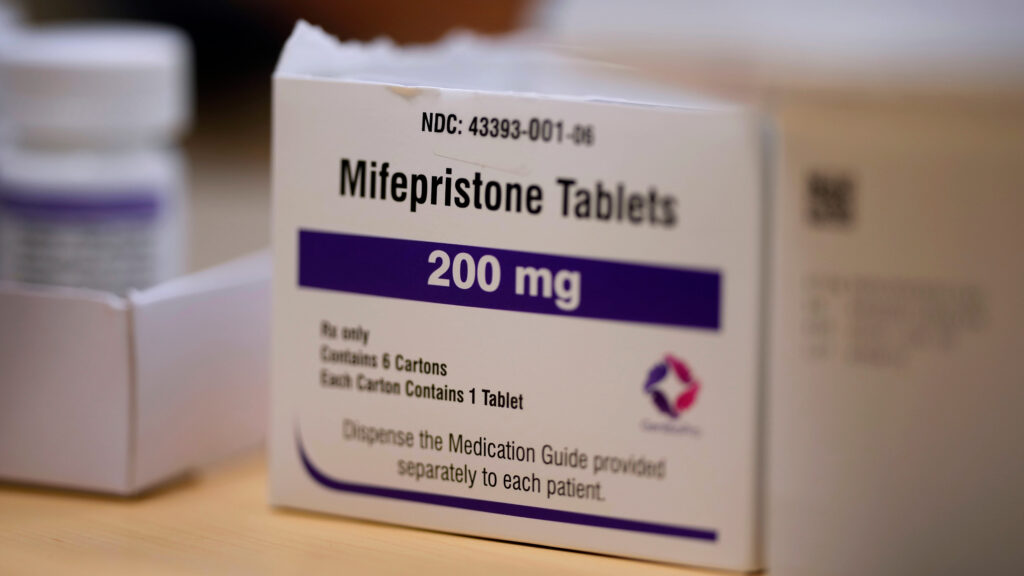
A federal appeals court has restricted access to one of the most common means of abortion in the U.S. by blocking the mailing of mifepristone prescriptions.
Friday’s unanimous ruling from a three-judge panel of the New Orleans-based 5th U.S. Circuit Court of Appeals is requiring that the abortion pill be distributed only in person and at clinics, overruling regulations set by the federal Food and Drug Administration.
Uncategorized
Bristol Myers’ pivotal year; Should AI be swinging bigger?; and more
Bristol Myers’ pivotal year; Should AI be swinging bigger?; and more
Welcome back to Endpoints Weekly! The last week of April brought a downpour of news as several pharma companies reported their first-quarter earnings. Max Gelman took a close look at a make-or-break moment for Bristol … Read More


Illinois’ financial crisis could bring the state to a halt
The final 6 ‘Game of Thrones’ episodes might feel like a full season
New Season 8 Walking Dead trailer flashes forward in time
Mod turns ‘Counter-Strike’ into a ‘Tekken’ clone with fighting chickens
Meet Superman’s grandfather in new trailer for Krypton
Disney’s live-action Aladdin finally finds its stars

StockWatch: Patient Death, Rival’s Patent Challenge Sink Erasca Shares

Federal appeals court blocks mailing of abortion pill mifepristone
Bristol Myers’ pivotal year; Should AI be swinging bigger?; and more

Arvinas’ ‘Protac’ breast cancer drug cleared by FDA
DNA-Containing Extracellular Vesicles Boost Antitumor Responses in Mice
Moderna in talks with FDA over Phase 4 Covid vaccine data
Illinois’ financial crisis could bring the state to a halt
The final 6 ‘Game of Thrones’ episodes might feel like a full season
New Season 8 Walking Dead trailer flashes forward in time
Mod turns ‘Counter-Strike’ into a ‘Tekken’ clone with fighting chickens
Meet Superman’s grandfather in new trailer for Krypton
Disney’s live-action Aladdin finally finds its stars
-
 Uncategorized9 years ago
These ’90s fashion trends are making a comeback in 2017
-
Contributors9 years ago
The final 6 ‘Game of Thrones’ episodes might feel like a full season
-
Uncategorized9 years ago
According to Dior Couture, this taboo fashion accessory is back
-
Uncategorized9 years ago
Uber and Lyft are finally available in all of New York State
-
Uncategorized9 years ago
Phillies’ Aaron Altherr makes mind-boggling barehanded play
-
Uncategorized9 years ago
The old and New Edition cast comes together to perform
-
Uncategorized9 years ago
Steph Curry finally got the contract he deserves from the Warriors
-
Uncategorized9 years ago
Disney’s live-action Aladdin finally finds its stars