
Uncategorized
The next generation of CAR-T cell therapies

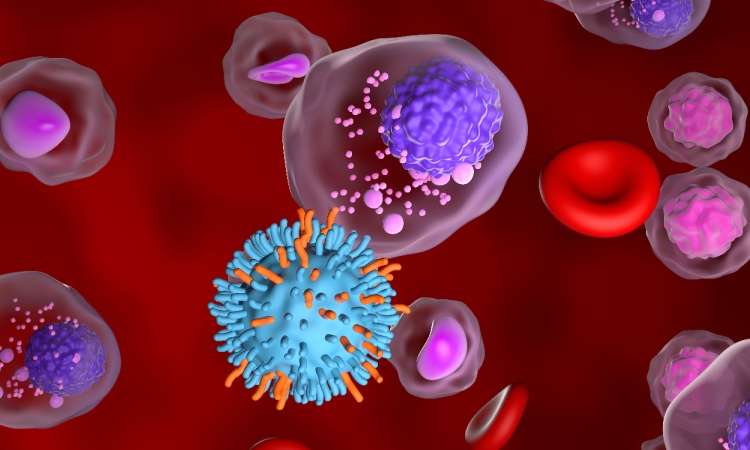

Drug Discovery World Editor Reece Armstrong speaks to Dr Jan Davidson-Moncada, Chief Medical Officer at Imviva Biotech about the development of CAR-T cell therapies and the company’s activities in this space.
RA: What are the biggest challenges when developing CAR-T cell therapies?
JDM: CAR-T therapies face several formidable barriers. Autologous approaches made from a patient’s own T-cells are effective but costly (often exceeding $400,000 per patient), require weeks of manufacturing, and may be unavailable to certain patients due to manufacturing failures. For rapidly progressing cancers, these manufacturing delays can be life-threatening; patients’ conditions may deteriorate during production, rendering them ineligible for treatment once cells are ready. Allogeneic CAR-T therapies overcome these delays by using healthy donor cells and providing a “point-of-care ready” alternative, but introduce their own challenges: graft-versus-host disease (GvHD), which has largely been overcome by the field, and rejection by the patient’s immune system which still remains a major obstacle; the latter has required intensive lymphodepleting chemotherapy to with unwanted effects on patient safety.
RA: You dosed the first US patient in your Phase Ib/II Tenacity-01 trial in December. What are you hoping from this trial and how does it set the company up for 2026?
JDM: TENACITY‑01 is a global Phase Ib/II trial evaluating the safety, efficacy, and cellular pharmacokinetics of CTD402 in adolescents and adults (≥12 years) with relapsed/refractory (R/R) T-cell acute lymphoblastic leukemia/lymphoblastic lymphoma (T-ALL-LBL). The first U.S. patient, dosed in December 2025 at Stanford Medicine, achieved complete remission with manageable adverse events and early discharge—demonstrating the ready-at-point-of-care promise. Earlier exploratory data showed a 64.1% complete remission rate with 91.7% minimal residual disease (MRD)‑negative status in R/R T-ALL/LBL, providing strong directional evidence that CTD402 can address this critical unmet need in a disease with limited treatment options and high mortality.
This year, Phase Ib interim data are expected by mid-2026, enabling us to progress CTD402 into a Phase II evaluation following Phase Ib readout—an accelerated development pathway supported by our Regenerative Medicine Advanced Therapy (RMAT) designation. Study completion is targeted for late 2028. This timing matters enormously for patients; approximately 40% of adults with R/R T-ALL/LBL relapse after first-line therapy, leaving very limited options and high mortality. A truly off-the-shelf CAR-T therapy, available at the point of care, has the potential to change the treatment paradigm for these rapidly progressing diseases.
RA: We saw some notable exits from the cell therapy space last year. Does this concern you?
JDM: While we recognise that the cell therapy landscape has experienced recent setbacks, we remain confident in the fundamentals of allogeneic CAR-T development. Our ANSWER platform (Antibody SWitch Engineered Receptor) enables rejection-resistant CAR-T design (resistant to host T & NK cell rejection) and is differentiated by enhanced pharmacokinetic (PK) profile and persistence of our allogeneic CAR-T cells when used with standard-dose lymphodepletion (LD), comparable to autologous approaches. In essence, it harnesses the advantages of allogeneic sourced CAR-T without being encumbered by the limitations.
We have substantial de-risking evidence: we’ve treated more than 300 patients with our platform in China, demonstrating both manufacturing consistency and clinical efficacy across our oncology and autoimmune programs. Our manufacturing process has proven robust across 50 production lots derived from 30 different donors, which is precisely the kind of scalability that some allogeneic approaches have struggled to achieve.
RA: How important was it for the company to receive both Regenerative Medicine Advanced Therapy (RMAT) and Rare Pediatric Disease designations from FDA?
JDM: These are both important milestones for Imviva, as these accelerate FDA interactions, enable potential priority or accelerated review, and provide major incentives. RMAT status supports faster development for CTD402 in a rapidly progressing cancer (R/R T-ALLALL/LBL), while Rare Pediatric Disease designation provides seven years of market exclusivity, tax credits for clinical research, and prescription drug user fee waivers.
Together, these designations strengthen our therapy’s pathway toward faster approval. They accelerate our ability to deliver effective, accessible treatment options to a patient population where timing is critical.
RA: You’ve developed a platform to address the remaining challenge of allogenic CAR-T therapy. Why is immune rejection a major challenge and how does your platform address this issue?
JDM: Immune rejection is a major barrier for allogeneic CAR‑T therapy because CAR-T cells made from donor T-cells are rapidly eliminated by the patient’s immune system. Imviva’s ANSWER platform overcomes this challenge by engineering immune‑evasion features—specifically through inhibitory ligands—that prevent host T‑ and NK‑cell–mediated rejection, allowing the infused CAR-T cells to persist and expand long enough to eliminate the cancer. This creates an allogeneic CAR‑T with improved persistence, potency, and treatment accessibility.
RA: You recently received organ drug designation for your CTD402 candidate. How does this decision reflect the unmet need in haematological conditions such as relapsed/refractory (R/R) T-cell acute lymphoblastic leukaemia/lymphoblastic lymphoma (T-ALL/LBL)?
JDM: This recognition provides us with regulatory support and extended market exclusivity to advance our development pathway. Orphan drug designation reflects the FDA’s acknowledgement of a critical unmet need: approximately 40% of adults with R/R T-ALL/LBL relapse after first-line therapy, leaving very limited salvage options and high mortality. We believe a truly off-the-shelf CAR-T therapy available at the point of care—with immediate availability and enhanced resistance to host immune rejection—addresses a fundamental barrier that has historically limited allogeneic approaches. By combining immediate availability with durable CAR-T persistence, CTD402 has the potential to change the treatment paradigm for these rapidly progressing diseases.
RA: How essential has your know-how in genetic manipulation been for the development of effective CAR-T cell therapies?
JDM: Genetic manipulation has been foundational to our ability to create next-generation allogeneic CAR-T therapies. At Imviva, we leverage gene delivery and editing know-how to achieve multiple critical objectives:
- Retroviral vector delivery system enables us to embed our proprietary inhibitory ligands into the CAR-T cell surface to enable selective immune evasion with high specificity. This is the core of our ANSWER platform, which allows the infused cells to evade immune attack while remaining potent against disease.
- We have iterated through five generations of our ANSWER technology, with each version being made possible by advances in editing precision and our ability to validate safety and functionality.
- We use the Cas9 gene editing system to precisely knock out the expression of T-cell receptor (TCR) and Human Leukocyte Antigen (HLA) class II genes, which eliminates the risk of GvHD and prevents host T cell rejection.
- We recently developed and presented Target Enrichment Long-range Sequencing (TELS) at American Society of Hematology (ASH) 2025, which improves detection of structural variations in genome-edited CAR-T cells compared to conventional methods, ensuring more rigorous safety assessment of genome-edited products.
- We have accumulated significant manufacturing and clinical testing experience with our leading programs. Multiple production lots derived from different donors have been successfully manufactured with consistent quality attributes. More importantly, potent clinical responses were achieved by our products manufactured from different healthy donors; this underlines an effective mechanism of action in our allogeneic CAR-T cells, which overcomes inherent donor variations with robust clinical outcomes.
RA: What’s the company’s plan for 2026?
JDM: In 2026, our primary focus is progressing the development of CTD402, with Phase Ib interim data expected by mid-2026 and study completion by late 2028. This timing enables us to progress the therapy into a Phase II evaluation following Phase Ib readout, supporting the accelerated development pathway for a treatment benefiting a patient population where timing is critical due to a high mortality rate. Beyond CTD402, we are also advancing CTA313, a dual-targeting CD19-BCMA therapy, into autoimmune indications with early clinical data showing strong results from our studies in China. These programs demonstrate the extensibility of our platform across both oncology and immunology, validating our approach to creating off-the-shelf cellular therapies for high unmet-need diseases.
The post The next generation of CAR-T cell therapies appeared first on Drug Discovery World (DDW).

Uncategorized
Sanofi Bispecific Scores in Asthma, Rhinosinusitis, but Eczema Bet Doesn’t Pay Off
Sanofi Bispecific Scores in Asthma, Rhinosinusitis, but Eczema Bet Doesn’t Pay Off
Sanofi has faced questions about the potential of lunsekimig in eczema, with executives calling the clinical trial a “measured risk.” Read More
Uncategorized
STAT+: Gilead to buy cancer biotech Tubulis for more than $3 billion
In a move that will grow its oncology pipeline, Gilead Sciences is spending more than $3 billion to buy the German biotech Tubulis, the companies said Tuesday.
The deal includes an upfront payment of $3.15 billion and up to $1.85 billion more if certain milestones are reached. It also highlights both the therapeutic and commercial promise of antibody-drug conjugates, the next-generation chemotherapy treatments that the privately held Tubulis is developing.
Gilead’s latest move comes just months after it said it would acquire Arcellx in a deal worth $7.8 billion. The two companies had already been working together on a multiple myeloma CAR-T therapy that could be approved later this year. Gilead last month also announced that it was buying Ouro Therapeutics, which is focused on drugs for autoimmune disease, for up to $2.18 billion.
In a move that will grow its oncology pipeline, Gilead Sciences is spending more than $3 billion to buy the German biotech Tubulis, the companies said Tuesday.
The deal includes an upfront payment of $3.15 billion and up to $1.85 billion more if certain milestones are reached. It also highlights both the therapeutic and commercial promise of antibody-drug conjugates, the next-generation chemotherapy treatments that the privately held Tubulis is developing.
Gilead’s latest move comes just months after it said it would acquire Arcellx in a deal worth $7.8 billion. The two companies had already been working together on a multiple myeloma CAR-T therapy that could be approved later this year. Gilead last month also announced that it was buying Ouro Therapeutics, which is focused on drugs for autoimmune disease, for up to $2.18 billion.
In its third acquisition of 2026, Gilead is spending $3.15 billion upfront to snag a next-generation antibody-drug conjugate platform from German startup Tubulis.
The California biopharma could pay out another $1.85 billion down the road …


Illinois’ financial crisis could bring the state to a halt
The final 6 ‘Game of Thrones’ episodes might feel like a full season
New Season 8 Walking Dead trailer flashes forward in time
Mod turns ‘Counter-Strike’ into a ‘Tekken’ clone with fighting chickens
Meet Superman’s grandfather in new trailer for Krypton
Disney’s live-action Aladdin finally finds its stars
Sanofi Bispecific Scores in Asthma, Rhinosinusitis, but Eczema Bet Doesn’t Pay Off

STAT+: Gilead to buy cancer biotech Tubulis for more than $3 billion
Gilead continues dealmaking streak with $3.15B Tubulis buy for ADCs
BioNTech to shutter Singapore HQ after ‘comprehensive review’
Amgen Seeks ‘Return to Growth’ for Tepezza as More Convenient Formulation Aces Phase 3

STAT+: Merck’s experimental HIV prevention pill could be made for less than $5 a year, researchers say
Illinois’ financial crisis could bring the state to a halt
The final 6 ‘Game of Thrones’ episodes might feel like a full season
New Season 8 Walking Dead trailer flashes forward in time
Mod turns ‘Counter-Strike’ into a ‘Tekken’ clone with fighting chickens
Meet Superman’s grandfather in new trailer for Krypton
Disney’s live-action Aladdin finally finds its stars
-
 Uncategorized9 years ago
These ’90s fashion trends are making a comeback in 2017
-
Contributors9 years ago
The final 6 ‘Game of Thrones’ episodes might feel like a full season
-
Uncategorized9 years ago
According to Dior Couture, this taboo fashion accessory is back
-
Uncategorized9 years ago
The old and New Edition cast comes together to perform
-
Uncategorized9 years ago
Phillies’ Aaron Altherr makes mind-boggling barehanded play
-
Uncategorized9 years ago
Uber and Lyft are finally available in all of New York State
-
Uncategorized9 years ago
Disney’s live-action Aladdin finally finds its stars
-
Uncategorized9 years ago
Steph Curry finally got the contract he deserves from the Warriors