
Uncategorized
‘Supercharged’ T cells could improve prostate cancer treatment

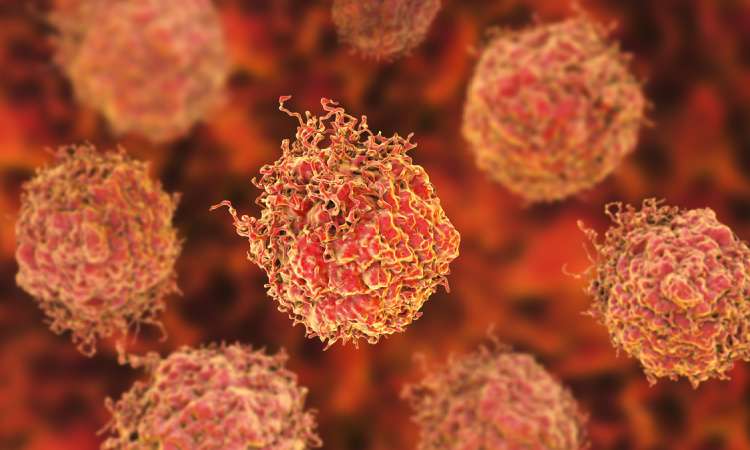

Scientists have engineered new ‘supercharged’ immune cells that could attack prostate cancer more effectively.
Researchers at UCLA and Stanford Medicine researchers, in collaboration with scientists from the University of Utah and Columbia University, have engineered a new class of ‘supercharged’ T cells that are stronger, longer lasting, and more precise at killing prostate cancer cells by fine-tuning how they physically interact with tumour cells.
The team, collaborating within the network of the Parker Institute of Cancer Immunotherapy (PICI), introduced a natural ‘catch bond,’ a fishhook-like interaction that strengthens when cells pull against each other. This allows T cells to latch onto cancer cells more effectively when they attack, helping them recognise the tumour, stay engaged longer and deliver a more powerful and targeted immune response without damaging healthy tissue.
The new approach represents an important step toward developing safer, more effective T cell therapies for prostate cancer and could potentially be adapted to treat a wide range of other tumours.
“By engineering catch bonds, we aim to benefit more patients by overcoming immune tolerance,” said co-senior author Dr Owen Witte, Founding Director Emeritus of the Eli and Edythe Broad Center of Regenerative Medicine and Stem Cell Research at UCLA and Co-Director of the PICI Center at UCLA.
“By creating T cells that are stronger, longer lasting, and highly precise, the approach moves the field closer to safer and more effective adoptive cell therapies for patients.”
How catch bond engineering ‘turbocharged’ T cells
T cells are a powerful weapon in the fight against cancer, forming the basis of treatments such as CAR-T cell therapy and checkpoint inhibitors. This research centres on another type of immunotherapy approach called T cell receptor (TCR) therapy, which engineers T cells to recognise specific proteins on cancer cells, allowing for highly targeted attacks.
Many of these proteins, however, are ‘self-antigens,’ or molecules normally found in the body. To prevent these T cells from attacking healthy tissue, the immune system naturally eliminates the strongest cancer-fighting T cells during development. This leaves behind weaker T cell receptors that may struggle to recognise and destroy tumours, particularly those that have learned to evade immune defences.
To overcome this challenge, researchers focused on fine-tuning naturally occurring T cell receptors to strengthen their ability to recognise a common prostate cancer protein called prostatic acid phosphatase (PAP), which is commonly expressed on prostate tissue and prostate tumours.
The team also identified a naturally weak TCR, known as TCR156, that could detect PAP but was not strong enough to effectively kill cancer cells.
Using a novel technique called catch bond engineering, a concept developed by the Garcia Lab at Stanford Medicine, the researchers ‘turbocharged’ the T cells, allowing them to attack prostate cancer cells more effectively.
Tumour control ‘can be linked to a single molecular bond’
In the body, T cells form brief, mechanical bonds with their targets, known as catch bonds, which help them sense and respond to threats. By altering just one or two amino acids in the T cell receptor, the scientists were able to strengthen these bonds while preserving the T cells’ natural ability to recognise their specific target.
“Using advanced structural studies at atomic resolution, we were able to demonstrate how a tiny change, just one amino acid in the interface between a T cell receptor and a prostate cancer protein called PAP, can extend the bond lifetime, dramatically boosting the T cell’s ability to kill tumours in living models,” said Dr Xiaojing Tina Chen, co-first author of the study and a Postdoctoral Scholar in the Department of Molecular and Cellular Physiology at the Stanford School of Medicine.
“This work shows that tumour control can be linked to a single molecular bond,” added co–first author Dr Zhiyuan Mao, a Postdoctoral Scholar in the Department of Microbiology, Immunology & Molecular Genetics and the Department of Molecular and Medical Pharmacology at the David Geffen School of Medicine at UCLA.
The study demonstrates that catch bond engineering can make T cells much stronger against prostate cancer while avoiding the risks of traditional T cell receptor engineering, including attacks on healthy tissue.
The findings also suggest a new way to predict which T cell therapies will succeed. By measuring how long T cells form bonds with tumour targets under mechanical force, a method called the biomembrane force probe, researchers can more accurately predict which engineered cells will be most effective in eliminating tumours.
The post ‘Supercharged’ T cells could improve prostate cancer treatment appeared first on Drug Discovery World (DDW).

The acquisition of Tubulis GmbH—Gilead Sciences’ latest of the year after buying Arcells and Ouro Medicines—brings into the fold a novel ovarian cancer candidate that has demonstrated promising mid-stage data.
Uncategorized
STAT+: Pharmalittle: We’re reading about FDA backing domestic production, another Gilead deal, and more
Rise and shine, everyone, another busy day is on the way. And it is getting off to a good start here on the Pharmalot campus, where clear blue skies and comfortable breezes are greeting us. Who could ask for anything more? Actually, we could — it is time to reheat the kettle for another cuppa stimulation. Our choice today is ginger peach. And here is a helpful tip — a teaspoon of honey enhances the flavors splendidly. Of course, you are invited to join us. For the full experience, we are now hawking replicas — take a look. Meanwhile, here are a few tidbits to help you along. As always, do keep in touch. We appreciate feedback, criticism, and tips. …
The U.S. Food and Drug Administration used the president’s budget to propose policies aimed at encouraging domestic development and manufacturing of drugs, STAT notes. FDA Commissioner Marty Makary has said the agency needs “giant, big ideas” to counter China’s dominance in early-stage clinical development of drugs. Among the FDA’s ideas are proposals to make it easier to run early-stage trials in the U.S. and to hand an advantage to U.S.-based generics manufacturers. The Trump administration has been using a variety of policy levers to try and bring drug manufacturing to the U.S. One of the legislative proposals in the FDA’s budget justification would let domestic manufacturers of generic drugs challenge brand drug patents a month before foreign companies, a major advantage in an intensely competitive process.
Two more drugmakers, AbbVie and Genentech, will officially start selling their medicines on the TrumpRx website, CBS News tells us. Abbvie, which struck a deal with the Trump administration in January to cut the cost of certain medicines, will sell Humira, a popular medication used to treat rheumatoid arthritis, Crohn’s disease, and ulcerative colitis, on the site at an 86% discount. The prescription prices on the site, however, are only available to patients who are uninsured, or whose insurance does not cover it, and who must pay the full list price out of pocket. Those with insurance coverage generally pay lower prices already. TrumpRx now sells over 61 drugs at a lower price, up from about 40 when the website went live in February.

Rise and shine, everyone, another busy day is on the way. And it is getting off to a good start here on the Pharmalot campus, where clear blue skies and comfortable breezes are greeting us. Who could ask for anything more? Actually, we could — it is time to reheat the kettle for another cuppa stimulation. Our choice today is ginger peach. And here is a helpful tip — a teaspoon of honey enhances the flavors splendidly. Of course, you are invited to join us. For the full experience, we are now hawking replicas — take a look. Meanwhile, here are a few tidbits to help you along. As always, do keep in touch. We appreciate feedback, criticism, and tips. …
The U.S. Food and Drug Administration used the president’s budget to propose policies aimed at encouraging domestic development and manufacturing of drugs, STAT notes. FDA Commissioner Marty Makary has said the agency needs “giant, big ideas” to counter China’s dominance in early-stage clinical development of drugs. Among the FDA’s ideas are proposals to make it easier to run early-stage trials in the U.S. and to hand an advantage to U.S.-based generics manufacturers. The Trump administration has been using a variety of policy levers to try and bring drug manufacturing to the U.S. One of the legislative proposals in the FDA’s budget justification would let domestic manufacturers of generic drugs challenge brand drug patents a month before foreign companies, a major advantage in an intensely competitive process.
Two more drugmakers, AbbVie and Genentech, will officially start selling their medicines on the TrumpRx website, CBS News tells us. Abbvie, which struck a deal with the Trump administration in January to cut the cost of certain medicines, will sell Humira, a popular medication used to treat rheumatoid arthritis, Crohn’s disease, and ulcerative colitis, on the site at an 86% discount. The prescription prices on the site, however, are only available to patients who are uninsured, or whose insurance does not cover it, and who must pay the full list price out of pocket. Those with insurance coverage generally pay lower prices already. TrumpRx now sells over 61 drugs at a lower price, up from about 40 when the website went live in February.
Uncategorized
FDA Seeks Expanded Authority To Regulate Postapproval Manufacturing Changes
FDA Seeks Expanded Authority To Regulate Postapproval Manufacturing Changes
Aiming to protect patients, the FDA sent lawmakers a wish list of legislative proposals intended to clarify and expand its oversight of updates to approved drug production processes. Read More


Illinois’ financial crisis could bring the state to a halt
The final 6 ‘Game of Thrones’ episodes might feel like a full season
New Season 8 Walking Dead trailer flashes forward in time
Mod turns ‘Counter-Strike’ into a ‘Tekken’ clone with fighting chickens
Meet Superman’s grandfather in new trailer for Krypton
Disney’s live-action Aladdin finally finds its stars
Gilead Swallows Another Partner, Paying up to $5B for ADC Specialist Tubulis

STAT+: Pharmalittle: We’re reading about FDA backing domestic production, another Gilead deal, and more
FDA Seeks Expanded Authority To Regulate Postapproval Manufacturing Changes
Sanofi Bispecific Scores in Asthma, Rhinosinusitis, but Eczema Bet Doesn’t Pay Off

STAT+: Gilead to buy cancer biotech Tubulis for more than $3 billion
Gilead continues dealmaking streak with $3.15B Tubulis buy for ADCs
Illinois’ financial crisis could bring the state to a halt
The final 6 ‘Game of Thrones’ episodes might feel like a full season
New Season 8 Walking Dead trailer flashes forward in time
Mod turns ‘Counter-Strike’ into a ‘Tekken’ clone with fighting chickens
Meet Superman’s grandfather in new trailer for Krypton
Disney’s live-action Aladdin finally finds its stars
-
 Uncategorized9 years ago
These ’90s fashion trends are making a comeback in 2017
-
Contributors9 years ago
The final 6 ‘Game of Thrones’ episodes might feel like a full season
-
Uncategorized9 years ago
According to Dior Couture, this taboo fashion accessory is back
-
Uncategorized9 years ago
The old and New Edition cast comes together to perform
-
Uncategorized9 years ago
Phillies’ Aaron Altherr makes mind-boggling barehanded play
-
Uncategorized9 years ago
Uber and Lyft are finally available in all of New York State
-
Uncategorized9 years ago
Disney’s live-action Aladdin finally finds its stars
-
Uncategorized9 years ago
Steph Curry finally got the contract he deserves from the Warriors